
Quick Answer
To remove a stuck bathtub drain without a tool made for the job, take out the stopper, cut the old putty or caulk around the flange, then slide the handles of needle-nose pliers into the drain cross bar and turn counterclockwise using a screwdriver through the handles as a lever. Warm the flange with a hair dryer first. Expect 20 to 45 minutes.
Key Takeaways
- A bathtub drain flange unscrews counterclockwise from the drain shoe beneath the tub.
- Needle-nose pliers handles plus a screwdriver lever replace a dedicated drain key in most cases.
- Old plumber’s putty or silicone under the flange is often what makes it stuck, not the threads.
- A hair dryer is safe heat for any tub; never use a torch or heat gun on acrylic or fiberglass.
- If the cross bar is broken off, you will need a drain extractor or a careful cut method.
Most stuck tub drains come out with ordinary household tools once you break the seal. This guide explains how to remove a stuck bathtub drain without a tool like a drain key or drain wrench, using pliers, screwdrivers, and a little heat. It also covers what to do if the cross bar is already broken.
What You’ll Need
- Needle-nose pliers, 6 to 8 inches, with straight handles
- Long flathead or Phillips screwdriver, 8 inches or more
- Second flathead screwdriver (for the crossed-screwdriver method)
- Utility knife or plastic scraper
- Hair dryer
- Penetrating oil (optional)
- Rubber gloves, rags, and a towel
- Helper to hold the drain shoe from below (optional, if you have an access panel)
How To Remove a Stuck Bathtub Drain Without a Tool: Step-by-Step
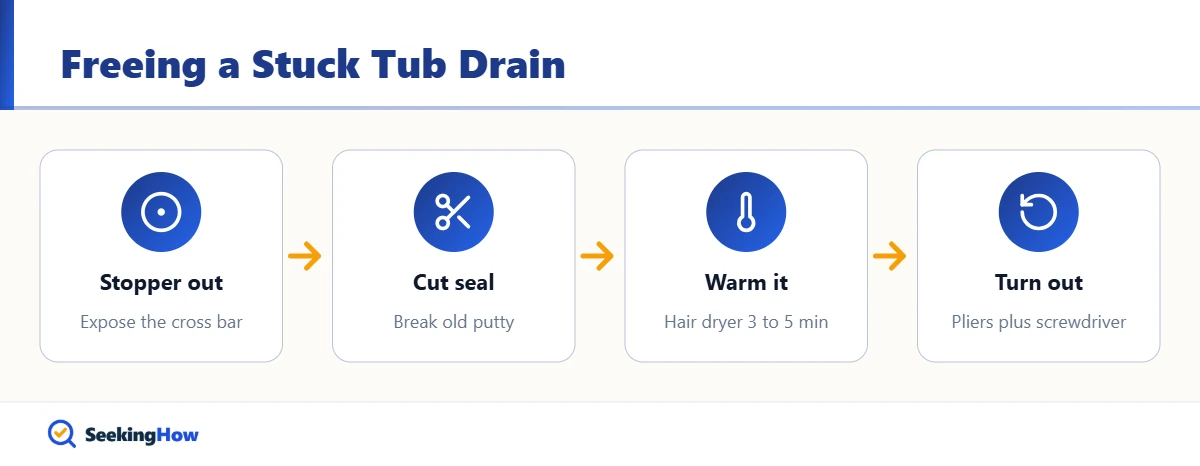
Step 1: Remove the Stopper
Take out the stopper so the cross bar inside the drain is exposed. Toe-touch stoppers unscrew counterclockwise, lift-and-turn stoppers come off after loosening a small knob screw, and trip-lever plungers come out through the overflow. Clean out hair so you can see the cross bar clearly.
Step 2: Cut the Old Seal
Run a utility knife or plastic scraper around the outer edge of the flange to break old plumber’s putty or silicone. On acrylic and fiberglass tubs, hold the blade nearly flat to avoid scoring the surface. In practice, this step alone frees many drains that seemed rusted in place.
Step 3: Warm the Flange
Aim a hair dryer at the drain flange on high for 3 to 5 minutes. Heat softens old putty and makes metal expand slightly. Never use a propane torch or heat gun on a plastic, acrylic, or fiberglass tub, because it can blister or warp the surface.
Step 4: Set Up the Pliers Lever
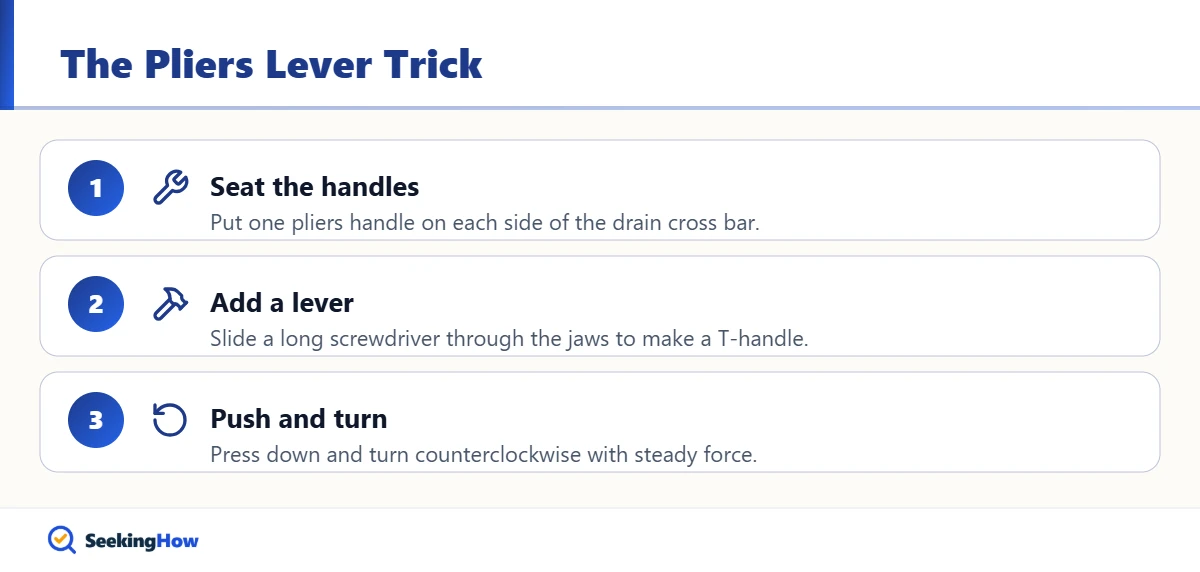
Insert the handles of closed needle-nose pliers into the cross bar so one handle sits on each side of the bar. Slide a long screwdriver through the pliers jaws or between the handles to make a T-handle. This spreads force across both sides of the cross bar instead of bending one spoke.
Step 5: Turn Counterclockwise With Steady Pressure
Push down firmly so the pliers stay seated and turn the screwdriver counterclockwise. Use steady force rather than jerks; a sudden jolt can snap the cross bar. If it does not move, add penetrating oil around the flange, wait 15 minutes, warm it again, and retry.
Step 6: Try the Crossed-Screwdriver Method
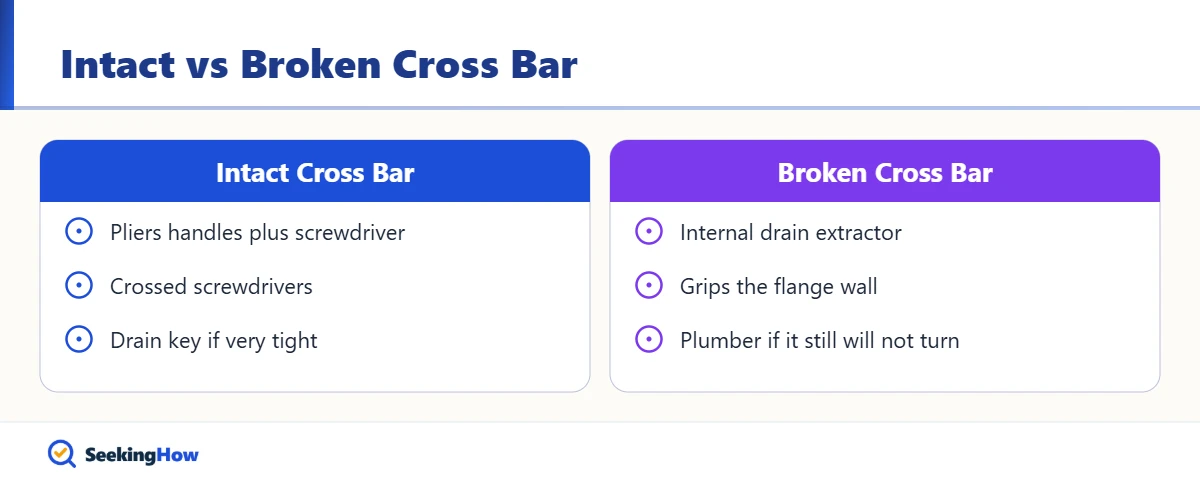
If the pliers slip, place two flathead screwdrivers across the drain in an X, tips wedged against the inside of the flange on opposite sides of the cross bar, and turn them together. This works on drains with a shallow or damaged cross bar. Most people find it needs two hands and patience.
Step 7: Lift Out the Flange and Clean Up
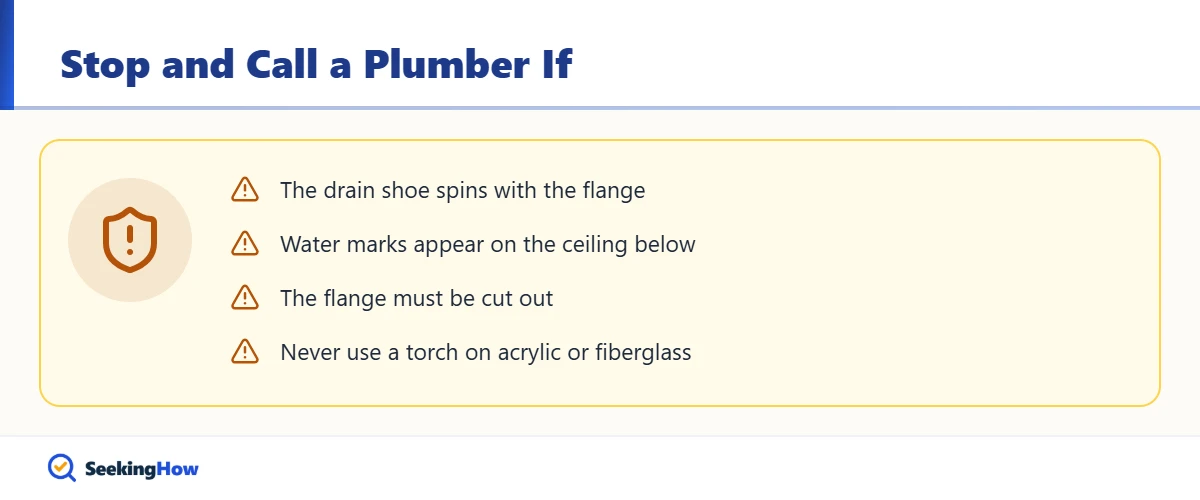
Once the flange turns, unscrew it by hand and lift it out. Scrape old putty from the tub and from the drain shoe threads. If the drain shoe below spins with the flange, have a helper hold it through an access panel, or stop and call a plumber.
Bottom line: break the seal, warm it, and use pliers handles plus a screwdriver lever; buy a drain extractor only if the cross bar is broken.
Method Comparison
| Method | Time | Cost | Best for |
|---|---|---|---|
| Pliers handles plus screwdriver | 10 to 30 min | Tools you own | Intact cross bar |
| Crossed screwdrivers | 15 to 40 min | Tools you own | Weak or bent cross bar |
| Drain key or dumbbell wrench | 5 to 15 min | Low-cost tool | Intact cross bar, very tight drains |
| Drain extractor | 10 to 20 min | Low-cost tool | Broken cross bar |
If That Didn’t Work
Problem: The cross bar bends or breaks. Cause: Corroded brass or uneven force. Fix: Use an internal drain extractor that grips the inside wall of the flange.
Problem: The flange and drain shoe spin together. Cause: The shoe gasket under the tub is loose. Fix: Hold the shoe from below through an access panel, or call a plumber.
Problem: The flange will not turn at all after heat and oil. Cause: Threads fused by corrosion. Fix: A plumber can cut two notches in the flange and drive it out; doing this yourself risks damaging the tub.
Problem: The drain is still slow after the flange is out. Cause: A clog below the shoe. Fix: Follow our steps to unclog a bathtub drain.
Safety and When To Call a Pro
Call a plumber if the drain shoe spins and you have no access panel, if water marks appear on the ceiling below, or if you need to cut the flange. A damaged shoe gasket leaks every time the tub drains. If you scratch or chip the tub, see how to fix a crack in a plastic bathtub before the damage spreads.
Prevention Tips
- Seal a new flange with plumber’s putty or silicone as the drain maker recommends, not with adhesive.
- Do not overtighten the new flange; snug plus a quarter turn is usually enough.
- Keep hair out of the drain so you rarely need to remove the flange at all.
Related Guides
- How To Unclog a Bathtub Drain
- How To Fix a Crack in a Plastic Bathtub
- How To Install a Fiberglass Bathtub
- How To Use a Drain Snake
Sources
- Oatey, tub drain and plumber’s putty product information (oatey.com)
- Kohler, bath drain installation guides (kohler.com)
- American Standard, bathtub care and installation resources (americanstandard-us.com)
Frequently Asked Questions
Which way do you turn a bathtub drain to remove it?
Turn a bathtub drain flange counterclockwise to remove it, viewed from above. It threads into the drain shoe under the tub. If it turns but does not rise, the shoe may be spinning with it, which means someone needs to hold the shoe from below.
Can I use pliers to remove a bathtub drain?
Yes, needle-nose pliers work well to remove a bathtub drain when you use the handles, not the jaws. Put one handle on each side of the cross bar and turn with a screwdriver through the pliers as a lever. This applies even pressure and protects the cross bar.
What if my bathtub drain has no cross bar?
A bathtub drain with no cross bar, or a broken one, needs an internal drain extractor that wedges against the inside of the flange. The crossed-screwdriver method can also work if the flange has notches. If neither grips, a plumber can cut the flange out safely.
Does WD-40 help loosen a tub drain?
Penetrating oil can help loosen a corroded tub drain, though the bigger obstacle is usually old putty or silicone. Cut the seal first, apply the oil around the flange edge, wait 15 minutes, and warm it with a hair dryer before turning.
Do I need to go under the tub to remove the drain?
Usually no, the drain flange comes out from above. You only need access below if the drain shoe spins with the flange or if the shoe gasket leaks. Many tubs have an access panel behind the plumbing wall for this reason.
How much does a plumber charge to remove a stuck tub drain?
Plumber pricing for a stuck tub drain varies widely by region and by whether the flange must be cut. Many homeowners pay roughly 150 to 350 dollars for removal and a new drain, as of 2026. Get a quote that includes the replacement flange and gasket.