Quick Answer
To take mascara off without makeup remover, soak a cotton pad in a gentle oil such as coconut, jojoba, olive or baby oil, hold it on closed lashes for 20 to 30 seconds, then wipe downward. Clean the lower lashes with an oiled cotton swab and wash your face with a mild cleanser and lukewarm water. Regular mascara also melts off with a warm, damp washcloth.
Key Takeaways
- Oil dissolves waterproof mascara; water and gentle cleanser work for regular and tubing formulas.
- Let the product soak for 20 to 30 seconds before wiping so you do not tug lashes out.
- Always wipe downward and outward, and follow up with a face wash to remove oily residue.
- Never use rubbing alcohol, dish soap, nail polish remover or household cleaners near your eyes.
- Take out contact lenses first, and stop if your eyes sting or turn red.
Running out of makeup remover at bedtime is common, and sleeping in mascara is a bad trade. The good news is that a few items already in your kitchen or bathroom cabinet do the job well. Here is how to pick the right one for your mascara type and remove it without irritating your eyes or losing lashes.
What Can You Use Instead of Makeup Remover?
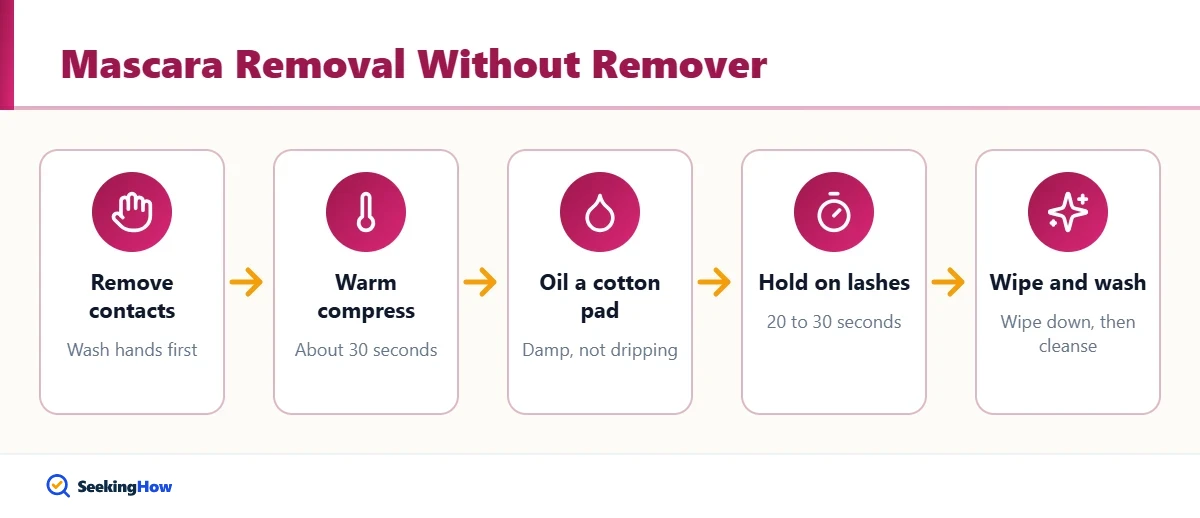
Mascara is made of pigments held together by waxes, oils and film-forming polymers. Waterproof formulas are designed to resist water and sweat, so they need an oil to break them down. Regular and tubing mascaras soften with warm water and a gentle cleanser. Choose your substitute based on what you are wearing and how sensitive your eyes are.
| Substitute | Works On | Pros | Watch Out For |
|---|---|---|---|
| Coconut oil | Regular and waterproof | Very effective, inexpensive | Can blur vision briefly; may clog pores in acne-prone skin |
| Jojoba oil | Regular and waterproof | Light texture, similar to skin’s own oil | Costs more than kitchen oils |
| Olive or sunflower oil | Regular and waterproof | Usually already in the kitchen | Heavier; rinse face afterward |
| Baby oil (mineral oil) | Regular and waterproof | Gentle, fragrance-free versions exist | Choose unscented to avoid stinging |
| Petroleum jelly | Regular and waterproof | Thick, stays put | Greasy; use a tiny amount |
| Gentle facial cleanser | Regular and tubing | No greasy film | Struggles with waterproof formulas |
| Tear-free baby shampoo, diluted | Regular | Mild on eyes | Rinse well; not for waterproof |
| Warm water and washcloth | Tubing and some regular | Zero products needed | Will not budge waterproof |
Tip: Check the tube. If it says waterproof or water-resistant, go straight to an oil. If it says tubing or “removes with warm water,” skip the oil and use a warm compress.
What Do You Need?
- Cotton pads or a soft, clean washcloth
- Cotton swabs for the lower lash line
- One gentle oil (coconut, jojoba, olive, sunflower or unscented baby oil) or petroleum jelly
- A mild, fragrance-free facial cleanser
- Lukewarm water and a clean towel
How Do You Remove Mascara Without Makeup Remover?
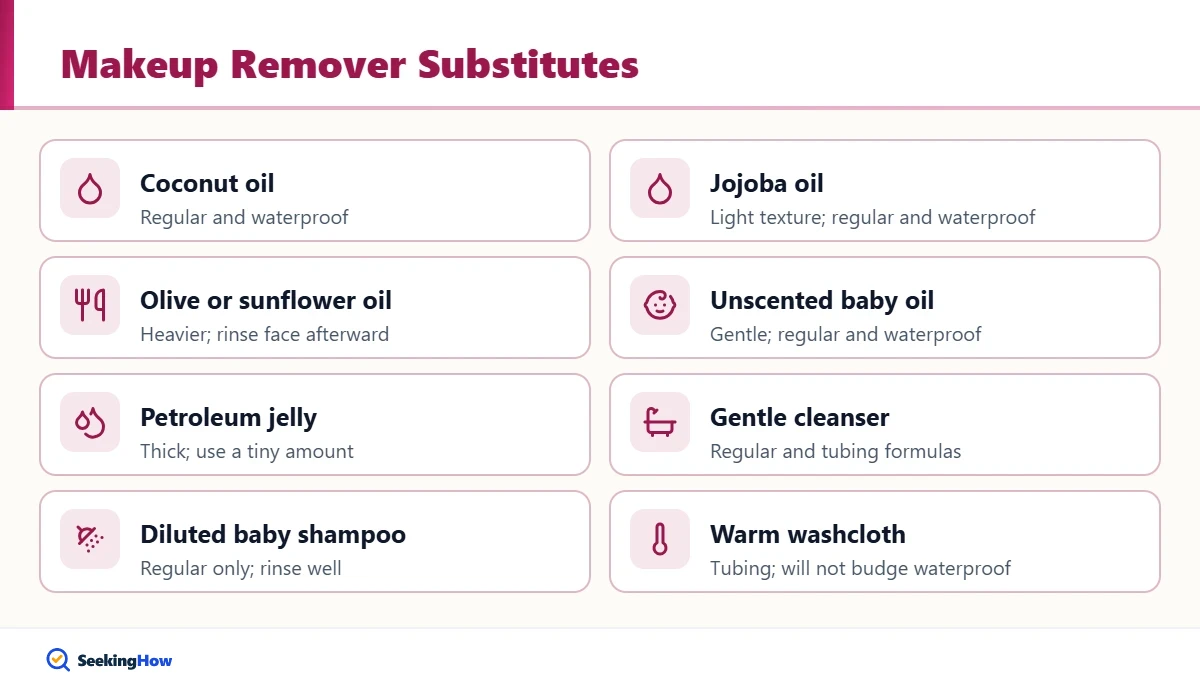
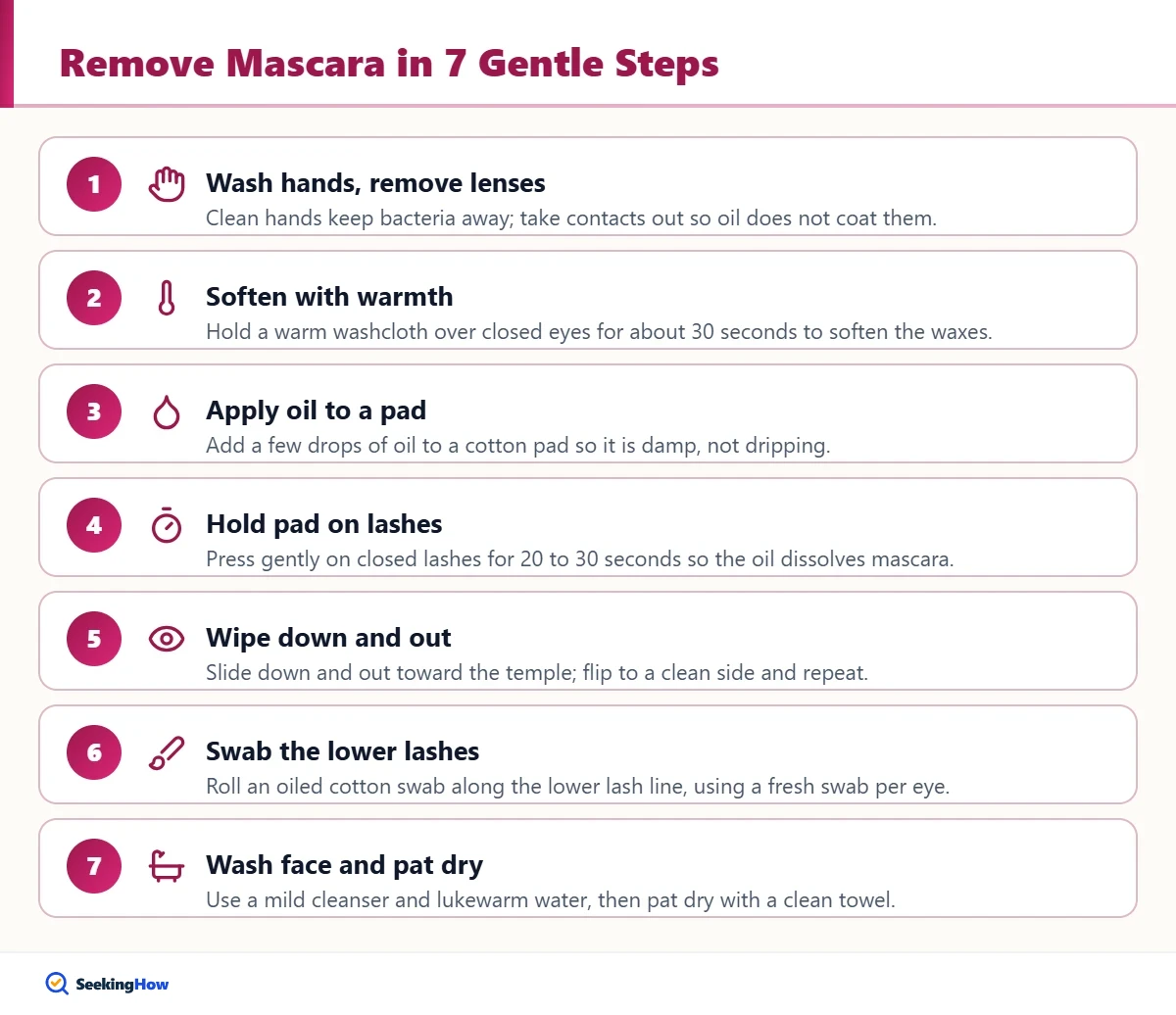
Step 1: Wash Your Hands and Remove Contact Lenses
Clean hands keep bacteria away from your eyes. If you wear contacts, take them out first so oil or cleanser does not coat the lenses. Pull long hair back so it does not drag product around.
Step 2: Soften the Mascara With Warmth
Hold a washcloth soaked in comfortably warm water over your closed eyes for about 30 seconds. Warmth softens the waxes in mascara so it releases with less rubbing. For tubing mascara, this step alone often loosens the little tubes so they slide off.
Step 3: Apply Oil to a Cotton Pad
Put a few drops of oil, or a pea-size amount of melted coconut oil, on a cotton pad. You want it damp, not dripping, so oil does not run into your eyes. For petroleum jelly, warm a small dab between your fingertips first.
Step 4: Hold the Pad on Your Lashes
Close your eye and press the pad gently against your upper lashes for 20 to 30 seconds. This gives the oil time to dissolve the mascara. Skipping the wait is what leads to scrubbing and lost lashes.
Step 5: Wipe Downward and Outward
Slide the pad down the lashes and out toward your temple in one gentle stroke. Flip to a clean side and repeat until the pad comes away mostly clean. Do not rub back and forth across the lid, which stretches delicate eyelid skin.
Step 6: Clean the Lower Lashes With a Swab
Dip a cotton swab in a little oil and roll it along the lower lash line, looking up as you go. Use a fresh swab for each eye. This also picks up the smudges that cause morning raccoon eyes.
Step 7: Wash Your Face and Pat Dry
Wash with a mild cleanser and lukewarm water to remove leftover oil and pigment, which can otherwise clog pores or the oil glands along the lash line. Pat dry with a clean towel instead of rubbing.
How Do You Take Off Waterproof Mascara Without Remover?
Waterproof mascara needs an oil, and it needs time. Use a slightly more saturated pad, hold it on the lashes for a full 30 seconds or a little longer, and repeat rather than pressing harder. A second pass with a fresh pad usually lifts the last flakes. If you still see residue, an oiled swab dabbed along the lash roots finishes the job.
Avoid trying to scrub waterproof mascara off with soap and water. It mostly smears the pigment across your lid and pulls on lashes.
What Should You Never Use on Your Eyes?
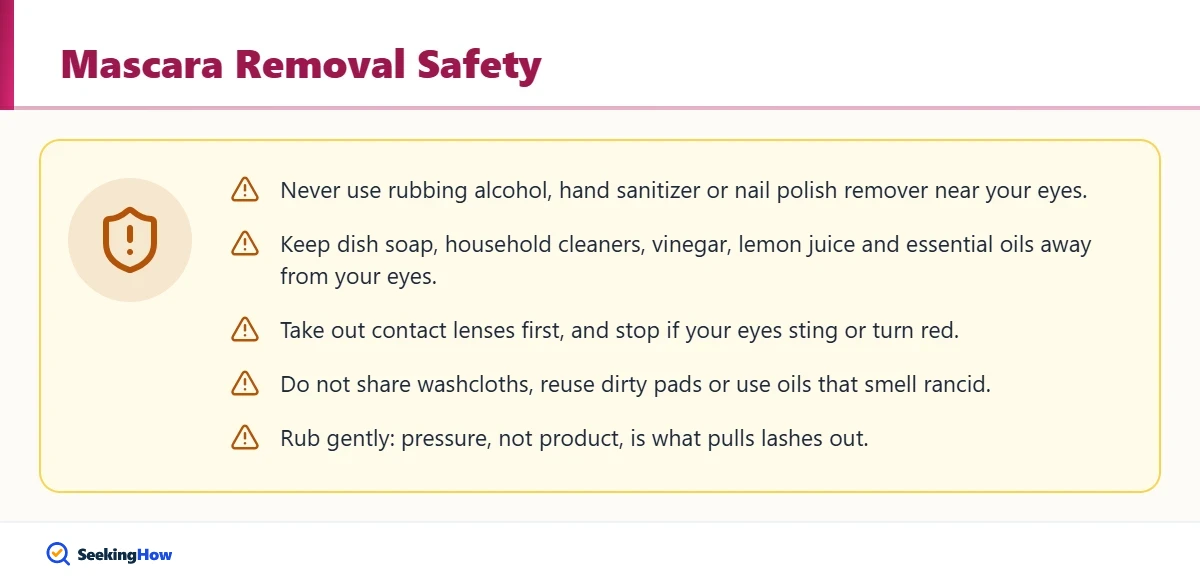
Safety: Keep these away from your eye area: rubbing alcohol, hand sanitizer, nail polish remover (acetone), dish soap, body wash with fragrance, household cleaners, vinegar, lemon juice and essential oils. They can sting, dry the skin or injure the surface of the eye. If anything gets in your eye and burning continues after rinsing with clean water, contact a doctor or poison control.
Also avoid sharing washcloths, reusing dirty pads, or using oils that smell rancid. Old, contaminated products are a common cause of eye irritation.
Is It Bad To Sleep in Mascara?
An occasional night is unlikely to cause lasting harm, but making a habit of it is a bad idea. Mascara left overnight can flake into your eyes, dry out and make lashes brittle so they break when you rub them. It can also contribute to clogged glands along the lash line and styes. Taking two minutes to remove it with any of the methods above is worth it.
Common Mistakes When Removing Mascara
- Rubbing hard. Pressure, not product, is what pulls lashes out.
- Using too much oil. Excess runs into the eye and blurs vision.
- Leaving oil on the skin. If you are acne-prone, follow up with a cleanser. Our guide to reducing pimples naturally covers more on pore-friendly habits.
- Using a dirty towel. Bacteria near the eyes increase the chance of irritation.
- Ignoring the lower lash line. Leftover pigment there is what smudges overnight.
How Can You Make Mascara Easier To Remove Next Time?
If you remove mascara at night with whatever is on hand, consider switching to a tubing formula, which slides off with warm water and light pressure. Save waterproof mascara for days you really need it, like weddings, workouts or the beach. Thin coats also remove more easily than heavily layered lashes.
For oily skin, a light oil such as jojoba followed by a gentle cleanser is a balanced routine; our article on reducing oily skin explains how to keep your face from feeling greasy after oil cleansing.
When Should You See a Doctor?
See an eye doctor if you have eye pain, redness that lasts more than a day, changes in vision, discharge, or a bump on the eyelid that grows or does not improve with warm compresses. Also get help if you notice lash loss in patches, which can have medical causes unrelated to makeup.
Frequently Asked Questions
Can Vaseline remove mascara?
Yes. A small amount of petroleum jelly warmed between your fingers dissolves both regular and waterproof mascara. Hold it on closed lashes briefly, wipe downward with a cotton pad, then wash your face with a mild cleanser because it leaves a greasy film that can blur vision and feel heavy.
Does coconut oil remove waterproof mascara?
Coconut oil is one of the most effective household options for waterproof mascara because oil breaks down the waxes and polymers that resist water. Use a little on a cotton pad, hold it on the lashes for about 30 seconds and wipe gently. Cleanse afterward if your skin is acne-prone.
Can you remove mascara with just water?
Plain warm water removes tubing mascara and sometimes softens regular mascara, but it will not remove waterproof formulas. For regular mascara, add a gentle facial cleanser. For waterproof, use an oil first, then rinse with water and cleanser.
Is baby shampoo safe for removing mascara?
Tear-free baby shampoo diluted with warm water is mild enough for many people to use around the eyes on regular mascara. Keep your eyes closed, use a small amount and rinse thoroughly. It does not work well on waterproof mascara, and you should stop if it stings.
Why do my lashes fall out when I remove mascara?
It is normal to lose a few lashes daily as part of the growth cycle, but rubbing dried mascara pulls out more. Letting oil soak for 20 to 30 seconds and wiping in one gentle direction reduces lash loss. See a doctor if you notice patchy or sudden heavy loss.