Quick Answer
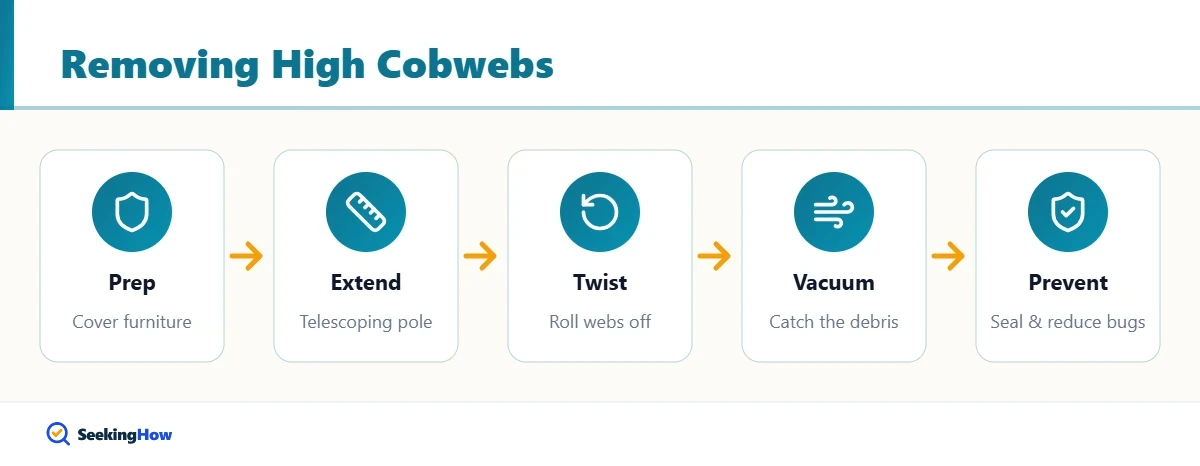
To remove cobwebs from high ceilings, attach a soft cobweb duster or microfiber head to a telescoping extension pole (12-24 ft), twist it into the web so the silk wraps around the head, and pull away. Work from the ceiling down, vacuum any debris, and wipe stubborn marks with a damp microfiber cloth. Most rooms take 10-20 minutes.
Key Takeaways
- An extension pole with a cobweb brush lets you reach most vaulted ceilings safely from the floor, no ladder needed.
- Twist, do not swipe: rolling the duster wraps the web instead of smearing it across paint.
- Clean top to bottom and vacuum last so falling dust and spiders end up on the floor, not on clean surfaces.
- Reduce return visits by sealing gaps, dimming outdoor lights, and dusting high corners monthly.
- Hire a pro for ceilings above about 20 ft or anything that requires scaffolding or a tall ladder.
Cobwebs collect in the corners of tall ceilings, around light fixtures, and on ceiling fans where you rarely look. Because they are out of reach, many people simply leave them. With the right pole and technique, you can clear them in minutes without a wobbly ladder.
What Causes Cobwebs on High Ceilings?
Strictly speaking, cobwebs are spider webs, often abandoned ones, that have collected dust and become visible. Spiders favor quiet, undisturbed corners near light and airflow, where insects travel. High ceilings, skylights, and ceiling fans are rarely disturbed, so webs pile up there.
Some “cobwebs” are just dust strands. Static electricity and gentle air movement from vents can draw lint into long threads that cling to corners and textured ceilings, especially in dry winter air.
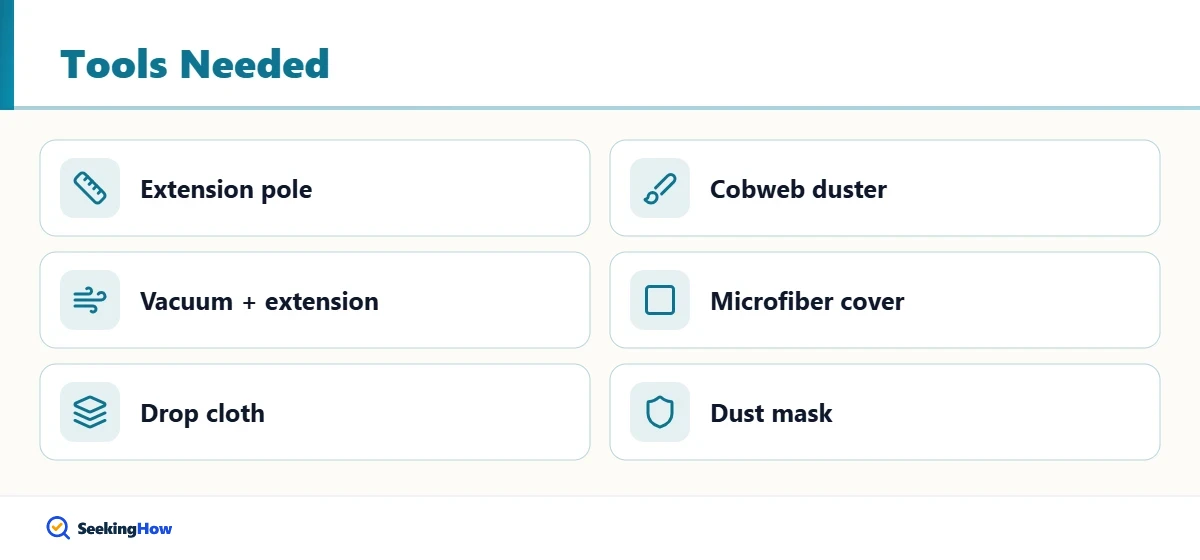
What Tools Do You Need To Reach High Ceilings?
Choose a tool based on ceiling height and the surface you are cleaning.
| Tool | Typical reach | Best for | Watch out for |
|---|---|---|---|
| Telescoping pole + cobweb brush | Pole lengths commonly 12-24 ft | Corners, beams, vaulted ceilings | Heavy at full extension; brace the pole |
| Extension pole + microfiber duster | Same as pole | Smooth paint, fans, fixtures | Wash the head often |
| Vacuum with extension wand and brush tool | About 8-12 ft with wands | Ceilings up to standard heights, heavy dust | Hose weight; use a canister model |
| Lint roller on a pole | Pole length | Textured or popcorn ceilings | Can pull loose texture |
| Sturdy step ladder | Depends on ladder | Detail work on fixtures | Fall risk; always follow ladder labels |
How To Remove Cobwebs From High Ceilings Step by Step
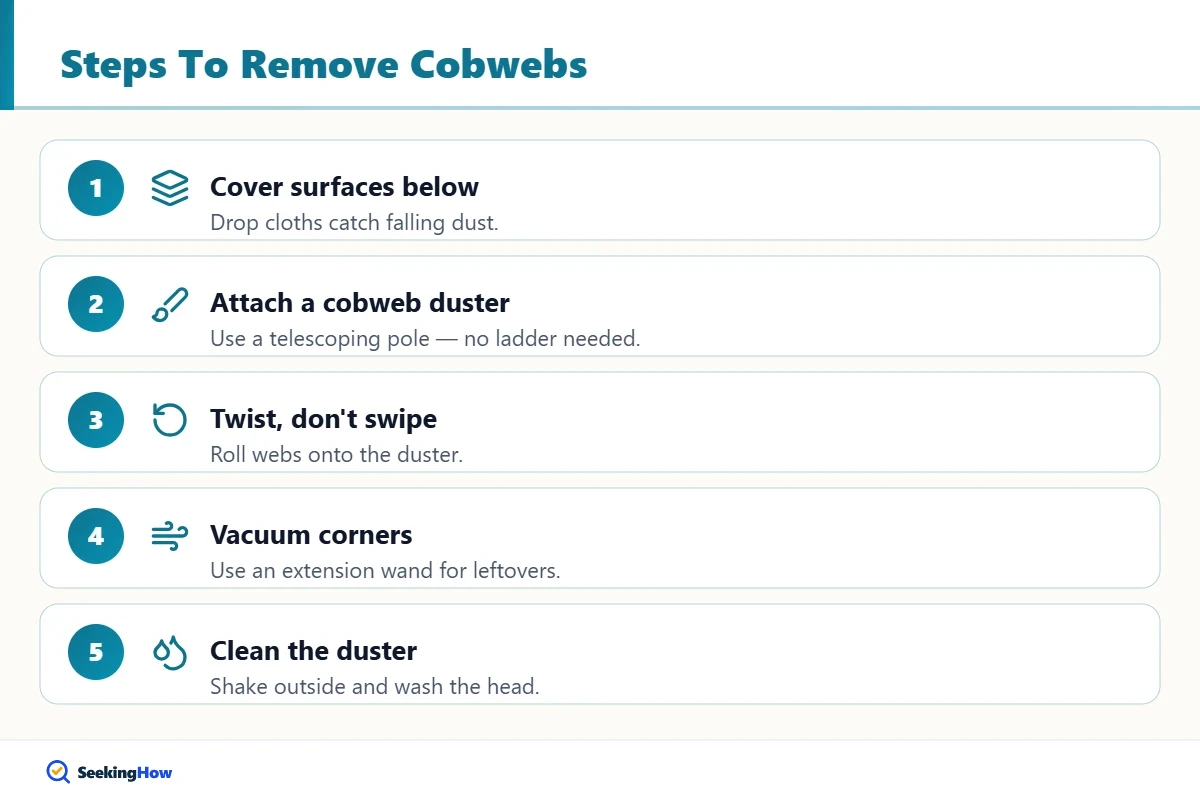
Step 1: Prepare the room
Turn off ceiling fans and lights and let bulbs cool. Lay a drop cloth or old sheet over furniture and floors below the work area. Put on safety glasses, since dust and spiders fall when you look up.
Step 2: Set up your pole and duster
Attach a cobweb brush or microfiber duster to the extension pole and lock each section firmly. Extend it only as far as needed; shorter poles are easier to control. A lightweight fiberglass or aluminum pole reduces arm fatigue.
Step 3: Twist the duster into each web
Position the brush just past the web, then rotate the pole so the bristles roll the silk around the head. Pull away gently. Swiping sideways tends to drag dusty webs across the paint and leave gray streaks.
Step 4: Work top to bottom
Start at the highest point of the ceiling, then move to corners, crown molding, beams, light fixtures, ceiling fan blades, and finally the tops of walls and window frames. Clean the duster head by tapping it into a trash bag between areas.
Step 5: Vacuum fallen debris
Vacuum the floor, baseboards, and drop cloth once the ceiling is done. Use a brush attachment on upholstered furniture where dust may have landed. Carry the drop cloth outside and shake it out.
Step 6: Spot-clean marks and wash your tools
Wipe any gray marks on painted ceilings with a barely damp microfiber cloth on a flat mop or pole; test an inconspicuous spot first on flat paint. Wash microfiber heads in warm water without fabric softener so they stay grippy, and let them air-dry.
How Do You Clean Cobwebs From Textured or Popcorn Ceilings?
Textured and popcorn ceilings crumble easily, so avoid stiff brushes and scrubbing. A lint roller attached to a pole or a vacuum brush held just off the surface lifts webs without pulling texture.
Safety: Popcorn ceilings installed before the 1980s may contain asbestos. Do not scrape, sand, or aggressively brush an older textured ceiling. If you are unsure, have a sample tested by an accredited lab, as recommended by the EPA, before disturbing it.
How Do You Clean Cobwebs Off Ceiling Fans and Light Fixtures?
For fans, slide an old pillowcase over each blade and pull it back so the dust and webs stay inside. A curved fan duster on a pole works on fans too high to reach. For fixtures, turn off the power, let bulbs cool, and dust the fixture with a microfiber head rather than spraying cleaner near sockets.
Is It Safe To Use a Ladder for High Ceilings?
A pole is almost always safer than a ladder for dusting. If you need a ladder for detail work, use a ladder rated for your weight, set it on level ground, keep three points of contact, and never stand on the top step or top cap. Have someone hold the base. On stairwells and two-story foyers, a pole or a professional is the better choice.
Common Mistakes To Avoid
- Swiping instead of twisting: This smears dust streaks across paint.
- Spraying cleaner on webs: Wet webs turn into sticky gray streaks.
- Cleaning floors first: You will just have to clean them again.
- Using a dirty duster: A clogged head redistributes dust. Clean it between rooms; our guide on cleaning a broom and dustpan uses similar methods for brushes.
- Overreaching on a ladder: Move the ladder instead of leaning.
How Do You Keep Cobwebs From Coming Back?
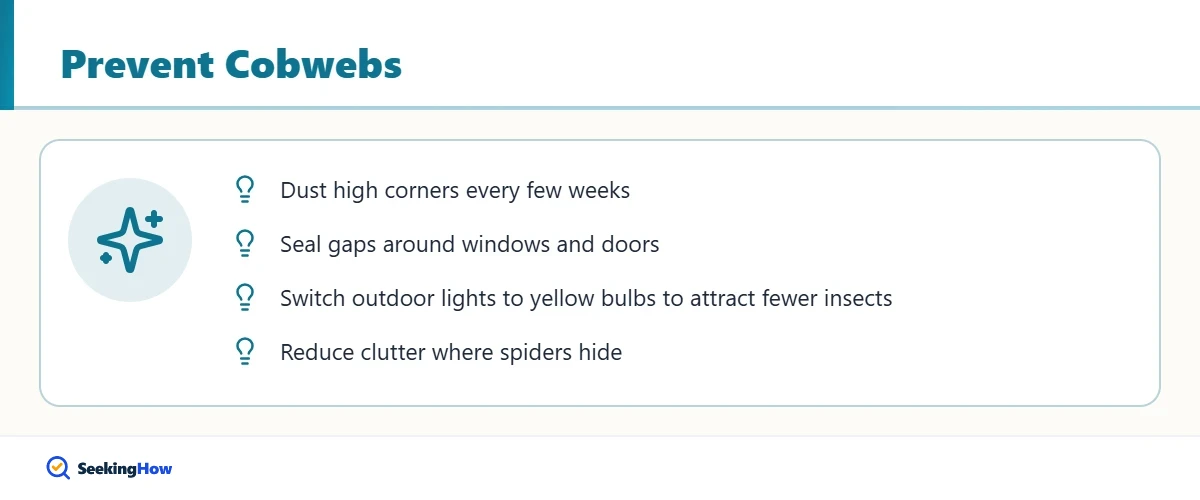
- Dust high areas monthly: Regular removal keeps webs small and discourages spiders from staying.
- Seal entry points: Caulk gaps around windows, doors, and utility penetrations, and repair torn screens.
- Reduce insect attractants: Outdoor lights near doors attract insects that spiders feed on. Yellow “bug” bulbs or motion-activated lights help.
- Control humidity and clutter: Spiders and their prey prefer damp, undisturbed spaces such as basements and storage corners.
- Vacuum egg sacs: Small, round silk sacs in corners should be vacuumed and the bag or canister emptied outside.
Some people spray peppermint oil or vinegar solutions in corners. These may help a little, but evidence that they reliably repel spiders is limited, so treat them as optional extras, not a solution.
If you are finding lots of small bugs along with webs, inspect bedding and furniture too; our guide to checking for bed bugs explains what to look for.
When Should You Call a Professional?
Call a professional cleaning service for ceilings above about 20 feet, stairwell ceilings over open drops, or delicate surfaces like chandeliers. If spiders keep returning in large numbers or you see potentially dangerous species such as black widows or brown recluses, contact a licensed pest control company.
For the rest of your deep clean, see how to clean a microfiber spin mop head so your floor tools stay fresh too.
Frequently Asked Questions
What is the best tool for cobwebs on high ceilings?
A telescoping extension pole with a soft cobweb brush is the best all-around tool. It reaches most vaulted ceilings from the floor and the round bristles grab webs when you twist. Add a microfiber duster head for smooth painted surfaces, fans and light fixtures.
How do you get cobwebs off a high ceiling without a pole?
You can tape a microfiber cloth or lint roller to a broom handle, or use a vacuum with extension wands and a brush attachment. For ceilings well above standard height, a proper extension pole is safer and more effective than improvised tools or a ladder.
Why do cobwebs keep coming back so fast?
Cobwebs return when spiders have food, shelter and entry points. Outdoor lights attract insects, gaps let spiders in, and undisturbed corners let them build. Regular dusting, sealing gaps and changing outdoor lighting usually reduce how quickly webs reappear.
Can you vacuum cobwebs off the ceiling?
Yes. A vacuum with extension wands and a soft brush attachment works well on ceilings within reach and captures dust instead of dropping it. Hold the brush lightly against textured or popcorn ceilings, or slightly off the surface, to avoid pulling off texture.
How often should you clean cobwebs from ceilings?
Once a month is a good routine for high ceilings and corners. In homes with more spiders, such as near woods or water, or in fall when spiders are more active, you may need to clear webs every two weeks.