Quick Answer
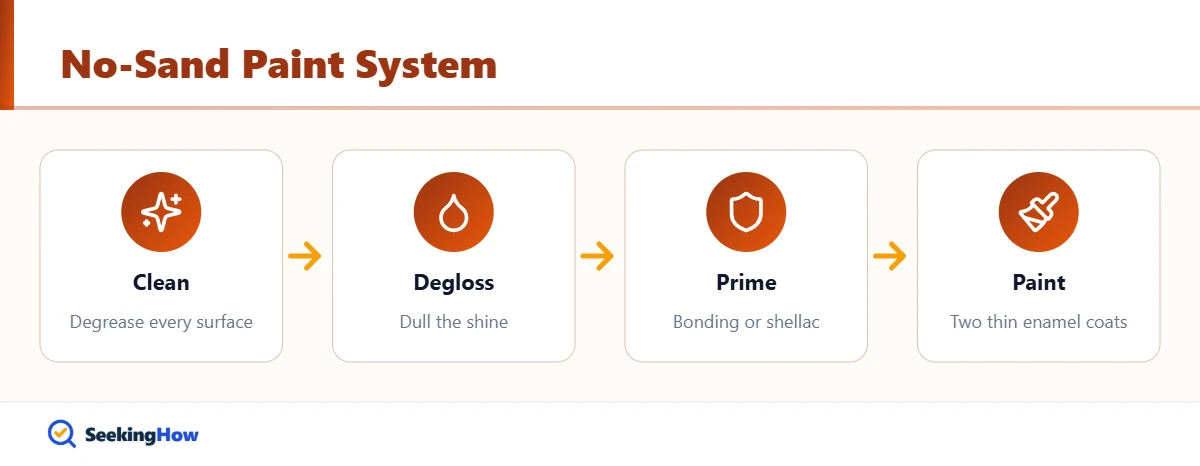
To paint over polyurethane without sanding, degrease the surface, wipe on a liquid deglosser, then apply a bonding or shellac-based primer before two coats of enamel paint. Allow about a day for the full process and up to several weeks for the paint to cure. Skipping the primer is the main reason paint peels off polyurethane.
Key Takeaways
- Paint will not grip glossy polyurethane on its own; a bonding or shellac-based primer creates the adhesion sanding normally provides.
- A liquid deglosser dulls the shine chemically and removes residue that blocks adhesion.
- Clean first: grease, wax, and furniture polish cause more paint failures than gloss does.
- Test adhesion with painter’s tape on a hidden spot before painting the whole piece.
- Paint feels dry in hours but needs days to weeks to fully cure and resist scratches.
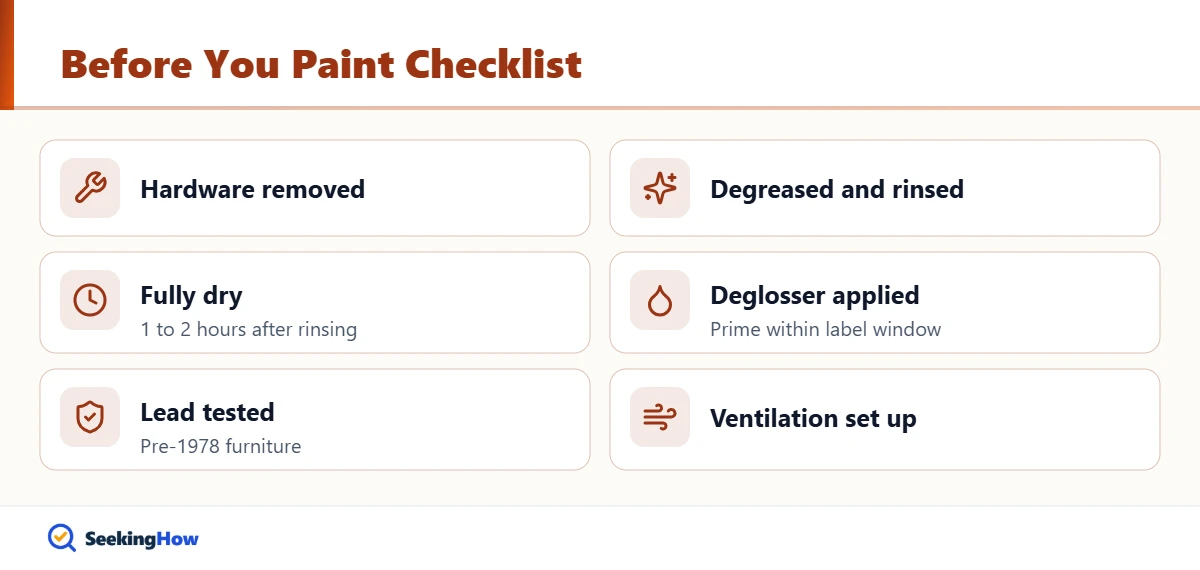
- Furniture made before 1978 should be tested for lead before any prep work.
Sanding a polyurethane-coated dresser, cabinet, or table is slow, dusty, and easy to overdo on veneer. You can paint over polyurethane without sanding if you replace the scuffing step with chemistry: a thorough clean, a deglosser, and the right primer. This guide covers that system plus the shortcuts that hold up and the ones that peel.
What You’ll Need
- Degreasing cleaner: TSP substitute or a dedicated pre-paint degreaser
- Liquid deglosser (sometimes sold as “liquid sandpaper”)
- Bonding primer or shellac-based primer
- Paint: water-based urethane-modified enamel or alkyd enamel for furniture and cabinets
- Lint-free rags and a bucket of clean water
- Quality synthetic brush (2 to 2-1/2 inch) and a 4-inch foam or microfiber mini roller
- Painter’s tape and drop cloths
- Screwdriver to remove hardware
- Nitrile gloves, safety glasses, and ventilation (fan or open windows)
- Lead test kit (for furniture made before 1978)
How To Paint Over Polyurethane Without Sanding: Step-by-Step
Step 1: Remove hardware and clean thoroughly
Take off knobs, pulls, and hinges, then scrub every surface with a degreaser mixed per the label. Kitchen cabinets and tabletops collect cooking grease and polish that block adhesion. Rinse with clean water and let the piece dry completely, at least 1 to 2 hours.
Step 2: Apply liquid deglosser
Wearing gloves, wipe deglosser onto the surface with a lint-free rag using firm, overlapping strokes, then wipe off with a second clean rag if the label calls for it. The surface should look dull and feel slightly tacky or matte. Most deglossers require you to prime within a specific window, often within an hour, so read the label and work in sections.
Step 3: Prime with a bonding or shellac-based primer
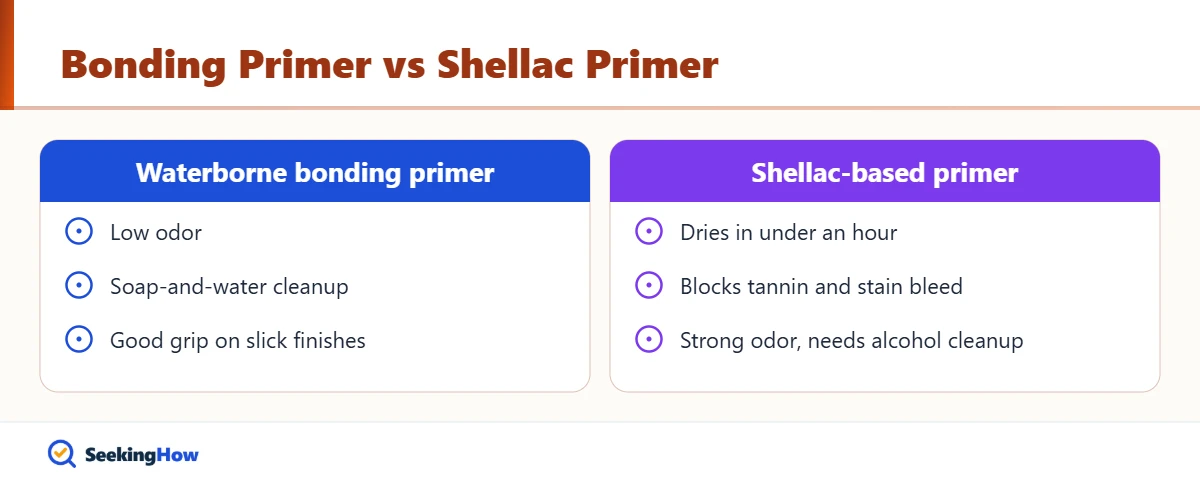
Brush or roll on a thin, even coat of bonding primer or shellac-based primer. Shellac-based primer dries fast, blocks tannin bleed from wood, and sticks well to slick finishes, while waterborne bonding primers have less odor. Thick coats are the most common mistake; they stay soft and can wrinkle under paint.
Step 4: Run an adhesion test
After the primer dries, press painter’s tape firmly onto a hidden area and pull it off quickly. If primer lifts, clean and degloss that area again before continuing. In practice, most people find this 5-minute test saves them from repainting an entire piece later.
Step 5: Apply two thin coats of paint
Roll paint on flat surfaces and brush details, then lightly tip off with the brush in the direction of the grain. Wait the recoat time on the can, usually 4 to 16 hours depending on paint type, before the second coat. Two thin coats level better and cure harder than one heavy coat.
Step 6: Let the paint cure before heavy use
Reinstall hardware after 24 to 48 hours, but treat the surface gently for the full cure period listed on the can, which can range from about a week to 30 days. Avoid setting heavy objects, placing rubber feet, or stacking items on fresh paint, as it can stick or dent before curing.
Bottom line: Clean, degloss, and use a bonding or shellac-based primer every time; that combination makes sanding optional on polyurethane.
Do Chalk Paint and Mineral Paint Work Without Primer?
Chalk-style and mineral paints often stick to cleaned polyurethane better than standard latex, which is why they are marketed as “no prep.” They still need degreasing and usually a protective topcoat of wax or water-based poly on furniture tops. For high-wear surfaces like tabletops and cabinet doors, primer plus enamel is more durable.
If That Didn’t Work
Problem: Paint peels in sheets. Cause: No primer, or grease left on the surface. Fix: Scrape loose paint, clean again, degloss, and prime with shellac-based primer.
Problem: Yellow or brown stains bleed through. Cause: Tannins or old finish chemistry reacting with water-based paint. Fix: Spot-prime with shellac-based primer, then repaint.
Problem: Paint stays tacky for days. Cause: Thick coats, high humidity, or polish residue. Fix: Improve airflow, keep the room near 70 degrees Fahrenheit, and use thinner coats.
Problem: Brush marks show. Cause: Overworking paint as it dries. Fix: Use a self-leveling enamel and stop brushing once an area starts to set.
Problem: Paint scratches off easily with a fingernail. Cause: Not yet cured. Fix: Wait the full cure time before judging durability.
| Method | Prep time | Durability | Best for |
|---|---|---|---|
| Deglosser + bonding primer + enamel | 2 to 3 hours | High | Cabinets, dressers, tables |
| Cleaner + shellac primer + enamel | 1 to 2 hours | High | Wood that may bleed tannins |
| Chalk or mineral paint + topcoat | 1 hour | Moderate | Decor furniture, low wear |
| Paint directly on poly | None | Low (peels) | Not recommended |
Safety and When To Call a Pro
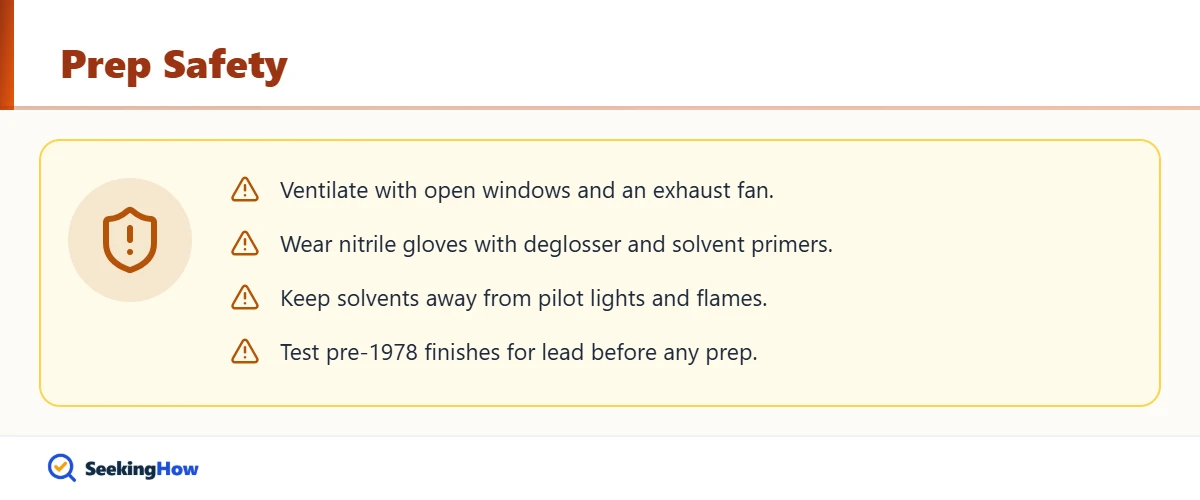
Use deglossers and shellac-based primers with windows open and a fan exhausting air outdoors, and wear nitrile gloves, because these products contain solvents that irritate skin and lungs. Keep them away from pilot lights and other ignition sources.
If the furniture or trim was finished before 1978, use an EPA-recognized lead test kit before prep, and hire a lead-safe certified contractor if lead is found. Also consider a pro for full kitchen cabinet sets, where spray equipment gives a smoother, more durable factory-like finish.
Prevention Tips
- Always test the full system on the back of a door or drawer first.
- Stir primer and paint thoroughly; settled solids reduce adhesion.
- Use felt pads under objects on painted tops after curing.
- Clean painted cabinets with mild soap, not abrasive cleaners.
If you would rather go back to bare wood, see how to remove polyurethane from wood, and for color changes without paint, read how to change wood color from dark to light.
Related Guides
- How to remove polyurethane from wood
- How to change wood color from dark to light
- How to paint an arch on a wall
- How to stabilize a wobbly cabinet
Sources
- U.S. EPA: lead-based paint, testing, and lead-safe renovation
- U.S. Consumer Product Safety Commission: household chemical and lead paint safety
- OSHA: solvent exposure and ventilation
Frequently Asked Questions
Can you paint directly over polyurethane?
No, paint applied directly over polyurethane usually peels or scratches off. Polyurethane is slick and non-porous, so paint has nothing to grip. Cleaning, deglossing, and a bonding or shellac-based primer give the paint a surface it can bond to without sanding.
What primer sticks to polyurethane?
Bonding primers and shellac-based primers stick best to polyurethane. Both are formulated to adhere to glossy, non-porous surfaces such as poly, laminate, and glossy paint. Shellac-based primer also blocks stains and tannins, which makes it the safer choice on oak and other wood that can bleed.
Does deglosser really replace sanding?
Deglosser can replace sanding when it is paired with a bonding primer. On its own, it dulls the shine and removes residue but does not create the scratch pattern sanding does. The primer supplies the extra grip, so use both for durable results on furniture and cabinets.
Can I use latex paint over polyurethane?
Yes, you can use latex paint over polyurethane once it is primed with a bonding or shellac-based primer. For furniture and cabinets, choose a water-based urethane-modified or alkyd enamel rather than wall paint, because enamels level better and cure to a harder, more washable surface.
Does chalk paint stick to polyurethane without sanding?
Chalk paint often sticks to clean polyurethane without sanding, but adhesion varies by brand and surface. Degrease thoroughly and test a hidden area with tape first. On high-traffic surfaces like tabletops, a primer underneath and a protective topcoat over chalk paint improve durability.
How long does paint take to cure over polyurethane?
Paint usually feels dry within a few hours but takes about one to four weeks to fully cure, depending on the product, temperature, and humidity. During curing, handle the piece gently and avoid stacking items on it. Check the paint can for the manufacturer cure time.
How can I tell if my furniture has polyurethane?
Place a few drops of water on the surface; if they bead and do not soak in, the wood has a film finish such as polyurethane or lacquer. A cotton swab with denatured alcohol softens shellac, and lacquer thinner softens lacquer, while cured polyurethane resists both.