Quick Answer
To paint an arch on a wall, mark a vertical centerline, draw the rectangle base with a level, then swing a pencil on a string (or a nail-and-string compass) from the center point to trace the curved top. Seal the line with low-tack painter’s tape or by brushing base color over it, roll on two coats of paint, and peel the tape while the last coat is still damp. Plan on 4-6 hours plus drying time.
Key Takeaways
- The width of the arch sets the radius of the curve: the radius is half the width for a classic semicircle top.
- A string compass pinned at the centerline gives a cleaner curve than freehand drawing or bending tape by eye.
- Use short pieces of flexible or delicate-surface painter’s tape around the curve so it follows the line without wrinkles.
- Two thin coats in eggshell or matte finish look better than one thick coat and hide roller marks.
- Remove the tape at a 45-degree angle while the final coat is slightly wet for the sharpest edge.
A painted arch adds the look of architecture without framing, drywall, or a contractor. It works as a headboard, a backdrop for a console table, a framed reading nook, or a playful accent in a kid’s room. The secret is geometry, not artistic talent: once you draw an accurate curve, the painting is straightforward.
What Do You Need to Paint an Arch on a Wall?
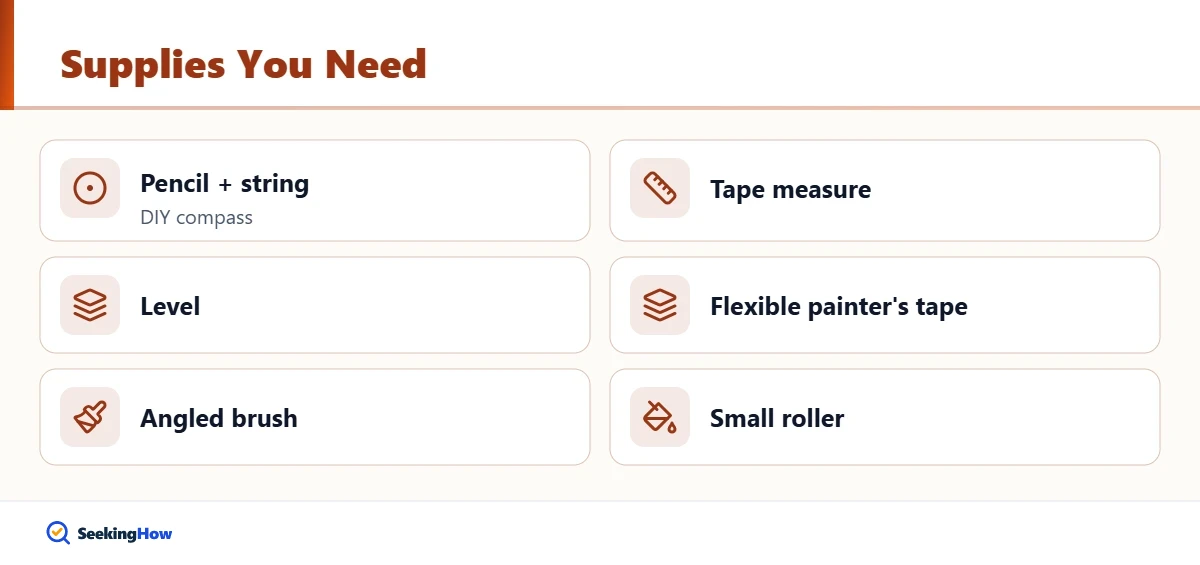
Most of what you need is already in a basic paint kit. The one specialty item is something to draw a perfect curve, and a string with a pencil tied to it does that job for almost nothing.
- Paint: one quart of interior latex paint covers most arches up to about 4 by 7 feet with two coats. Eggshell or matte hides wall flaws; satin is easier to wipe clean.
- Painter’s tape: 1-inch delicate-surface tape for curves, plus standard 1.5-inch tape for the straight sides.
- Measuring and marking: tape measure, 4-foot level or laser level, pencil, and a length of non-stretch string or a thin strip of cardboard.
- Pivot point: a small finishing nail, push pin, or thumbtack.
- Application: a 2-inch angled sash brush, a 4-inch mini roller with a 3/8-inch nap, and a small tray.
- Prep: mild detergent, sponge, lightweight spackle, and 220-grit sanding sponge.
Tip: Before committing, sketch the arch with chalk or use a cardboard template taped to the wall. Live with it for a day and check how it lines up with furniture, outlets, and light switches.
How Do You Choose the Size and Placement of a Painted Arch?
Scale makes or breaks the effect. An arch that is too narrow looks like a stripe, and one that is too wide reads as an accidental blob. A good rule is to make the arch slightly wider than the furniture it frames, extending 6-12 inches past each side.
| Use | Typical width | Typical height | Curve radius |
|---|---|---|---|
| Queen headboard | 72-76 in | 60-72 in | 36-38 in |
| King headboard | 88-92 in | 60-72 in | 44-46 in |
| Desk or console nook | 48-60 in | 72-84 in | 24-30 in |
| Mirror or art frame | 30-40 in | 60-80 in | 15-20 in |
| Faux doorway | 32-36 in | 84-90 in | 16-18 in |
Most painted arches start at the baseboard and rise to roughly two-thirds of the ceiling height. In a room with 8-foot ceilings, a top point of 6 to 6.5 feet usually looks balanced. Keep at least a few inches of plain wall between the top of the curve and the ceiling so the shape does not feel cramped.
How to Paint an Arch on a Wall, Step by Step
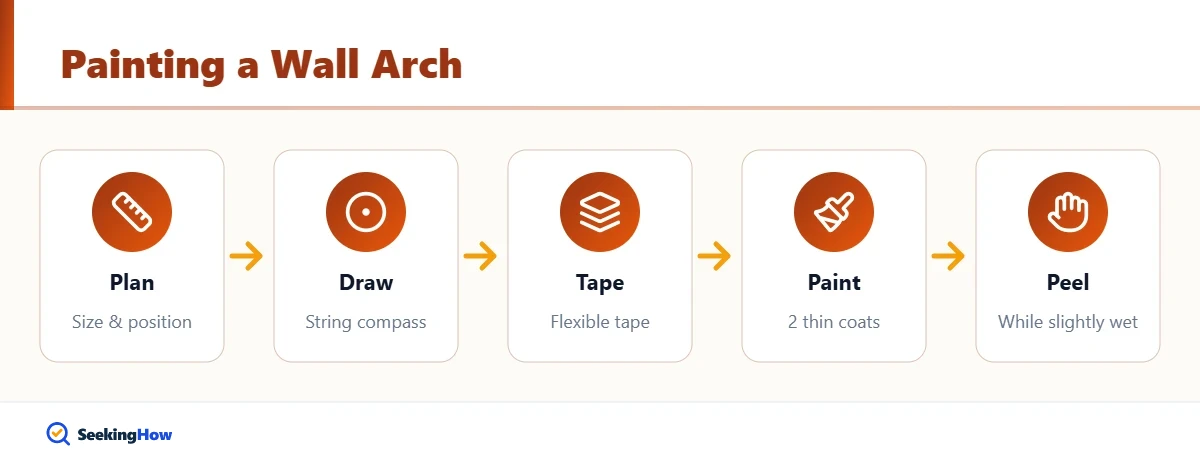
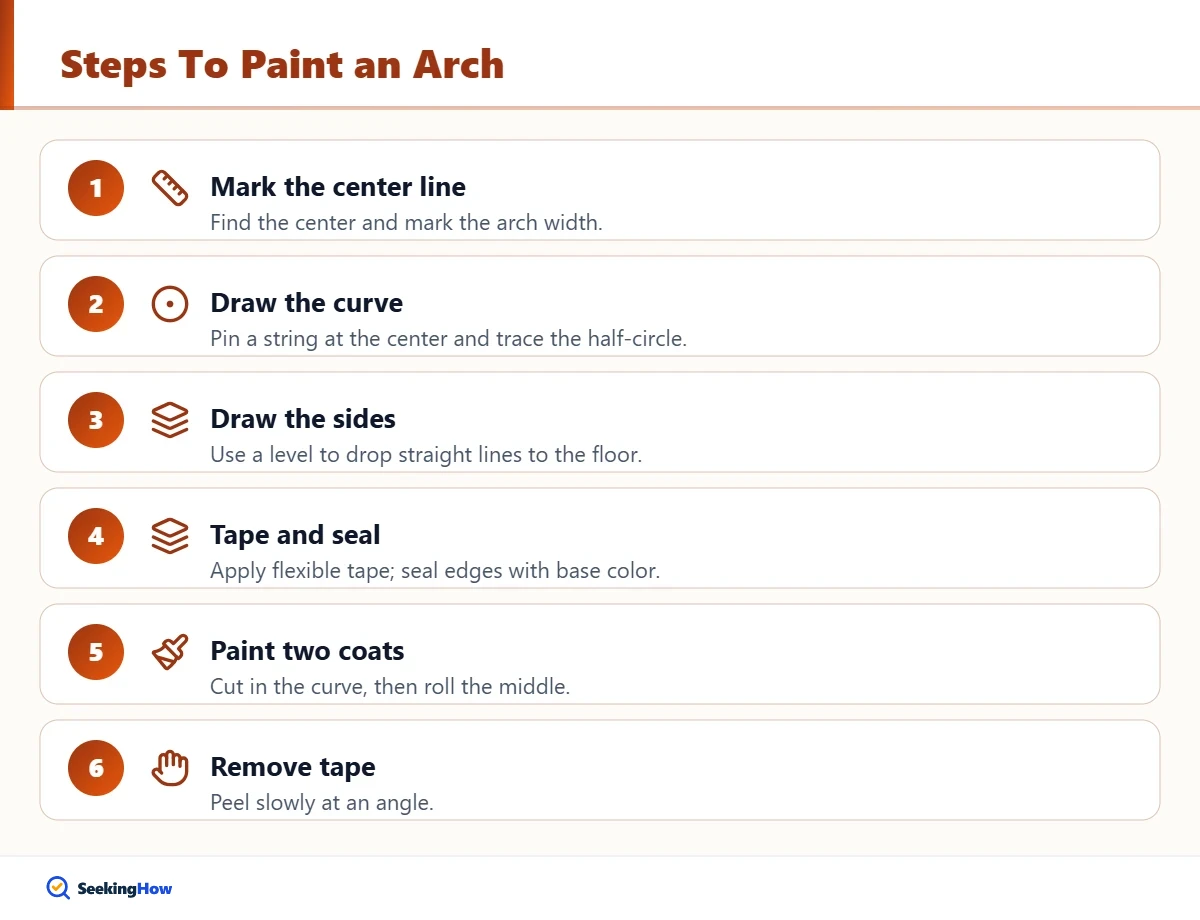
Step 1: Clean and Prep the Wall
Wipe the wall with a damp sponge and a few drops of dish soap to remove dust and grease, then let it dry. Fill nail holes with spackle, sand smooth with a 220-grit sponge, and remove any outlet covers inside the arch area. Paint and tape both stick far better to clean, flat drywall.
Step 2: Mark the Centerline
Measure the wall or the furniture you are framing and mark its center. Use a level to draw a faint vertical line from the floor up past the planned top of the arch. Every other measurement is taken from this line, so double-check it.
Step 3: Draw the Straight Sides
Measure half the arch width out from the centerline on each side and mark it. Decide how tall the straight sides should be, which equals the total height minus the radius. Draw both sides with a level, then connect their tops with a light horizontal line; the center of that line is your pivot point.
Step 4: Trace the Curve With a String Compass
Tap a small nail or push pin into the pivot point. Tie string to it and to a pencil so the distance equals the radius, then keep the string taut and swing the pencil from one side line to the other. If you cannot put a hole in the wall, have a helper hold the string end firmly on the pivot point instead.
Step 5: Tape the Outline
Run standard tape along the straight sides, placing it outside the pencil line. For the curve, use short 2-3 inch pieces of delicate-surface tape overlapped like fish scales so the edge follows the line smoothly. Press every edge down firmly with a putty knife or credit card.
Step 6: Seal the Tape Edge
Brush a thin coat of the existing wall color, or clear matte medium, over the tape edge and let it dry for about 30 minutes. Any bleed fills the gap with the wall color, so your arch color cannot seep underneath. This single step is the difference between crisp and fuzzy lines.
Step 7: Cut In and Roll the First Coat
Use the angled brush to paint a 2-3 inch band along the tape and the baseboard. While the edges are still wet, fill the middle with the mini roller, working in overlapping vertical strokes. Keep the coat thin and even and let it dry according to the can, usually 1-2 hours for latex.
Step 8: Apply the Second Coat and Remove the Tape
Roll a second coat the same way. While it is still slightly tacky, pull the tape back on itself at a 45-degree angle, slowly and steadily. If paint starts to lift, score the edge lightly with a sharp utility knife before continuing.
Step 9: Touch Up and Cure
Once the paint is dry, fix any small bleeds with an artist’s brush and the wall color. Remove the nail and fill the tiny hole. Latex paint feels dry within hours, but avoid leaning furniture against it or scrubbing it for about two weeks while it cures fully.
What Are the Best Paint Colors and Finishes for an Arch?
Contrast drives the effect. A deep color such as terracotta, olive, navy, or charcoal on a white or cream wall creates a bold focal point. A tone-on-tone arch, two or three shades darker than the wall, gives a subtle, designer look that suits small rooms.
- Matte or flat: hides drywall flaws and looks most like plaster, but scuffs more easily.
- Eggshell: the best all-around choice for bedrooms and living rooms, with a soft sheen and better washability.
- Satin: good in kids’ rooms and hallways where hands touch the wall, but it shows roller marks more.
- Limewash or color-washed finishes: add a textured, Mediterranean look; apply with a large brush in crisscross strokes.
If you need to work around trim, the same careful prep you would use when you install baseboard molding on an uneven floor pays off here: cut in neatly against the baseboard top rather than painting over it.
What Are Common Mistakes When Painting an Arch?
- Skipping the centerline: an arch that is a half-inch off center becomes obvious once furniture sits in front of it.
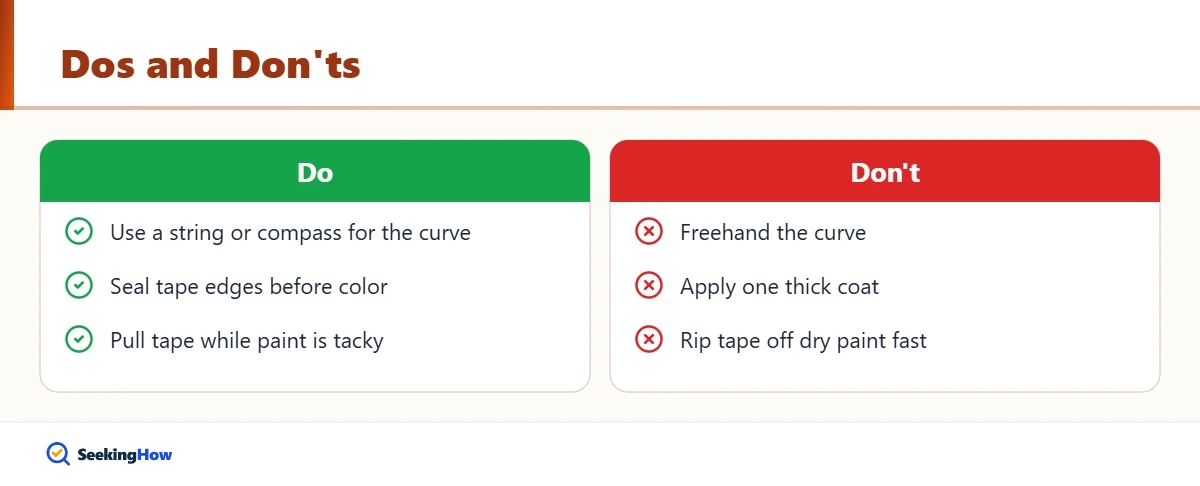
- Using a stretchy string: yarn or elastic cord changes length as you swing it, producing an egg-shaped curve. Use mason’s line, fishing line, or a cardboard strip with holes punched at the radius.
- Long pieces of tape on the curve: they wrinkle and leave flat spots. Short overlapping pieces follow the line.
- Heavy coats: thick paint pools at the tape edge and peels away with the tape.
- Waiting days to remove tape: fully cured latex bonds to the tape and tears at the edge.
Can You Paint an Arch Without Tape?
Yes. Many experienced painters freehand the curve with a steady hand and a quality angled brush. Load the brush lightly, start with the bristles slightly away from the line, and drag the brush along the pencil mark so the bristles fan into a fine edge. Work in short, overlapping strokes and rest your pinky on the wall for stability.
Tapeless painting is faster on textured walls, where tape cannot seal against bumps. Expect to do a second, careful cutting pass after the first coat dries. For removable decor, such as in a rental, consider peel-and-stick wallpaper cut into an arch shape or an arch-shaped wall decal, which come off without damage.
How Do You Fix Mistakes on a Painted Arch?
Small bleeds under the tape can be cleaned with a damp cotton swab while the paint is wet. Once dry, touch them up with the wall color and a fine artist’s brush. If the curve itself is uneven, redraw the correct line with the string compass, paint the wall color over the error, and repaint the arch edge once it dries.
If you need to remove paint from a surface you did not mean to hit, such as a window or mirror, the methods in this guide on removing paint from glass also work for stray latex drips.
Creative Ideas for a Painted Arch
- Headboard arch: center it behind the bed and hang two sconces just outside the curve.
- Double or nested arches: paint a smaller arch inside a larger one in a lighter shade for depth.
- Arch with shelves: mount floating shelves inside the painted shape to create a faux built-in.
- Mirror frame: paint an arch slightly larger than an arched mirror so a band of color surrounds it.
- Color-blocked entry: paint an arch around a doorway and extend it to frame the opening.
For other surface-friendly decor ideas that avoid holes, see how to hang a tapestry on the ceiling without holes.
Safety: If your home was built before 1978, the existing paint may contain lead. Do not sand old paint until you test it with an EPA-recognized lead test kit, and ventilate the room while painting.
Frequently Asked Questions
How do you draw a perfect arch on a wall?
Mark a vertical centerline, find the pivot point where the straight sides end, and tie a pencil to non-stretch string at a length equal to half the arch width. Pin the string at the pivot and swing the pencil in a smooth half circle while keeping the string taut.
What kind of tape is best for painting a curved arch?
Use a thin, flexible delicate-surface painter tape, ideally 1 inch wide. Tear it into 2 to 3 inch pieces and overlap them along the curve. Short pieces follow the line without wrinkles, and low-tack adhesive will not pull fresh wall paint off when removed.
How much paint do I need for a painted arch?
A quart of interior latex paint covers about 100 square feet per coat, so it handles most arches up to roughly 4 by 7 feet with two coats. For very large headboard arches or dark colors that need a third coat, buy a gallon or a second quart.
Can I paint an arch in a rental apartment?
Only with your landlord permission, since most leases require returning walls to the original color. Keep the wall color for repainting later. Removable alternatives include arch-shaped peel-and-stick wallpaper or decals that come off without damaging the paint underneath.
How long should paint dry before removing tape?
Remove tape while the final coat is still slightly tacky, usually within 30 to 60 minutes of rolling it on. If the paint has fully dried, score along the tape edge with a sharp utility knife first so the paint film breaks cleanly instead of peeling.