Quick Answer
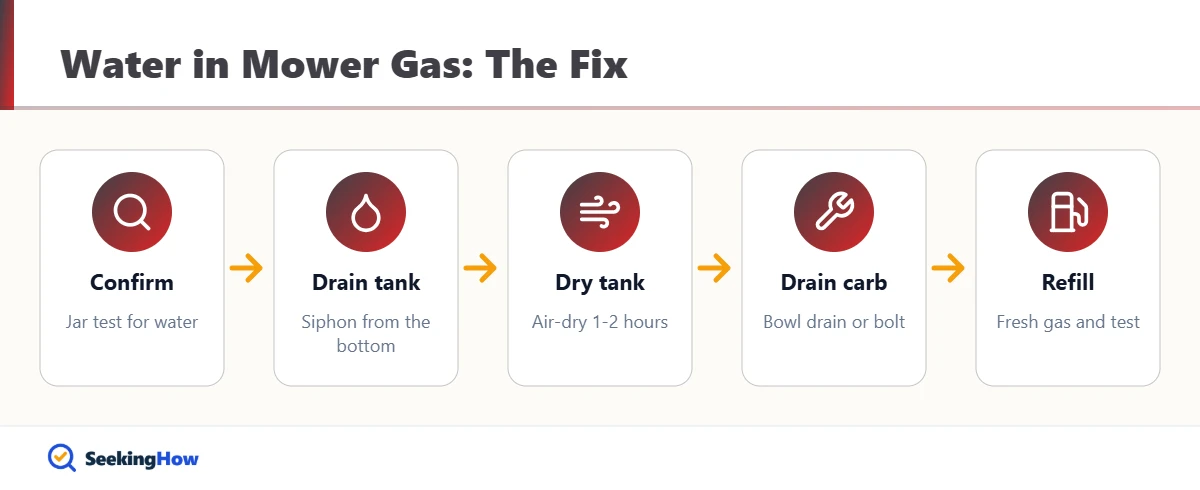
To get water out of a lawn mower gas tank, drain all fuel into an approved container with a hand siphon pump or by disconnecting the fuel line, let the empty tank air-dry, then drain the carburetor bowl and refill with fresh gasoline. The job takes 30-60 minutes. Work outdoors with the engine cold, and never pour contaminated fuel on the ground.
Key Takeaways
- Water is heavier than gasoline, so it sinks and collects at the bottom of the tank and the carburetor bowl.
- Draining the tank alone is not enough; water in the carburetor bowl keeps the mower sputtering.
- Fuel additives that claim to absorb water only handle small traces, not visible water droplets.
- Ethanol-blended gas can absorb moisture and phase-separate in storage, a common source of water in mower tanks.
- Take contaminated fuel to a household hazardous waste site; never dump it on soil or into drains.
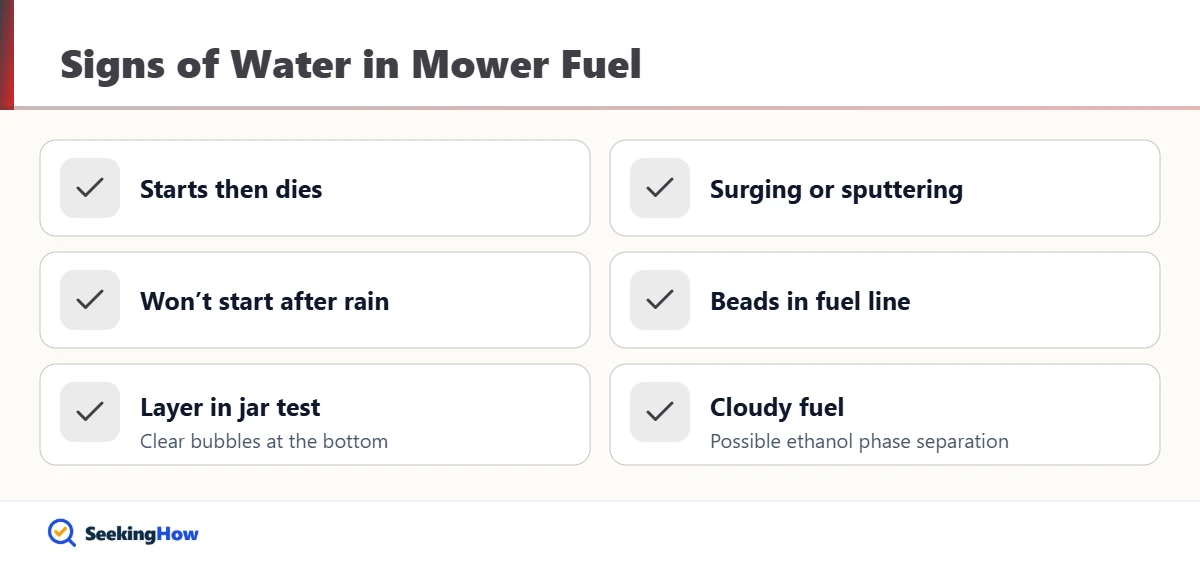
A mower that starts, surges and dies, or won’t start after sitting in the rain, often has water in the fuel. This guide explains how to get water out of a lawn mower gas tank on walk-behind and riding mowers, including the carburetor step most guides skip.
What You’ll Need
- Hand siphon pump (squeeze-bulb or manual transfer pump)
- Approved gas can or drain pan for contaminated fuel
- Clear glass jar to check for water (optional but useful)
- Screwdriver or socket set (often 3/8 or 1/2 inch for the bowl drain or bolt)
- Fuel line pinch-off pliers or a small clamp
- Shop towels and nitrile gloves
- Fresh gasoline, octane as listed in your engine manual (ethanol-free if available)
- Fuel stabilizer (optional)
- Replacement inline fuel filter (if equipped)
How To Get Water Out of a Lawn Mower Gas Tank: Step-by-Step
Step 1: Confirm the Problem
Siphon a little fuel from the bottom of the tank into a clear jar and let it settle 2-3 minutes. Water shows up as clear bubbles or a separate layer at the bottom; phase-separated ethanol fuel looks cloudy with a distinct layer. If the fuel is clear and uniform, the problem is likely stale gas or a dirty carburetor instead.
Step 2: Prepare the Mower Safely
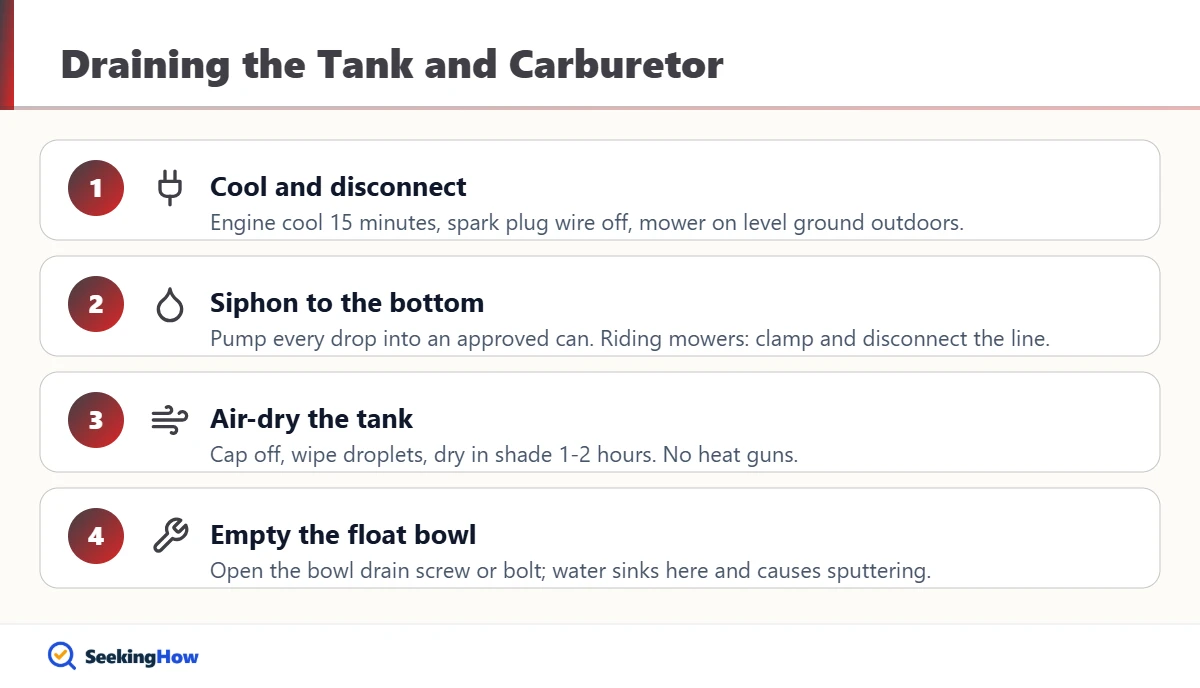
Move the mower outdoors, let the engine cool for at least 15 minutes and disconnect the spark plug wire (or remove the key on a riding mower). Set it on level ground. Hot mufflers can ignite spilled fuel, and an attached plug wire lets the engine fire if you pull the blade.
Step 3: Drain the Gas Tank
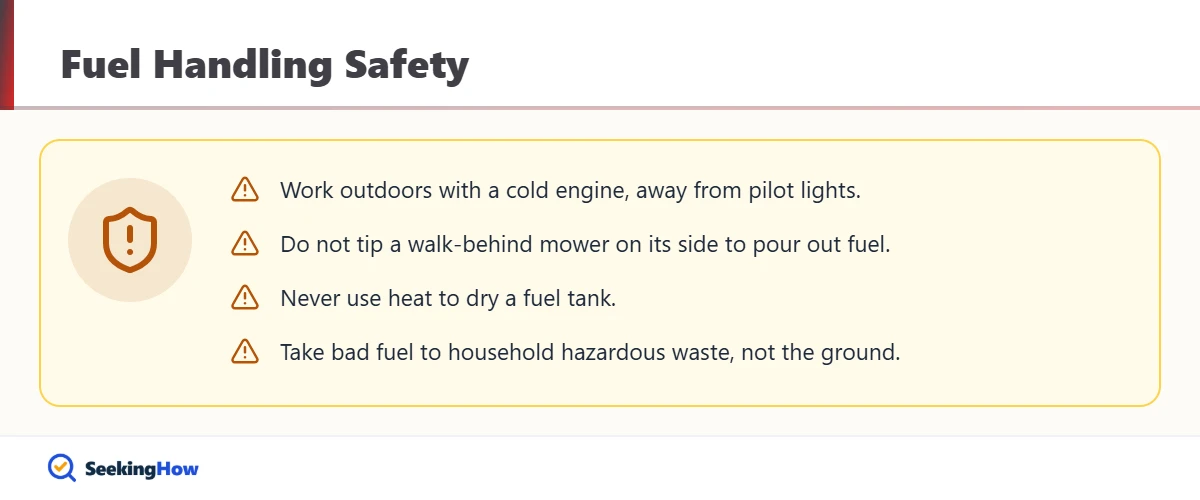
Insert the siphon hose to the very bottom of the tank and pump all fuel into your gas can or pan. On riding mowers, it is often easier to clamp the fuel line, disconnect it at the filter and let the tank drain into the container. Do not tip a walk-behind mower on its side to pour fuel out; oil can flood the air filter, and fuel can spill on the hot engine.
Step 4: Dry the Tank
With the cap off, wipe out reachable droplets with a lint-free towel and let the tank air-dry in the shade for 1-2 hours. Swirling a small splash of fresh gas and draining it again rinses out the last traces. Never use a heat gun or hair dryer on a fuel tank.
Step 5: Drain the Carburetor Bowl
Place a towel underneath, then open the bowl drain screw or remove the bolt at the bottom of the float bowl and let the fuel run out. Water collects here because it sinks; if you skip this, the mower will still sputter. Reinstall the bolt snugly, making sure its gasket seats properly.
Step 6: Replace the Fuel Filter and Check the Line
If your mower has an inline fuel filter, replace it, noting the flow arrow points toward the carburetor. Look for water beads in clear fuel lines and drain them. Filters are inexpensive and trap water and debris you cannot see.
Step 7: Refill and Test
Fill with fresh gasoline, reconnect the spark plug wire and start the mower. It may take several pulls or a few cranks for fuel to reach the carburetor. Let it run 5 minutes; if it surges or dies, repeat the bowl drain once more.
Bottom line: Always drain both the tank and the carburetor bowl; one without the other leaves water in the system.
| Method | Time | Best for | Limits |
|---|---|---|---|
| Siphon pump | 15-20 min | Walk-behind mowers | May leave water in the bottom corner |
| Disconnect fuel line | 15-30 min | Riding mowers, tractors | Needs a clamp and drain pan |
| Remove tank | 30-60 min | Heavy contamination, rust or debris | More disassembly |
| Water-absorbing additive | Minutes | Trace moisture only | Does not fix visible water |
If That Didn’t Work
Problem: Mower still sputters. Cause: Water or varnish left in the carburetor jets. Fix: Drain the bowl again, or remove and clean the carburetor with carb cleaner.
Problem: Mower won’t start at all. Cause: Fuel not reaching the carburetor or a wet spark plug. Fix: Check the fuel shutoff valve is open, and pull, dry or replace the spark plug.
Problem: Water keeps coming back. Cause: Damaged or missing cap vent seal, or storage outdoors. Fix: Replace the gas cap and store the mower under cover.
Problem: Rust flakes or debris in the drained fuel. Cause: Long-term water in a metal tank. Fix: Remove and clean the tank, or replace it.
Car gas tanks need a different approach; see our guide on how to get water out of a car gas tank.
Safety and When To Call a Pro
Work outdoors away from pilot lights, water heaters and sparks, and wipe spills immediately. Gasoline vapor is flammable and harmful to breathe. Take contaminated fuel to a household hazardous waste collection site (and if any splashes in your vehicle on the way, here is how to get gas smell out of car carpet); it is not legal or safe to pour on the ground. Call a small-engine shop if the tank is rusted inside, the carburetor needs rebuilding, fuel leaks from the bowl gasket after reassembly, or the engine runs but smokes heavily.
Prevention Tips
- Buy only the gas you will use within about 30 days, or add fuel stabilizer at the pump.
- Use ethanol-free gasoline when available for small engines.
- Store the mower and gas cans under cover with caps tight.
- Run the tank dry or use stabilized fuel before winter storage.
Related Guides
- How to get water out of a gas tank
- How to make a lawn mower go 40 mph
- How to get gas smell out of car carpet
- How to hang a backpack blower in the garage
Sources
- U.S. Environmental Protection Agency – Household hazardous waste
- Briggs and Stratton – Small engine fuel and maintenance guidance
- Your mower engine operator’s manual – fuel, carburetor and storage sections
Frequently Asked Questions
How does water get in a lawn mower gas tank?
Water gets in a lawn mower gas tank through rain or sprinkler water around a loose or damaged cap, condensation in a partly empty tank, or contaminated gas cans. Ethanol-blended gasoline can also absorb moisture over time and separate. Storing the mower outdoors or under a dripping eave makes it much more likely.
Will a lawn mower run with water in the gas?
A lawn mower may run briefly with water in the gas but usually sputters, surges or dies, especially when water reaches the carburetor jets. Larger amounts prevent starting entirely. Running it that way can also lead to corrosion in the carburetor, so drain the fuel rather than trying to run it out.
Can I use HEET or a dry gas additive in a mower?
Water-removing additives can help with trace moisture, but they are not a fix for visible water droplets or a separated layer. Draining is the reliable fix. Check your engine manual before using alcohol-based additives, since some small-engine makers discourage extra alcohol in fuel.
Do I need to drain the carburetor after water in the gas tank?
Yes, drain the carburetor bowl after finding water in the gas tank. Water sinks and settles in the float bowl, so the engine keeps stalling even after the tank holds fresh fuel. Most bowls have a drain screw or a bottom bolt that empties them in a minute or two.
How do I dispose of gas with water in it?
Dispose of gas with water in it at a household hazardous waste facility or collection event. Keep it in a sealed, labeled gas can until then. Do not pour it on the ground, in storm drains or in the trash. Some auto shops or recycling centers also accept contaminated fuel; call first.
How long does it take to get water out of a lawn mower tank?
Getting water out of a lawn mower tank takes about 30-60 minutes of work, plus 1-2 hours of drying time for the empty tank. Removing the tank or cleaning the carburetor adds another 30-60 minutes. Most homeowners can finish the job in an afternoon.