Quick Answer
To hang a backpack blower in a garage, screw a heavy-duty utility hook or a slatwall/track-system hook rated for at least 50 pounds into a wall stud about 4 to 5 feet off the floor. Hang the blower by its backpack frame or carry handle, not the blower tube, with the tube secured and the unit away from water heaters and other ignition sources.
Key Takeaways
- Many gas backpack blowers weigh around 20 to 25 pounds, so anchor into studs, not bare drywall.
- Hang by the frame or handle; hanging by the tube or harness strap can stress the parts.
- Wall track and slatwall systems let you move the hook and store attachments nearby.
- Keep gas-powered equipment away from pilot lights, water heaters and furnaces.
- Use fuel stabilizer or run the tank dry before long seasonal storage.
A backpack blower is bulky, awkwardly shaped and easy to trip over on a garage floor. Getting it on the wall protects the tubes and engine housing, frees floor space and makes it easy to grab on yard day. Here is how to choose the right hanger and mount it so it holds safely.
What Is the Best Way to Hang a Backpack Blower?
The best option depends on your wall and how much other yard gear you need to store. A single heavy-duty hook is the cheapest; a track or slatwall system is the most flexible.
| Option | Best for | Pros | Cons |
|---|---|---|---|
| Heavy-duty utility hook | One blower, quick install | Inexpensive, strong when screwed into a stud | Fixed position |
| Wall track or rail system | Several tools and blowers | Movable hooks, holds heavy loads across studs | Higher cost |
| Slatwall panels | Organized garages | Clean look, many accessory hooks | Most expensive, more install work |
| Pegboard | Light handheld tools | Cheap, flexible | Standard pegboard hooks are not made for 20+ lb loads |
| Heavy-duty shelf | Renters, block walls | No special hook needed | Uses more space |
| Ceiling hoist or overhead hook | Off-season storage | Frees wall space | Harder to reach for weekly use |
What Do You Need?
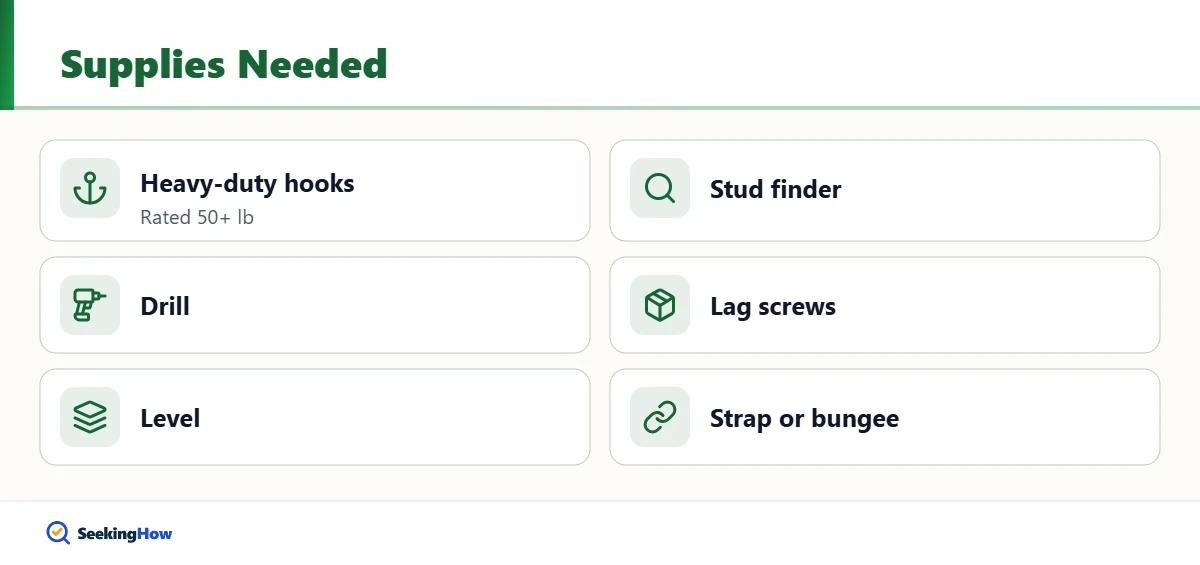
- A heavy-duty utility hook, bike hook or track-system hook rated well above the blower’s weight
- Stud finder
- Drill/driver and bits sized for pilot holes
- Lag screws or the structural screws supplied with the hook
- Level, tape measure and pencil
- Optional: rubber-coated hook, small shelf or bin for tubes and nozzles, bungee strap
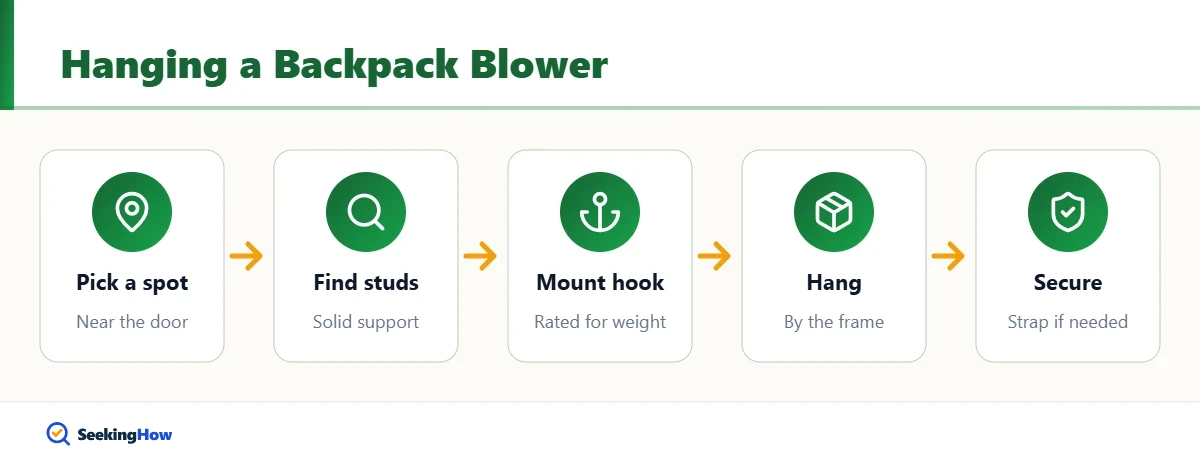
How to Hang a Backpack Blower in a Garage
Step 1: Check the Blower’s Weight and Hanging Points
Look up your model’s weight in the owner’s manual. Many gas backpack blowers weigh roughly 20 to 25 pounds dry, and battery models with the battery installed can be similar. Identify a sturdy hanging point, usually the top of the backpack frame or a carry handle.
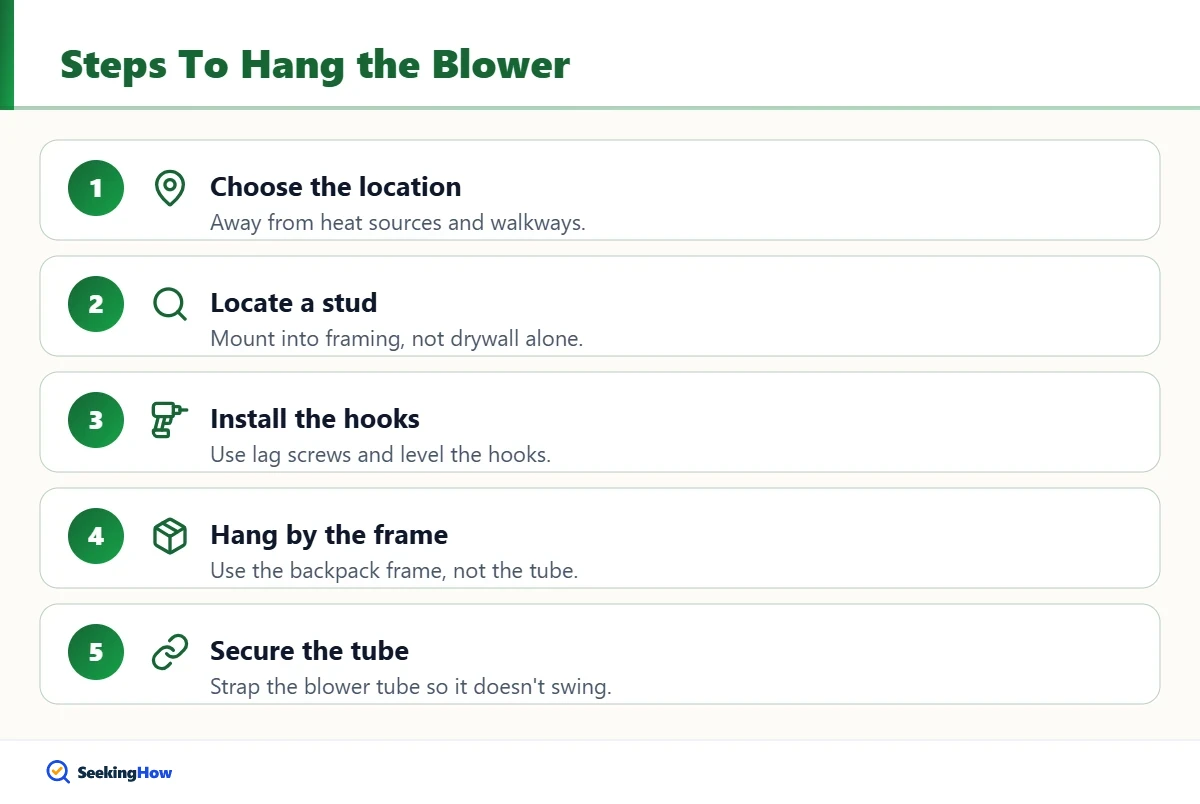
Step 2: Choose a Safe Location
Pick a wall spot clear of car doors, walkways and the garage door track. Keep gas equipment away from water heaters, furnaces and other ignition sources, since fuel vapor can collect near the floor. Allow enough space for the blower tube to hang without hitting other tools.
Step 3: Locate a Wall Stud
Run a stud finder along the wall and mark the center of a stud. Studs are usually 16 inches apart on center. In a garage with exposed framing, you can mount directly to the stud or a horizontal blocking board.
Step 4: Mark the Height
Set the hook so the bottom of the blower clears the floor by several inches and the frame sits at a height you can lift comfortably, often around 4 to 5 feet. Lifting a 20-plus pound unit overhead is awkward, so avoid mounting it too high.
Step 5: Drill Pilot Holes and Install the Hook
Drill pilot holes into the stud and drive the screws or lag bolts supplied with the hook until it is tight against the wall. For track systems, screw the rail into every stud it crosses, check it with a level, then clip the hook into the rail.
Step 6: Hang the Blower and Secure the Tube
Lift the blower by its frame and set the frame or handle on the hook. Let the tube hang straight down or clip it to the frame with its holder, and add a bungee strap if the unit can swing. Store spare nozzles and tubes in a bin nearby.
Step 7: Test the Load
Press down firmly on the hanging blower to check the hook does not flex or pull out. If it moves, re-drive the screws into solid wood or switch to a stronger hook.
Tip: Hanging a backpack blower by its shoulder straps can stretch them and lets the unit spin. Use the frame. Some manufacturers and aftermarket brands sell dedicated blower brackets that cradle the engine frame.
How Do You Hang a Blower on Drywall or Concrete?
Drywall without a stud: drywall anchors are not meant for repeated loading with heavy, swinging equipment. Install a horizontal plywood or 1×4 cleat screwed into two or more studs, then mount the hook to the cleat.
Concrete or block walls: use concrete screws or sleeve anchors sized for the hook, drilled with a masonry bit. A track system screwed into block with masonry anchors works well for heavier collections.
How Should You Prepare a Gas Blower for Storage?
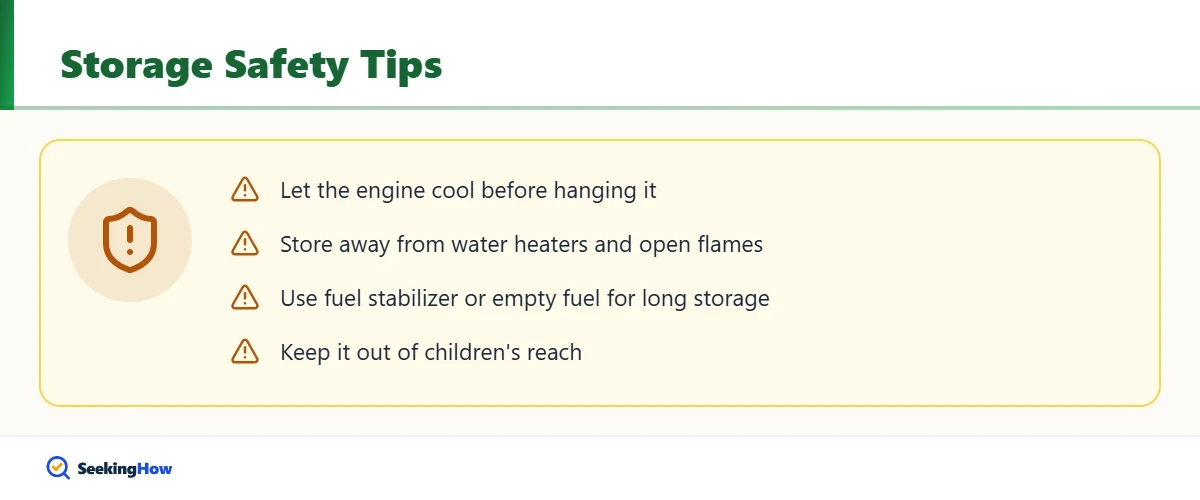
For storage over a month or more, follow your owner’s manual. Common guidance is to add fuel stabilizer and run the engine to circulate it, or to drain the tank and run the engine until it stops. Let the engine cool completely before hanging it, clean debris from the air intake and check the air filter.
Safety: Never hang a hot engine or store fuel containers near water heaters, furnaces, dryers or other flames. Keep the blower out of reach of children, and make sure the hook cannot let the unit fall onto a vehicle.
Common Mistakes When Hanging Leaf Blowers
- Screwing hooks into drywall only.
- Using thin pegboard hooks for a heavy blower.
- Hanging the unit by the blower tube or straps.
- Mounting it too high to lift safely.
- Storing it hot or with stale fuel all winter.
- Placing it where a car door or trunk can hit it.
If you are organizing the whole garage, our guide on cutting RaceDeck floor tiles covers flooring, and lawn mower performance tips cover your other big yard machine.
Frequently Asked Questions
How much does a backpack blower weigh?
It varies by model, but many gas backpack blowers weigh roughly 20 to 25 pounds without fuel, and larger commercial units can weigh more. Battery models are often similar once the battery is installed. Check your owner manual and choose a hook rated well above that weight.
Can I hang a leaf blower on pegboard?
Pegboard works for light handheld blowers with heavy-duty locking hooks, but standard pegboard hooks are not designed for a 20-pound backpack unit. For backpack blowers, use a stud-mounted utility hook, a wall track system or slatwall rated for heavy tools.
Should I store a backpack blower with gas in it?
For short breaks between uses, many owners leave fuel in the tank. For storage over about a month, follow the owner manual, which usually recommends adding fuel stabilizer and running the engine or draining the tank and running it dry to prevent gummed carburetors.
How high should I hang a backpack blower?
Mount it so the frame sits at a height you can lift comfortably, often around 4 to 5 feet, with the bottom of the unit several inches off the floor. Avoid overhead positions for a heavy unit you use every week.
Can you hang a leaf blower from the garage ceiling?
Yes, for off-season storage. Use a ceiling hook or hoist screwed into a ceiling joist, not drywall, and make sure the blower hangs clear of the garage door, opener and vehicles. For weekly use, a wall hook is more convenient and safer to lift.