Quick Answer
To get gas smell out of car carpet, open the doors, blot up all liquid gasoline, cover the spot with baking soda or clay cat litter for several hours, then scrub with warm water and grease-cutting dish soap, rinse with a 1:1 white vinegar solution and dry completely. Expect 4-24 hours total. Keep all flames, sparks and heat away.
Key Takeaways
- Gasoline smell lingers because the fuel soaks through the carpet into the padding underneath.
- Absorb first, wash second: baking soda or cat litter pulls out fuel that soap alone cannot reach.
- Grease-cutting dish soap breaks down gasoline residue; vinegar and baking soda handle the leftover odor.
- Never vacuum liquid gasoline with a shop vac or household vacuum; motor sparks can ignite vapors.
- Drying fully with airflow is what finally clears the smell; damp padding keeps releasing odor.
- A smell that returns while driving points to a fuel leak, not a dirty carpet.
A tipped gas can or fuel-soaked shoes can leave a car smelling like a gas station for days. This guide covers how to get gas smell out of car carpet safely, in the order that actually works, plus what to do when the odor keeps coming back.
What You’ll Need
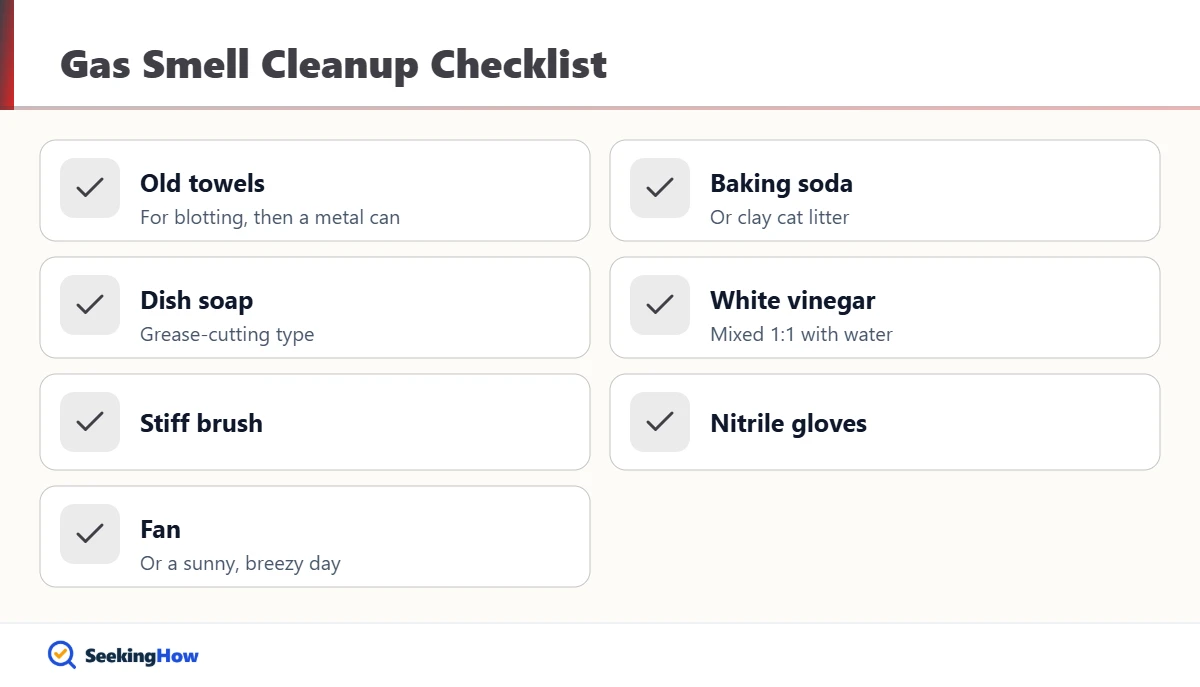
- Old towels or paper towels for blotting
- Baking soda (1-2 lb box) or clay cat litter
- Grease-cutting liquid dish soap
- Distilled white vinegar
- Bucket of warm water and a spray bottle
- Stiff-bristle scrub brush
- Nitrile gloves
- Metal can with a lid for used rags
- Wet/dry vac (only after liquid gas is removed and the area is washed)
- Fan, activated charcoal bags or fresh coffee grounds (optional)
How To Get Gas Smell Out of Car Carpet: Step-by-Step
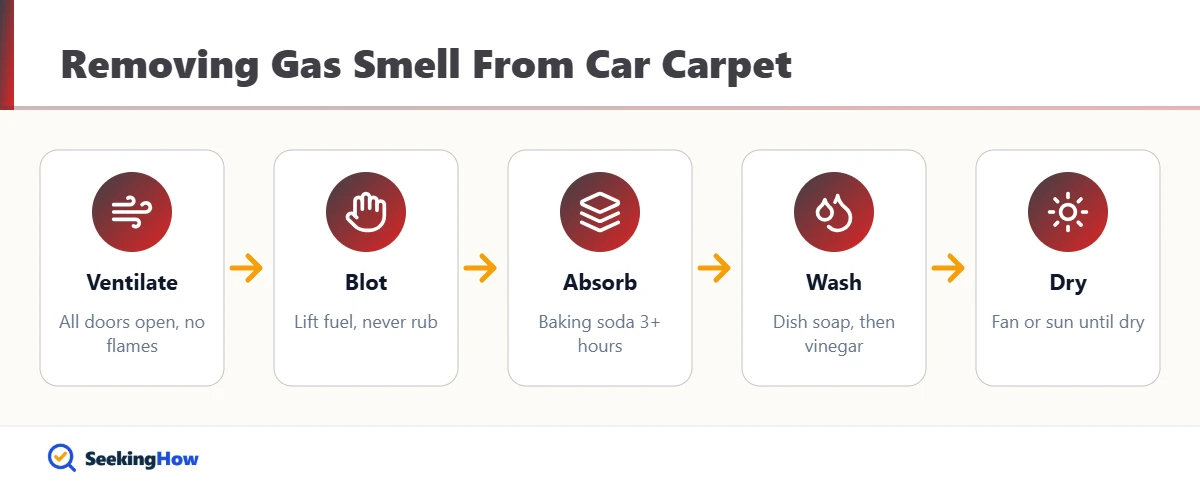
Step 1: Ventilate and Remove Ignition Sources
Park outside, turn off the engine, open every door and do not smoke or use lighters nearby. Gasoline vapor is heavier than air and collects low in the footwell. Most people start scrubbing with the doors closed and end up with a headache.
If the spill happened while dealing with contaminated fuel, our guide on getting water out of a gas tank covers that job safely.
Step 2: Blot Up the Liquid Gasoline
Press dry towels firmly onto the spill and lift straight up, swapping to dry towels until no more fuel transfers. Blotting pulls fuel up; rubbing pushes it deeper into the padding. Put used rags in a lidded metal can outdoors or spread them flat outside to evaporate, never in a pile in the trunk.
Step 3: Absorb With Baking Soda or Cat Litter
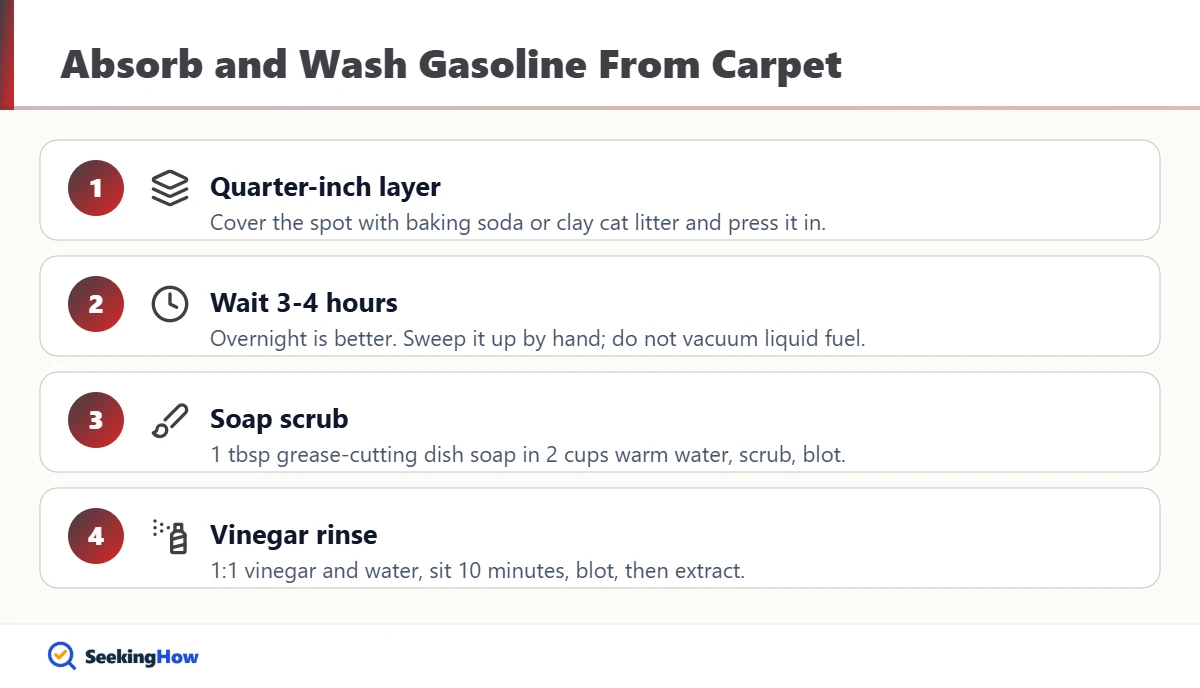
Pour a thick layer (about a quarter inch) of baking soda or clay cat litter over the area, press it in, and leave it for at least 3-4 hours, ideally overnight with the windows cracked. Sweep or brush it up by hand into a bag. For a large spill, repeat this step once before washing.
Step 4: Scrub With Dish Soap and Warm Water
Mix 1 tablespoon of grease-cutting dish soap into 2 cups of warm water. Work it into the carpet with a stiff brush, then blot with clean towels. Dish soap emulsifies the oily fuel residue that causes the lingering smell.
Step 5: Rinse With Vinegar Solution
Spray a 1:1 mix of white vinegar and water over the area, let it sit 10 minutes and blot. This rinses out soap and neutralizes remaining odor; see more vinegar uses around the home. Now that the fuel is washed out, you can extract the moisture with a wet/dry vac.
Step 6: Dry Completely
Leave the doors or windows open in the sun or run a fan into the footwell for several hours, and lift removable floor mats to dry separately. Press a dry towel on the carpet; if it comes up damp, keep drying. Damp padding is the main reason the smell returns the next morning.
Step 7: Deodorize Leftover Odor
Sprinkle baking soda again, leave overnight and vacuum it up once the area is dry. Place activated charcoal bags or an open container of fresh coffee grounds in the car for a few days. In practice, a faint smell for a day or two after cleaning is normal and fades with airing.
Bottom line: Absorb, then wash, then dry; skipping the absorb or dry step is why most gas smells come back.
| Product | What it does | When to use |
|---|---|---|
| Baking soda / cat litter | Absorbs liquid fuel and odor | First, right after blotting |
| Dish soap | Breaks down oily residue | After absorbing |
| White vinegar | Rinses soap and neutralizes odor | After scrubbing |
| Enzyme cleaner | Breaks down organic stains | Not effective on gasoline |
| Activated charcoal / coffee | Absorbs airborne odor | Final days after cleaning |
If That Didn’t Work
Problem: The smell comes back after a day. Cause: Fuel in the padding under the carpet. Fix: Repeat the absorb and wash steps, or have a detailer pull up and clean or replace that section of padding.
Problem: The smell is strongest with the engine running. Cause: A fuel leak, loose gas cap or evaporative system problem. Fix: Check the gas cap clicks tight and have the car inspected promptly.
Problem: A stain remains. Cause: Dye or oil residue in the fibers. Fix: Repeat the dish soap scrub or use an automotive carpet cleaner, testing it on a hidden spot first.
Problem: The rubber floor mat still smells. Cause: Fuel soaked into the mat’s surface. Fix: Wash it outside with dish soap and hot water, then let it dry in the sun.
Safety and When To Call a Pro
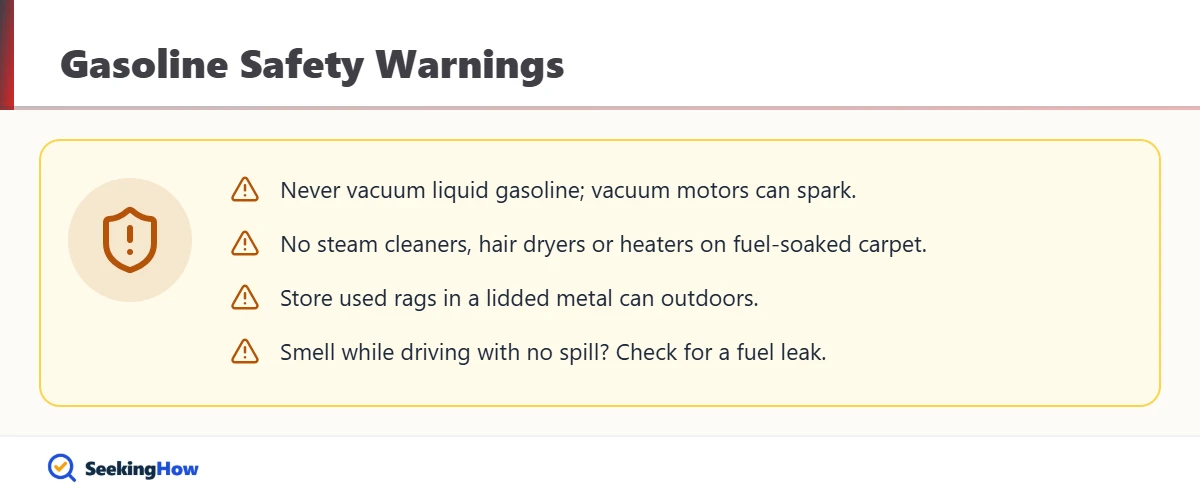
Gasoline is flammable and its vapors are harmful to breathe. Do not use a steam cleaner, heat gun or hair dryer on fuel-soaked carpet, do not run the heater until the area is clean, and never vacuum liquid gasoline. Leave the car and get fresh air if you feel dizzy, nauseous or get a headache. Call a professional detailer if more than a cup or so soaked into the carpet, if the padding stays wet, or if the odor is present without any spill, which can signal a leak that needs a mechanic.
Prevention Tips
- Carry gas cans in the trunk upright, in a tub or on a rubber mat, and secure them so they cannot tip.
- Use an approved, tightly closed fuel container, never an open or makeshift one.
- Keep a spare towel and a small box of baking soda in the trunk for quick cleanup.
- Wipe shoes after filling equipment at the pump before getting in.
Related Guides
- Practical vinegar uses around the home
- How to clean dog poop out of carpet
- How to get water out of a gas tank
- How to fix a tear in a car seat without sewing
Sources
- Centers for Disease Control and Prevention (CDC) / ATSDR – Gasoline health effects information
- Occupational Safety and Health Administration (OSHA) – Flammable liquids safety
- Your vehicle owner’s manual – interior care and fuel system sections
Frequently Asked Questions
How long does gas smell last in a car?
Gas smell in a car can last days to weeks if the fuel soaked into the padding and was not cleaned. After proper blotting, absorbing, washing and drying, most of the odor is gone within 24-48 hours. A faint smell may linger a little longer in hot weather as remaining traces evaporate.
Does baking soda remove gas smell?
Yes, baking soda helps remove gas smell by absorbing liquid fuel and odor molecules. It works best as the first step after blotting, left on for several hours, and again as a final deodorizer. It does not break down oily residue, so follow it with a dish soap scrub.
Is it safe to drive with gas smell in the car?
It is not ideal to drive with a strong gas smell. Breathing gasoline vapor can cause headaches, dizziness and nausea, and vapors are flammable. Drive with windows open only if necessary after cleaning. If the smell appears without a spill, have the fuel system checked before driving much.
Can I use an enzyme cleaner on gasoline?
Enzyme cleaners are not very effective on gasoline because they target organic material such as urine, food and vomit. Gasoline is a petroleum product, so grease-cutting dish soap does a better job of breaking down the residue. Use an enzyme cleaner only if there is another organic stain in the same area.
Will coffee grounds get rid of gas smell in a car?
Fresh, dry coffee grounds can help absorb leftover gas odor in the air after cleaning. Place them in an open container on the floor for a day or two. They mask and absorb lingering smell but will not remove fuel from the carpet, so clean the spill first.
Should I shampoo car carpet after a gas spill?
You can shampoo car carpet after a gas spill, but only after blotting and absorbing the liquid fuel. Use a cool-water carpet extractor or wet/dry vac rather than a heated steam cleaner. Running an extractor over liquid gasoline is a fire risk and spreads fuel deeper.