Quick Answer
To fix a tear in a car seat without sewing, slide a canvas sub-patch under the tear, glue the edges down to it with flexible fabric or leather/vinyl adhesive, then fill and color the seam. A repair kit does the job in about 1 hour plus overnight curing. Never use super glue, which cracks and leaves hard edges.
Key Takeaways
- A backing sub-patch under the tear carries the load; glue alone on the edges will split again.
- Use flexible adhesive made for upholstery, leather or vinyl, never super glue or hot glue.
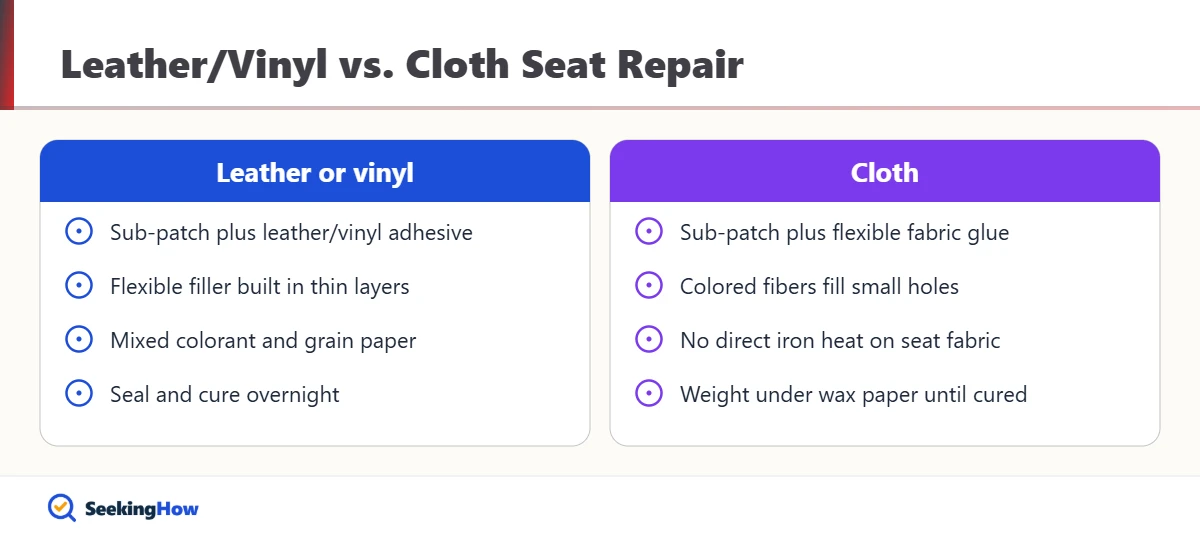
- Leather and vinyl tears get filler and colorant; cloth tears get fabric glue and matching fibers.
- Tears longer than about 3 inches, or on seat bolsters, usually need a professional repair.
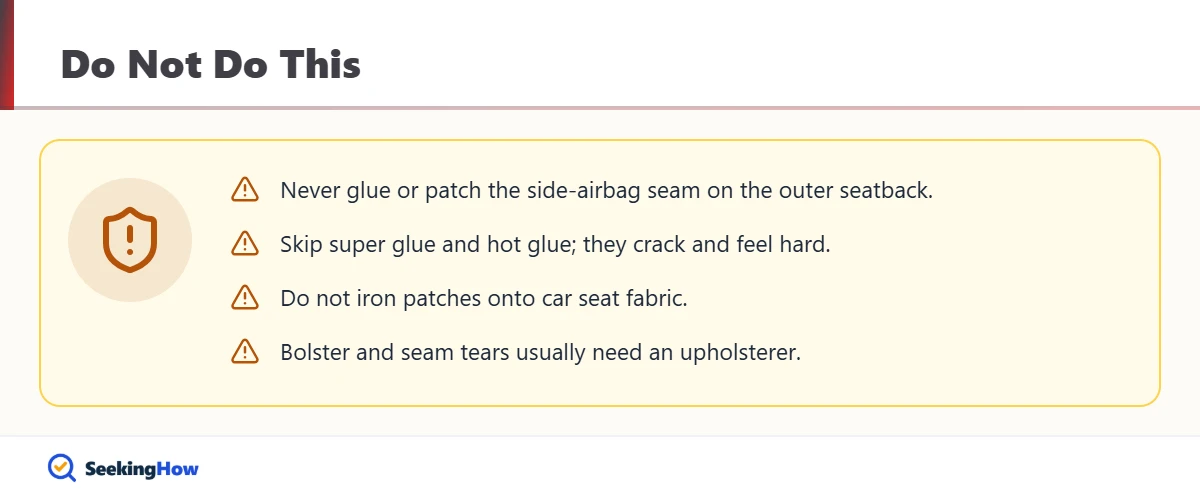
- Do not apply heat or glue near side-airbag seams on the outer edge of front seatbacks.
Most car seat tears start small, at a seam, a bolster or where keys rub, and grow every time you slide in. Knowing how to fix a tear in a car seat without sewing lets you stop the damage in an afternoon with a kit and no needle. The right method depends on whether the seat is leather, vinyl or cloth.
What You’ll Need
- Leather and vinyl repair kit (sub-patch fabric, adhesive, filler, colorants, grain paper) for leather or vinyl seats
- Flexible fabric glue or upholstery adhesive and a fabric repair kit with colored fibers for cloth seats
- Thin canvas or denim scrap, about 1 inch larger than the tear on every side (if not in the kit)
- Small curved scissors and tweezers
- Palette knife or old plastic card
- Isopropyl alcohol and lint-free cloths
- Wax paper and a heavy book or clamp
- Hair dryer on low (optional)
How To Fix a Tear in a Car Seat Without Sewing: Step-by-Step
These steps cover leather and vinyl seats, the most common no-sew repair. Cloth seats follow the same idea with a different finish, covered in the next section.
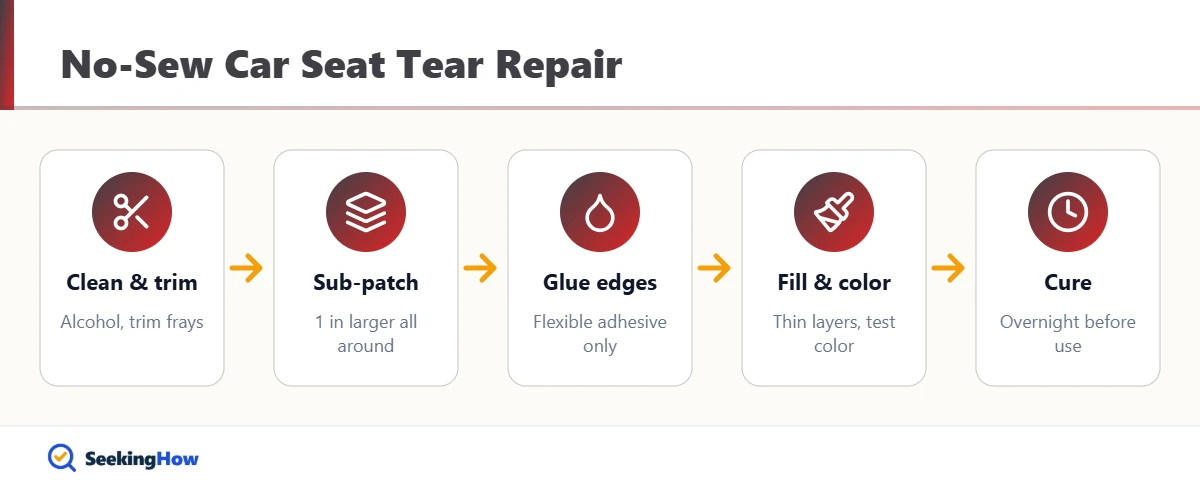
Step 1: Clean and Trim the Tear
Wipe 2 inches around the tear with isopropyl alcohol and let it dry. Trim frayed threads and curled, hardened edges with small scissors so the edges meet flat. Most people skip cleaning, and the adhesive fails because of body oils and protectant sprays.
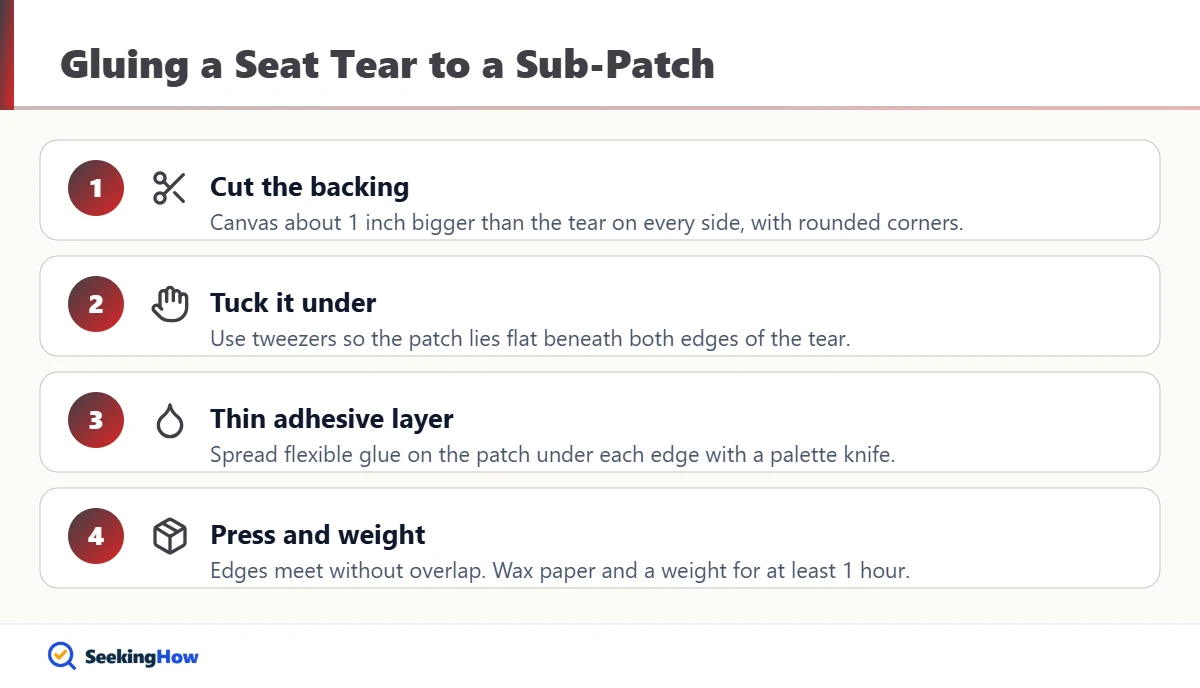
Step 2: Insert a Sub-Patch
Cut canvas about 1 inch larger than the tear on all sides, round the corners, and tuck it under the tear with tweezers so it lies flat beneath both edges. This backing does the work stitches would do. Without it, the edges pull apart the first time someone sits down.
Step 3: Glue the Edges to the Patch
Use a palette knife to spread a thin layer of flexible adhesive on top of the patch, under each edge. Press the edges down so they meet without overlapping, cover with wax paper and weight it for at least 1 hour. Too much glue squeezes out and leaves a hard, shiny ridge.
Step 4: Fill the Seam
Spread thin layers of flexible filler into the gap, letting each layer dry (a hair dryer on low speeds this up to a few minutes). Build until the seam sits level with the surface, then press the kit’s grain paper on the last layer if it has one. Thin layers stay flexible; one thick layer cracks.
Step 5: Match and Apply Color
Mix the kit’s colorants on a scrap and test on a hidden spot like the seat’s lower back, letting it dry fully because colors darken as they dry. Dab on thin coats, feathering past the repair by about half an inch. In practice, matching slightly darker hides a repair better than slightly lighter.
Step 6: Seal and Cure
If the surrounding leather is dry and crazed rather than torn, see our guide to fixing cracked leather seats. Apply the kit’s sealer or top coat if included, then let the repair cure overnight before anyone sits on it. Avoid cleaners and conditioners on the area for about a week.
How To Fix a Tear in a Cloth Car Seat Without Sewing
Insert a canvas sub-patch the same way, then glue the fabric edges down with flexible fabric glue and weight under wax paper for the time on the label. For small holes or burns, fill with a fabric repair kit: mix colored fibers to match, press them into adhesive over the backing, and smooth with the kit’s tool. Skip iron-on patches inside the car; car seat fabrics often melt or glaze with direct iron heat.
Quick Cover-Up: Self-Adhesive Repair Patches
Peel-and-stick leather or vinyl patches cover a tear in 5 minutes. They work as a temporary fix on low-wear areas but tend to lift on seat cushions and bolsters within months. Round the corners and warm the patch slightly to improve adhesion.
| Method | Time | Durability | Best for |
|---|---|---|---|
| Sub-patch + adhesive + filler + color | 1 hr + overnight | Good | Leather and vinyl tears under 3 in |
| Sub-patch + fabric glue + fibers | 45 min + cure | Good | Cloth tears, small burns |
| Self-adhesive patch | 5 min | Low-moderate | Temporary or low-wear areas |
| Professional upholstery repair | Same day to 2 days | Best | Bolsters, seams, long tears |
Bottom line: Use a sub-patch kit for any leather, vinyl or cloth tear under about 3 inches, and send bolster or seam tears to an upholsterer.
If That Didn’t Work
Problem: The tear reopened. Cause: No sub-patch or patch too small. Fix: Lift the edges, insert a patch at least 1 inch larger all around, and re-glue.
Problem: The repair feels hard or cracks. Cause: Super glue or thick filler layers. Fix: Cut out the hardened material and redo with flexible adhesive and thin layers.
Problem: The color is off. Cause: Matched while wet or under indoor light. Fix: Remix and test in daylight after it dries.
Problem: The repair is shiny. Cause: Gloss sealer or too much adhesive. Fix: Lightly scuff with a fine pad and apply a matte top coat.
Safety and When To Call a Pro
Many front seats have side airbags that deploy through a seam on the outer side of the seatback, often marked with an airbag tag. Do not glue, patch or cover that seam; take those tears to a professional. Also call an upholsterer for split seams along piping, tears on heavily worn side bolsters, foam that is crumbling or exposed, and heated seats where you can see wiring. Ventilate the car while using adhesives, and if glue gets on your fingers, here is how to remove super glue from skin.
Prevention Tips
- Keep keys, tools and studded jeans pockets off the seat bolsters.
- Clean and condition leather every 2-3 months to keep it supple.
- Use a sunshade or tinted windows to cut UV damage.
- Fix small nicks right away before they grow into tears.
Related Guides
- How to fix cracked leather seats
- How to fix a peeling leather steering wheel
- How to remove super glue from skin
- How to disinfect a fabric couch
Sources
- National Highway Traffic Safety Administration (NHTSA) – Air bags, including side air bags
- Your vehicle owner’s manual – seat airbag locations and upholstery care
- Leather, vinyl and fabric repair kit manufacturer instructions – adhesive and cure times
Frequently Asked Questions
Can you fix a car seat tear with glue only?
You can, but glue alone usually fails because the edges have nothing to hold onto under stress. A canvas sub-patch tucked beneath the tear gives the adhesive a strong base. With a patch, a glued repair can last years; without one, it often reopens within weeks on a seat cushion.
What is the best glue for car seat tears?
The best glue for car seat tears is a flexible adhesive made for leather, vinyl or upholstery fabric, such as the one included in repair kits. It stays soft after curing. Avoid super glue, hot glue and construction adhesives, which harden, crack and can discolor the material.
Do self-adhesive leather patches work on car seats?
Self-adhesive leather patches work as a quick, temporary fix, especially on seatbacks or areas that do not get much friction. On seat cushions and side bolsters they often lift at the corners within a few months. Rounded corners and a clean, alcohol-wiped surface help them last longer.
How do you fix a hole in a cloth car seat?
Fix a hole in a cloth car seat by inserting a backing patch, adding a thin layer of fabric adhesive, and pressing in color-matched fibers from a fabric repair kit. Smooth the fibers and let them cure. This works well for cigarette burns and small holes up to about half an inch.
How long does a no-sew car seat repair last?
A well-done no-sew repair with a sub-patch and flexible adhesive can last several years on low-stress areas. Repairs on the driver seat bolster wear out fastest because of sliding in and out. Conditioning leather and avoiding sharp objects in pockets extends repair life.
Can I repair a tear near a seat airbag?
No, do not repair a tear on or next to a side airbag seam yourself. Glue, patches or covers there can interfere with deployment. Seats with side airbags usually have a tag on the outer edge. Have an upholstery shop or dealer repair that area with the correct thread.
How much does a professional car seat tear repair cost?
Professional car seat tear repair cost varies widely by region, material and tear size. A small mobile repair typically costs far less than replacing a seat cover panel, which may require removing the seat. Get a quote with photos; most upholsterers can estimate small tears that way.