Quick Answer
To fix a peeling leather steering wheel, clean it with isopropyl alcohol, wet-sand the loose finish smooth with 600-1000 grit paper, fill rough spots with flexible leather filler, then sponge on thin coats of color-matched leather colorant and a matte top coat. Plan on 2-3 hours plus a 24-hour cure, and keep products away from the airbag cover.
Key Takeaways
- Most peeling steering wheels are losing their factory color coat, not the leather itself, so refinishing usually works.
- Never glue peeling flakes back down; sand them flush so new color has a smooth, bonded base.
- Thin coats of water-based leather colorant flex with the grip and wear far better than one heavy coat.
- Use a matte or satin top coat; gloss finishes look cheap and get slippery with sweaty hands.
- Do not remove or soak the airbag module; mask the horn pad and its seams before you start.
- If the hide underneath is cracked through or split, a rewrap kit or professional re-trim is the lasting fix.
Peeling usually starts at 9 and 3 o’clock, where hands, sunscreen, lotion and heat break down the thin pigmented coating on top of the leather. This guide shows how to fix a peeling leather steering wheel with a refinishing kit, when a cover or rewrap makes more sense, and the mistakes that make a repair peel again within weeks.
What You’ll Need
- Isopropyl alcohol (70% or 90%) or a dedicated leather prep/degreaser
- Wet/dry sandpaper: 600, 800 and 1000 grit
- Lint-free microfiber cloths
- Painter’s tape (1 inch) to mask the airbag cover, trim and stitching
- Flexible leather filler (heavy-duty filler only if there are gouges)
- Water-based leather colorant matched to your interior (many suppliers match by vehicle paint/trim code or a photo)
- Leather top coat or sealer in matte or satin
- Small foam sponges or a fine artist’s brush
- Hair dryer on low (optional, speeds drying)
- Nitrile gloves
How To Fix a Peeling Leather Steering Wheel: Step-by-Step
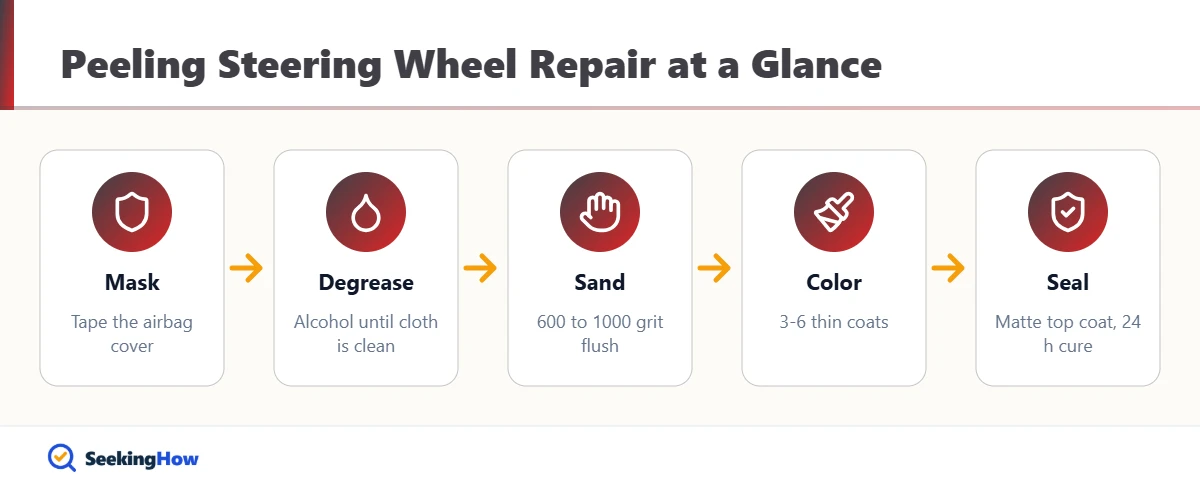
Step 1: Mask the Airbag Cover and Trim
Tape off the center horn pad, its seam line, spoke trim, buttons and any stitching you want to keep its original color. The airbag cover is designed to split open along hidden tear lines, so solvents and colorant should never run into those seams. Most people skip this and end up with dye on the logo and buttons.
Step 2: Deep-Clean and Degrease
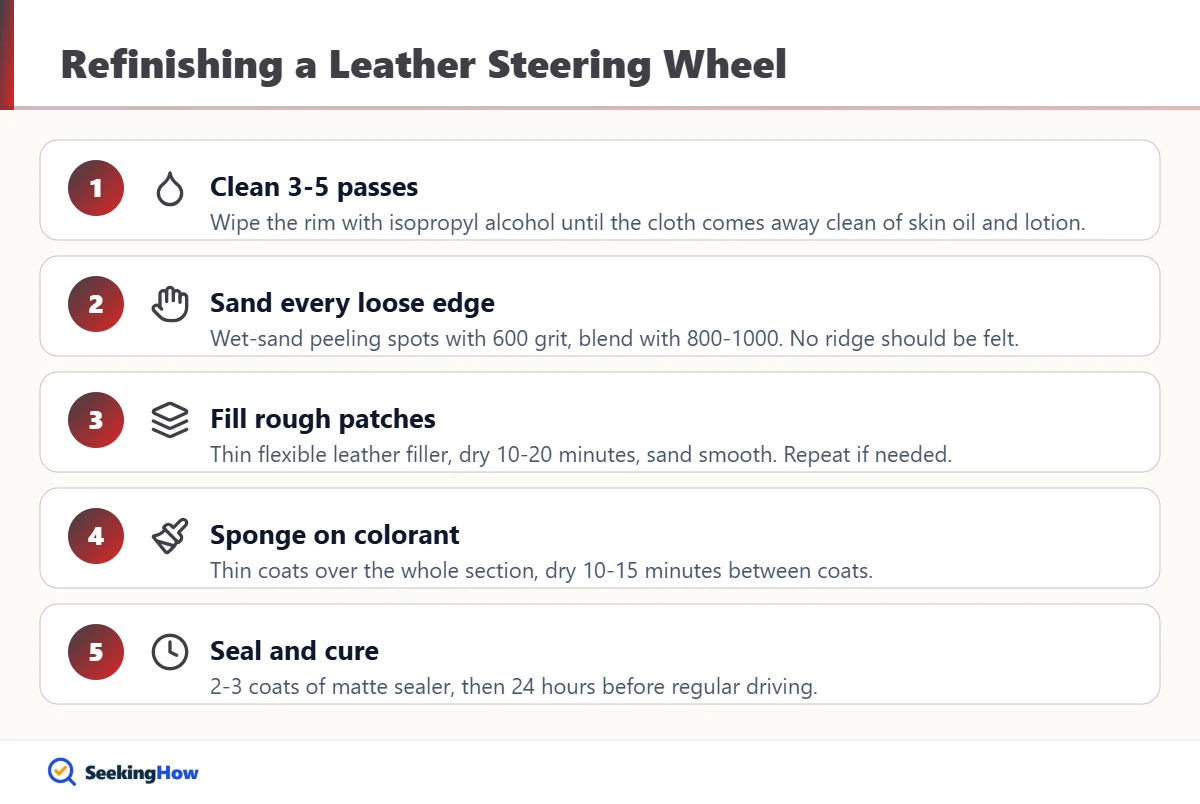
Wipe the whole rim with isopropyl alcohol on a cloth until the cloth comes away clean, usually 3-5 passes. Years of skin oil and hand cream sit in the grain, and colorant will not bond over them. Let the rim dry for 10 minutes.
Step 3: Sand the Peeling Edges Flush
Lightly wet-sand the flaking areas with 600 grit until every loose edge is gone and you can’t feel a ridge with your fingertip, then blend with 800-1000 grit. Sand only the coating, not into the hide; stop when the edge feels smooth. The most common mistake is leaving small loose flakes, which lift again and take the new color with them.
Step 4: Fill Low Spots and Scuffs
Spread a very thin layer of flexible leather filler into any rough or worn patches with a fingertip or palette knife, let it dry (about 10-20 minutes, or faster with a hair dryer on low), then sand smooth with 1000 grit. Repeat until the surface feels uniform. Skip this step if the leather is only discolored, not rough.
Step 5: Apply Thin Coats of Colorant
Dab colorant on with a slightly damp foam sponge, working the whole section rather than just the bad spots so it blends. Let each coat dry to the touch (roughly 10-15 minutes) and apply 3-6 thin coats until coverage is even. In practice, the rim looks blotchy after the first two coats; that is normal and evens out.
Step 6: Seal With a Matte Top Coat
Apply 2-3 thin coats of sealer the same way, drying between coats. The top coat is what takes the abrasion from your hands; colorant alone wears through quickly. Choose matte or satin to match factory leather and keep grip.
Step 7: Let It Cure Before Driving
Remove the tape and let the wheel cure for at least 24 hours before regular driving; follow the kit’s cure time if it is longer. If you must drive sooner, wear clean cotton gloves. Avoid leather conditioners on the new finish for about a week. If tape leaves gummy marks on the spoke trim, follow our guide to removing adhesive from plastic.
The same clean, sand, color and seal method also works on seats, covered in our guide to fixing cracked leather seats.
Bottom line: If the leather under the peeling finish is smooth and intact, refinish it; if the hide is torn, cracked through or spongy, rewrap or replace instead.
Other Ways To Fix a Peeling Steering Wheel
Steering Wheel Cover
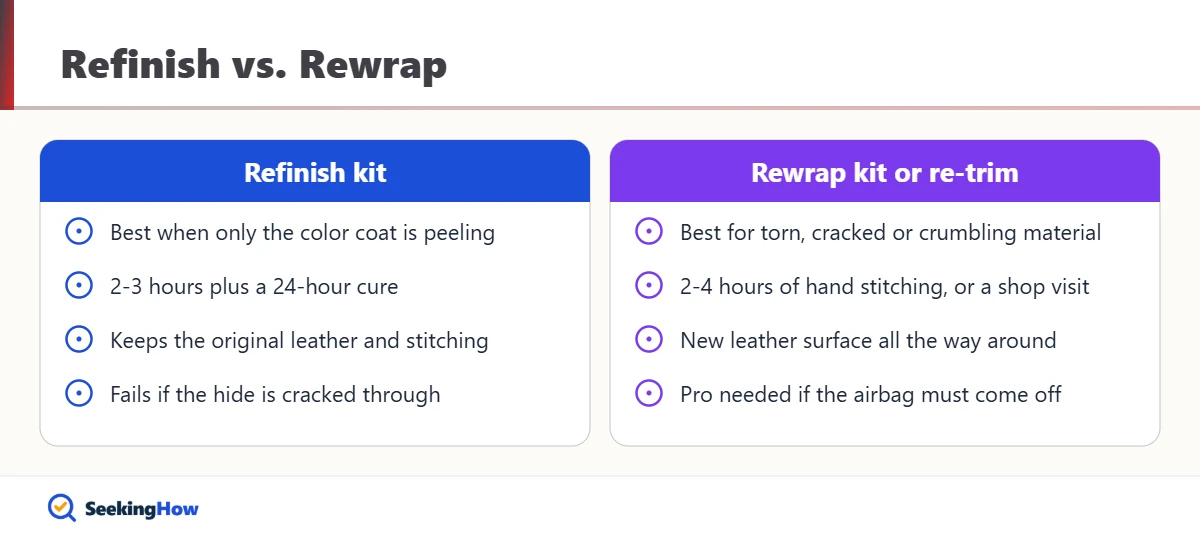
A snug, correctly sized cover hides peeling in 5 minutes and protects the rim, but it adds thickness and can shift if it’s loose. Measure the rim diameter (most cars are 14.5-15 inches) before buying, and avoid slippery or fuzzy covers.
Stitch-On Rewrap Kit
Precut leather wraps lace over the old rim with a needle and thread and give a near-factory look. Expect 2-4 hours of hand stitching. Rewrap kits work best on wheels with peeling that has spread around most of the rim.
Professional Re-Trim or Replacement
An auto upholstery shop can rewrap the rim in new hide, or a dealer can replace the wheel. This is the right call for heated wheels with exposed wiring, wheels with deep splits, or anything that requires removing the airbag.
| Method | Time | Difficulty | Best for |
|---|---|---|---|
| Refinish kit (sand, color, seal) | 2-3 hrs + 24 hr cure | Moderate | Peeling color coat on intact leather |
| Steering wheel cover | 5 min | Easy | Quick cover-up, leased or older cars |
| Stitch-on rewrap kit | 2-4 hrs | Moderate-hard | Widespread peeling or worn grain |
| Professional re-trim | 1-2 days at shop | None for you | Torn hide, heated wheels, airbag removal |
If That Didn’t Work
Problem: New color is peeling within weeks. Cause: Oils left in the grain or loose flakes not sanded away. Fix: Sand back to a stable edge, degrease more thoroughly, and recoat in thinner layers.
Problem: The wheel feels sticky or tacky. Cause: Coats applied too thick or not fully cured. Fix: Give it another 24-48 hours in a warm car; if still tacky, lightly sand and apply a fresh thin top coat.
Problem: The color doesn’t match. Cause: Colorant chosen by eye under garage light. Fix: Test on the back of the rim in daylight; order a match by interior trim code if needed.
Problem: The rim looks shiny and plastic. Cause: Gloss sealer. Fix: Apply a matte top coat over it.
Problem: The material underneath is crumbling. Cause: The wheel is bonded or synthetic leather breaking down. Fix: Refinishing won’t hold; use a rewrap kit or replace the wheel.
Safety and When To Call a Pro
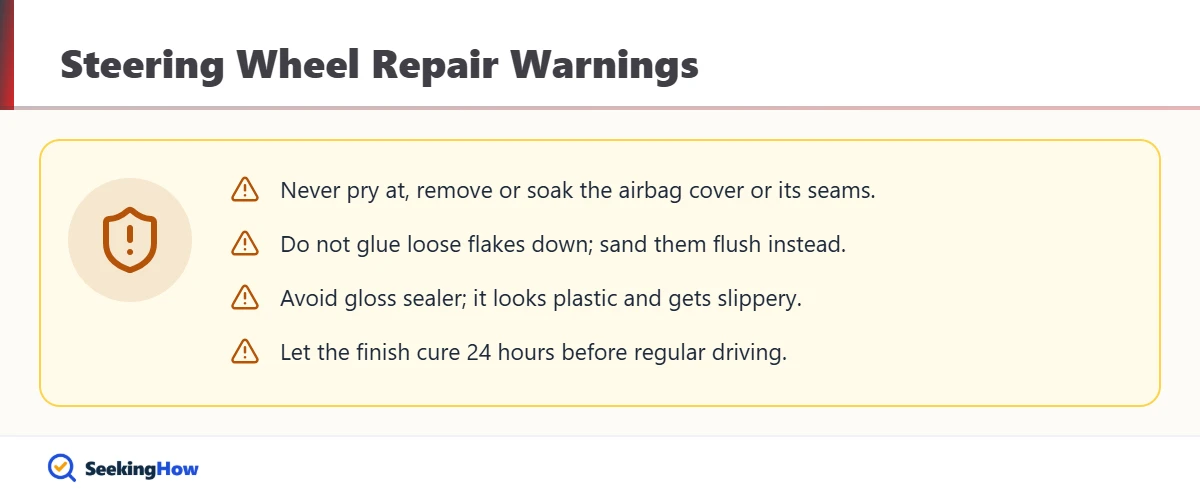
Never remove, pry at or soak the airbag module yourself; mishandled airbags can deploy with serious force. Call a pro if the job needs the airbag removed, if heated-wheel wiring or the heating element is exposed, if the rim has a split that catches your hand, or if the wheel has cracks in the hard core underneath. Work with doors open for ventilation, and make sure the finished rim is not slick before driving.
Prevention Tips
- Wash or wipe your hands before driving after applying sunscreen, lotion or hand sanitizer.
- Clean the rim monthly with a pH-neutral leather cleaner, then condition lightly.
- Use a windshield sunshade; heat and UV dry out the finish fastest.
- Avoid all-purpose cleaners and alcohol wipes for routine cleaning; save alcohol for repair prep.
Related Guides
- How to fix cracked leather seats
- How to remove sticky residue
- How to remove adhesive from plastic trim
- How to get water out of a gas tank
Sources
- National Highway Traffic Safety Administration (NHTSA) – Air bag safety information
- Your vehicle owner’s manual – steering wheel, airbag and interior care sections
- Leather colorant and repair kit manufacturer instructions – surface prep and cure times
Frequently Asked Questions
Why is my leather steering wheel peeling?
A leather steering wheel peels because the thin pigmented top coat wears away from hand friction, skin oils, sunscreen, hand sanitizer and heat. The leather underneath is often fine. Some wheels use bonded or synthetic leather, which can delaminate in layers; that material is harder to refinish and often needs a rewrap instead.
Can you glue a peeling steering wheel back down?
No, gluing peeling flakes back down rarely lasts and leaves hard, raised edges. The flakes are worn finish that has already lost its bond. Sanding the edges flush and applying fresh colorant and sealer creates a smooth, flexible surface. Super glue in particular cracks and feels rough under your hands.
How long does a refinished steering wheel last?
A properly prepped and sealed steering wheel refinish typically lasts a few years with daily driving. The biggest factors are degreasing well, thin coats and a durable top coat. Wiping the rim monthly and avoiding lotion on your hands before driving noticeably extends the life of the new finish.
Is a steering wheel cover a good fix for peeling?
Yes, a steering wheel cover is a good quick fix for peeling, especially on older or leased cars. Choose one sized to your rim diameter so it does not shift. Avoid thick or slippery covers, and remember the peeling continues underneath, so flakes may build up inside the cover over time.
Can I fix a peeling heated steering wheel?
Yes, you can refinish the surface of a heated steering wheel the same way, as long as the heating element is not exposed. Use thin coats and do not sand aggressively. If you see wires, a mesh layer or a split in the hide, stop and have an upholstery shop or dealer handle it.
What grit sandpaper should I use on a leather steering wheel?
Use 600 grit to remove loose peeling edges, then 800 to 1000 grit to blend and smooth. Wet-sanding with a lightly damp pad reduces dust and keeps you from cutting into the leather. Coarser grits like 220 or 320 leave scratches that show through colorant.
Will the new color rub off on my hands?
A properly cured and sealed finish should not rub off on your hands. Color transfer means the top coat was skipped, the coats were too thick, or the wheel was driven before curing. Let it cure 24 hours, and add another thin top coat if any color comes off on a white cloth.