Quick Answer
To dispose of motor oil for free, pour the cooled used oil into a clean, sealed plastic container and drop it off at an auto parts store that recycles oil, such as AutoZone or O’Reilly, or at a local household hazardous waste site. Drop-off takes about 10 minutes. Never mix oil with gasoline, antifreeze or water, because contaminated oil is often refused.
Key Takeaways
- As of 2026, AutoZone and O’Reilly Auto Parts accept used motor oil and oil filters for recycling free of charge at participating stores.
- Oil mixed with gasoline, antifreeze, water or solvents usually cannot be recycled and may be refused.
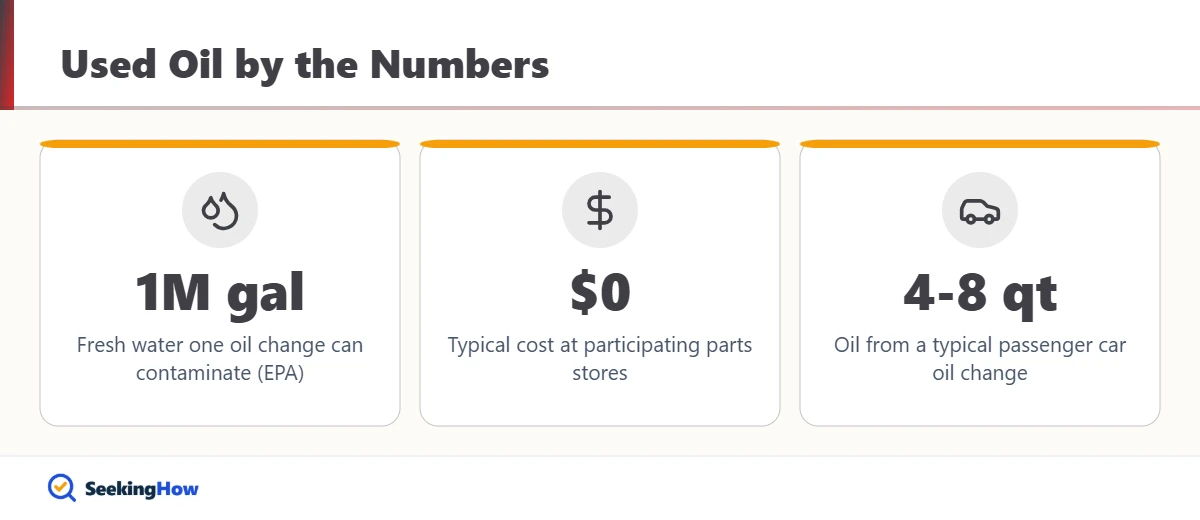
- The EPA says used oil from one oil change can contaminate one million gallons of fresh water.
- Drain oil filters fully before recycling them; most collection points take filters with the oil.
- Call ahead for large amounts; individual stores may limit quantities or have a full collection tank.
After a DIY oil change, you’re left with roughly 4-8 quarts of used oil and a dirty filter. Here’s how to dispose of motor oil for free, legally and without a mess, including what collection points will and won’t accept.
What You’ll Need
- Drain pan with a pour spout (or a sealed drain-and-carry container)
- Clean, leak-proof plastic container with a screw cap, ideally the original oil jugs
- Funnel
- Zip-top bag for the used oil filter
- Nitrile gloves and shop towels
- Marker to label the container “used motor oil”
- Cardboard or kitty litter for drips (optional)
How To Dispose of Motor Oil for Free: Step-by-Step
Step 1: Let the Oil Cool
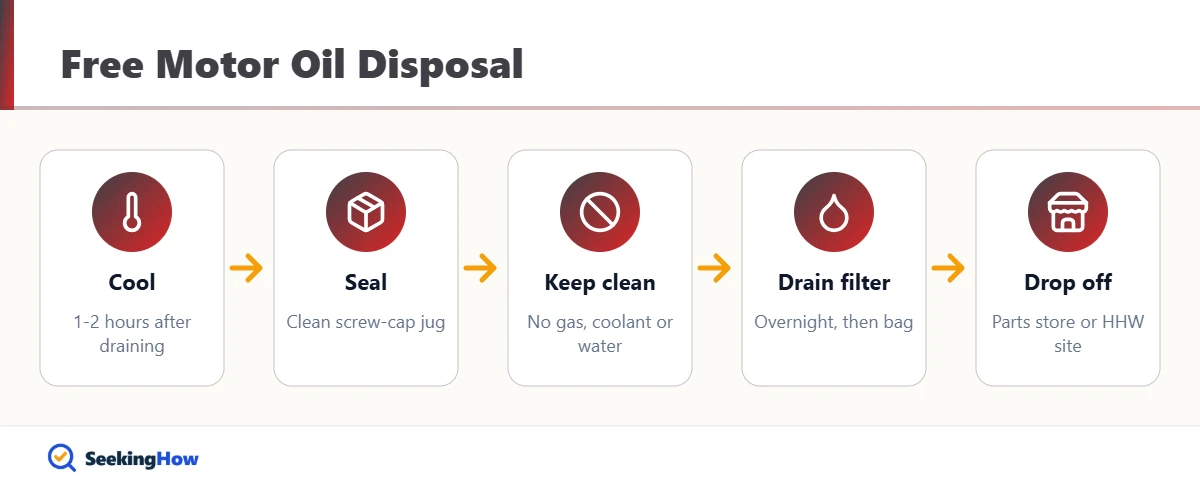
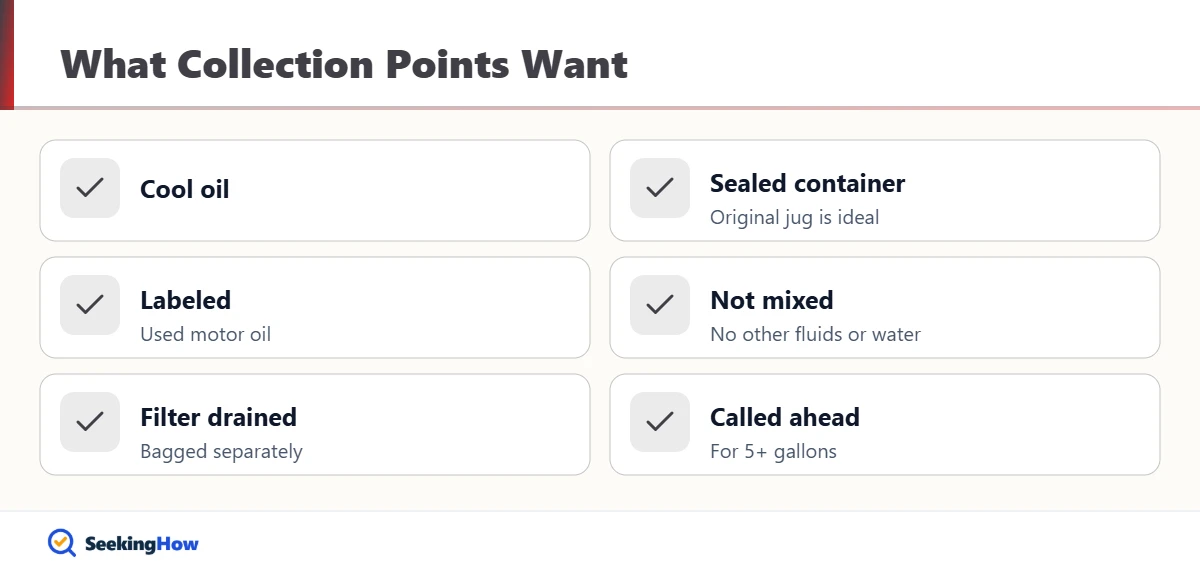
Wait until the drained oil is cool to the touch, usually 1-2 hours after draining. Hot oil can deform thin plastic jugs and burn your hands during the pour. Most spills happen when people rush this step.
Step 2: Transfer to a Clean, Sealed Container
Use a funnel to pour the oil into its original jugs or another clean plastic container with a tight screw cap. AutoZone advises against milk jugs and juice bottles, and any container that once held other fluids, because residue contaminates the oil. Label it “used motor oil.”
Step 3: Keep It Uncontaminated
Do not add gasoline, antifreeze, brake fluid, solvent, paint or water to the oil. Collection programs refuse mixed fluids because they cannot be re-refined the same way. In practice, the most common mistake is reusing an antifreeze or washer fluid jug.
Step 4: Drain and Bag the Oil Filter
Set the old filter open-end down over the drain pan for several hours, ideally overnight, to drain the trapped oil. Then seal it in a zip-top bag. Most stores that take oil also take filters, but drained filters are much easier to accept.
Step 5: Find a Free Drop-Off Location
Check your nearest auto parts store’s recycling service, call your city or county household hazardous waste program, or use the Earth911 or American Petroleum Institute recycling locators. Some quick-lube shops and municipal transfer stations also accept used oil. Call first if you have more than about 5 gallons or if it is late in the day, since store tanks can fill up.
Step 6: Drop It Off
Bring the sealed containers inside or to the service counter as directed; staff may ask for your name, the type of oil and the amount. O’Reilly, for example, accepts motor oil in drain pans, buckets or closed containers and returns your container. Do not leave oil outside a closed store; that is illegal dumping in most places.
Bottom line: Keep used oil clean and sealed, then take it to an auto parts store or hazardous waste site; it costs nothing when it isn’t contaminated.
| Drop-off option | Cost | Takes filters? | Notes |
|---|---|---|---|
| AutoZone (participating stores) | Free | Yes | Uncontaminated oil in a suitable plastic container |
| O’Reilly Auto Parts | Free | Yes | Also takes gear oil, transmission and power steering fluid |
| Household hazardous waste site | Usually free for residents | Usually | May take contaminated oil; check hours and residency rules |
| Quick-lube shops | Often free | Varies | Call first; policies differ by location |
| Curbside oil pickup | Free where offered | Varies | Only in some cities; special containers may be required |
If That Didn’t Work
Problem: The store refused your oil. Cause: It looked or smelled contaminated, or the tank was full. Fix: Take mixed fluids to a household hazardous waste site; for a full tank, try another store or call ahead.
Problem: Your oil has water in it. Cause: Rain got into the drain pan. Fix: Treat it as contaminated and bring it to a hazardous waste facility.
Problem: You have a large amount from multiple vehicles. Cause: Stores may limit quantities. Fix: Split trips or use a county facility or a used oil collection business.
Problem: The container leaked in your car. Cause: Loose cap or thin jug. Fix: Set containers in a plastic tub during transport and absorb spills with kitty litter right away.
Safety and When To Call a Pro
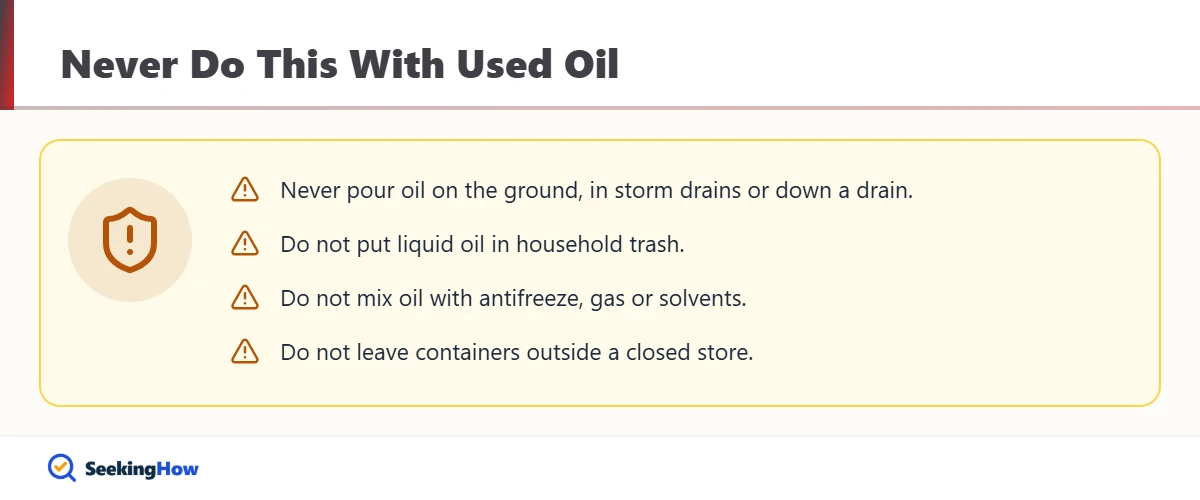
Never pour used oil on the ground, into storm drains, down a sink or toilet, or into the trash; it is illegal in most areas and pollutes water. Wear gloves, because used motor oil contains contaminants that should not stay on your skin. Contact your local hazardous waste agency for oil mixed with other chemicals, for spills larger than you can absorb, or for oil that reached a storm drain or waterway.
Prevention Tips
- Keep the empty jugs from your new oil to reuse for the old oil.
- Use a drain pan with a lid so rain cannot get in.
- Recycle at the same trip you buy your next oil change supplies.
- Store used oil away from children, pets and heat until drop-off.
Getting rid of other car waste works the same way: see our guides on how to dispose of used tires and on cleaning up after a fuel spill, how to get gas smell out of car carpet.
Related Guides
- How to dispose of used tires
- How to get water out of a lawn mower gas tank
- How to get gas smell out of car carpet
- How to remove drive-type grease fittings
Sources
- U.S. Environmental Protection Agency – Managing, reusing and recycling used oil
- AutoZone – Oil recycling: how to dispose of motor oil
- O’Reilly Auto Parts – Free oil, fluid and battery recycling
- U.S. Environmental Protection Agency – Household hazardous waste
Frequently Asked Questions
Does AutoZone take used oil for free?
Yes, as of 2026 AutoZone accepts used motor oil and oil filters for free recycling at participating stores. Bring uncontaminated oil in a suitable sealed plastic container, preferably the original jugs. Oil mixed with other fluids is not recyclable, so it may be refused. Calling your local store first is wise for large amounts.
Does O’Reilly take used motor oil?
Yes, O’Reilly Auto Parts accepts used motor oil for free, along with oil filters, gear oil, hydraulic oil, transmission fluid and power steering fluid, according to its recycling page. Staff may ask for your name and the amount, and leaking or contaminated containers may be refused. Your container is returned to you.
Can I throw motor oil in the trash?
No, you should not throw liquid motor oil in the trash, and many states and cities prohibit it. Oil can leak from garbage trucks and landfills into soil and water. Take it to a recycling collection point instead. Small amounts of oil-soaked rags or absorbent may have separate local rules.
What do I do with oil mixed with antifreeze?
Take oil mixed with antifreeze or other fluids to a household hazardous waste facility or collection event. Parts stores generally refuse mixed fluids because they contaminate the whole collection tank. Keep the mixture sealed and labeled with what is in it so the facility can handle it properly.
How much used oil can I drop off at once?
Most people can drop off the oil from a typical oil change, about 4-8 quarts, without any issue. Limits for larger amounts vary by store and area, and a store tank may be full. Call ahead if you have more than about 5 gallons, or use a county hazardous waste site.
Do I need to recycle the oil filter too?
Yes, you should recycle the oil filter, since it holds used oil and recyclable steel. Drain it upside down for several hours, then seal it in a plastic bag. AutoZone and O’Reilly accept drained filters with oil, and many household hazardous waste sites take them too.
Will a store pay me for used motor oil?
No, stores do not pay individuals for used motor oil; the service is free in both directions. Some businesses that generate large volumes contract with used oil collectors, but home quantities are simply recycled at no charge. Used car batteries are different and may earn a store gift card.