Quick Answer
To cut corrugated plastic sheeting, mark your line, clamp a metal straightedge on top, and draw a sharp utility knife along it in 2-3 light passes until you cut through both faces. Cuts parallel to the flutes go fastest; cuts across them need firmer pressure. For thick sheets (8-10 mm) or many cuts, use a table saw or circular saw with a fine-tooth blade.
Key Takeaways
- A fresh utility knife blade and a metal straightedge handle most 4 mm and 6 mm sheets.
- Cutting with the flutes (the internal channels) is much easier than cutting across them.
- Score only the top face to make a clean fold or a hinge.
- Use a fine-tooth saw blade for thick sheets, and support the sheet so it does not flutter.
- Always cut on a self-healing mat or scrap board and keep your free hand behind the blade.
Corrugated plastic, often sold under names like Coroplast, is twin-wall polypropylene: two thin flat faces joined by vertical ribs called flutes. It is light, waterproof and cheap, which is why it shows up in yard signs, plant markers, pet enclosures and craft projects. Cutting it is easy once you understand how the flutes affect the blade.
What Is the Best Tool for Cutting Corrugated Plastic?
The best tool depends on the sheet thickness, the cut direction and how many pieces you need. For most home projects, a utility knife wins on speed and cleanliness.
| Tool | Best for | Pros | Cons |
|---|---|---|---|
| Utility knife | 4-6 mm sheets, straight cuts | Cheap, clean edge, no dust | Slower across flutes; dulls quickly |
| Box cutter or snap-off knife | Thin sheets, crafts | Easy blade refresh | Flexible blade can wander |
| Heavy-duty scissors or snips | Small pieces, curves in 2-4 mm sheet | Quick, no straightedge needed | Crushes flutes; rough edge |
| Table saw or circular saw | 8-10 mm sheets, many repeat cuts | Fast, square cuts | Needs fine blade and support; noise |
| Jigsaw | Curves and cutouts | Follows shapes | Vibration can chatter the sheet |
| Laser or CNC router | Production sign work | Precise, repeatable | Specialized equipment |
What Thickness of Corrugated Plastic Do You Have?
Thickness changes how you should cut. Most sheets come in 4×8-foot panels or smaller sign blanks such as 18×24 inches, and in a few standard thicknesses.
- 2-3 mm: thin craft and packaging sheet. Cuts easily with scissors or a single knife pass.
- 4 mm: the standard yard-sign thickness. Two or three knife passes cut it cleanly.
- 6 mm: stiffer, used for durable signs, pet pens and garden projects. A knife still works, but cuts across the flutes take effort.
- 8-10 mm: heavy-duty panels for floor protection, enclosures and displays. A saw is usually the better choice.
You can check thickness with a ruler at the edge of the sheet. If the label lists weight instead, heavier sheets per square foot are usually thicker and denser, which also means more blade wear.
Which Way Should You Cut: With or Across the Flutes?
Whenever your project allows it, lay out pieces so the longest cuts run with the flutes. A cut with the flutes slides between the internal ribs, so the blade only has to sever the two outer faces. A cut across the flutes has to slice through every rib, which takes more force and creates more chance for the blade to wander.
Flute direction also affects strength. A sign or panel is stiffest when the flutes run in the direction the piece needs to resist bending. For yard signs, flutes usually run vertically so the wire H-stake slides into the channels from the bottom edge.
What Do You Need Before You Start?
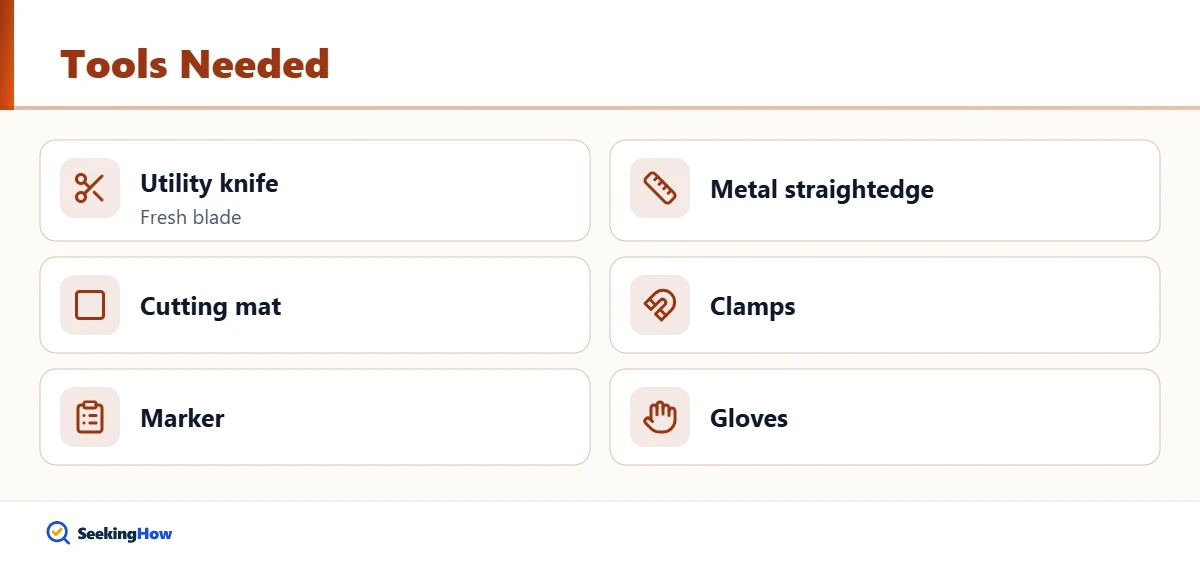
- Utility knife with several fresh blades.
- Metal straightedge or framing square, ideally with a non-slip back.
- Self-healing cutting mat or a sheet of scrap plywood or cardboard underneath.
- Clamps to hold the straightedge in place.
- Tape measure and a fine permanent marker or grease pencil.
- Cut-resistant gloves and safety glasses, especially if using a saw.
- Fine-tooth saw blade (plywood or plastic-cutting type) if cutting thick sheet.
How Do You Cut Corrugated Plastic With a Utility Knife?
This method works for nearly all straight cuts in 4 mm and 6 mm sheets, the thicknesses most stores sell for signs and crafts.
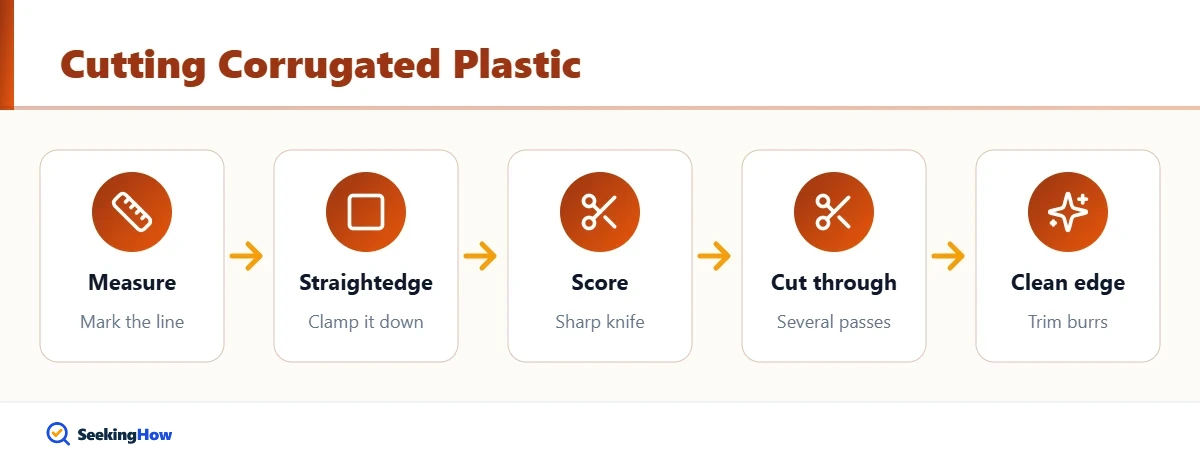
Step 1: Check the Flute Direction
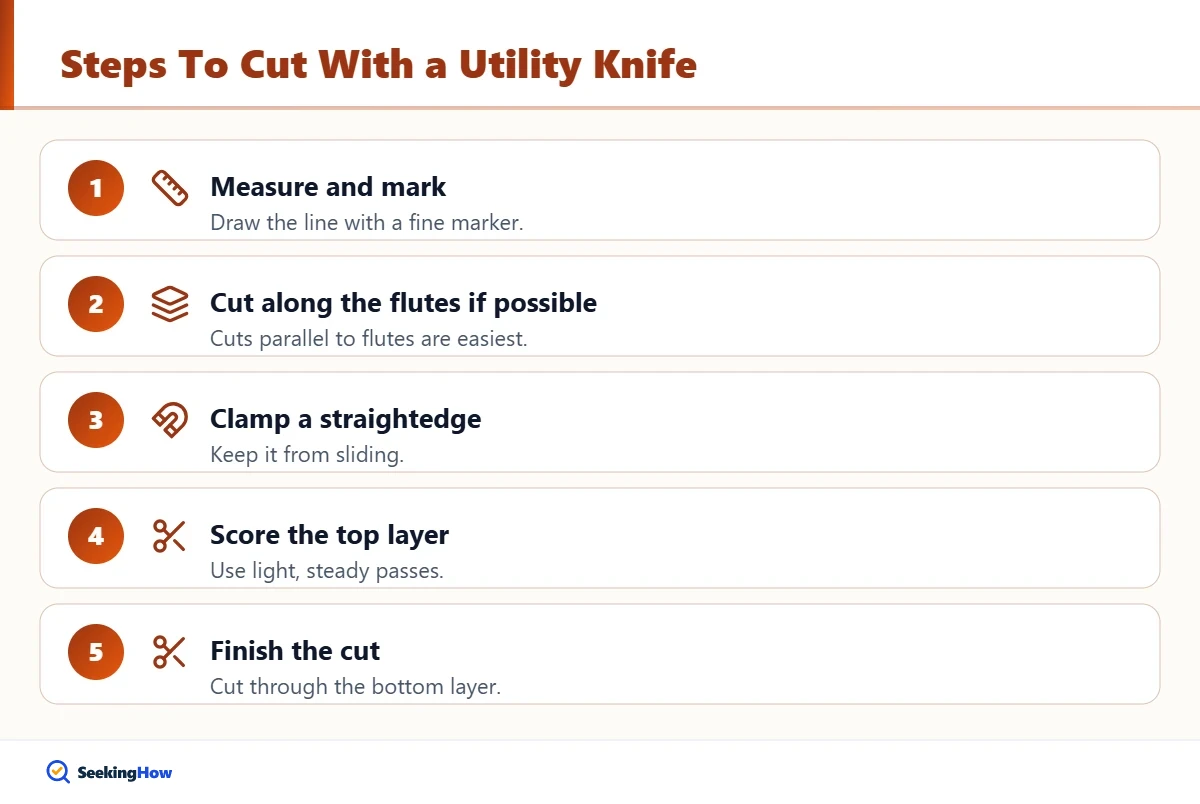
Look at the edge of the sheet: you will see a row of small channels. Cuts that run parallel to those channels slice between ribs and need little force. Cuts across the channels must sever every rib, so plan for more passes.
Step 2: Measure and Mark the Line
Measure twice and mark both ends of the cut with a fine marker, then connect the marks using your straightedge. Mark on the side that will be hidden if the piece is going to be displayed.
Step 3: Set Up a Firm Cutting Surface
Lay the sheet flat on a cutting mat or scrap board on a sturdy table. Clamp the straightedge exactly on the line, placed so the blade will cut on the waste side.
Step 4: Make a Light Scoring Pass
Hold the knife at a low angle and draw it along the straightedge with light, steady pressure. This first pass creates a groove that guides the following passes and prevents the blade from wandering.
Step 5: Cut Through Both Faces
Repeat 1-2 more passes with firmer pressure until the blade cuts through the top face, the flutes and the bottom face. Keep your free hand flat on the straightedge, well away from the blade path.
Step 6: Separate and Clean the Edge
Lift the offcut away. If a few ribs are still connected, run the knife through them rather than tearing. Trim any burrs or fuzzy edges with a light pass of the blade or fine sandpaper.
Tip: Change the blade sooner than you think. Polypropylene dulls edges fast, and a dull blade tears the flutes and crushes the sheet instead of slicing it.
How Do You Cut Thick Corrugated Plastic With a Saw?
For 8 mm and 10 mm sheets, or when you need dozens of identical pieces, a saw is faster.
- Table saw: use a fine-tooth blade (60-80 teeth on a 10-inch blade, or a plastic-cutting blade). Set the blade just above the sheet and use the rip fence for square, repeatable cuts.
- Circular saw: clamp a straightedge as a guide and support both sides of the cut so the sheet does not pinch or sag.
- Feed rate: move steadily. Too slow can melt the polypropylene; too fast can chip the edge.
Safety: Thin plastic can vibrate and kick back. Wear eye protection, keep hands clear of the blade, and use a push stick on a table saw.
How Do You Cut Curves, Holes and Shapes?
For curves, trace a template, then follow the line with a utility knife in short, shallow passes, or use a jigsaw with a fine-tooth blade at a moderate speed. For small radius curves in thin sheet, sharp heavy-duty scissors work but will crush the flutes slightly.
For holes, use a sharp drill bit at moderate speed with scrap wood underneath, a step bit for clean larger holes, or a leather or paper hole punch for grommet holes in thin sign material. A rotary craft tool can rout window cutouts.
Can You Use a Hot Knife on Corrugated Plastic?
Yes. An electric hot knife, the kind sold for foam and rope cutting, melts through polypropylene and partially seals the edge as it cuts, which reduces open flutes and fraying. Work in a well-ventilated area, move slowly with a straightedge, and keep the tip clean. Expect a slightly raised, melted bead on the edge that you can trim with a knife if needed.
How Do You Score and Fold Corrugated Plastic?
To fold along the flutes, cut through only the top face, leaving the bottom face intact as a hinge, then bend away from the cut. To fold across the flutes, press a dull tool such as a butter knife or bone folder along the line to crush the ribs, then bend. This is how DIY boxes, planter liners and enclosures are made from a single sheet.
What Mistakes Should You Avoid?
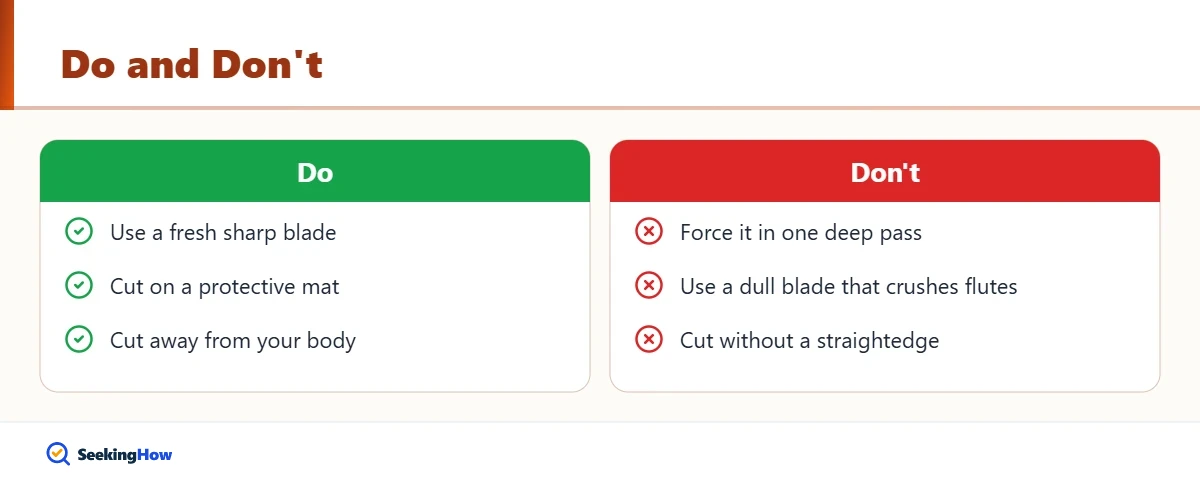
- Trying to cut through in one hard pass, which lets the blade jump the straightedge.
- Using a dull blade that tears and crushes the flutes.
- Cutting without a backing surface, which damages your table and the blade.
- Using a coarse framing blade on a saw, which chips and melts the edge.
- Pulling the knife toward your body or across your free hand.
How Do You Finish and Seal the Cut Edges?
Open flutes collect dirt, water and insects outdoors. For a finished look, cover edges with U-channel edge trim, cloth or vinyl tape, or seal them with a thin bead of clear silicone. For crafts, double-sided tape and hot glue join pieces well, although standard glues do not bond strongly to polypropylene.
The same measure-twice, straightedge-and-clamp approach applies to other sheet goods; see our guides on building a box spring out of plywood and installing baseboard molding on uneven floors for more cutting technique.
Frequently Asked Questions
Can you cut corrugated plastic with scissors?
Yes, thin sheets of 2-4 mm can be cut with heavy-duty scissors or tin snips, especially for small pieces and curves. Scissors crush the flutes slightly and leave a rougher edge than a knife, so use a utility knife and straightedge for visible straight edges.
What saw blade is best for corrugated plastic?
Use a fine-tooth blade, such as a 60 to 80 tooth plywood or plastic-cutting blade on a 10-inch table saw. Fine teeth slice the thin faces without chipping, while coarse framing blades tend to tear the sheet and can melt the polypropylene at the edge.
How do you cut Coroplast without crushing it?
Use a very sharp blade, a firm flat backing surface and several light passes rather than one hard push. Hold the straightedge down with clamps instead of heavy hand pressure, and cut along the flutes when your layout allows it.
Is corrugated plastic waterproof once cut?
The polypropylene itself is waterproof, but cut edges leave the flutes open, so water, dirt and insects can collect inside. For outdoor use, seal edges with U-channel trim, tape or a thin bead of clear silicone, or orient flutes vertically so water drains out.
How do you make a clean hole in corrugated plastic?
Drill at moderate speed with a sharp bit and a piece of scrap wood under the sheet. A step bit gives clean larger holes, and a hole punch works well for grommet holes in thin sign stock. Avoid high speed, which can melt and smear the plastic.