Quick Answer
To clean a waffle maker with non-removable plates, unplug it, let it cool until just warm, brush out crumbs with a soft pastry brush, then wipe the grids with a damp microfiber cloth. Loosen stuck batter with a few drops of cooking oil or a baking soda paste for 5 minutes. Never submerge the unit or use metal tools on nonstick plates.
Key Takeaways
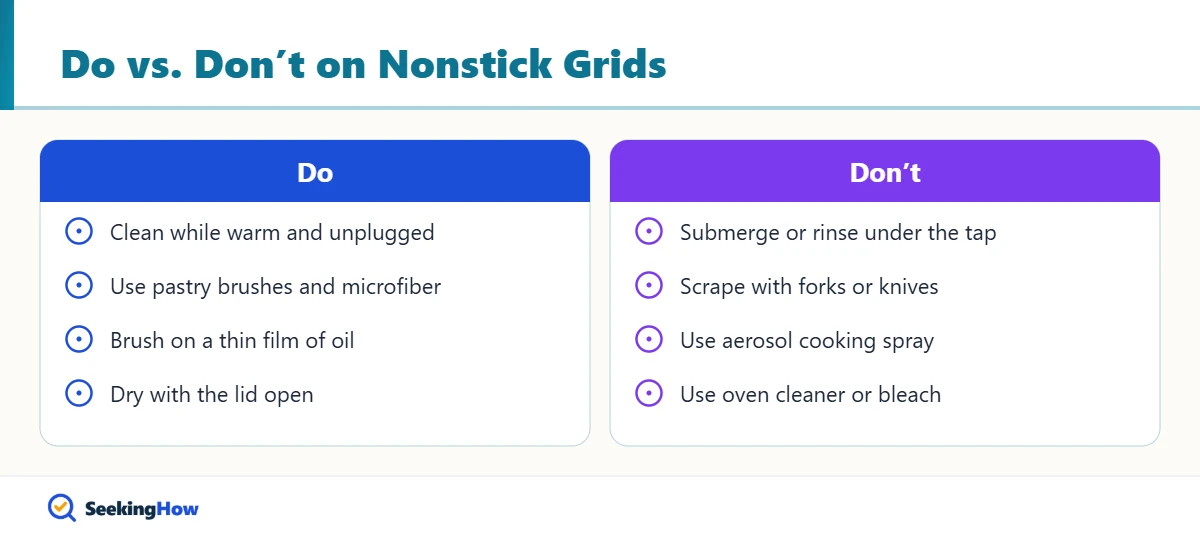
- Clean a waffle maker while it is unplugged and slightly warm, because residue softens but the plates will not burn you.
- Never put a waffle maker with fixed plates under running water or in the sink.
- A few drops of cooking oil left for 5 minutes softens baked-on batter on nonstick grids.
- Baking soda paste and a soft toothbrush remove sticky, gummy buildup without scratching the coating.
- Aerosol cooking spray causes much of the sticky film on waffle irons; brush on oil instead.
Most home waffle makers, including many Dash, Cuisinart and Hamilton Beach models, have plates that do not come off. This guide explains how to clean a waffle maker with non-removable plates after everyday use and how to rescue one with burnt, gummy buildup, all without getting water into the heating element.
What You’ll Need
- Soft pastry brush or clean, dry soft-bristle toothbrush
- Microfiber cloths or paper towels
- Cooking oil (vegetable, canola or melted coconut)
- Baking soda and water
- Silicone or wooden spatula or chopstick for stuck bits
- Mild dish soap
- Cotton swabs for hinge and gaps (optional)
How To Clean a Waffle Maker With Non-Removable Plates: Step-by-Step
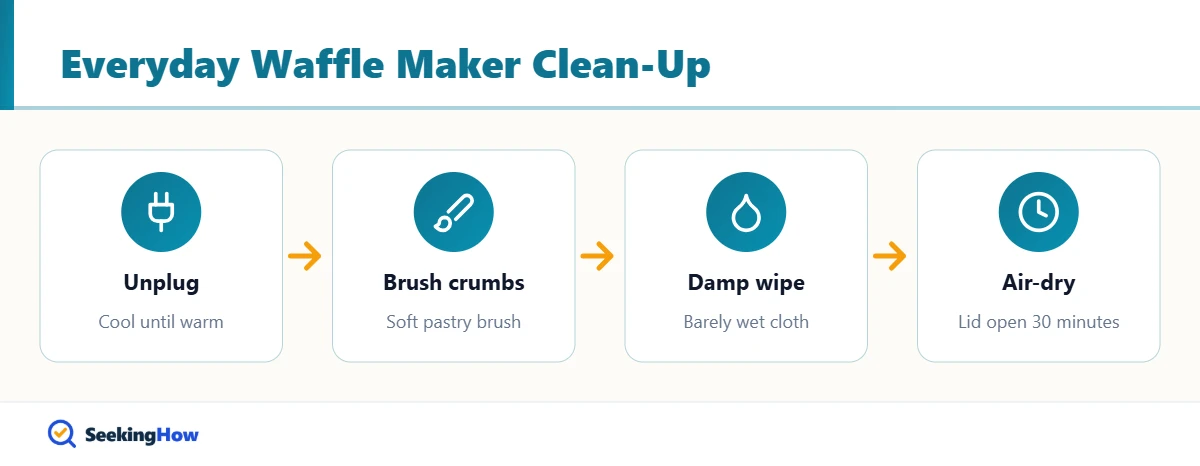
Step 1: Unplug and Let It Cool Until Warm
Unplug the waffle maker and open the lid. Wait about 10 to 15 minutes until the plates are warm but comfortable to touch. Warm residue wipes away easily, while fully cold batter hardens and fully hot plates can burn your fingers.
Step 2: Brush Out Loose Crumbs
Sweep crumbs out of the grid squares with a dry pastry brush, tipping the unit over a trash can. Use a wooden chopstick or silicone spatula to pop out larger stuck pieces. Never use forks, knives or metal scrubbers, which scratch the nonstick coating.
Step 3: Wipe the Plates With a Damp Cloth
Dampen a microfiber cloth with warm water and a drop of dish soap, then wring it until it barely drips. Wipe each grid square and the edges. Follow with a cloth dampened in plain water to remove soap, which otherwise smokes on the next batch.
Step 4: Soften Stuck Batter With Oil
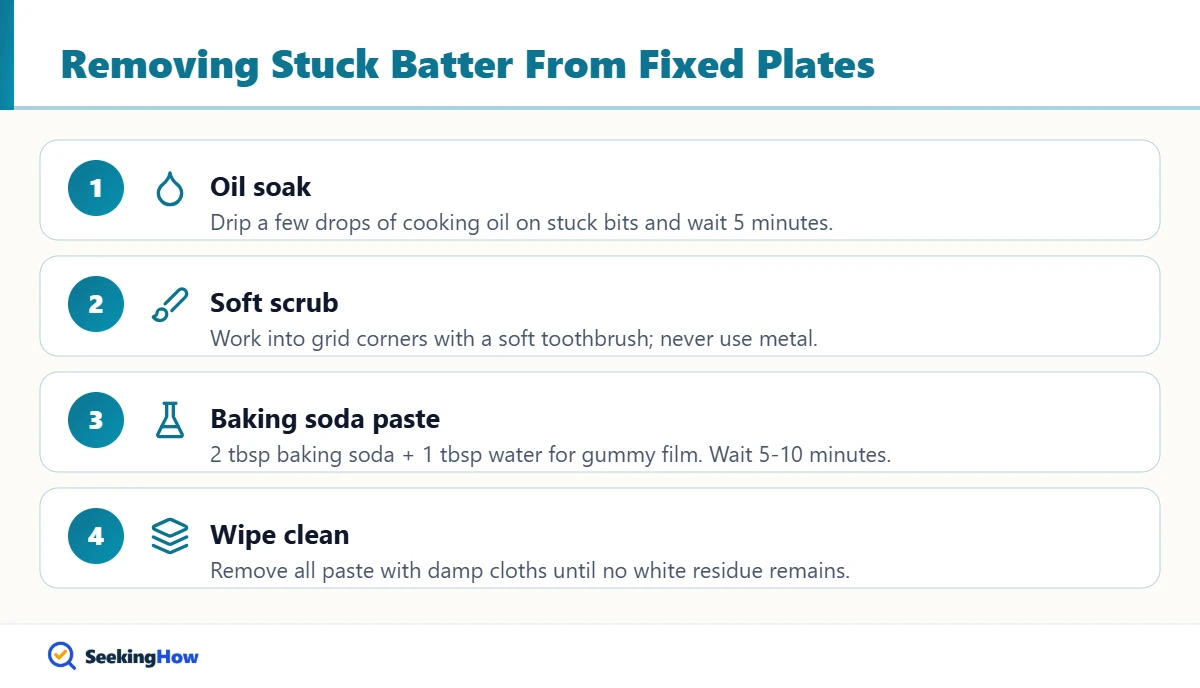
For baked-on bits, drip a few drops of cooking oil onto the residue and let it sit 5 minutes. The oil seeps under the crust and lifts it. Wipe with a paper towel, using a soft toothbrush to work into the corners of the grid.
Step 5: Use Baking Soda Paste for Sticky Buildup
Mix 2 tablespoons of baking soda with 1 tablespoon of water. Spread the paste over gummy brown film, wait 5 to 10 minutes, then scrub gently with a soft toothbrush. Wipe away all paste with damp cloths until no white residue remains. Do not add vinegar to the paste; vinegar and baking soda react and cancel each other out.
Step 6: Clean the Exterior and Dry
Wipe the lid, handle and drip edges with a damp, soapy cloth, and use cotton swabs around the hinge where batter overflows. Leave the lid open for 30 minutes so all moisture evaporates before storing.
Bottom line: a warm brush-and-wipe after every use prevents 90 percent of deep-cleaning jobs; save oil and baking soda for stuck-on residue.
The Steam Trick for Burnt-On Batter
For stubborn crust, unplug the waffle maker while still warm, lay a damp (not dripping) paper towel across the bottom plate and close the lid for 10 minutes. The gentle steam softens the crust so it wipes away. In practice, this works best combined with a few drops of oil afterward.
| Mess | Method | Time | Tools |
|---|---|---|---|
| Crumbs, light grease | Brush and damp wipe | 3 minutes | Pastry brush, cloth |
| Stuck batter bits | Oil soak and wipe | 5 to 10 minutes | Cooking oil, toothbrush |
| Sticky, gummy film | Baking soda paste | 15 minutes | Baking soda, toothbrush |
| Burnt crust | Steam towel, then oil | 15 to 20 minutes | Damp paper towel |
If That Didn’t Work
Problem: The plates stay tacky after cleaning. Cause: Polymerized cooking spray film. Fix: Repeat the baking soda paste, then switch to brushing on a little oil rather than aerosol spray.
Problem: Waffles still stick after cleaning. Cause: Plates were not reseasoned or the coating is worn. Fix: Brush a thin layer of oil on warm plates before the first waffle; replace the unit if the coating is flaking.
Problem: The waffle maker smokes on the next use. Cause: Soap, oil puddles or batter left in gaps. Fix: Wipe with a plain damp cloth, clean seams with cotton swabs and run it empty for a few minutes with the window open.
Problem: Batter has leaked into the hinge or vents. Cause: Overfilling. Fix: Pick it out with a wooden toothpick once cool; do not pour water into openings. The same crumbs-first approach works when you clean a toaster inside.
Safety and When To Replace
Never immerse the waffle maker, cord or plug in water, and never clean it while plugged in. If water gets into the body, unplug it and let it dry for at least 24 hours before use. Avoid oven cleaner, bleach and abrasive powders, which damage nonstick coatings.
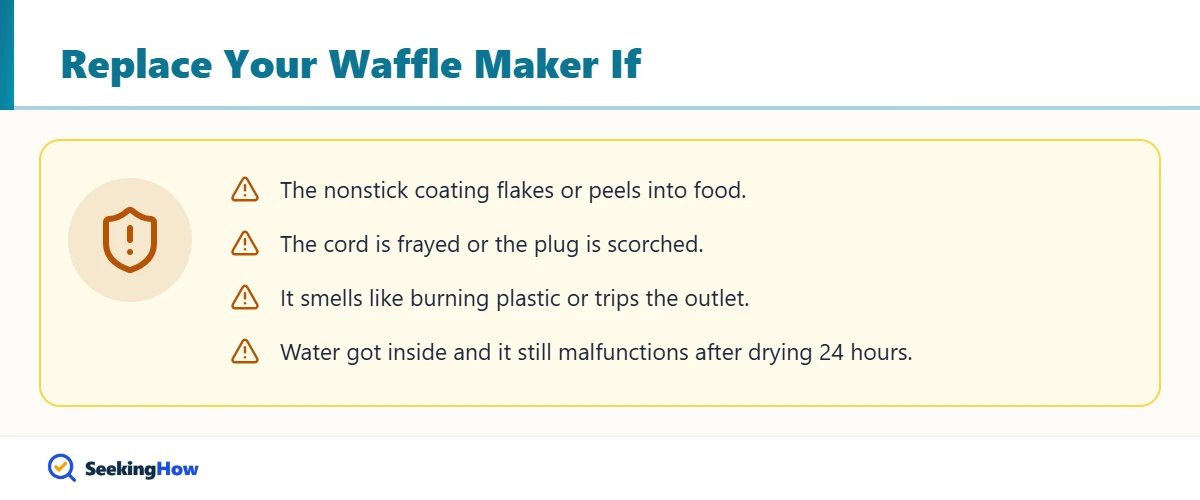
Stop using the waffle maker and replace it if the nonstick coating is peeling or flaking into food, the cord is frayed, it trips a GFCI outlet, or it smells like burning plastic. Check the manufacturer’s manual for model-specific cleaning limits.
Prevention Tips
- Brush a thin film of oil on the plates with a silicone brush instead of using aerosol spray.
- Use the amount of batter your model recommends to avoid overflow into the hinge.
- Wipe the plates after every use while still warm.
- Store the waffle maker with a paper towel between the plates to catch dust.
Related Guides
- How to clean a toaster inside
- Vinegar uses around the house
- Why vinegar and baking soda react
- How to remove sticky residue
Sources
- U.S. Consumer Product Safety Commission: small kitchen appliance safety (cpsc.gov)
- USDA Food Safety and Inspection Service: keeping kitchen equipment clean (fsis.usda.gov)
- Cuisinart: waffle maker use and care instructions (cuisinart.com)
Frequently Asked Questions
Can you wash a waffle maker in the sink?
No, a waffle maker with non-removable plates should never go in the sink or under running water. Water can reach the heating element and wiring, creating a shock hazard and ruining the unit. Clean the plates with a barely damp cloth and wipe the exterior separately.
How do you get burnt batter off a waffle maker?
Unplug the waffle maker while warm, lay a damp paper towel on the bottom plate and close the lid for 10 minutes to steam the crust. Then drip on a little cooking oil, wait 5 minutes and wipe with a soft toothbrush. Baking soda paste handles any remaining residue.
Why is my waffle maker sticky after cleaning?
A sticky film usually comes from aerosol cooking spray, whose additives bake into a gummy layer on nonstick plates. Scrub it off with baking soda paste and a soft toothbrush, wipe thoroughly and use brushed-on oil from then on. Sticking can also mean the coating is worn.
Should you clean a waffle maker after every use?
Yes, a quick brush and damp wipe after every use is the easiest way to keep a waffle maker clean. It takes about 3 minutes while the plates are warm. Skipping it lets oils polymerize and batter harden, which turns a simple wipe into a deep-cleaning job.
Can I use vinegar to clean a waffle maker?
Yes, a cloth lightly dampened with equal parts white vinegar and water helps cut greasy film on the exterior and plates. Wring it out well, wipe, then follow with a plain damp cloth. Vinegar does not loosen baked-on batter as well as oil or baking soda paste.
How do you clean the outside of a waffle maker?
Wipe the exterior with a cloth dampened in warm, soapy water, then with a clean damp cloth, and dry it with a towel. Use cotton swabs or a toothpick for the hinge and seams where batter drips. Never spray cleaner directly into vents or openings.