Quick Answer
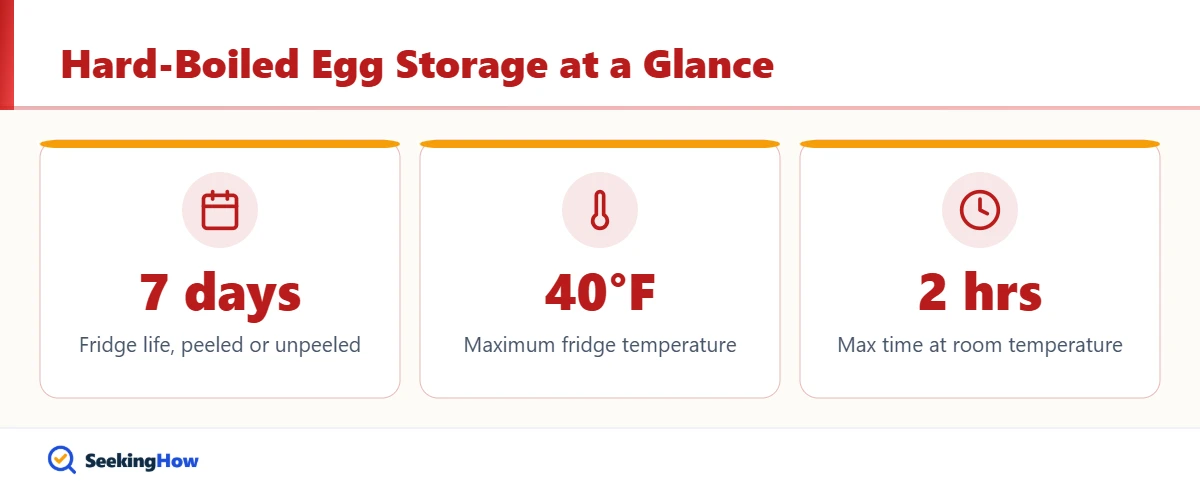
Unpeeled hard-boiled eggs last up to 1 week in the fridge when refrigerated within 2 hours of cooking and kept at 40°F or below. Store them in a covered container on an inside shelf, not the door. Throw out any egg with a slimy shell, sour or strong sulfur smell, or one left out longer than 2 hours.
Key Takeaways
- Hard-boiled eggs, peeled or unpeeled, keep for about 7 days in a refrigerator set at 40°F or colder.
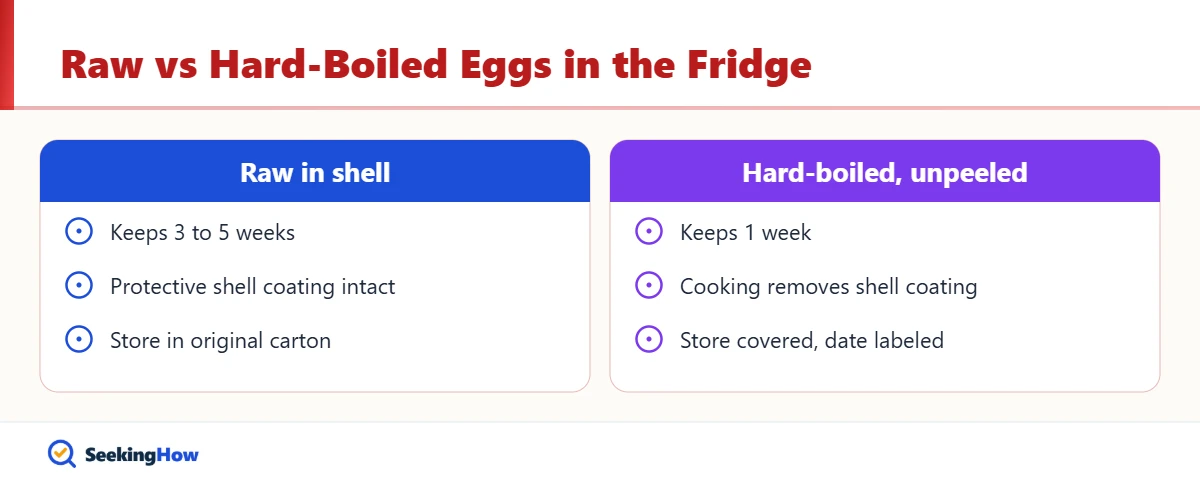
- Hard-boiled eggs spoil faster than raw eggs because cooking removes the protective coating on the shell.
- Refrigerate cooked eggs within 2 hours, or within 1 hour when the room is above 90°F.
- Freezing whole hard-boiled eggs makes the whites rubbery and watery; freeze only the yolks.
- Leaving the shell on helps keep the egg moist and limits odor transfer, but it does not extend the 1-week limit.
Knowing how long unpeeled hard-boiled eggs last in the fridge makes meal prep and snack planning simple. The rule is short, but the storage details decide whether your eggs are still safe and pleasant on day 6.
What You’ll Need
- Refrigerator thermometer, set to confirm 40°F (4°C) or below
- Covered container or the original carton
- Bowl of ice water for cooling
- Marker or tape to label the cooking date
- Paper towels
How Long Do Unpeeled Hard-Boiled Eggs Last in the Fridge?
Unpeeled hard-boiled eggs last 1 week in the fridge, according to U.S. food safety guidance from the FDA and USDA. That 7-day window is the same for peeled eggs. The clock starts when the eggs are cooked, not when they are bought.
Many people assume the shell makes a cooked egg last as long as a raw one, but the opposite is true. Raw eggs keep 3 to 5 weeks because their shells have a natural or applied coating. Boiling strips that coating and opens the pores, so bacteria and odors can get in more easily.
How To Store Unpeeled Hard-Boiled Eggs: Step-by-Step
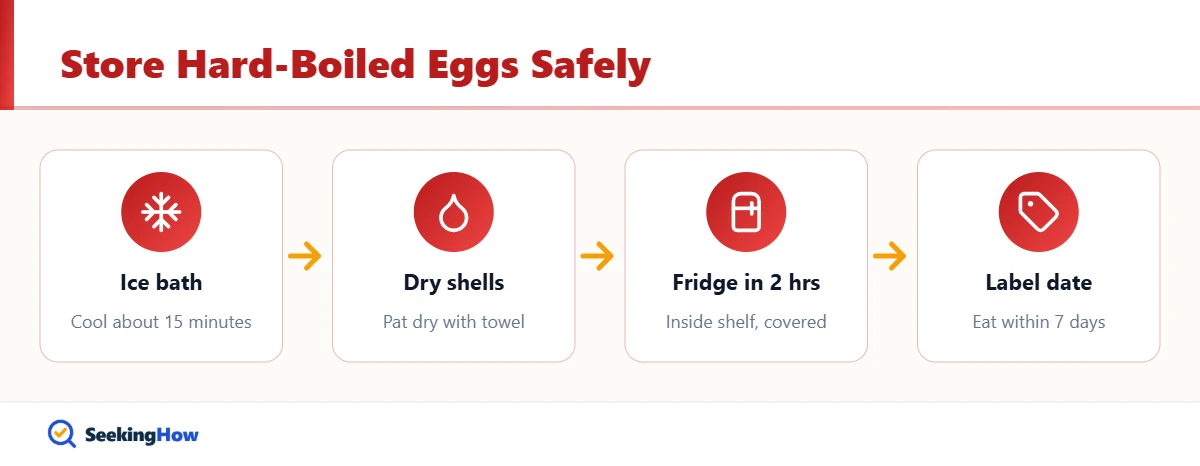
Step 1: Cool the Eggs Quickly
Move eggs from the pot into ice water for about 15 minutes. Fast cooling moves eggs through the bacterial danger zone of 40°F to 140°F quickly. The common mistake is leaving a pot of eggs on the stove to cool for hours.
Step 2: Dry the Shells
Pat each egg dry with a paper towel. Surface moisture encourages bacterial growth and can make shells slimy over several days.
Step 3: Refrigerate Within 2 Hours
Put the eggs in the fridge within 2 hours of cooking, or within 1 hour on a day above 90°F. Eggs left out longer than that should be discarded, even if they look and smell fine.
Step 4: Use a Covered Container on an Inside Shelf
Store eggs in a lidded container or the carton on a middle or back shelf, where the temperature is steady. The door warms every time it opens, and hard-boiled eggs can absorb odors from onions and other strong foods.
Step 5: Label the Date and Eat Within 7 Days
Write the cooking date on the container. In practice, a label is what keeps a forgotten batch from sitting until day 10. Eat the oldest eggs first and discard anything left after 1 week.
Bottom line: cool fast, refrigerate within 2 hours, and treat 7 days as a firm limit for hard-boiled eggs with or without shells.
Storage Times Compared
| Egg type | Fridge (40°F or below) | Room temperature | Freezer |
|---|---|---|---|
| Raw eggs in shell | 3 to 5 weeks | Not recommended in the U.S. | Not in shell |
| Hard-boiled, unpeeled | 1 week | 2 hours max | Not recommended |
| Hard-boiled, peeled | 1 week | 2 hours max | Not recommended |
| Cooked yolks only | Up to 1 week | 2 hours max | Freezes well |
| Egg salad or deviled eggs | 3 to 4 days | 2 hours max | Not recommended |
If That Didn’t Work
Problem: The shell feels slimy or sticky. Cause: Moisture and bacterial growth. Fix: Discard the egg; do not rinse and eat it.
Problem: Eggs smell strongly of sulfur when opened. Cause: A mild sulfur smell is normal, but a sharp, sour, or rotten odor signals spoilage. Fix: Throw out any egg whose smell is stronger than a fresh hard-boiled egg.
Problem: The whites are rubbery and dry by day 5. Cause: Moisture loss in an uncovered bowl. Fix: Store in a covered container; quality improves even though the safety window stays 1 week.
Problem: You are unsure when the eggs were cooked. Cause: No date label. Fix: When in doubt, throw them out, and label future batches.
Safety and When To Throw Eggs Out
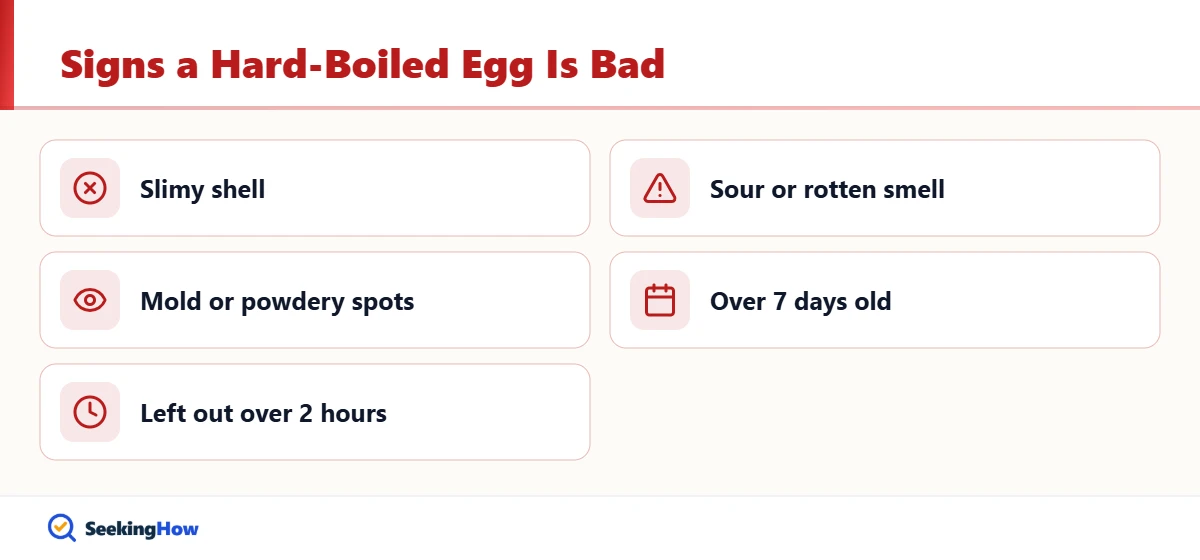
Spoiled eggs can carry Salmonella and other bacteria that cause vomiting, diarrhea, fever, and stomach cramps. Discard unpeeled hard-boiled eggs if any of these apply:
- They sat out longer than 2 hours, including at a picnic or egg hunt.
- They are more than 7 days past cooking.
- The shell is slimy, powdery, or shows mold.
- The white is gray-green throughout or the egg smells sour or rotten.
- The shell cracked and the egg was not refrigerated promptly.
Take extra care with eggs served to pregnant people, young children, older adults, or anyone with a weakened immune system, and contact a doctor if food poisoning symptoms include high fever, bloody diarrhea, or signs of dehydration.
Prevention Tips
- Boil only as many eggs as you can eat in a week.
- Keep your fridge at 40°F or below and check it with a thermometer.
- Leave shells on until you are ready to eat for better moisture and flavor.
- Freeze extra cooked yolks for crumbling over salads later.
Related Guides
- How to hard boil eggs perfectly (easy to peel)
- How to make buttermilk yogurt at home
- How to use an Aroma rice cooker for steaming
Sources
- U.S. Food and Drug Administration: What you need to know about egg safety (fda.gov)
- USDA Food Safety and Inspection Service: Shell eggs from farm to table (fsis.usda.gov)
- FoodSafety.gov: Cold food storage chart (foodsafety.gov)
Frequently Asked Questions
Do unpeeled hard-boiled eggs last longer than peeled ones?
No, unpeeled hard-boiled eggs do not last longer than peeled ones; both keep about 1 week in the fridge. The shell does help hold moisture and block odors, so unpeeled eggs often taste fresher on day 5 or 6. Peeled eggs should be kept in a covered container, ideally with a damp paper towel.
Can you eat hard-boiled eggs after 10 days?
No, you should not eat hard-boiled eggs after 10 days. Food safety agencies recommend using them within 7 days of cooking. Spoilage bacteria do not always change smell or appearance, so an egg that seems fine can still make you sick. Discard any eggs past the 1-week mark.
Why do hard-boiled eggs spoil faster than raw eggs?
Hard-boiled eggs spoil faster because boiling removes the protective coating on the shell and opens its pores. That lets bacteria and air pass through more easily. Raw eggs in their cartons keep 3 to 5 weeks in the fridge, but cooked eggs keep only about 1 week.
Can hard-boiled eggs sit out overnight?
No, hard-boiled eggs should not sit out overnight. Cooked eggs left at room temperature for more than 2 hours, or more than 1 hour above 90°F, should be thrown away. Bacteria multiply quickly between 40°F and 140°F, and reheating or refrigerating later will not make them safe again.
Can you freeze hard-boiled eggs?
You can freeze cooked yolks, but freezing whole hard-boiled eggs is not recommended. Frozen cooked whites turn tough, rubbery, and watery when thawed. Separate the yolks, freeze them in an airtight container, and use them crumbled on salads or in sauces within a few months.
How can you tell if a hard-boiled egg has gone bad?
A hard-boiled egg has gone bad if it smells sour or rotten, has a slimy or chalky shell, or shows mold. A faint sulfur smell and a green ring around the yolk are normal and harmless. If you cannot remember when the egg was cooked, throw it out.
Do hard-boiled eggs need to be refrigerated for Easter dyeing?
Yes, dyed hard-boiled eggs need refrigeration if you plan to eat them. Keep them in the fridge before and after dyeing and limit time at room temperature to 2 hours total. Eggs used for outdoor egg hunts that sat out longer should be discarded rather than eaten.