Quick Answer
To hard boil eggs, place them in a pot, cover with cold water by 1 inch, and bring to a full boil. Turn off the heat, cover, and let large eggs sit 10-12 minutes. Move them to an ice bath for 5 minutes, then peel. For easier peeling, lower eggs into already-boiling water and cook 11-13 minutes instead.
Key Takeaways
- Large eggs need about 10-12 minutes off the heat (cold-start) or 11-13 minutes at a boil (hot-start) for firm yolks.
- An ice bath stops the cooking, prevents the green-gray yolk ring, and makes peeling easier.
- Starting eggs in boiling water or steam usually gives the easiest-peeling shells.
- Eggs that are a week or more old peel more easily than very fresh ones.
- Refrigerate hard-boiled eggs within 2 hours and eat them within 1 week.
Hard-boiled eggs are one of the simplest kitchen staples, yet they go wrong in familiar ways: rubbery whites, chalky yolks with a green ring, or shells that take half the white with them. Getting them right comes down to three things: timing, a fast cool-down, and the right start method for easy peeling.
How Long Do You Boil Eggs?
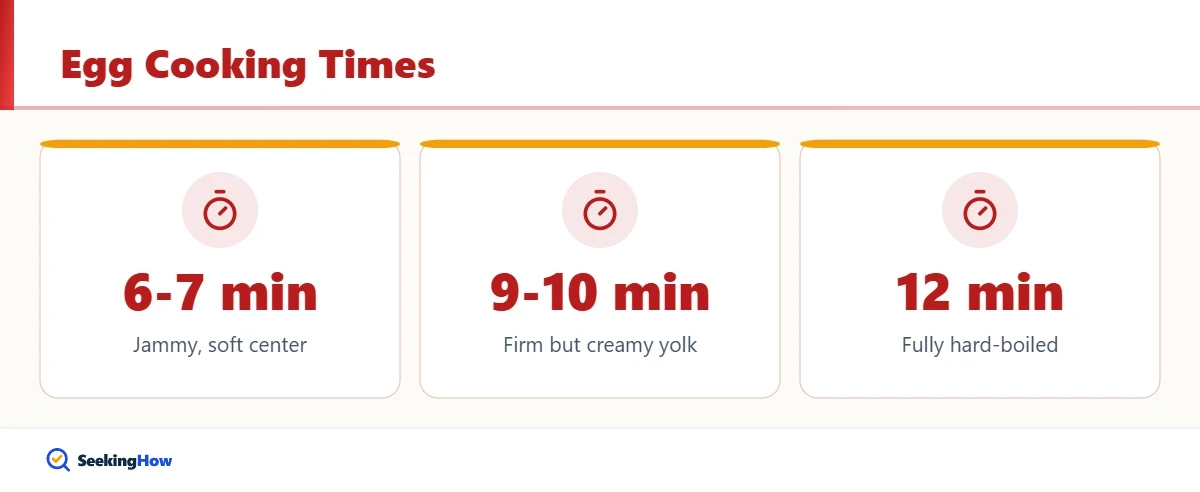
Cooking time depends on the egg size, the starting method and how firm you like the yolk. The times below are for large eggs straight from the refrigerator, lowered into water that is already at a gentle boil.
| Time in boiling water | Yolk | Best for |
|---|---|---|
| 6 minutes | Runny, white just set | Toast soldiers, ramen |
| 7-8 minutes | Jammy, soft center | Salads, grain bowls |
| 9-10 minutes | Mostly set, slightly soft center | Snacking |
| 11-13 minutes | Fully set, creamy-firm | Deviled eggs, egg salad |
| 15+ minutes | Dry, chalky, green ring likely | Avoid |
Adjust for size: subtract about 1 minute for medium eggs and add about 1-2 minutes for extra-large or jumbo eggs. At high altitude, water boils at a lower temperature, so add a few minutes.
What Do You Need?
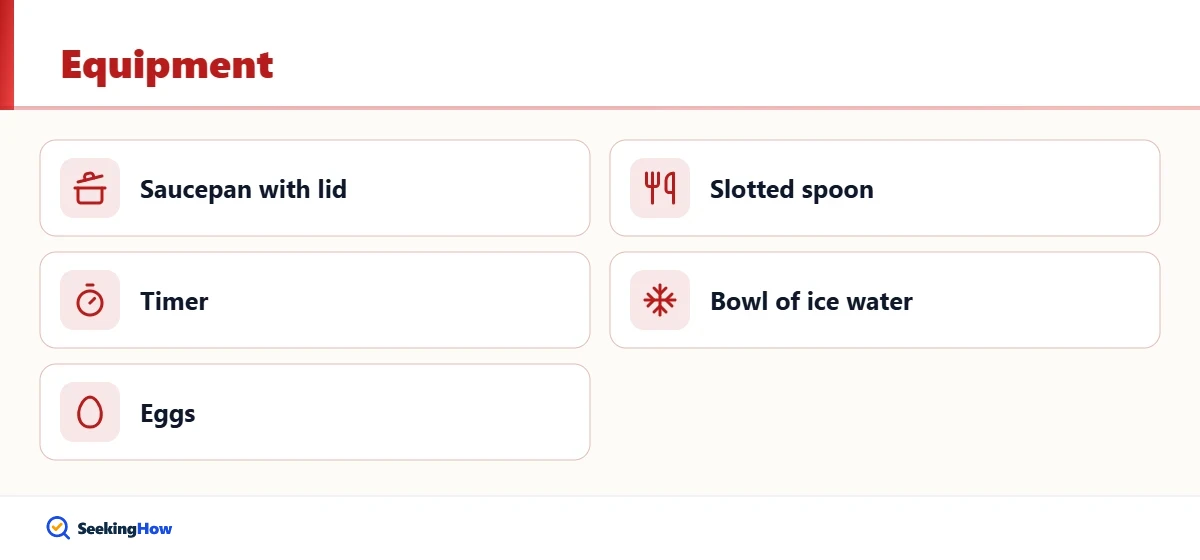
- Eggs (large eggs are the standard for timing).
- A saucepan wide enough to hold the eggs in a single layer.
- A lid.
- A slotted spoon or spider.
- A large bowl of ice water.
- A timer.
How Do You Hard Boil Eggs Step by Step?
This is the classic cold-start method. It is gentle, forgiving and needs no guesswork about when to start the timer.
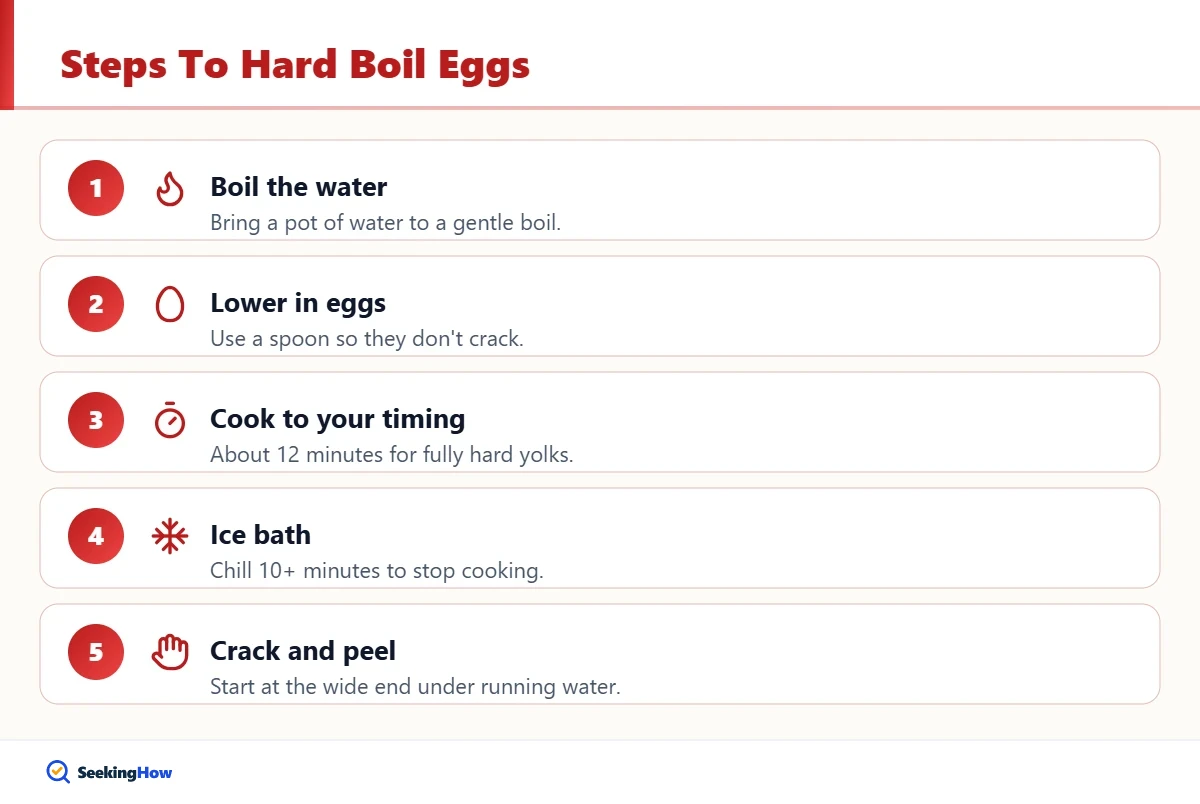
Step 1: Cover the Eggs With Cold Water
Place the eggs in a single layer in the saucepan and add cold water until they are covered by about 1 inch. A single layer helps them cook evenly; crowding can lead to cracks and uneven doneness.
Step 2: Bring the Water to a Full Boil
Set the pan over high heat, uncovered, and bring it to a full rolling boil. This usually takes 8-12 minutes depending on your stove and the amount of water.
Step 3: Cover and Let the Eggs Sit
As soon as the water boils, turn off the heat, cover the pan and leave it on the burner. Let large eggs stand for 10-12 minutes: 10 for a creamy yolk, 12 for fully firm. On an electric or glass cooktop, slide the pan off the hot element so it does not keep cooking.
Step 4: Shock the Eggs in Ice Water
While the eggs stand, fill a bowl with ice and cold water. Transfer the eggs with a slotted spoon and leave them for at least 5 minutes, until cool enough to handle. This stops the cooking and prevents the gray-green ring.
Step 5: Crack and Peel
Tap each egg all over on the counter, then roll it gently under your palm to crackle the shell. Start peeling at the wide end, where the air pocket is, and peel under a thin stream of cool water to help the membrane release.
Tip: If you cook eggs often, the hot-start method (lower cold eggs into gently boiling water for 11-13 minutes, then ice bath) gives more consistent peeling. The sudden heat sets the outer white before it can bond to the membrane.
How Do You Make Hard-Boiled Eggs Easy to Peel?
- Start hot. Lowering eggs into boiling water or a steamer basket is the most reliable trick for clean peeling.
- Use older eggs. As eggs age, the white becomes more alkaline and the air cell grows, both of which help shells release. Eggs that have been in your fridge for a week or more peel more easily than farm-fresh eggs.
- Do not skip the ice bath. Rapid cooling makes the egg contract slightly from the shell.
- Peel under water or in a bowl of water to slip the membrane off.
- Peel soon after cooling. Fully chilled eggs from the fridge can be harder to peel.
What Are Other Ways to Hard Boil Eggs?
Steamed Eggs
Bring about 1 inch of water to a boil in a pot with a steamer basket. Add the eggs, cover, and steam for 12-13 minutes for hard yolks, then ice bath. Steaming uses less water, heats up quickly, and gives very easy peeling.
Pressure Cooker or Multicooker
Many people use the 5-5-5 method: place eggs on the trivet with 1 cup of water, cook at high pressure for 5 minutes, let the pressure release naturally for 5 minutes, quick-release, then ice bath for 5 minutes. Check your appliance manual, since models vary.
Air Fryer
Air fryers can cook eggs in the shell without water, typically at around 250-270°F for roughly 15-17 minutes. Results vary by model, so test one egg first, and still use an ice bath. Shells may develop small brown spots, which are harmless.
Baked Eggs
Some cooks bake eggs in a muffin tin at 325°F for about 25-30 minutes. This is handy for large batches but can leave brown spots on the whites and is less consistent than boiling.
Should You Add Salt, Vinegar or Baking Soda to the Water?
These additions are popular kitchen tips, but none is required for good hard-boiled eggs.
- Salt: a pinch can help egg white that leaks from a cracked shell set faster, so the crack seals. It does not noticeably change flavor or peeling.
- Vinegar: a tablespoon of white vinegar works the same way, helping leaking whites coagulate. Your eggs will not taste of vinegar.
- Baking soda: some cooks add about half a teaspoon to raise the water’s pH and ease peeling. Results are mixed, and too much can give the whites a slightly sulfurous taste. Starting the eggs hot is more reliable.
If an egg cracks badly in the pot, it is still safe to eat once fully cooked. It just may look a little ragged where the white escaped.
Why Do Hard-Boiled Eggs Get a Green Ring?
The gray-green layer around the yolk forms when sulfur in the white reacts with iron in the yolk, creating iron sulfide. It happens with overcooking and slow cooling. It is safe to eat but looks unappetizing and comes with a stronger sulfur smell. Keep timing tight and move the eggs straight to ice water to prevent it.
What Common Mistakes Should You Avoid?
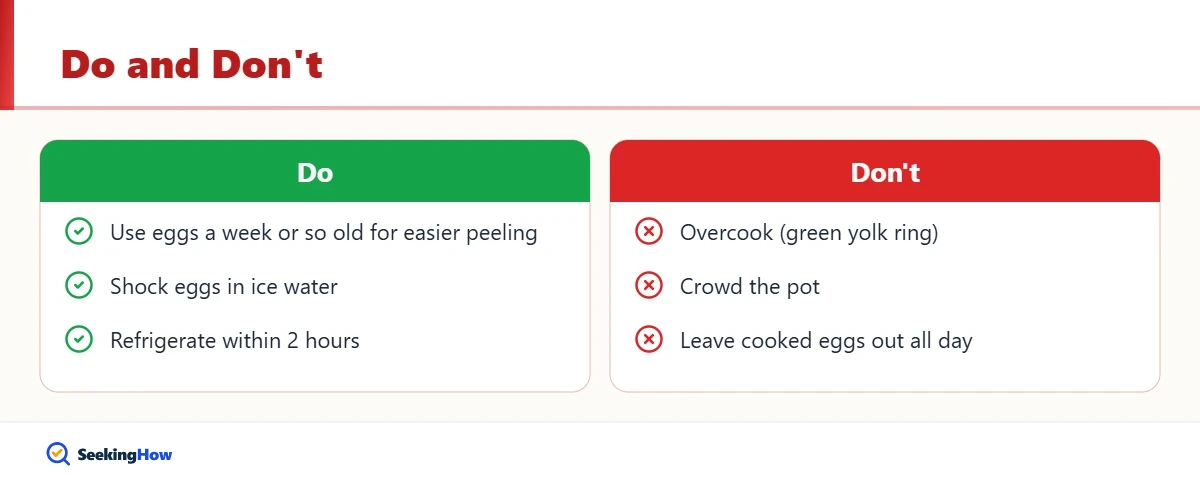
- Boiling eggs hard for 15 minutes or more, which makes whites rubbery and yolks chalky.
- Crowding the pot, which cooks eggs unevenly and causes cracks.
- Dropping eggs in from a height; lower them gently with a spoon.
- Skipping the ice bath.
- Using very fresh eggs and expecting easy peeling with a cold start.
How Long Do Hard-Boiled Eggs Last?
According to US food safety guidance, refrigerate hard-boiled eggs within 2 hours of cooking and eat them within 1 week. Keeping them in the shell protects them from absorbing fridge odors and drying out. Peeled eggs should be stored in a covered container and eaten within a few days for the best quality. Hard-boiled eggs do not freeze well because the whites turn rubbery and watery.
How Can You Use Hard-Boiled Eggs?
Hard-boiled eggs work in egg salad, deviled eggs, Cobb and nicoise salads, ramen, grain bowls and as an easy protein snack. If you track protein intake, see our explainer on what isolate protein is for how whole foods compare with powders. They also pair nicely with homemade buttermilk yogurt for a simple breakfast, and with seafood boils like steamed blue crabs.
Cooking on a glass-top range? Avoid dragging heavy pots across the surface, and read our guide to repairing a damaged glass cooktop if you already have scratches.
Frequently Asked Questions
How do you know when hard-boiled eggs are done?
Timing is the most reliable test, since you cannot see inside the shell. Large eggs are fully set after 10-12 minutes covered off the heat, or 11-13 minutes in boiling water. If unsure, cool and cut one egg open before cooling the rest.
Why are my hard-boiled eggs so hard to peel?
Very fresh eggs and slow, cold-start cooking make the white bond to the shell membrane. Use eggs that are at least a week old, start them in boiling water or steam, shock them in ice water, and peel under running water starting from the wide end.
Can you eat hard-boiled eggs with a green yolk?
Yes. The gray-green ring is iron sulfide that forms when eggs are overcooked or cooled slowly. It is safe to eat but can taste slightly sulfurous. Shorter cooking times and an immediate ice bath prevent it.
Can you hard boil eggs in the microwave?
It is not recommended to microwave eggs in the shell, because steam builds up inside and the egg can burst, sometimes after it comes out. Some appliances sell special microwave egg cookers; follow those instructions exactly if you use one.
Do hard-boiled eggs need to be refrigerated?
Yes. Refrigerate them within 2 hours of cooking, or within 1 hour if it is above 90 degrees F. Stored in the shell in the fridge, they keep for about 1 week. Do not leave them at room temperature for longer than 2 hours.