Quick Answer
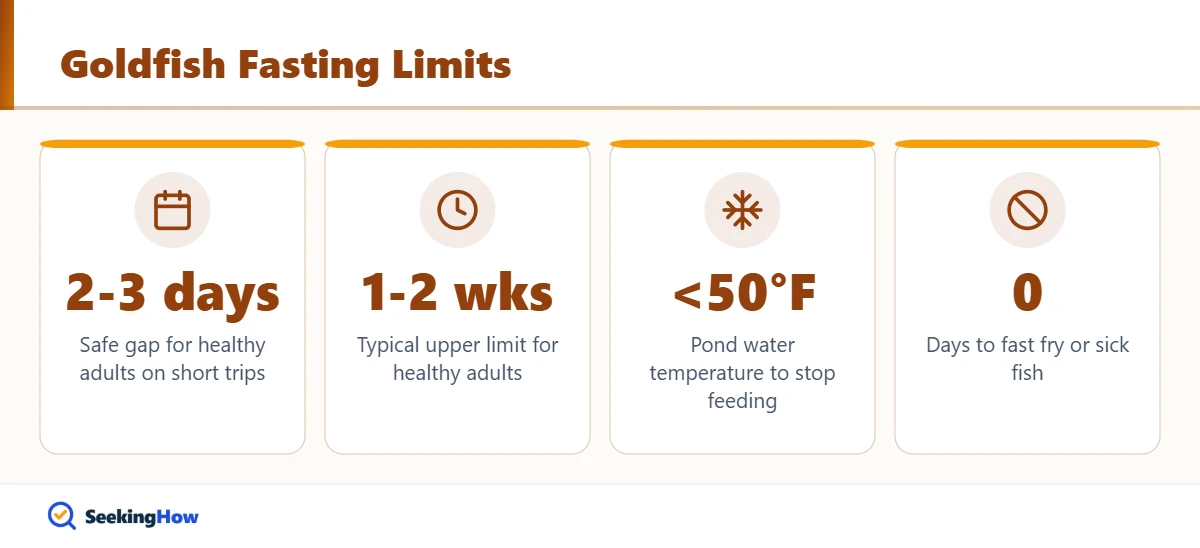
A healthy adult goldfish can go about 1-2 weeks without food in a clean, established aquarium, but plan on no more than 2-3 days without feeding for routine trips. Young, sick or fancy goldfish tolerate fasting less well. Outdoor pond goldfish naturally stop eating in winter, and feeding should stop once water drops below 50°F.
Key Takeaways
- Healthy adult goldfish can usually survive 1-2 weeks without food, though they start using body reserves well before that.
- A weekend away of 2-3 days is generally fine for healthy adult goldfish with no special preparation beyond a water change.
- Fry, juveniles, sick fish and fancy goldfish should not be fasted for long.
- Warmer water speeds metabolism, so goldfish in warmer tanks need food sooner.
- Pond goldfish slow down in cold water; pond guidance says stop feeding completely below 50°F.
- Feeding blocks often foul the water; a pet sitter with pre-portioned meals or an automatic feeder is safer for longer trips.
Goldfish act starving every time someone walks past the tank, so leaving them for a few days can feel risky. The real answer to how long a goldfish can go without food depends on age, health and water temperature. Here’s what is safe, what isn’t and how to prepare before a trip.
What You’ll Need (Before a Trip)
- Gravel vacuum and bucket for a pre-trip water change
- Water conditioner
- Aquarium thermometer
- Water test kit for ammonia and nitrite
- Automatic fish feeder, tested before you leave (for trips over about 3-4 days)
- Pill organizer or labeled bags with pre-measured portions for a pet sitter (optional)
How Long Can a Goldfish Go Without Food? The Short Version
A healthy adult goldfish in a stable, clean aquarium can generally go about 1-2 weeks without food, according to veterinarian-reviewed guidance, though about a week is a more comfortable upper limit. That doesn’t make long fasts a good plan. After several days, goldfish draw on body reserves, may lose condition and can become more prone to illness. For routine absences, 2-3 days without food is a safe, low-stress gap for healthy adults.
How To Prepare Your Goldfish for Time Without Food: Step-by-Step
Step 1: Check Your Goldfish’s Health
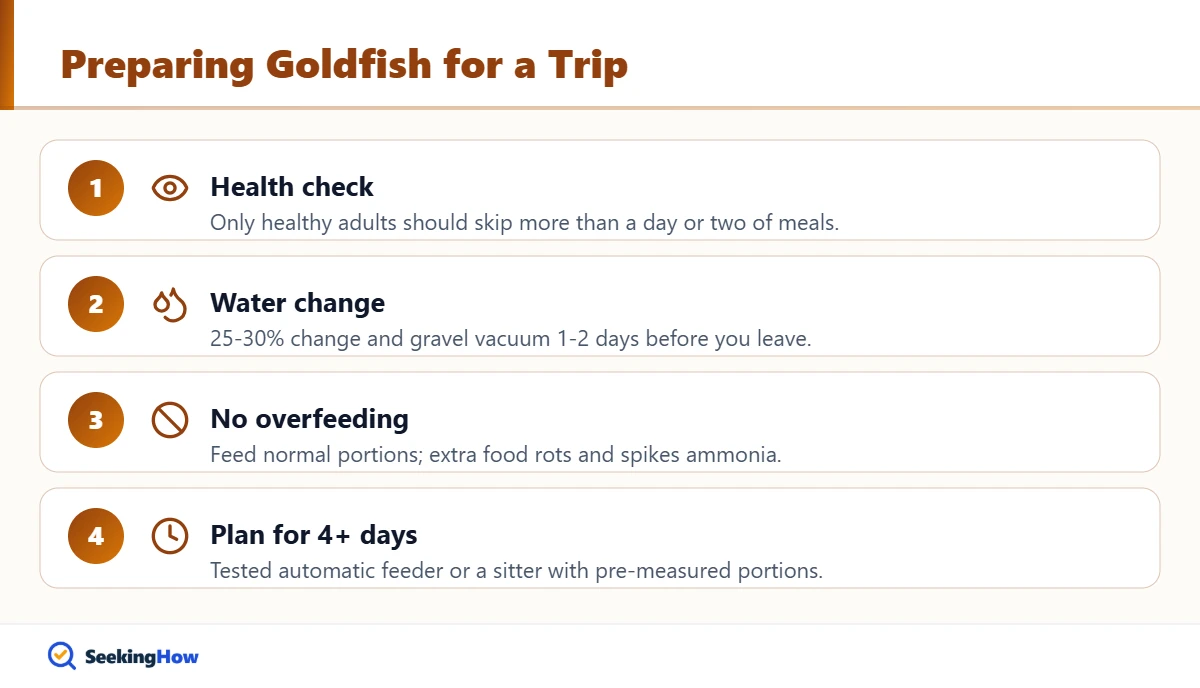
Make sure your goldfish are eating eagerly, swimming normally and showing no white spots, clamped fins or floating problems. Only healthy adults should go without food for more than a day or two. If a fish is sick, arrange a feeder or sitter even for short trips.
Step 2: Do a Partial Water Change 1-2 Days Before
Change about 25-30% of the water and vacuum the gravel 1-2 days before you leave. Clean water lowers stress while the fish isn’t eating. Avoid big filter cleanings right before a trip, since they can disturb beneficial bacteria.
Step 3: Feed Normally Until You Leave
Keep regular, modest portions up to departure day. Do not overfeed before leaving to “stock them up”; excess food just rots and spikes ammonia. Goldfish produce a lot of waste, so this is the most common pre-trip mistake.
Step 4: Choose a Feeding Plan for Longer Trips
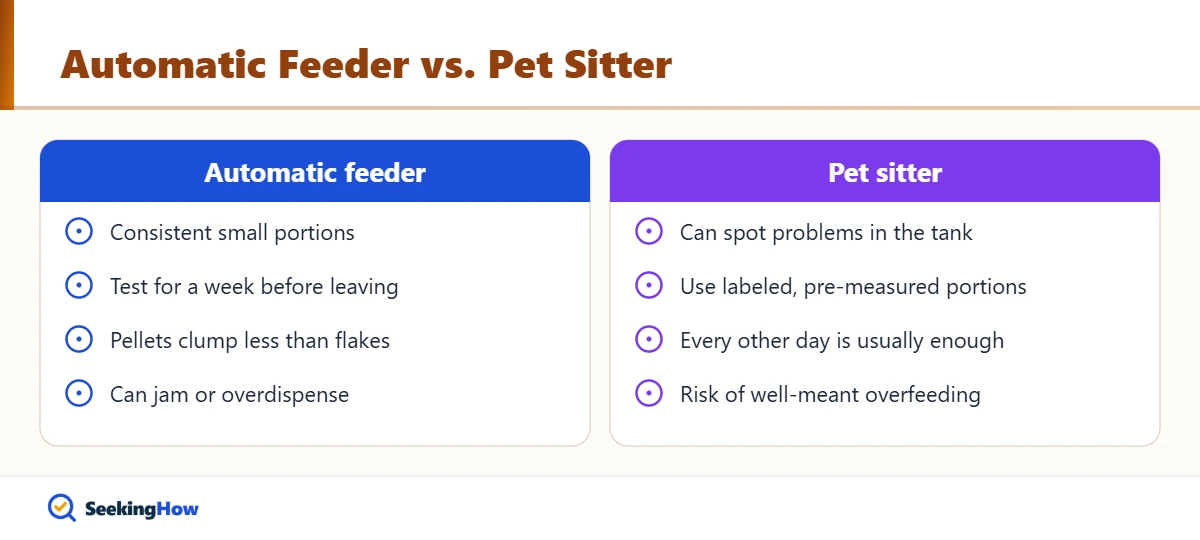
For 4 days or longer, use a tested automatic feeder set for small portions, or ask a pet sitter to feed pre-measured portions every other day. Label each portion clearly; overfeeding by well-meaning sitters causes more problems than missed meals. Avoid slow-release feeding blocks, which can dissolve and cloud the water.
Step 5: Keep Temperature Stable
Leave the heater (if used) and filter running, and keep the tank out of direct sun. Most goldfish do well in cooler water than tropical fish, roughly 60-74°F depending on type. Steady temperatures keep metabolism and appetite predictable.
Step 6: Resume Feeding Gently
When you return, feed a small meal first and return to normal portions over a day. Test the water and do a partial change if ammonia or nitrite shows up. A burst of food after a fast is easy to overdo.
Bottom line: Skip feeding for a 2-3 day trip; for anything longer, use a tested automatic feeder or a sitter with pre-portioned meals.
| Situation | Safe without food | Recommended plan |
|---|---|---|
| Healthy adult, aquarium | 2-3 days easily; up to about 1-2 weeks | Skip meals for short trips; feeder or sitter for longer |
| Fancy goldfish | Shorter than common goldfish | Feeder or sitter for trips over 2-3 days |
| Juveniles and fry | Very short; need frequent meals | Do not fast; arrange feeding |
| Sick goldfish | Not recommended | Arrange feeding and vet care |
| Pond goldfish, water below 50°F | Through winter dormancy | Stop feeding until water warms |
Goldfish in Ponds During Winter
Pond goldfish slow down as water cools because they are cold-blooded and their digestion slows. Pond-care guidance recommends reducing feeding between about 60°F and 50°F with an easy-to-digest cold-water food, and stopping completely below 50°F, even if the fish still look active. Food eaten in cold water can sit undigested. Resume light feeding in spring once the water stays above about 50°F.
If That Didn’t Work
Problem: Water is cloudy when you get home. Cause: Feeder dispensed too much or a feeding block dissolved. Fix: Do a 25-30% water change, test water and reduce feeder portions.
Problem: Goldfish looks thin after a trip. Cause: Long fast or competition with tankmates. Fix: Resume normal small meals 2 times a day and watch weight return over a week or two.
Problem: Goldfish won’t eat after you return. Cause: Water quality changes or stress. Fix: Test water and change part of it; contact a vet if refusal lasts more than 2-3 days.
Problem: Automatic feeder jammed. Cause: Humidity clumping the food. Fix: Use pellets instead of flakes and test the feeder for several days before leaving.
When To See a Vet
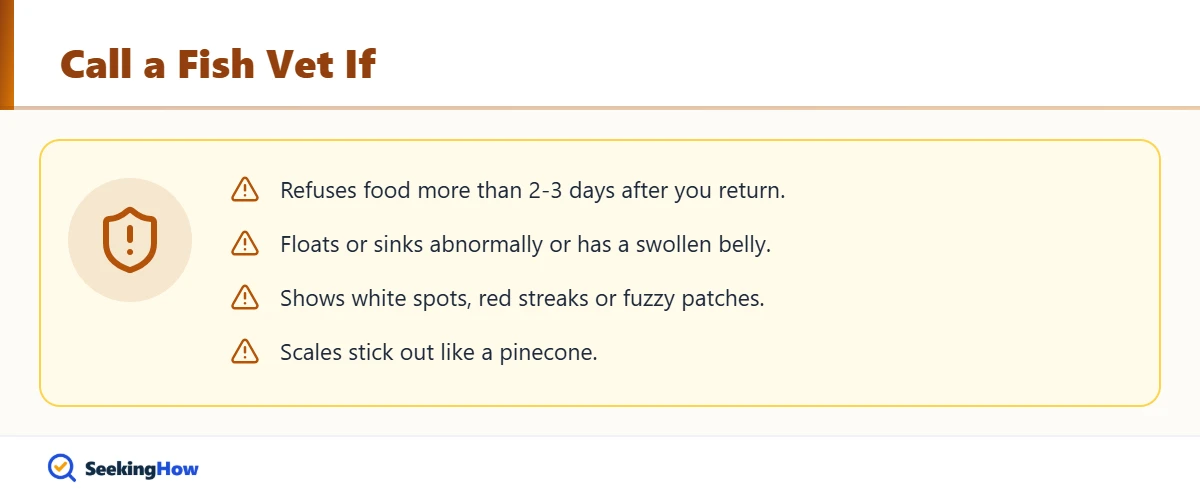
Contact a veterinarian who treats fish if a goldfish refuses food for more than 2-3 days after you return, floats or sinks abnormally, has a swollen belly or raised, pinecone-like scales, shows white spots, red streaks or fuzzy patches, or rubs against objects repeatedly. Bring water test results. Long fasts can unmask illnesses that were mild before the trip.
Prevention Tips
- Keep goldfish in a filtered tank sized for their adult length so water stays stable when you are away.
- Run an automatic feeder for a week at home before relying on it.
- Leave written, portion-labeled instructions for sitters.
- Schedule a water change right before every trip.
Keeping a betta too? See how long a betta fish can go without food and use the same gentle cleaning routine in how to clean a betta tank without removing the fish.
Related Guides
- How long can a betta fish go without food
- How to clean a betta tank without removing the fish
- How often to feed a betta fish
- How long can a betta live in a bowl without a filter
Sources
- The Vet Desk (veterinarian-reviewed) – How long can goldfish go without eating
- Aquascape – Feeding fish in the fall: when to stop feeding
- American Veterinary Medical Association – Pet care resources
Frequently Asked Questions
Can goldfish go a week without food?
Yes, a healthy adult goldfish in a clean, established aquarium can usually go a week without food. It is not ideal, and the fish will use body reserves, but most recover quickly once feeding resumes. Fancy goldfish, juveniles and sick fish should not be left that long without feeding.
Can I leave my goldfish for a weekend?
Yes, healthy adult goldfish are generally fine for a weekend of 2-3 days without food. Do a partial water change a day or two before leaving, keep the filter running and skip extra feeding. There is no need for a feeding block, which can foul the water.
Are vacation feeding blocks safe for goldfish?
Vacation feeding blocks are not the best choice for goldfish because they can dissolve unevenly, cloud the water and raise ammonia. Goldfish already produce a lot of waste. A tested automatic feeder or a sitter feeding pre-measured portions is safer for trips longer than a few days.
Do goldfish eat in winter?
Pond goldfish eat very little in winter and should not be fed once water drops below about 50°F, according to pond-care guidance. Their metabolism slows in cold water. Indoor aquarium goldfish at room temperature keep eating normally all year and should stay on their usual schedule.
How often should goldfish be fed normally?
Most adult goldfish do well with 1-2 small meals a day, giving only what they eat in a couple of minutes. Overfeeding is common and leads to poor water quality and bloating. Sinking pellets or gel foods can help fancy goldfish that gulp air from floating food.
What are signs a goldfish is starving?
Signs a goldfish is not getting enough food include a sunken or pinched belly, a visibly thinner body behind the head, low energy and constant scavenging of gravel. Short fasts rarely cause these. If you see them, increase feeding to regular small meals and check that tankmates are not outcompeting it.