Quick Answer
How long a betta can live in a bowl without a filter depends on bowl size, temperature and water changes: in a small, unheated bowl with infrequent changes, ammonia can reach harmful levels within days and shorten its life sharply. With a heater and 50% water changes every 2-3 days, a betta can survive much longer, but a filtered, heated tank of 5+ gallons is the healthy standard.
Key Takeaways
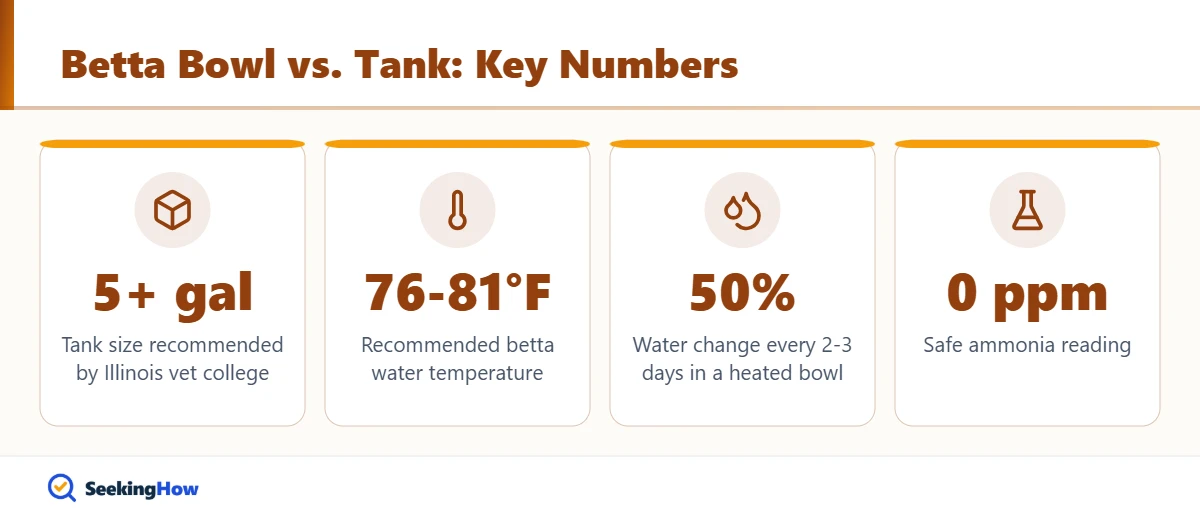
- There is no fixed survival time; water quality, temperature and bowl volume decide how long a betta lasts without a filter.
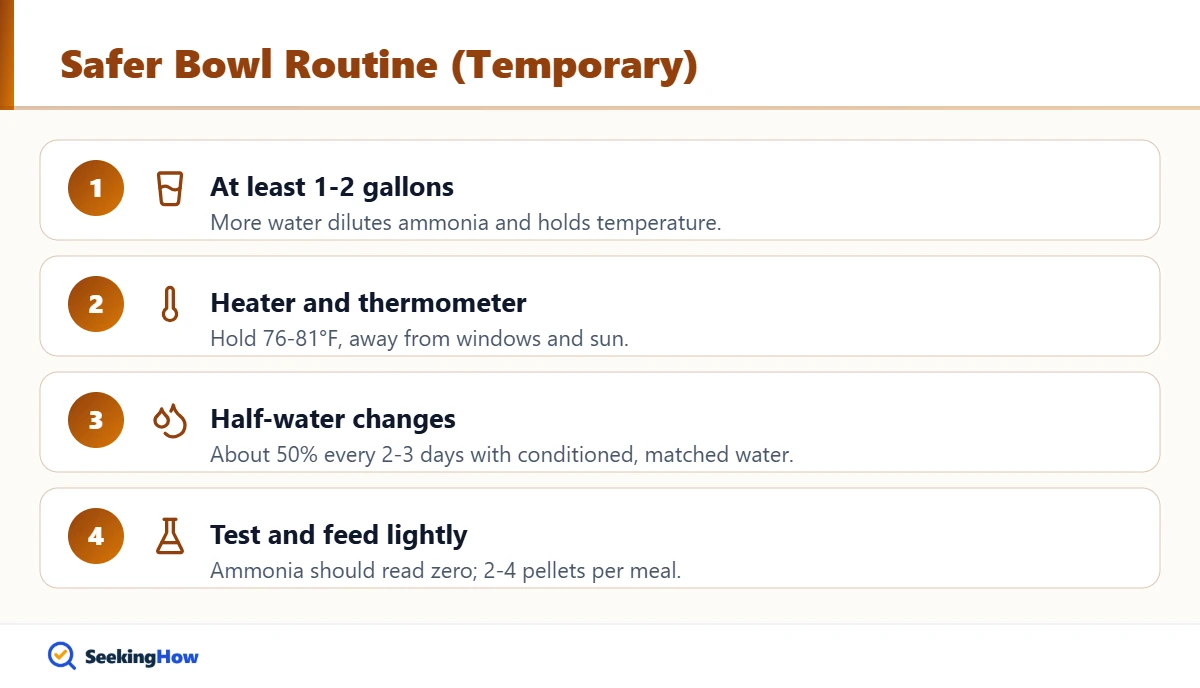
- Betta waste produces ammonia, and without a filter’s bacteria it builds up quickly in small volumes of water.
- The University of Illinois College of Veterinary Medicine advises against bowls and recommends a tank of 5 gallons or larger.
- Bettas are tropical fish; unheated bowls at room temperature often run colder than the recommended 76-81°F.
- If a bowl is temporary, use at least 1-2 gallons, add a heater and change about half the water every 2-3 days.
Bettas can breathe air from the surface with a special labyrinth organ, which is why they’re sold in cups and bowls. That ability helps them survive low oxygen, but it does nothing about the ammonia that builds up in still, unfiltered water. Here’s an honest answer to how long a betta can live in a bowl without a filter, and how to keep one safe if a bowl is your only option for now.
What You’ll Need (If You Must Use a Bowl Temporarily)
- Bowl or container holding at least 1-2 gallons (bigger is safer)
- Small adjustable aquarium heater rated for the volume
- Aquarium thermometer
- Water conditioner (dechlorinator)
- Ammonia test kit
- Clean cup or small siphon for water changes
- Live plant such as anubias or java fern (optional, helps absorb waste)
- Lid with air gaps (bettas can jump)
How Long Can a Betta Live in a Bowl Without a Filter?
A betta in an unfiltered bowl can survive anywhere from days to years, which is why answers online vary so much. The deciding factor is how fast ammonia builds up versus how often you remove it. In a small, unheated bowl that gets changed weekly or less, ammonia and cold stress commonly cause illness, fin rot and an early death. In a larger heated bowl with frequent partial water changes, a betta can live a normal life, but the routine is demanding and mistakes add up fast.
In practice, most problems come from three things together: a bowl under 1 gallon, no heater and infrequent changes. Fix those and survival improves dramatically; switch to a filtered tank and the risk drops further.
How To Keep a Betta Healthy in a Bowl Without a Filter: Step-by-Step
Step 1: Use the Largest Bowl You Can
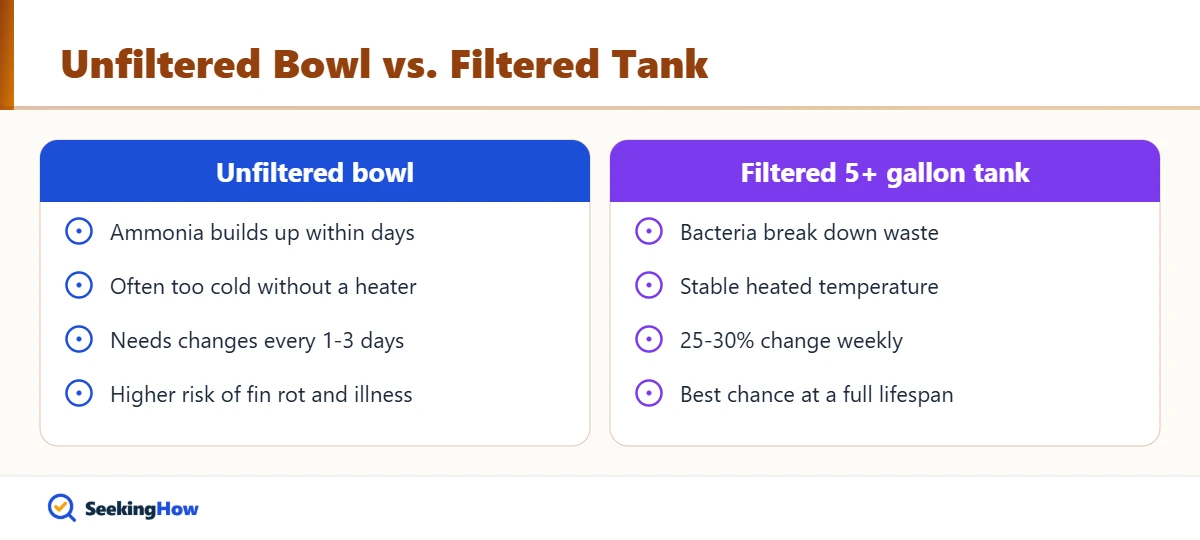
Choose at least 1-2 gallons; more water dilutes waste and holds temperature better. Tiny vases and cups under half a gallon foul within a day or two. Wash new bowls with plain water only, never soap.
Step 2: Add a Heater and Thermometer
Use a small adjustable heater sized for the volume and keep the water at 76-81°F. Most homes run cooler than that, especially at night, and cold bettas become sluggish and prone to disease. Avoid placing the bowl in direct sun, which can overheat small volumes quickly.
Step 3: Change About 50% of the Water Every 2-3 Days
Scoop or siphon out about half the water and replace it with conditioned water matched to within about 2°F. Remove debris and uneaten food from the bottom each time. For bowls under 1 gallon, daily partial changes are safer.
Step 4: Test for Ammonia
Test ammonia every few days. Any reading above zero means you need more frequent or larger water changes. Testing removes the guesswork, since ammonia is invisible and odorless at harmful levels.
Step 5: Feed Lightly
Offer 2-4 betta pellets once or twice a day and remove leftovers after 5 minutes. Every extra pellet becomes ammonia in a small bowl. See how often to feed a betta fish for portions.
Step 6: Plan the Upgrade
Move your betta to a filtered, heated tank of at least 5 gallons when you can. Use a gentle, adjustable or sponge filter so the current doesn’t push long fins around. Once the filter is established, weekly 25-30% changes are enough.
Bottom line: A heated bowl with frequent changes can work short term, but a filtered 5-gallon tank is the reliable way to give a betta a full lifespan.
| Setup | Water change routine | Risk level |
|---|---|---|
| Under 1 gallon, no heater, no filter | Daily partial changes needed | High |
| 1-2 gallon bowl, heater, no filter | About 50% every 2-3 days | Moderate |
| 2.5-5 gallon tank, heater, gentle filter | 25-50% weekly | Low |
| 5+ gallon tank, heater, gentle filter, plants | 25-30% weekly | Lowest |
If That Didn’t Work
Problem: Water gets cloudy or smelly within a day. Cause: Overfeeding or too small a bowl. Fix: Cut portions, remove leftovers, and change water more often or upgrade the container.
Problem: Betta sits at the bottom and won’t eat. Cause: Cold water or ammonia. Fix: Check temperature and test ammonia; see how to tell if a betta is dying or sleeping.
Problem: Fins look ragged or are shrinking. Cause: Fin rot linked to poor water quality. Fix: Increase water changes immediately and consult a fish vet if it spreads.
Problem: Temperature swings day to night. Cause: Small volume with no heater or an unregulated heater. Fix: Use an adjustable heater and keep the bowl away from windows and vents.
When To See a Vet
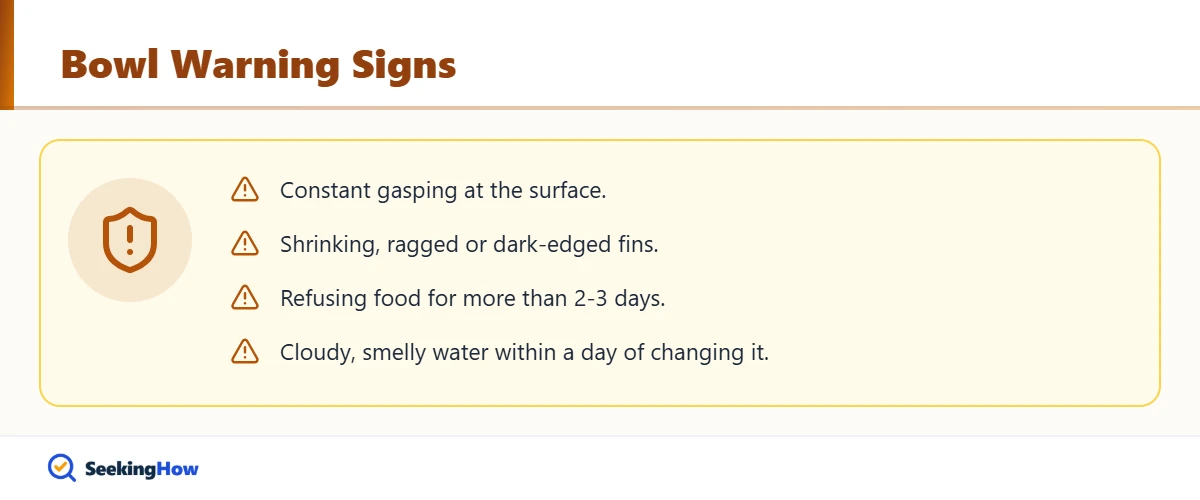
Contact a veterinarian who treats fish if your betta stops eating for more than 2-3 days, gasps at the surface constantly, develops white spots, fuzzy patches or pinecone-like raised scales, or has fins that keep shrinking despite clean water. Bring recent ammonia readings. Do not add salt or medications to a small bowl without guidance, since dosing errors are easy in small volumes.
Prevention Tips
- Treat a bowl as temporary housing, not a permanent home.
- Keep a spare bucket of conditioned water ready so changes are quick.
- Clean any new tank once it’s set up following how to clean a betta tank without removing the fish.
- Add a live plant to absorb some waste and give your betta cover.
Related Guides
- How to clean a betta tank without removing the fish
- How often to feed a betta fish
- How to tell if a betta fish is dying or sleeping
- How long can a betta fish go without food
Sources
- University of Illinois College of Veterinary Medicine – Bettas need more than bowls
- PetSmart Learning Center – How to care for your betta fish
- American Veterinary Medical Association – Pet care resources
Frequently Asked Questions
Can a betta live in a bowl without a filter?
A betta can live in a bowl without a filter if the bowl is large enough, heated and given frequent partial water changes, but it is harder and riskier than a filtered tank. Without a filter, ammonia from waste builds up quickly. Veterinary guidance favors a filtered tank of at least 5 gallons.
How often should I change water in a betta bowl without a filter?
Change about 50% of the water every 2-3 days in a 1-2 gallon unfiltered betta bowl, and more often in smaller bowls. Use conditioned water matched to the bowl temperature. Testing ammonia tells you whether your schedule is keeping up; any reading above zero means change more.
Why do pet stores keep bettas in cups?
Pet stores keep bettas in small cups for display and to separate males, which fight each other. The cups are meant as short-term holding, not a long-term home. Bettas tolerate them briefly because they can breathe surface air, but they need a larger heated, filtered setup at home.
Do bettas need a heater in a bowl?
Yes, bettas need a heater in a bowl in most homes, since they are tropical fish that do best at about 76-81°F. Room temperature is usually cooler, especially overnight. Use a small adjustable heater rated for the bowl volume and a thermometer to confirm the temperature.
What is the minimum tank size for a betta?
The University of Illinois College of Veterinary Medicine recommends a tank of 5 gallons or larger for a betta, and PetSmart lists at least 3 gallons with a filter and heater. Larger tanks keep water quality and temperature more stable, which reduces stress and disease.
Is a filter bad for bettas?
No, a filter is not bad for bettas as long as the current is gentle. Strong flow can push long-finned bettas around and tire them out. Choose a sponge filter or an adjustable low-flow filter, and baffle the outflow with a sponge or plant if your betta struggles to swim.