Quick Answer
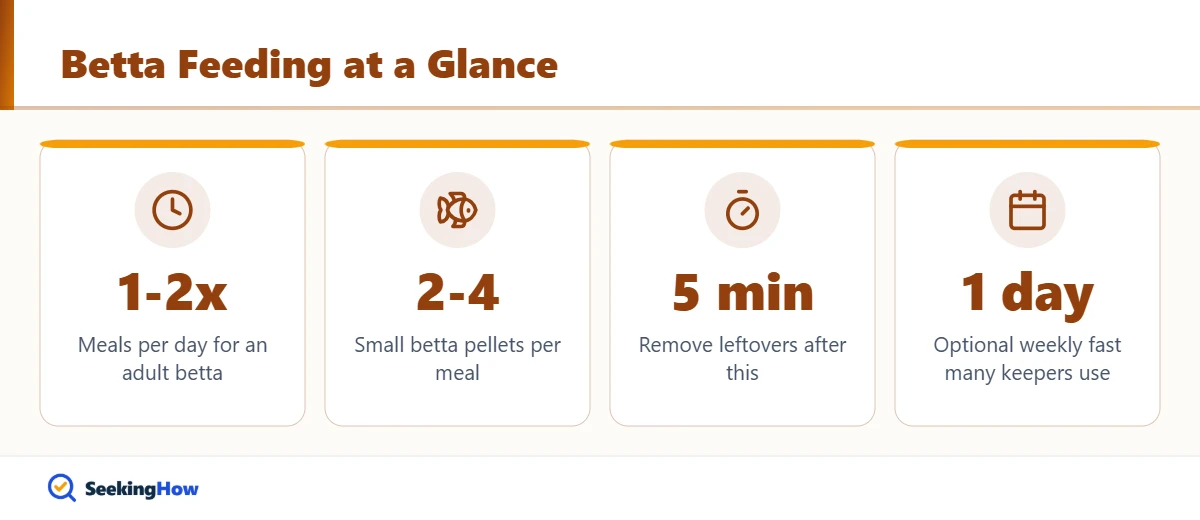
Feed an adult betta fish once or twice a day, giving only what it eats in about 2-3 minutes, usually 2-4 small betta pellets per meal. Use a quality betta pellet as the staple, add frozen or freeze-dried brine shrimp or bloodworms as occasional treats, and remove leftovers right away. Overfeeding, not underfeeding, is the most common betta feeding mistake.
Key Takeaways
- Adult bettas do best on 1-2 small meals a day, not one large one.
- A betta’s stomach is small, so a typical meal is only 2-4 standard betta pellets.
- The University of Illinois College of Veterinary Medicine advises feeding an amount the fish finishes within 3-5 minutes and removing leftovers.
- Bettas are carnivores and need a protein-rich pellet made for bettas, not generic tropical flakes alone.
- Many keepers skip one day of feeding per week to help prevent bloating and constipation.
- Uneaten food fouls the water quickly, especially in small tanks without a filter.
Betta fish will act hungry almost every time you walk by, which is why so many end up overfed. Knowing how often to feed a betta fish, and how much, keeps its digestion healthy and its water clean. Here’s a simple routine for adult bettas, young bettas and vacation days.
What You’ll Need
- Betta-specific pellets as the staple (protein-rich; check the label for a first ingredient such as fish or shrimp meal)
- Frozen or freeze-dried treats: brine shrimp, bloodworms or daphnia (occasional)
- Small turkey baster or net to remove leftovers
- Aquarium thermometer (target about 76-82°F)
- Feeding log or phone reminder (optional)
How Often To Feed a Betta Fish: Step-by-Step Routine
Step 1: Pick a Feeding Schedule
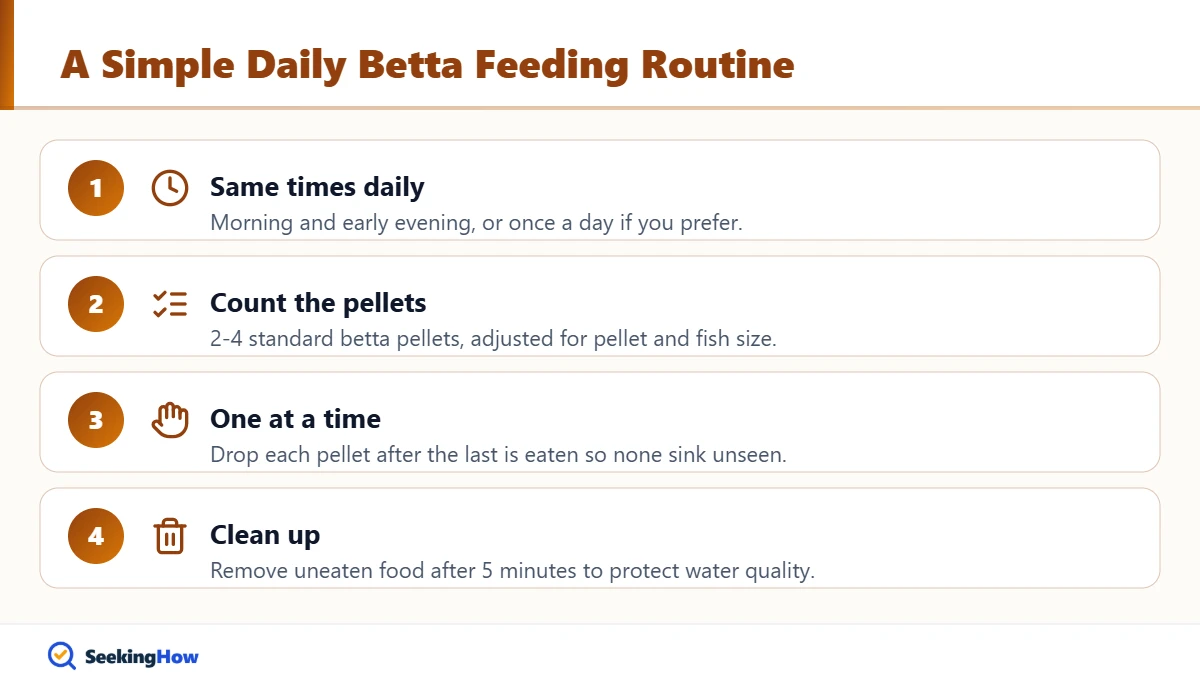
Feed adult bettas once or twice daily at roughly the same times, such as morning and early evening. Two smaller meals are easier to digest than one big meal. Most people find a consistent time also makes it easier to notice if the fish stops eating, an early sign of illness.
Step 2: Measure a Small Portion
Offer 2-4 standard betta pellets per meal, adjusting for pellet size and fish size. If you feed flakes, offer a pinch the betta can finish in about 2-3 minutes. Watch the belly: it should look gently rounded after eating, never swollen.
Step 3: Feed One Pellet at a Time
Drop pellets in one by one and let the betta eat each before adding the next. This prevents food from sinking unnoticed into gravel or plants. Some bettas spit pellets out and take them back; that is normal.
Step 4: Remove Leftovers Within 5 Minutes
Siphon or net out any uneaten food after 5 minutes. Leftover food breaks down into ammonia, which stresses bettas and can burn their fins. This matters most in small or unfiltered tanks.
Step 5: Add Treats 1-2 Times a Week
Replace a regular meal with frozen or freeze-dried brine shrimp, bloodworms or daphnia once or twice a week. Pre-soak freeze-dried foods in a little tank water for a few minutes so they don’t expand in the stomach. Treats add variety but should not replace the staple pellet.
Step 6: Consider a Weekly Fast Day
Many keepers skip feeding one day a week. This gives the digestive system a rest and helps prevent bloating and constipation. Healthy adult bettas handle a missed day easily.
Bottom line: Feed a small portion of betta pellets once or twice a day, remove leftovers, and when in doubt, feed less rather than more.
| Betta age or situation | How often | Portion |
|---|---|---|
| Adult betta | 1-2 times a day | 2-4 pellets per meal |
| Juvenile betta | 2-3 small meals a day | Tiny portions of crushed pellets or baby brine shrimp |
| Bloated or constipated betta | Fast 1-2 days | Then resume smaller meals |
| Weekend away | Skip feedings | Healthy adults tolerate 2-3 days without food |
| Longer trips | Pet sitter with pre-portioned meals | Avoid slow-release feeder blocks that cloud water |
Signs You Are Feeding Wrong
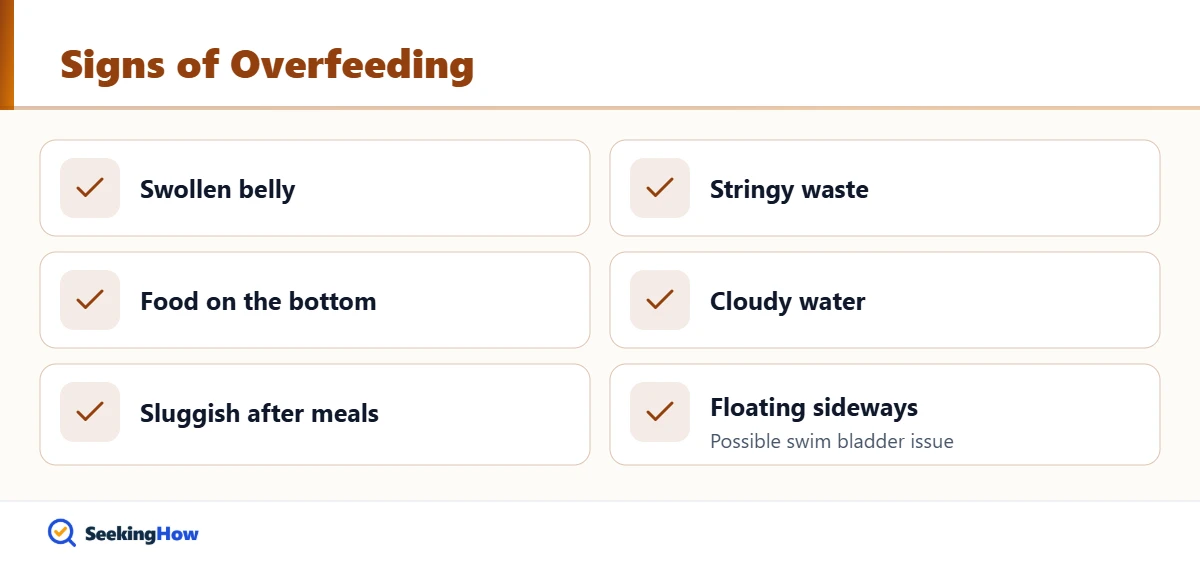
Problem: Swollen belly or stringy, trailing waste. Cause: Overfeeding or constipation. Fix: Fast for 1-2 days, then feed smaller portions.
Problem: Cloudy or smelly water. Cause: Uneaten food decaying. Fix: Remove leftovers promptly, do a partial water change and cut the portion.
Problem: Betta ignores food. Cause: Water too cold, stress, a new food or illness. Fix: Check the temperature (about 76-82°F), test water quality, and offer a familiar food.
Problem: Betta looks thin with a sunken belly. Cause: Underfeeding, competition from tankmates or parasites. Fix: Feed twice a day, target-feed away from tankmates and see a vet if weight loss continues.
When To See a Vet
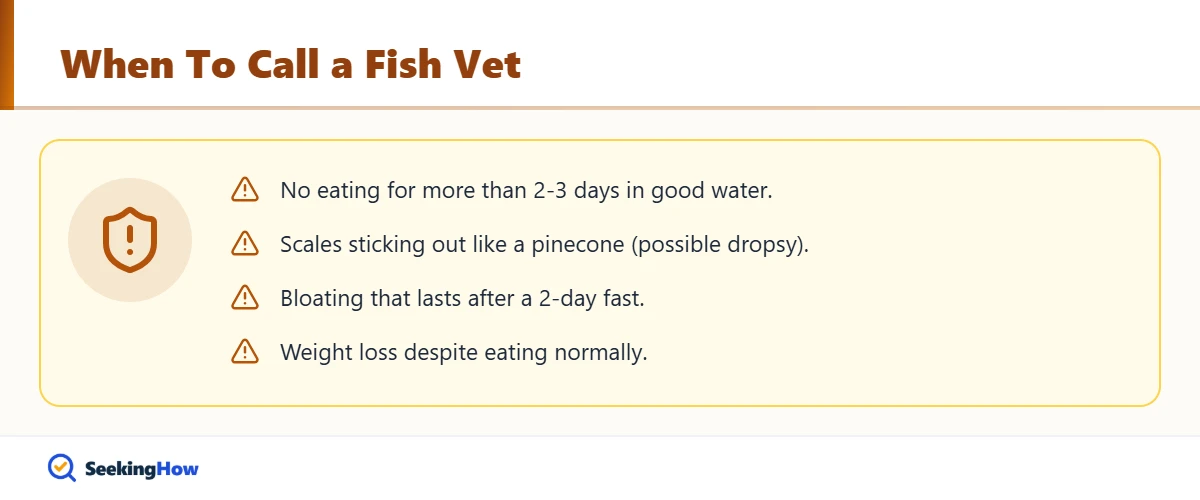
Contact a veterinarian who treats fish if your betta refuses food for more than 2-3 days in good water conditions, if the belly is swollen and the scales stick out like a pinecone (a sign of dropsy), if it stays bloated after a 2-day fast, or if it loses weight while eating. Clamped fins, rubbing against decor, and white spots alongside poor appetite also warrant an exam. Many betta problems trace back to water quality, so bring recent test results.
Prevention Tips
- Keep food sealed and use it within a few months of opening; stale pellets lose nutrients.
- Make one person responsible for feeding to avoid double meals.
- Keep the tank heated and filtered so your betta digests well.
- Do partial water changes weekly to remove waste from food.
Going away? See how long a betta fish can go without food before you buy a vacation feeder.
Related Guides
- How long can a betta fish go without food
- How to get whipworms out of your yard
- How to clean dog poop out of carpet
Sources
- University of Illinois College of Veterinary Medicine – Bettas need more than bowls
- PetSmart Learning Center – How to care for your betta fish
- American Veterinary Medical Association – Pet care resources
Frequently Asked Questions
How many pellets should I feed my betta?
Feed most adult bettas 2-4 standard betta pellets per meal, once or twice a day. Larger pellets mean fewer per meal. A good check is that the belly looks slightly rounded after eating, not swollen. Adjust down if food is left uneaten or the fish looks bloated.
Can I feed my betta once a day?
Yes, feeding a betta once a day is fine for healthy adults as long as the portion is appropriate. Many owners prefer two smaller meals because they are easier to digest and help you notice appetite changes. Young, growing bettas benefit from more frequent small meals.
Is it bad to feed a betta fish flakes?
Flakes are not bad, but betta-specific pellets are usually a better staple because they are formulated for carnivores and are easier to portion. Generic tropical flakes may lack enough protein. If you use flakes, choose a betta formula and remove leftovers since flakes break down quickly.
How do I know if my betta is hungry?
You cannot reliably tell if a betta is hungry by its behavior, because bettas beg for food even when full. Feed on a schedule rather than in response to begging. A healthy betta that eats eagerly at mealtimes and keeps a rounded, not sunken, belly is getting enough.
What happens if I overfeed my betta?
Overfeeding a betta can cause bloating, constipation and swim bladder problems that make it float or sink awkwardly. Leftover food also raises ammonia and fouls the water. Fasting for 1-2 days and then feeding smaller portions resolves most mild cases.
Should I feed my betta bloodworms every day?
No, bloodworms are best as a treat once or twice a week, not a daily food. They are rich and lack complete nutrition on their own, and some bettas become picky if fed them too often. Use a quality betta pellet as the everyday staple.
Do bettas need to eat every day?
Bettas do not need to eat every single day, and healthy adults handle a missed day easily. Many keepers fast their bettas one day a week. Regular daily feeding still keeps them in the best condition, so skip days only intentionally, not by accident for long stretches.