
Quick Answer
To clean a betta tank without removing the fish, unplug the heater and filter, wipe algae off the glass, then use a small gravel vacuum to siphon out 25-30% of the water along with debris. Rinse filter media in the removed tank water and refill slowly with dechlorinated, temperature-matched water. The job takes 20-30 minutes and avoids netting stress.
Key Takeaways
- Partial water changes of about 25-30% weekly keep a filtered betta tank clean without moving the fish.
- Always treat new tap water with a water conditioner and match its temperature within about 2°F.
- Rinse filter media in old tank water, never under tap water, to keep beneficial bacteria alive.
- Unplug the heater before lowering the water level so it doesn’t overheat out of water.
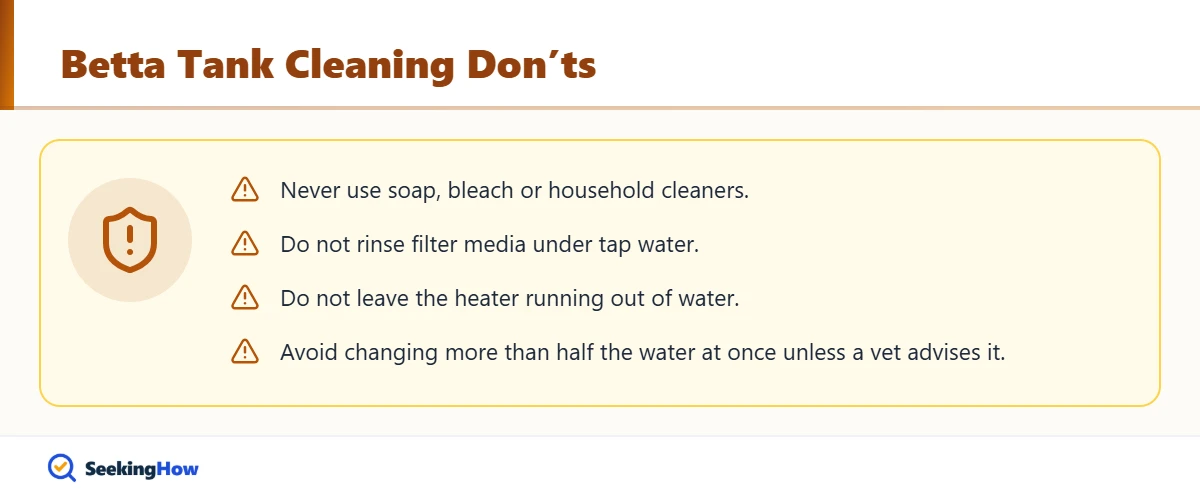
- Avoid soap, bleach and household cleaners anywhere in or on the tank.
- Small or unfiltered bowls need more frequent changes because waste builds up faster.
Netting a betta for every cleaning stresses the fish and can tear its long fins. Learning how to clean a betta tank without removing the fish lets you keep the water healthy with a simple weekly routine. This method works for filtered tanks of about 2.5 gallons and up.
What You’ll Need
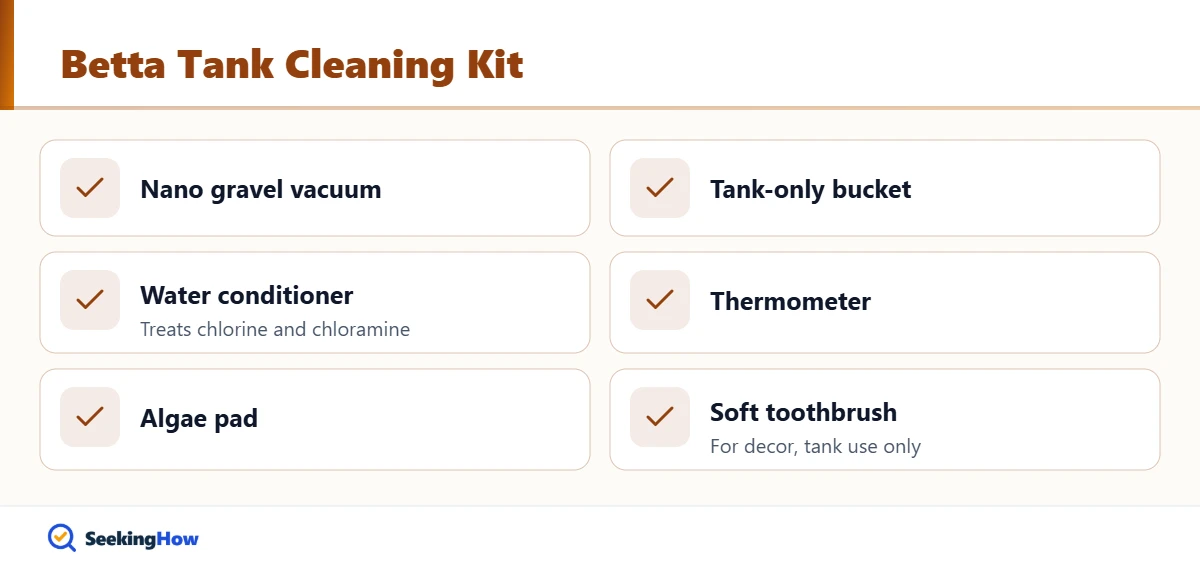
- Small aquarium gravel vacuum or siphon (a narrow “nano” size for small tanks)
- Clean bucket used only for the aquarium
- Water conditioner (dechlorinator that also handles chloramine)
- Aquarium thermometer
- Algae pad or magnetic glass scraper (aquarium-safe)
- Soft toothbrush reserved for the tank
- Paper towels
- Turkey baster for spot-cleaning (optional)
How To Clean a Betta Tank Without Removing the Fish: Step-by-Step
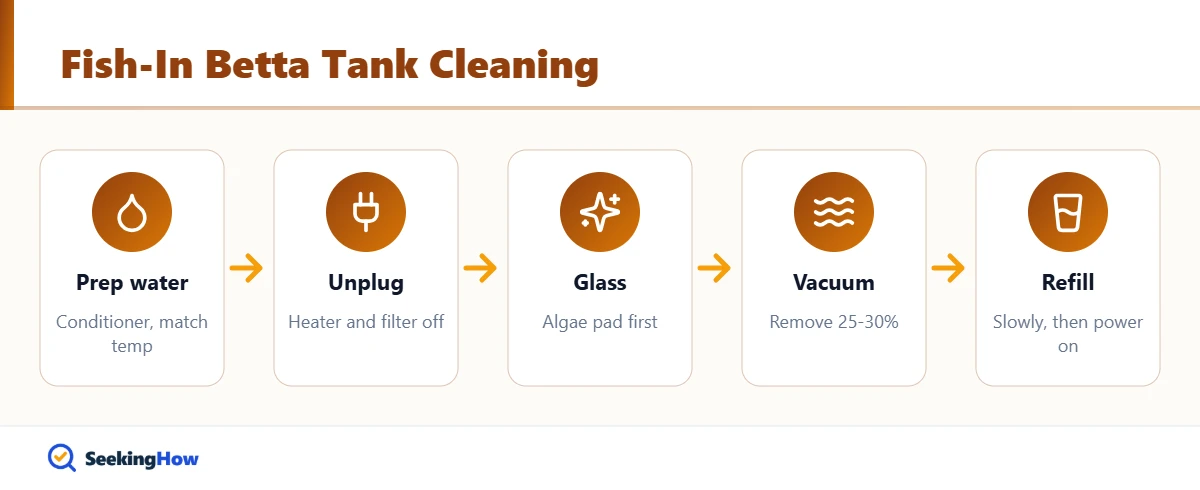
Step 1: Prepare the New Water
Fill a clean bucket with tap water, add water conditioner at the label dose for the full bucket, and adjust it to within about 2°F of the tank temperature. Sudden temperature changes stress bettas. Most people forget to dose the conditioner for the bucket volume and underdose it.
Step 2: Unplug the Heater and Filter
Switch off and unplug both before you lower the water level. A heater exposed to air can overheat and crack, and a filter can run dry and burn out. Wait about 10-15 minutes after unplugging before lifting the heater out of water if you need to move it.
Step 3: Clean the Glass
Wipe algae off the inside glass with an aquarium algae pad or magnetic scraper, working slowly so your betta can move away. Do this before vacuuming so the loosened algae gets siphoned out. Never use a kitchen sponge that may hold soap residue.
Step 4: Vacuum the Gravel and Remove Water
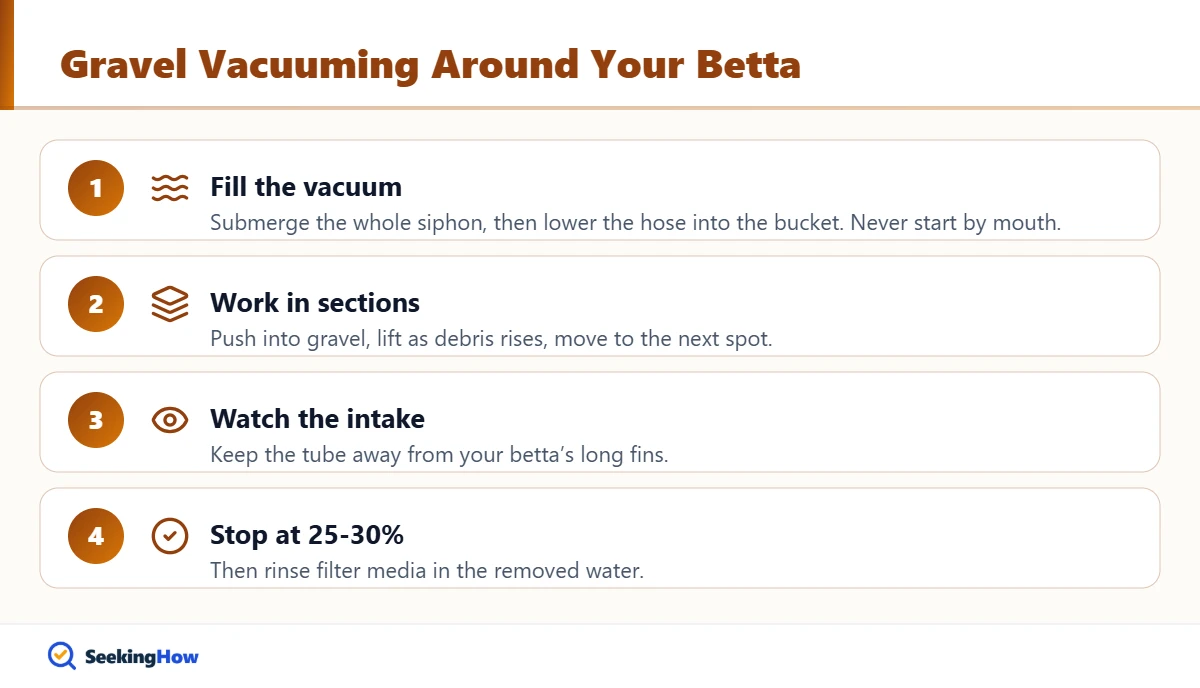
Start the siphon and push the vacuum into the gravel, lifting it as debris rises, working in sections. Stop when about 25-30% of the water is removed. Keep the siphon end away from your betta; bettas are curious, and long fins can get pulled against the intake.
Step 5: Rinse Filter Media in Old Tank Water
Once a month, or when flow slows, swish the filter sponge or cartridge in the bucket of removed tank water until it stops releasing gunk. Tap water’s chlorine kills the beneficial bacteria that break down waste. Replace cartridges only when they are falling apart, not on a strict schedule.
Step 6: Wipe Decorations in Place
Brush algae off decorations and plant leaves with a soft tank-only toothbrush while they stay in the tank, or lift them out briefly and rinse in old tank water. Trim melting live plant leaves. Leaving decor in place keeps your betta’s resting spots familiar.
Step 7: Refill Slowly and Restart Equipment
Pour the conditioned water in slowly against the glass or over a decoration so the betta isn’t blasted. Wipe the outside glass, then plug the filter and heater back in. Check the temperature again after 30 minutes.
Bottom line: A weekly 25-30% vacuum-and-refill with conditioned, temperature-matched water cleans the tank well enough that you should rarely need to move your betta.
| Tank setup | Partial water change | Filter media rinse |
|---|---|---|
| 5+ gallons, filtered and heated | About 25-30% weekly | Monthly, in old tank water |
| 2.5-5 gallons, filtered | About 25-50% weekly | Every 2-4 weeks |
| Unfiltered bowl or small tank | Several times a week; not recommended | No filter |
| Heavily planted tank | About 20-25% weekly | Monthly |
If That Didn’t Work
Problem: Water turns cloudy after cleaning. Cause: Disturbed debris or a bacterial bloom from rinsing media in tap water. Fix: Leave it alone a few days, avoid overfeeding, and only rinse media in tank water.
Problem: Betta is lethargic after the change. Cause: Temperature shock or missing conditioner. Fix: Check temperature and dose conditioner for the full tank volume if you are unsure.
Problem: Algae returns within days. Cause: Too much light, overfeeding or direct sunlight. Fix: Keep lights on 8-10 hours a day and move the tank out of sun.
Problem: Siphon won’t start. Cause: Air in the tube. Fix: Submerge the whole vacuum to fill it, then lower the hose end into the bucket; never start a siphon by mouth.
When To See a Vet
Cleaning won’t fix disease. Contact a fish vet if your betta stays lethargic or stops eating for more than 2-3 days after water changes, if ammonia or nitrite readings stay above zero despite regular changes, or if you see white spots, fuzzy patches, rotting fins or gasping. Avoid adding medications during routine cleaning unless a vet recommends them. If your betta seems still after cleaning, see how to tell if a betta fish is dying or sleeping.
Prevention Tips
- Feed small portions and remove leftovers; see how often to feed a betta fish.
- Keep a live plant or two to help absorb waste.
- Test water weekly for ammonia, nitrite and nitrate.
- Keep a dedicated bucket and tools that never touch soap.
Related Guides
- How often to feed a betta fish
- How to tell if a betta fish is dying or sleeping
- How long can a betta fish go without food
Sources
- University of Illinois College of Veterinary Medicine – Bettas need more than bowls
- PetSmart Learning Center – How to care for your betta fish
- American Veterinary Medical Association – Pet care resources
Frequently Asked Questions
How often should I clean my betta tank?
Clean a filtered betta tank with a 25-30% partial water change about once a week. Rinse filter media in old tank water about monthly. Smaller tanks and unfiltered bowls need more frequent changes because waste and ammonia build up faster in less water.
Can I clean my betta tank with the fish in it?
Yes, you can and usually should clean a betta tank with the fish in it. Partial water changes and gravel vacuuming are gentle when done slowly. Removing the fish for every cleaning adds stress and risks fin damage from netting. Just keep the siphon away from its fins.
Can I use tap water for my betta tank?
Yes, tap water is fine for a betta tank once you treat it with a water conditioner that neutralizes chlorine and chloramine. Match the temperature before adding it. The University of Illinois College of Veterinary Medicine advises against distilled water because it lacks needed minerals.
Should I do a 100% water change for my betta?
No, a 100% water change is rarely needed and can shock a betta with sudden changes in temperature and chemistry. It also removes beneficial bacteria. Regular partial changes are safer. A large change may be appropriate only in emergencies, such as a toxic spill or a vet’s advice.
How do I clean algae off betta tank decorations?
Clean algae off betta tank decorations by scrubbing them with a soft toothbrush reserved for the tank, either in place or after lifting them out and rinsing in old tank water. Never use soap. Reducing light to 8-10 hours a day and avoiding overfeeding slows algae regrowth.
Do I need to remove my betta to clean the filter?
No, you do not need to remove your betta to clean the filter. Unplug it, take out the sponge or cartridge, and swish it in a bucket of water removed from the tank. Reinstall it, refill the tank and plug the filter back in.