Quick Answer
To get dog pee smell out of a couch, blot up as much urine as possible, check the fabric’s cleaning code, then saturate the spot with an enzyme cleaner made for pet urine and let it work for at least 10 to 15 minutes before blotting and air-drying for 24 to 48 hours. Avoid ammonia and heat, which lock odor in.
Key Takeaways
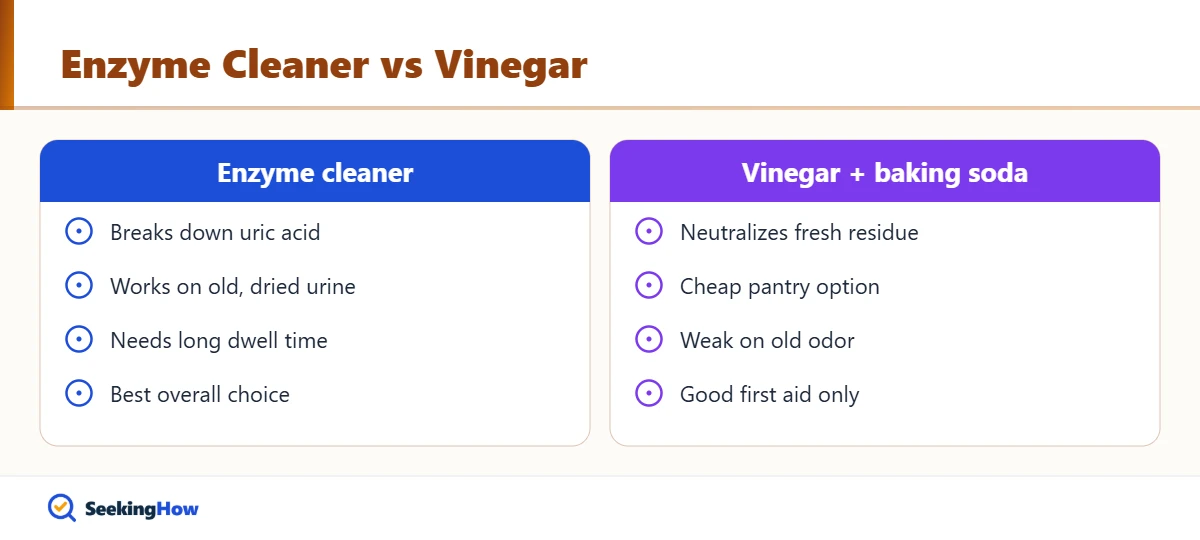
- Enzyme cleaners break down uric acid, the part of dog urine that keeps smelling after the surface looks clean.
- The cleaner must reach as deep as the urine did, so soaked cushions need more product than a damp spot.
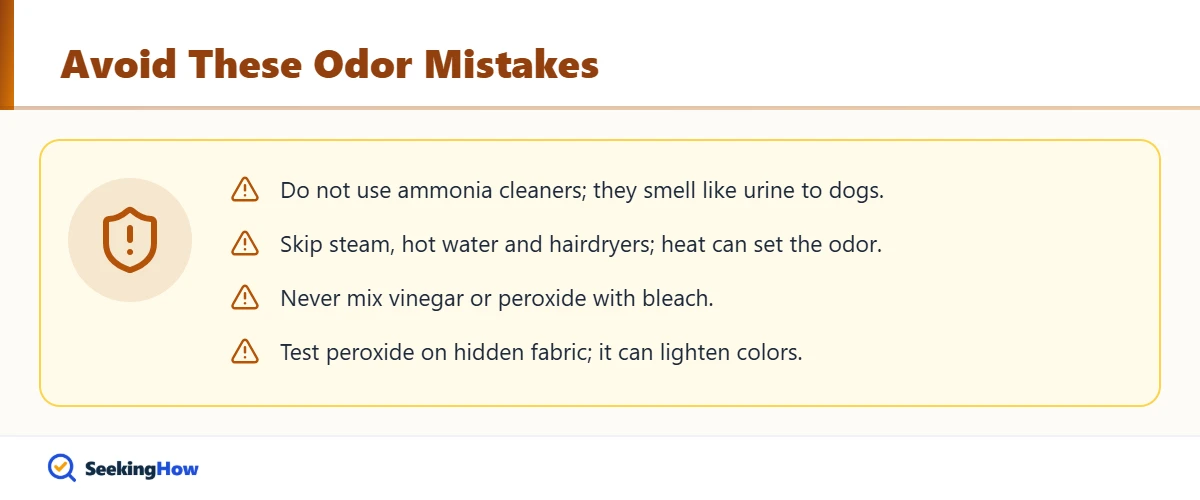
- Ammonia-based cleaners smell like urine to a dog and can invite repeat marking.
- Steam, hairdryers and hot water can set urine odor into fibers and foam.
- A UV flashlight in a dark room shows old stains you cannot see in daylight.
- If the smell returns after two enzyme treatments, the foam core usually needs replacing.
A couch is harder to de-scent than a floor because urine soaks through the fabric into padding and foam, where surface sprays never reach. This guide shows how to get dog pee smell out of a couch on fresh accidents and old, dried spots, plus what to do when the odor keeps coming back.
What You’ll Need
- White paper towels or a clean, light-colored microfiber cloth
- Enzyme-based pet urine cleaner (labeled for urine and safe for upholstery)
- Distilled white vinegar and cool water (for pre-treating, if the fabric code allows water)
- Baking soda
- Spray bottle and a small soft brush
- UV (blacklight) flashlight, 365 to 395 nm (optional, for finding old stains)
- Plastic wrap or a damp towel (optional, to slow drying so enzymes keep working)
- Wet-dry vacuum or upholstery extractor (optional)
How To Get Dog Pee Smell Out of a Couch: Step-by-Step
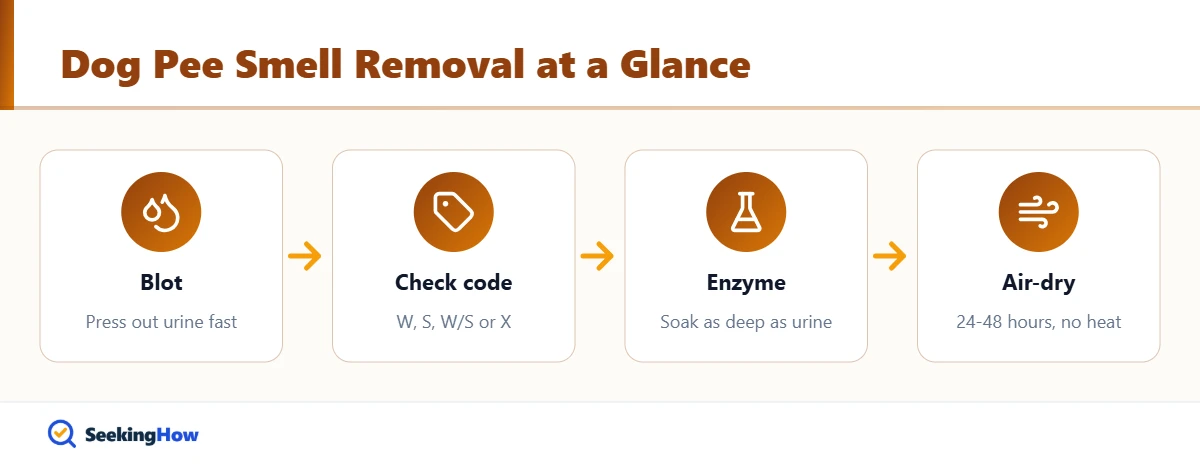
Step 1: Blot Up Fresh Urine Immediately
Press thick layers of paper towels into the wet spot and stand on or press them firmly until they come up nearly dry. Every bit of urine you remove now is odor you won’t have to break down later. The most common mistake is rubbing, which spreads urine sideways into a bigger ring.
Step 2: Find Every Spot and Check the Cleaning Code
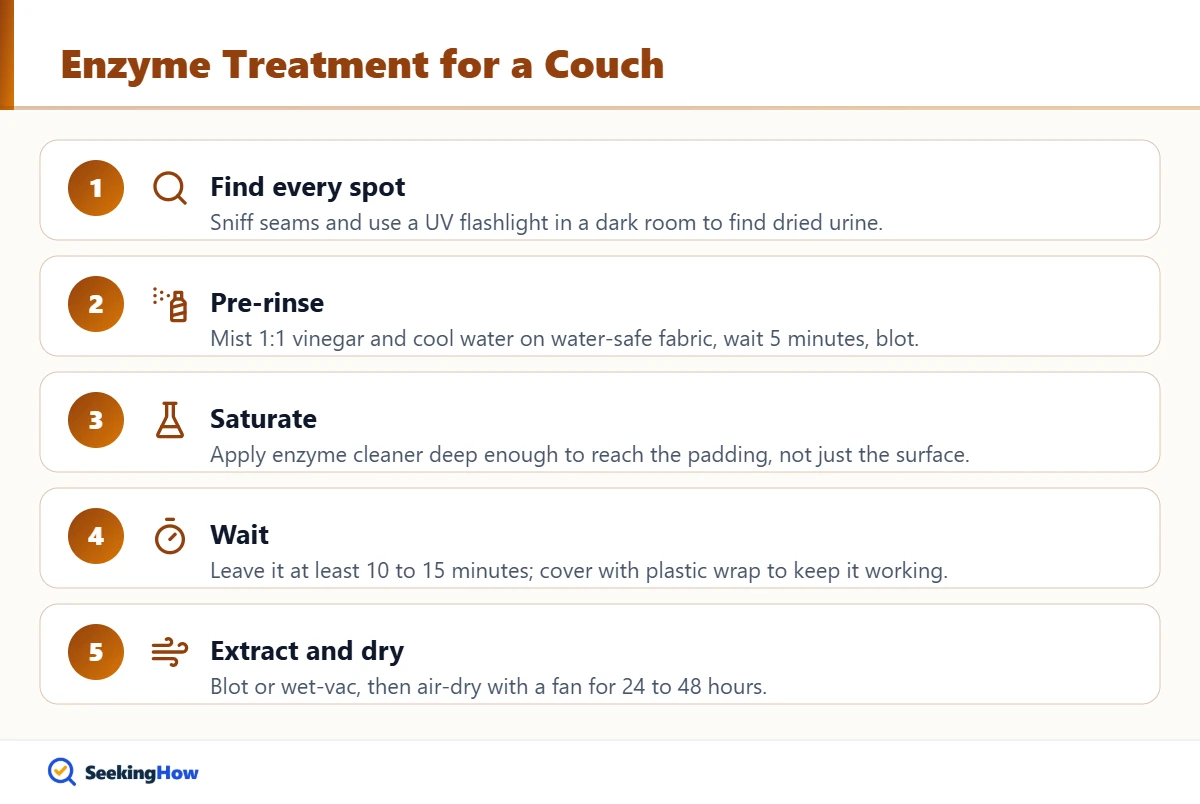
Sniff along seams and cushions, then use a UV flashlight in a dark room; dried urine usually glows yellow-green. Look for the care tag under a cushion or the deck: W means water-based cleaners are fine, S means solvent only, W/S allows either, and X means vacuum only. For S or X fabrics, test any product on a hidden area or call a professional upholstery cleaner.
Step 3: Remove the Cushion Cover if You Can
If the cover unzips and the tag allows washing, wash it cold with a cup of enzyme laundry additive or a pet-odor detergent, then air-dry. Do not machine-dry until the smell is completely gone, because dryer heat can set it. Treat the foam insert separately in the next steps.
Step 4: Pre-Rinse With a Vinegar Solution (Water-Safe Fabrics Only)
Mist a 1:1 mix of white vinegar and cool water over the spot, wait 5 minutes, and blot. The acid helps neutralize the alkaline salts left as urine dries. Skip this step right before an enzyme product only if the enzyme label says to avoid acids; otherwise rinse lightly with plain water and blot before Step 5.
Step 5: Saturate the Area With an Enzyme Cleaner
Spray or pour enough enzyme cleaner to wet the fabric as deeply as the urine went, which for a soaked cushion means into the foam. Let it sit for the label’s dwell time, usually at least 10 to 15 minutes; many products work better over several hours. In practice, covering the spot loosely with plastic wrap keeps it damp so the enzymes keep working.
Step 6: Blot, Then Extract Moisture
Blot with clean towels, or run a wet-dry vacuum or small upholstery extractor over the area to pull out dissolved residue. Removing the liquid also prevents a water ring and a musty smell. Do not rinse enzyme cleaner away early unless the label tells you to.
Step 7: Air-Dry Without Heat, Then Deodorize
Let the couch air-dry for 24 to 48 hours with a fan blowing across it, not a hairdryer or heater. Once fully dry, sprinkle baking soda over the spot, leave it overnight, and vacuum. Most people find a second enzyme treatment is needed for old or large accidents.
Bottom line: If the fabric tolerates water, an enzyme cleaner applied deep enough and left to work long enough is the one method that reliably removes dog pee smell from a couch.
If That Didn’t Work
Problem: The smell comes back on humid days. Cause: Uric acid crystals remain in the padding and reactivate with moisture. Fix: Repeat the enzyme treatment with more product, inject it into the foam with a syringe applicator, and extend dwell time.
Problem: A water ring appeared. Cause: The edges dried faster than the center and left a tide line. Fix: Lightly mist the whole panel seam to seam with distilled water and blot evenly so it dries uniformly.
Problem: The fabric is clean but the cushion still reeks. Cause: The foam core is saturated. Fix: Remove the foam, soak it in enzyme solution in a tub, press out the liquid, and dry it outdoors in shade; replace it if odor persists.
Problem: The dog keeps peeing in the same spot. Cause: Residual scent marks it as a bathroom area. Fix: Retreat the spot, block access to the couch for a few weeks, and review house-training and health causes below.
| Method | Time | Cost | Works on old odor? | Best for |
|---|---|---|---|---|
| Enzyme cleaner | 15 min to overnight + drying | Low | Yes, with repeat | Most couches (W, W/S) |
| Vinegar + baking soda | 1 to 2 hours + drying | Very low | Partly | Fresh, small spots |
| Wet-dry extractor + enzyme | 1 to 2 hours + drying | Medium | Yes | Large or soaked areas |
| Professional upholstery cleaning | Half a day | Higher | Yes | S or X fabrics, leather, heirlooms |
Safety and When To See a Vet
Never mix vinegar, hydrogen peroxide or enzyme cleaners with bleach, and keep pets off treated areas until dry. Hydrogen peroxide can lighten dark fabrics, so test it first or leave it out. For leather, microsuede marked S, or antique pieces, use a cleaner approved for that material or hire a professional.
See your veterinarian if a house-trained dog suddenly starts urinating on furniture, especially with frequent urination, straining, blood in the urine, increased thirst, or accidents during sleep. The AVMA notes that house-soiling can have medical causes, such as urinary tract infections, bladder stones, kidney disease or age-related incontinence, that cleaning alone will not fix.
Prevention Tips
- Use a washable, waterproof couch cover while house-training a puppy or managing an older dog.
- Take dogs out after meals, naps and play, and before you leave the house.
- Reward outdoor elimination right away so the couch never becomes the habit spot.
- Keep an enzyme cleaner on hand so fresh accidents get treated within minutes.
Related Guides
- How to disinfect a fabric couch safely
- How to clean dog poop out of carpet
- Smart vinegar uses around the house
- How to use Lysol disinfectant spray the right way
Sources
- American Veterinary Medical Association (AVMA) – pet behavior and house-soiling resources: avma.org
- ASPCA – pet care and house-training guidance: aspca.org
- Upholstery manufacturer care labels – W, S, W/S and X cleaning codes
- U.S. EPA – safer choice and household cleaning product guidance: epa.gov
Frequently Asked Questions
Does vinegar get dog pee smell out of a couch?
Vinegar helps with fresh spots but rarely removes old dog urine odor on its own. A 1:1 vinegar and water rinse neutralizes some alkaline residue, yet uric acid crystals deep in the cushion usually survive. Follow it with an enzyme cleaner for lasting results.
How long does enzyme cleaner take to work on a couch?
Enzyme cleaner needs at least 10 to 15 minutes of contact, and old stains often need several hours or overnight while staying damp. The enzymes only work while wet, so covering the spot with plastic wrap helps. Full odor removal is judged after the couch dries completely.
Can I use baking soda alone on dog urine on a couch?
Baking soda alone absorbs surface odor but does not break down urine in the padding. Use it as the final step after an enzyme treatment and full drying. Leave it overnight, then vacuum thoroughly with an upholstery attachment.
Why does my couch still smell like dog pee after cleaning?
The couch still smells because urine reached the foam and the cleaner did not. Uric acid crystals reactivate with humidity, so the odor returns. Apply more enzyme cleaner, inject it into the foam if needed, and replace the foam if two thorough treatments fail.
Is it safe to steam clean a couch with dog urine?
Steam cleaning is not recommended until the urine is fully treated. Heat can bond urine odor to fibers and make it harder to remove. Use an enzyme cleaner first, let it dry, and only then consider a hot-water extraction if the fabric code allows water.
How do I get dog pee smell out of a leather couch?
Wipe urine off a leather couch quickly with a damp cloth and a cleaner made for finished leather, then condition it. Avoid soaking leather with vinegar or enzyme sprays unless the product says it is leather-safe. If urine seeped into seams or cushions, a leather professional is the safer choice.
Will the smell make my dog pee on the couch again?
Yes, any leftover urine scent can draw a dog back to the same spot. Dogs detect odor far below what people notice. Treat the area thoroughly, block access for a few weeks, and rule out medical problems with your vet if accidents continue.