Quick Answer
To fix a squeaky metal bed frame, tighten every bolt with a wrench or hex key, lubricate metal-to-metal joints with silicone spray or paraffin wax, and add felt or rubber pads where slats, rails, and legs touch. The job takes 30 to 45 minutes. Avoid oil-based sprays on parts that touch bedding or the floor.
Key Takeaways
- Loose bolts at the corner brackets cause most metal bed frame squeaks, so tighten every fastener first.
- Silicone spray or paraffin wax quiets metal-on-metal joints without staining sheets or carpet.
- Felt pads, rubber washers, or cork tape stop squeaks where slats and center supports rub the rails.
- Lie on the bed and shift your weight to pinpoint the noise before taking anything apart.
- A frame that still squeaks after tightening may have a cracked weld or bent rail that needs replacement.
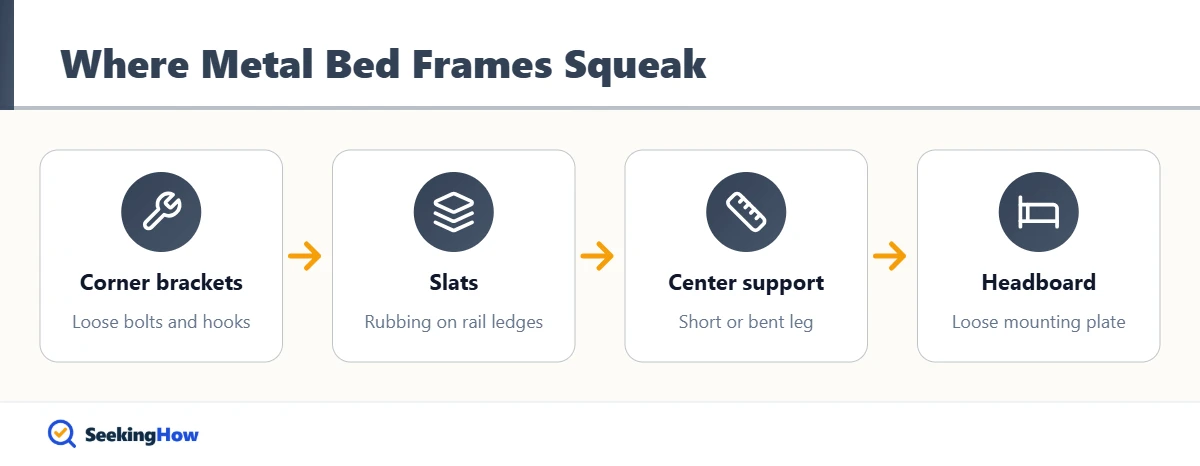
A metal bed frame squeaks when two hard surfaces move against each other under your weight: a bolt that has backed out, a slat sliding in its rail, or a leg rocking on an uneven floor. Learning how to fix a squeaky metal bed frame is mostly about finding that one moving joint and stopping it from moving or rubbing. The fixes below go from the most common cause to the least.
What You’ll Need
- Adjustable wrench and a socket set (most frames use 10 mm, 13 mm, or 1/2-inch nuts)
- Hex (Allen) keys, usually 4 mm, 5 mm, or 6 mm, for frames sold flat-packed
- Phillips screwdriver
- Silicone lubricant spray or a block of paraffin wax (a plain white candle works)
- Self-adhesive felt pads or cork tape
- Rubber or nylon washers sized to your bolts (optional)
- Blue (medium-strength) threadlocker (optional)
- Rubber furniture cups or leg pads (optional)
- Flashlight and an old towel or drop cloth
How To Fix a Squeaky Metal Bed Frame: Step-by-Step
Step 1: Find the Exact Source of the Squeak
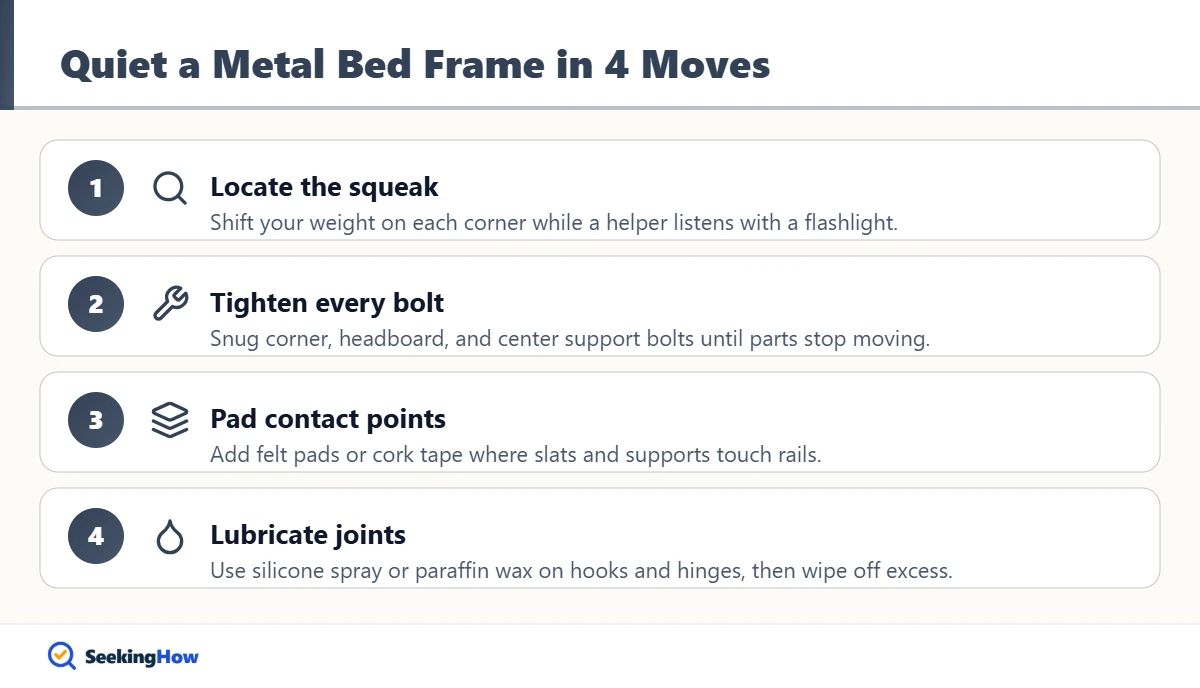
Strip the bed to the mattress, then lie down and roll, sit on each corner, and press on the center. Have a second person crouch beside the frame with a flashlight while you move, because a squeak that sounds like it comes from the headboard often starts at a side rail bracket. The most common mistake is lubricating everything at once, which hides the real cause and leaves a sticky mess.
Step 2: Remove the Mattress and Check the Mattress Itself
Lift the mattress and box spring off and push down on the bare frame. If the frame is silent but the noise returns with the mattress on, the squeak is coming from the box spring’s internal springs, not the frame. In that case, a new foundation or a solid platform board solves it, and no amount of frame tightening will help.
Step 3: Tighten Every Bolt and Screw
Work around the frame and tighten each bolt at the corner brackets, headboard and footboard plates, and center support. Snug them firmly with a wrench, but stop once the parts no longer move; overtightening can strip threads or crack thin steel. In practice, most squeaks disappear at this step because frame bolts loosen gradually as the bed flexes every night.
Step 4: Add Washers or Threadlocker to Loose Joints
If a bolt keeps loosening, remove it, slide a rubber or nylon washer between the metal parts, and reinstall it. For bolts that back out every few weeks, add a drop of blue threadlocker to the threads, which holds them but still lets you remove them with hand tools later. Never use red threadlocker on furniture, since it is designed to be permanent.
Step 5: Lubricate Metal-to-Metal Contact Points
Spray silicone lubricant into hinge points, folding joints, and the hooks where side rails lock into the headboard brackets, then wipe off the excess with a rag. Rubbing paraffin wax on the hooks and slat seats is a cleaner option because it will not drip onto the carpet. Avoid general-purpose penetrating oil, which attracts dust and can stain mattresses and sheets.
Step 6: Pad Slats, Rails, and Center Supports
Stick felt pads or cork tape where wooden or metal slats rest on the rail ledge, and on top of the center support beam. This stops the slats from clicking and rubbing each time you turn over. If a wooden slat is cracked or bowed, replace it, as described in our guide on how to fix a broken bed slat.

Step 7: Level the Legs and Protect the Floor
Check whether the frame rocks on its own. Put rubber furniture cups or felt pads under each leg and adjust any center support legs so they touch the floor without lifting the side rails. A center leg that is too short lets the middle of the frame flex and creak every night.
Bottom line: Tighten first, pad second, and lubricate last; most metal bed frames go silent after the first two steps.
If That Didn’t Work
Problem: The squeak returns within a week. Cause: Bolts are working loose under nightly movement. Fix: Add lock washers or blue threadlocker and recheck every three months.
Problem: The headboard squeaks against the wall or frame. Cause: The headboard plate is loose or touches the wall. Fix: Tighten the mounting bolts, add rubber washers, and put a felt bumper on the back of the headboard. Our guide to attaching a headboard to a metal bed frame covers the plates and spacers.
Problem: Creaking only in the middle of the bed. Cause: The center support is missing, short, or bent. Fix: Adjust or replace the center support leg so it carries the load.
Problem: A single joint clicks no matter what. Cause: A cracked weld or elongated bolt hole. Fix: Inspect with a flashlight; replace the bracket or the frame if metal is cracked.
Problem: The noise is a soft, springy creak. Cause: Box spring or mattress coils. Fix: Replace the foundation or use a solid platform board instead.
| Fix | Time | Cost | Best for |
|---|---|---|---|
| Tighten bolts | 10–15 min | Free | Most squeaks at corners and brackets |
| Felt pads or cork tape | 10 min | Low | Clicking slats and center supports |
| Silicone spray or wax | 5 min | Low | Hinges, hooks, folding joints |
| Rubber washers or threadlocker | 15 min | Low | Bolts that keep loosening |
| Replace bracket or frame | 1 hour+ | Moderate | Cracked welds or bent rails |
Safety and When To Call a Pro
Stop using the bed and replace the frame if you see a cracked weld, a bent side rail, or a bracket that has torn around its bolt hole, because these can collapse under load. Wear gloves when handling stamped steel, which often has sharp edges. Spray silicone with the window open and keep it off the floor, since it makes hard floors slippery.

Prevention Tips
- Recheck and tighten frame bolts every three to six months.
- Keep felt pads under slats and legs and replace them when they flatten.
- Use the center support legs your frame came with, especially for queen and king beds.
- Avoid sitting heavily on the corners, which stresses the corner brackets most.
Related Guides
- How to fix a broken bed slat
- How to attach a headboard to a metal bed frame
- How to make a box spring out of plywood
- How to fix a wobbly chair
Sources
- U.S. Consumer Product Safety Commission (CPSC) — furniture safety guidance (cpsc.gov)
- Henkel Loctite — threadlocker strength grades and removability (loctite.com)
- WD-40 Company — silicone lubricant product use information (wd40.com)
Frequently Asked Questions
What is the best lubricant for a squeaky metal bed frame?
Silicone spray is the best lubricant for most metal bed frames because it reaches into joints, stays slick, and does not attract much dust. Paraffin wax is a cleaner choice for hooks and slat ledges. Skip heavy oils and grease, which collect lint and can stain sheets, mattresses, and carpet.
Can I use WD-40 on a squeaky bed frame?
Yes, but the original WD-40 is a light-duty product that may quiet a joint only briefly. A dedicated silicone lubricant lasts longer on metal-to-metal contact. Whatever you use, spray onto a rag or the joint itself, wipe away the excess, and keep it off the floor and bedding.
Why does my metal bed frame squeak when I move?
A metal bed frame squeaks when you move because a joint shifts under your weight. Usually a bolt has loosened, a slat is sliding on its ledge, or a center leg is not touching the floor. Each movement makes metal rub metal, which creates the squeak or creak.
How do I stop bed slats from squeaking?
Stop bed slats from squeaking by sticking felt pads or cork tape on the rail ledges where the slats rest. Make sure every slat sits fully in its slot and that the center support is touching the floor. Replace any slat that is cracked or bowed.
Does a squeaky bed frame mean it is broken?
No, most squeaky bed frames are simply loose, not broken. Tightening bolts fixes the majority of cases. Treat it as broken only if you find a cracked weld, bent rail, or torn bracket, which can fail suddenly and should be replaced rather than lubricated.
How often should I tighten my bed frame bolts?
Check and tighten bed frame bolts every three to six months, and after moving the bed. Frames flex every night, so fasteners loosen gradually. Adding rubber washers or a drop of blue threadlocker extends the time between checks for bolts that loosen often.
Will a rug or furniture pads stop bed frame noise?
Furniture pads help when the noise comes from legs sliding or rocking on a hard floor. They do not fix squeaks at the corner brackets or slats. Use rubber cups under each leg, then tighten and pad the frame itself for full quiet.