Quick Answer
To fix a peeling faux leather couch, scrape off all loose flakes, sand the edges smooth with 600-grit sandpaper, then fill the bare fabric with a flexible leather or vinyl filler and recolor it with matching color compound. Small areas take 1 to 2 hours plus drying. Large peeling areas are better covered with adhesive patches, a slipcover, or reupholstery.
Key Takeaways
- Peeling faux leather cannot be reglued; the loose top layer must be removed before any repair.
- Bonded and polyurethane (PU) leather peel because the thin coating breaks down with age, heat, sunlight, and body oils.
- Flexible filler plus color compound gives the most invisible result on small to medium spots.
- Self-adhesive leather repair patches are the fastest fix for arms and seat edges.
- When peeling covers most of the seat, a slipcover or reupholstery is more cost-effective than patching.
Most faux leather couches are made of bonded leather or polyurethane (PU) coated over a fabric backing, and that thin top coat eventually cracks and flakes. This guide on how to fix a peeling faux leather couch shows you how to stop the flaking, rebuild the surface, and decide when a repair is no longer worth it.
What You’ll Need
- Plastic scraper or old credit card
- Lint roller or vacuum with a brush attachment
- 600-grit sandpaper or a fine sanding sponge
- Isopropyl alcohol (70%) and lint-free cloths
- Leather and vinyl repair kit with flexible filler and color compound
- Small palette knife or spatula
- Fine sponge or small brush for color
- Hair dryer on low heat (optional)
- Self-adhesive faux leather repair patches (optional)
- Water-based leather or vinyl top coat or sealer (optional)
Why Faux Leather Couches Peel
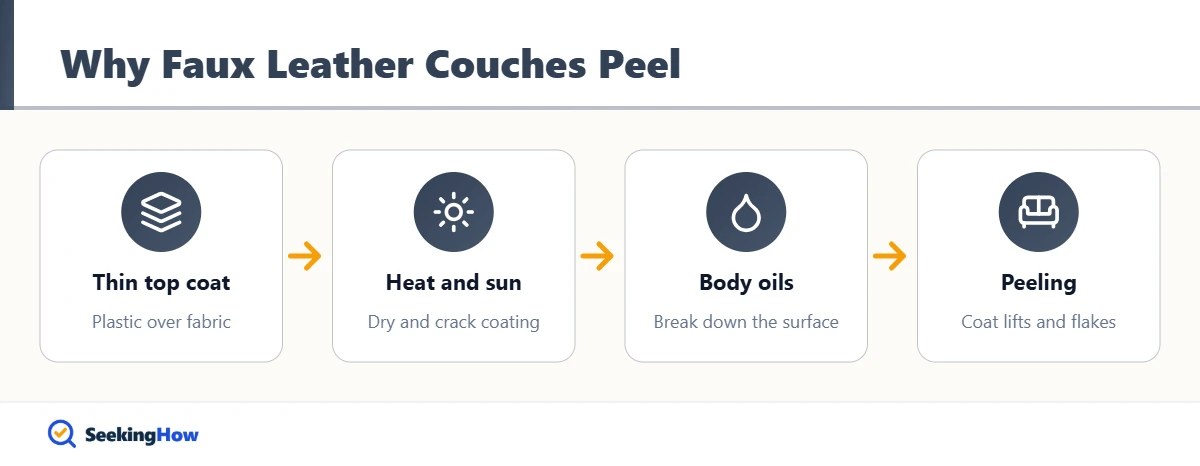
Faux leather peels because its plastic surface layer separates from the fabric backing underneath. Bonded leather is especially prone to this because its top coat is very thin. Heat, direct sunlight, body oils, and harsh cleaners all speed up the breakdown, which is why arms, headrests, and seat fronts peel first.
How To Fix a Peeling Faux Leather Couch: Step-by-Step
Step 1: Remove All Loose Flakes
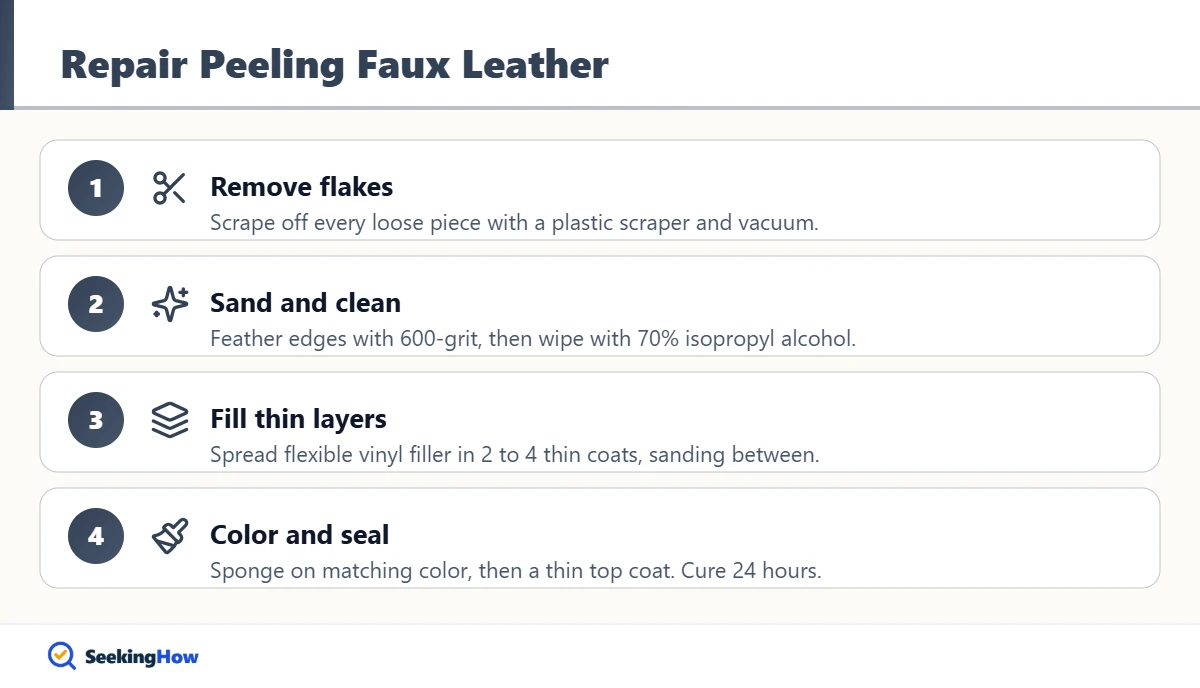
Gently scrape the peeling area with a plastic scraper or an old card until only firmly attached material remains. Then roll the area with a lint roller or vacuum it to collect the flakes. The most common mistake is painting or filling over loose flakes, which simply peel off again with the new layer attached.
Step 2: Sand the Edges Smooth
Lightly sand the border between the bare fabric and the remaining faux leather with 600-grit sandpaper. You want a feathered edge, not a sharp step, so the filler blends in. Sand with very light pressure; too much pressure tears the fabric backing.
Step 3: Clean and Degrease the Area
Wipe the repair area with a cloth dampened with 70% isopropyl alcohol and let it dry for 10 minutes. This removes body oils and old conditioner that stop filler and color from bonding. Test the alcohol on a hidden spot first, since it can dull some finishes.
Step 4: Apply Flexible Filler in Thin Layers
Spread a thin layer of flexible leather and vinyl filler over the bare fabric with a palette knife, feathering it into the surrounding surface. Let each layer dry (a hair dryer on low speeds this up), then sand lightly with 600-grit and add another layer until the surface is level. Thick single coats crack, so use two to four thin coats instead.
Step 5: Recolor With Matching Color Compound
Dab the color compound on with a fine sponge in light coats, extending slightly past the repair to blend it. Let each coat dry before the next, and stop when the color is even. Most people find that matching the color under daylight gives a better result than matching under indoor lighting.
Step 6: Seal and Let It Cure
Apply a thin water-based top coat if your kit includes one, matching the sheen of the couch. Keep people and pets off the area for at least 24 hours, or as long as the product label says. A sealer improves durability on seat cushions that take daily wear.
Faster Alternative: Adhesive Repair Patches
Self-adhesive faux leather patches are the quickest fix for peeling arms and seat edges. Remove the flakes, clean with alcohol, cut the patch with rounded corners so the edges do not lift, and press it on firmly for a minute. Patches are visible up close, but they look tidy and take about 15 minutes.
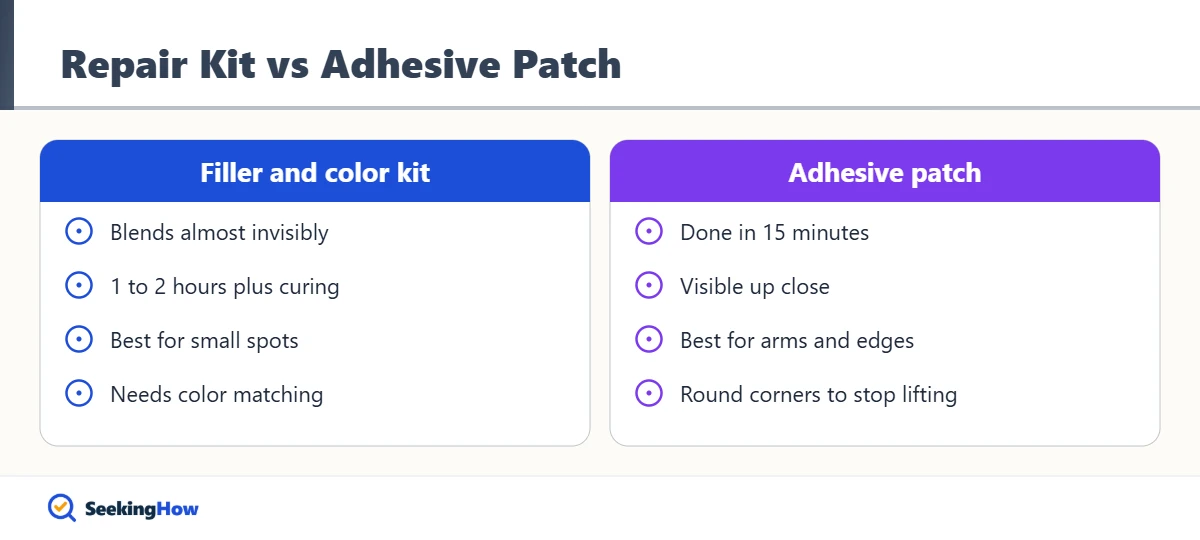
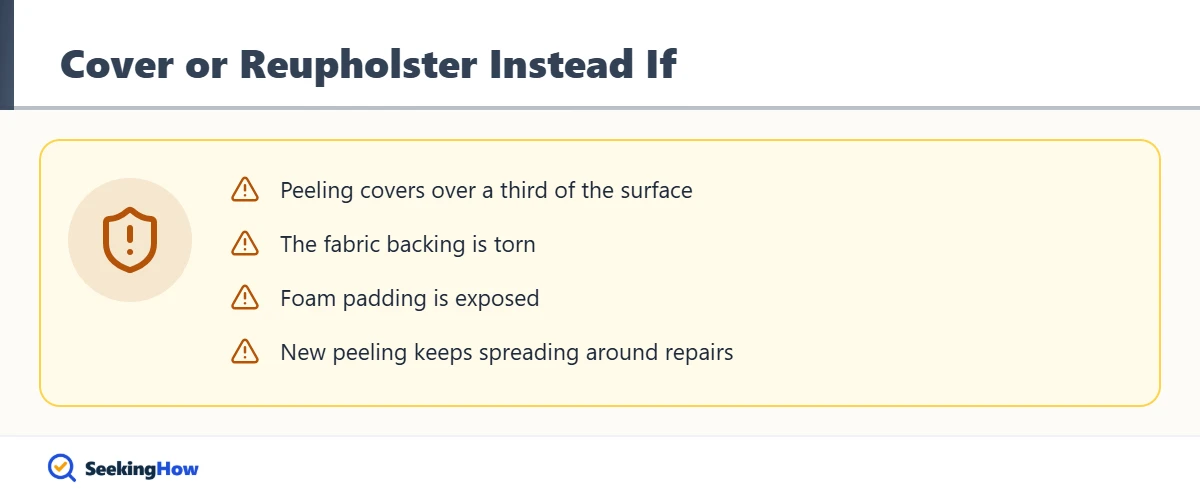
Bottom line: Use filler and color for spots smaller than your hand, patches for worn arms and edges, and a slipcover or reupholstery when more than a third of the surface is peeling.
If That Didn’t Work
Problem: New peeling appears around the repair. Cause: The surrounding coating is failing too. Fix: Expand the repair area or switch to a patch or cover.
Problem: Filler cracks when you sit. Cause: Layers too thick or a rigid filler. Fix: Sand it off and reapply a flexible vinyl filler in thinner coats.
Problem: The color does not match. Cause: Mixing under artificial light. Fix: Remix in daylight and blend the color over a wider area.
Problem: Patch edges lift. Cause: Oily surface or square corners. Fix: Clean with alcohol, round the corners, and press firmly for one minute. For similar cracking on car upholstery, see our guide to fixing cracked leather seats.
| Method | Time | Cost | Look | Best for |
|---|---|---|---|---|
| Filler and color compound | 1–2 hours plus curing | Low | Most invisible | Small to medium spots |
| Adhesive patches | 15 minutes | Low | Visible up close | Arms and seat edges |
| Stretch slipcover | 30 minutes | Moderate | New fabric look | Widespread peeling |
| Professional reupholstery | Days to weeks | High | Like new | Good frames worth keeping |
Safety and When To Call a Pro
Work in a ventilated room, since some fillers and sealers release fumes while they dry, and keep the products away from children and pets. Call an upholsterer if the peeling covers most of the couch, if the fabric backing is torn, or if foam is exposed, because a cosmetic kit will not hold up. Vacuum flakes often; small children and pets may chew or swallow them.
Prevention Tips
- Keep the couch out of direct sunlight and at least 3 feet from heaters.
- Clean with a damp cloth and mild soap only; avoid alcohol-based or solvent cleaners for routine care.
- Use a throw on headrests and arms where hair products and skin oils collect.
- Keep cushions in place so the surface does not rub and crease; see our tips on stopping couch cushions from sliding.
Related Guides
- How to fix cracked leather seats
- How to stop couch cushions from sliding
- How to disinfect a fabric couch
- How to repair plastic wicker furniture
Sources
- U.S. Environmental Protection Agency (EPA) — indoor air quality and volatile organic compounds (epa.gov)
- Leather and vinyl repair kit manufacturers — product instructions for filler and color compound application
- University cooperative extension services — care and cleaning of upholstered furniture
Frequently Asked Questions
Can you stop faux leather from peeling?
You cannot reverse peeling once faux leather has started to flake, but you can slow it. Remove loose flakes, repair bare spots, and keep the couch away from sunlight and heat. Cleaning only with mild soap and water also helps preserve the remaining coating.
Can you glue peeling faux leather back down?
No, gluing peeling faux leather back down rarely works because the flakes are brittle, thin, and already detached from the backing. They crack again as soon as the cushion flexes. Removing the flakes and filling the area gives a more durable result.
Can you paint a peeling faux leather couch?
Yes, you can paint faux leather with flexible vinyl or leather paint, but only after removing all peeling material. Paint over flaking surfaces will lift with the flakes. Use thin coats and a flexible product designed for upholstery, not ordinary wall or craft paint.
Is bonded leather worth repairing?
Bonded leather is worth repairing only for small, localized peeling. Its thin surface tends to fail across the whole piece over time, so widespread peeling usually returns. For a couch with a solid frame, a slipcover or reupholstery is often the better long-term choice.
How long does a faux leather repair last?
A well-done faux leather repair can last months to years, depending on where it is and how much it flexes. Repairs on arms and backs hold up longer than seat cushions. Thin coats, flexible filler, and a top coat all extend the life of the repair.
What causes faux leather to crack and peel so fast?
Faux leather cracks and peels fast because heat, ultraviolet light, body oils, and harsh cleaners break down its plastic coating. Lower-cost bonded leather has a thinner coating, so it shows wear sooner. Placement near windows or heaters speeds up the damage noticeably.