Quick Answer
Yes, you can mix vinegar and dish soap for cleaning. The combination is safe, produces no toxic fumes and works well on soap scum, greasy stovetops and grimy tubs. Use equal parts warm white vinegar and dish soap for heavy scum, or 1 cup vinegar, 1 cup water and 1 tablespoon dish soap as a spray. Never add bleach, and skip natural stone.
Key Takeaways
- Vinegar and dish soap do not react dangerously; mixing them is safe for routine household cleaning.
- Vinegar dissolves mineral deposits and soap scum, while dish soap lifts grease the vinegar alone cannot cut.
- A 1:1 mix of warm vinegar and dish soap is the go-to for bathtub and shower scum.
- Never combine vinegar with bleach, which releases toxic chlorine gas.
- Do not use the mix on marble, granite, travertine, unsealed grout or waxed wood.
Vinegar and dish soap are two of the cheapest cleaners in most homes, so it is natural to wonder whether combining them helps or hurts. The short answer to “can you mix vinegar and dish soap for cleaning” is yes, and the mix outperforms either one alone on greasy, crusty messes. Here is how to make it, where it works and where it can cause damage.
Why Vinegar and Dish Soap Work Together
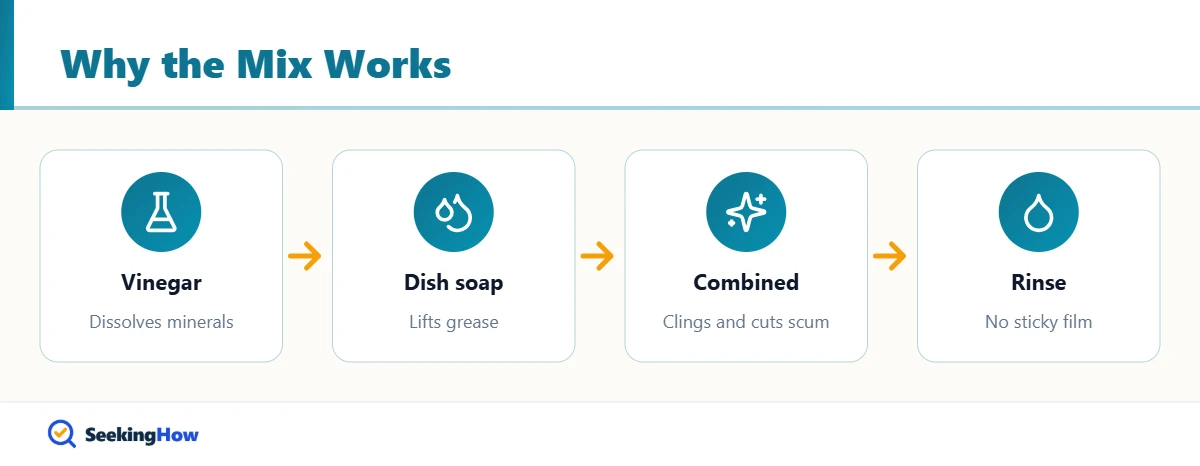
Distilled white vinegar is about 5% acetic acid, which dissolves hard water minerals and the calcium-based film known as soap scum. Dish soap contains surfactants that surround grease and oils so water can rinse them away. Together, the mix breaks down both mineral and greasy layers, which is why it shines on tubs, shower doors and range hoods. For more ideas, see our 20 vinegar uses around the house.
The dish soap also thickens the solution, so it clings to vertical surfaces longer than plain vinegar. Most people find that extra contact time is the main reason the combination works so well on shower walls.
What You’ll Need
- Distilled white vinegar (5% acidity)
- Liquid dish soap (a plain grease-cutting formula; avoid dish soaps with added bleach)
- Clean spray bottle (16 to 32 ounces) labeled with the contents
- Measuring cup and tablespoon
- Microwave-safe cup for warming vinegar (optional)
- Non-scratch scrub sponge and microfiber cloths
How To Mix Vinegar and Dish Soap for Cleaning: Step-by-Step
Step 1: Choose the Right Ratio
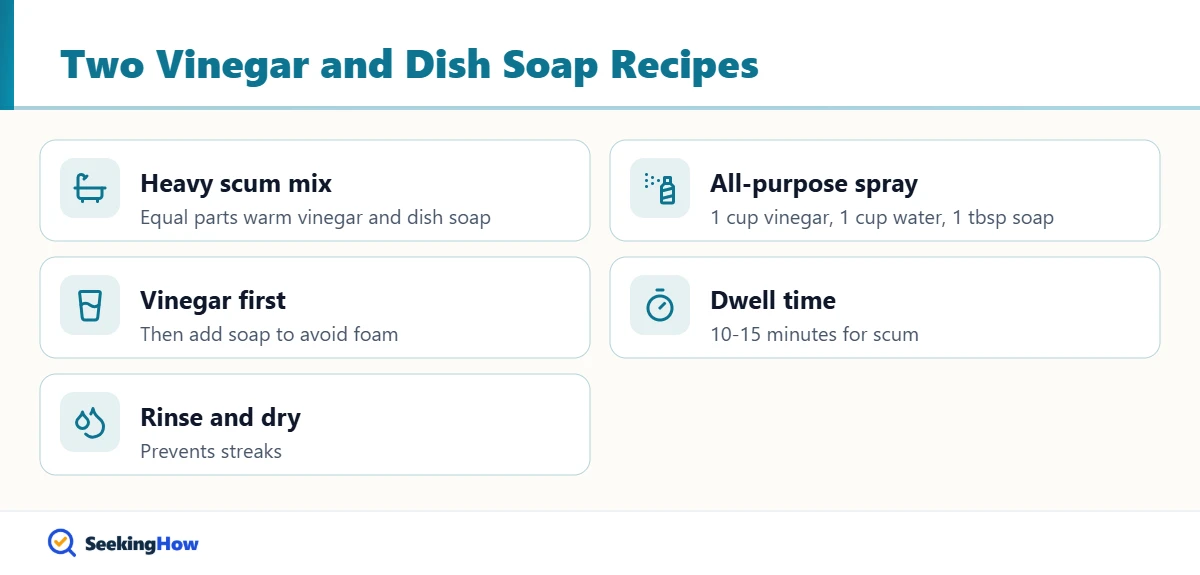
For heavy soap scum, use equal parts vinegar and dish soap. For an all-purpose spray, use 1 cup vinegar, 1 cup water and 1 tablespoon dish soap. Using too much soap leaves a sticky film that attracts dirt.
Step 2: Warm the Vinegar (Optional)
Heat the vinegar in a microwave-safe cup for about 30 to 60 seconds until warm, not boiling. Warm vinegar mixes more easily with thick dish soap and works faster on scum. Let it cool slightly before pouring it into a plastic spray bottle.
Step 3: Add Vinegar First, Then Soap
Pour the vinegar (and water, if using) into the bottle first, then add the dish soap. Adding soap first creates a foamy mess when you pour in the liquid. Swirl gently instead of shaking hard. Do not add baking soda to the same bottle; vinegar and baking soda react and neutralize each other.
Step 4: Spray and Let It Sit
Spray the surface and let it sit 10 to 15 minutes for soap scum, or 1 to 2 minutes for everyday grease. Dwell time does most of the work. For heavy tub rings, wait up to an hour.
Step 5: Scrub, Rinse and Dry
Scrub with a non-scratch sponge, rinse thoroughly with warm water and wipe dry with a microfiber cloth. Rinsing removes leftover soap that would otherwise leave streaks and a slippery tub floor.
Bottom line: mix vinegar and dish soap for scum and grease on tile, glass, porcelain and stainless steel, and keep it away from stone and bleach.
Where To Use It and Where Not To
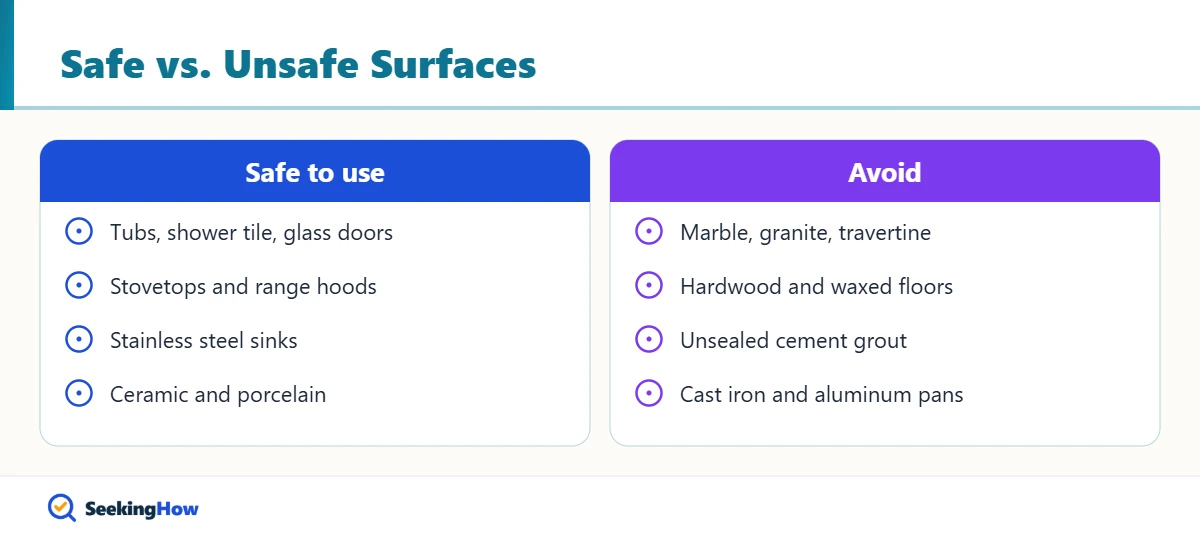
| Surface | Safe? | Recommended mix | Notes |
|---|---|---|---|
| Bathtub, shower tile, glass doors | Yes | 1:1 warm vinegar and soap | Let sit 10 to 15 minutes, rinse well |
| Stovetop, range hood, backsplash tile | Yes | All-purpose spray | Wipe after 1 to 2 minutes |
| Stainless steel sinks | Yes | All-purpose spray | Rinse and dry to prevent spots |
| Marble, granite, travertine | No | None | Acid etches and dulls stone |
| Hardwood or waxed floors | No | None | Can strip finish and leave haze |
| Cast iron, aluminum pans | Avoid | None | Acid can strip seasoning or discolor |
If That Didn’t Work
Problem: Surfaces look streaky or feel sticky. Cause: Too much dish soap or not enough rinsing. Fix: Cut the soap to 1 teaspoon per cup of liquid and rinse with plain water.
Problem: Soap scum is still there after scrubbing. Cause: Thick, layered buildup. Fix: Warm the mix, apply it, cover with plastic wrap to slow evaporation and wait an hour.
Problem: The mix separates in the bottle. Cause: Normal settling. Fix: Swirl gently before each use; make small batches you will use within a few weeks.
Problem: Grout looks lighter or rough. Cause: Acid attacking unsealed cement grout. Fix: Stop using vinegar there and reseal the grout.
Safety and When To Call a Pro
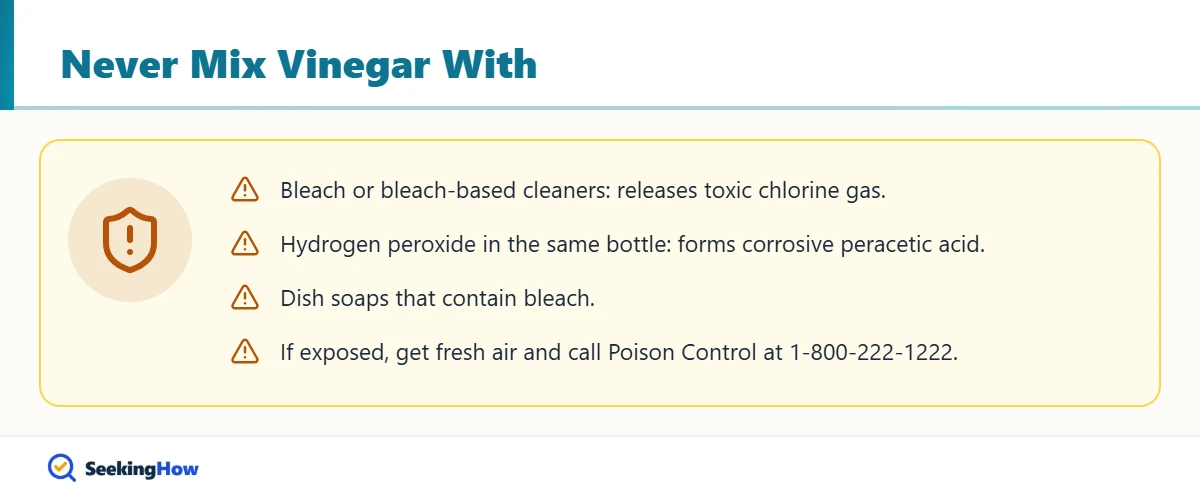
Never mix vinegar with bleach or bleach-containing cleaners; the acid releases chlorine gas that can cause coughing, chest pain and breathing problems. Also avoid combining vinegar with hydrogen peroxide in the same bottle, which forms corrosive peracetic acid. Label your spray bottle and keep it away from children.
Call a stone or tile professional if acid has already etched marble or granite, leaving dull spots, or if grout is crumbling. If you accidentally mixed bleach and vinegar and feel short of breath, leave the room, get fresh air and call Poison Control at 1-800-222-1222 or 911 for severe symptoms.
Prevention Tips
- Squeegee shower walls and glass after every shower to slow scum buildup.
- Spray the all-purpose mix on stovetops weekly before grease hardens.
- Use a water softener or shower filter if you have very hard water.
Related Guides
- 20 genius vinegar uses around the house
- Why vinegar and baking soda react
- White vinegar vs. distilled white vinegar
- How to disinfect a fabric couch
Sources
- American Cleaning Institute: cleaning product safety and never mixing bleach with acids (cleaninginstitute.org)
- America’s Poison Centers: household chemical mixing hazards (poisoncenters.org)
- U.S. EPA: safer household cleaning choices (epa.gov/saferchoice)
Frequently Asked Questions
Is it safe to mix vinegar and Dawn dish soap?
Yes, mixing white vinegar with Dawn or another ordinary dish soap is safe. The two do not produce toxic gas or a dangerous reaction. Avoid dish soaps that contain bleach, and never add bleach to the mix. Label the bottle so no one adds anything else to it later.
What is the best ratio of vinegar to dish soap?
For heavy soap scum, use equal parts warm vinegar and dish soap. For everyday cleaning, mix 1 cup vinegar, 1 cup water and 1 tablespoon dish soap. Stronger soap ratios cling better but need more rinsing, so match the ratio to how tough the mess is.
Does vinegar cancel out dish soap?
No, vinegar does not cancel out modern dish soap. Dish soaps use synthetic surfactants that keep working in mildly acidic solutions. The mix still cuts grease while the vinegar dissolves minerals, which is why it works better than either one alone on bathtub and shower scum.
Can you use vinegar and dish soap on floors?
You can use a very dilute version on sealed ceramic or porcelain tile, about 1 cup vinegar and a few drops of dish soap per gallon of warm water. Do not use it on hardwood, laminate, marble or natural stone, where acid and soap residue can dull or damage the finish.
Does vinegar and dish soap disinfect?
No, vinegar and dish soap clean but are not registered disinfectants. They remove grease, scum and many germs physically, but they do not reliably kill viruses and bacteria. For disinfection, use an EPA-registered product following its label after cleaning with the vinegar mix.
Can you mix vinegar, baking soda and dish soap?
You can, but the vinegar and baking soda neutralize each other, leaving mostly salty water. The fizz looks impressive but cleans less than either ingredient alone. Instead, use a baking soda and dish soap paste for scrubbing, then a vinegar spray as a separate step.
How long does a vinegar and dish soap mix last?
A vinegar and dish soap mix stays effective for several weeks in a closed spray bottle. It may separate, so swirl it before use. Make small batches, label the bottle clearly with the contents and date, and store it out of reach of children.