
Quick Answer
To unclog a shower drain full of hair without chemicals, remove the drain cover and pull the hair out with gloved fingers, needle-nose pliers, or a plastic barbed drain tool. If water still drains slowly, plunge with a cup plunger or run a 1/4-inch hand drain snake. Most clogs clear in 10 to 20 minutes. Avoid pouring boiling water into PVC pipes.
Key Takeaways
- Hair clogs usually sit within the first 6 inches below the shower drain cover.
- A plastic barbed drain tool costs a few dollars and removes most hair clogs in minutes.
- Use hot tap water, not boiling water, on PVC drain pipes and plastic shower pans.
- Baking soda and vinegar can freshen a drain but rarely dissolve a mat of hair.
- A 1/4-inch hand drain snake reaches hair caught in the trap.
- A hair catcher over the drain prevents most future clogs.
Shower drains clog because hair binds with soap scum into a dense mat just below the strainer. You can unclog a shower drain full of hair without chemicals using mechanical methods that remove the clog instead of trying to dissolve it. This approach is safer for your pipes, your septic system, and your skin.
What You’ll Need
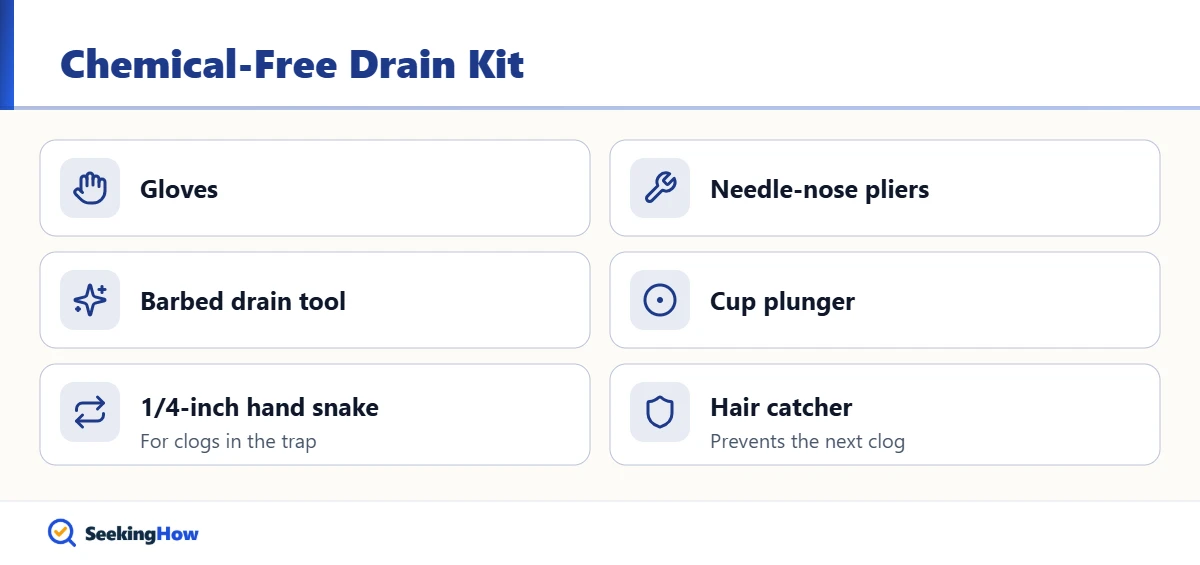
- Rubber or disposable gloves
- Screwdriver (Phillips or flathead, to remove the drain cover)
- Needle-nose pliers or long tweezers
- Plastic barbed drain cleaning tool, 18 to 24 inches
- Cup plunger (flat rubber cup, not a toilet flange plunger)
- Hand drain snake (drum auger) with a 1/4-inch cable, 15 to 25 feet (optional)
- Wet/dry shop vacuum (optional)
- Flashlight, trash bag, and paper towels
- Hair catcher sized to your drain (for prevention)
How To Unclog a Shower Drain Full of Hair Without Chemicals: Step-by-Step
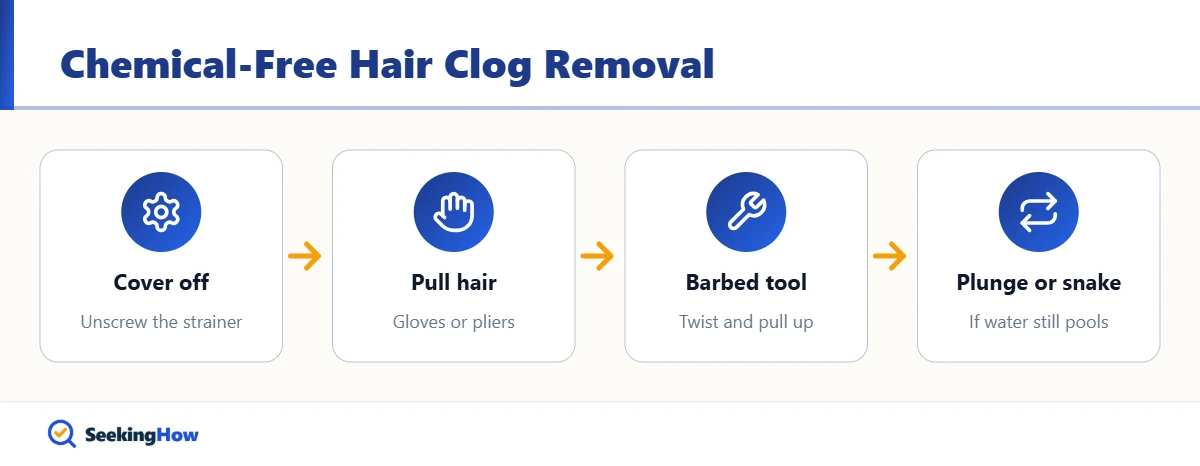
Step 1: Remove the Drain Cover
Unscrew the strainer with a screwdriver, or pry up a snap-in cover gently with a flathead. Some covers twist counterclockwise to release. Put screws in a cup, not on the shower floor, where they can roll into the drain.
Step 2: Pull Out Visible Hair
Shine a flashlight into the drain and pull out the hair you can reach with gloved fingers or needle-nose pliers. Pull slowly so the mat comes out in one piece instead of tearing and leaving a plug behind. Bag it immediately; it smells.
Step 3: Use a Barbed Drain Tool
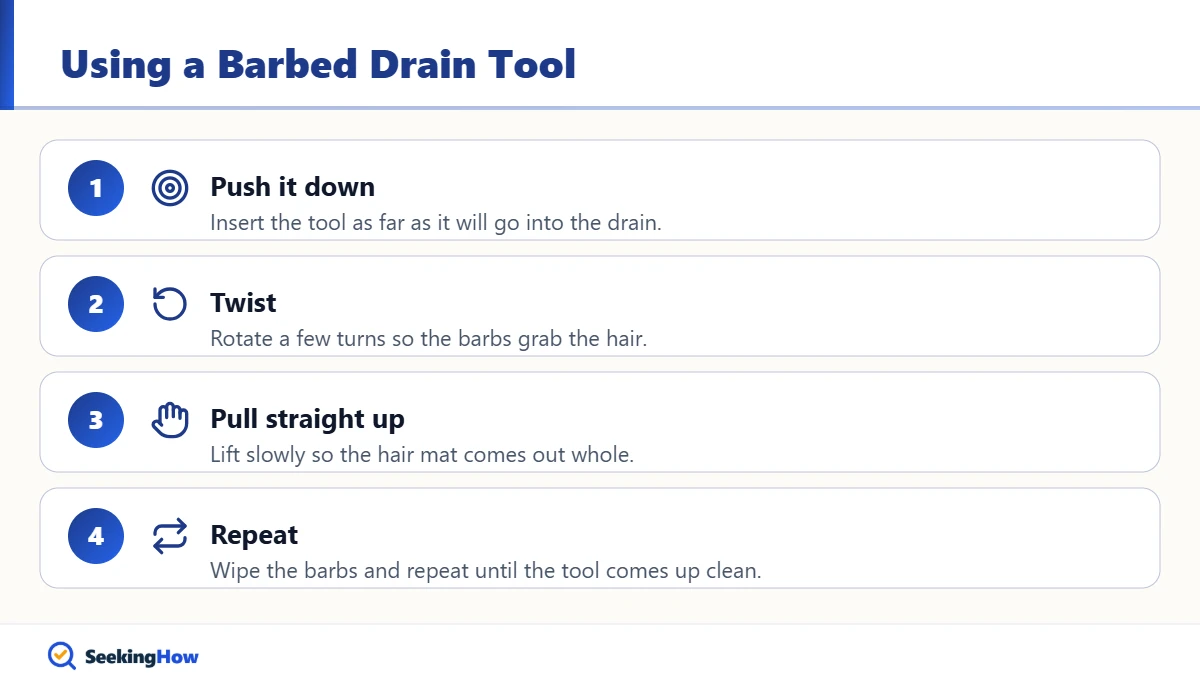
Push the plastic barbed tool down as far as it goes, twist it a few times, and pull it straight up. Wipe the barbs clean and repeat until it comes up clear. In practice, this step alone clears most shower drains full of hair.
Step 4: Flush With Hot Tap Water
Run the hottest tap water for 2 to 3 minutes to wash loosened soap scum through. Hot tap water is safe for PVC pipes; boiling water can soften PVC joints and crack some shower pans and porcelain. If water pools, move on to plunging.
Step 5: Plunge the Drain
Put a few inches of water in the shower, cover any overflow opening with a wet rag, and seal a cup plunger over the drain. Plunge with 10 to 15 firm strokes, keeping the seal. Most people find that plunging after removing visible hair works far better than plunging first.
Step 6: Snake the Trap
Feed a 1/4-inch hand drain snake into the drain until it meets resistance, usually at the trap. Lock the cable, crank clockwise to grab the hair, and pull it back slowly. For more help using an auger, see how to use a drain snake.
Step 7: Test and Reinstall the Cover
Run the shower for two minutes and watch for pooling. Clean the strainer, reinstall it, and add a hair catcher on top. If the drain is still slow, the clog is farther down the line.
Bottom line: pull the hair out mechanically with a barbed tool first; plunge or snake only if water still pools.
Non-Chemical Methods Compared
| Method | Time | Cost | Works on |
|---|---|---|---|
| Fingers or pliers | 5 min | Free | Hair at the strainer |
| Barbed drain tool | 5 to 10 min | Low | Hair in the top 2 feet |
| Cup plunger | 5 min | Low | Soft, partial clogs |
| Hand drain snake | 15 to 30 min | Moderate | Hair in the trap and beyond |
| Wet/dry vacuum | 10 min | Uses one you own | Loose debris near the top |
| Baking soda and vinegar | 30 min | Low | Odor and light buildup, not hair mats |
If That Didn’t Work
Problem: The barbed tool will not go down. Cause: A cross bar or stopper blocks the drain. Fix: Remove the stopper or use a snake that can pass the bars.
Problem: The shower and tub both drain slowly. Cause: A shared branch line is clogged. Fix: Snake from the tub or follow our steps to unclog a bathtub drain.
Problem: Water backs up into the shower when the toilet flushes or the washer drains. Cause: A main line clog. Fix: Stop using water and call a plumber.
Problem: The drain gurgles but is clear. Cause: A blocked plumbing vent. Fix: Have a plumber check the roof vent.
Safety and When To Call a Pro
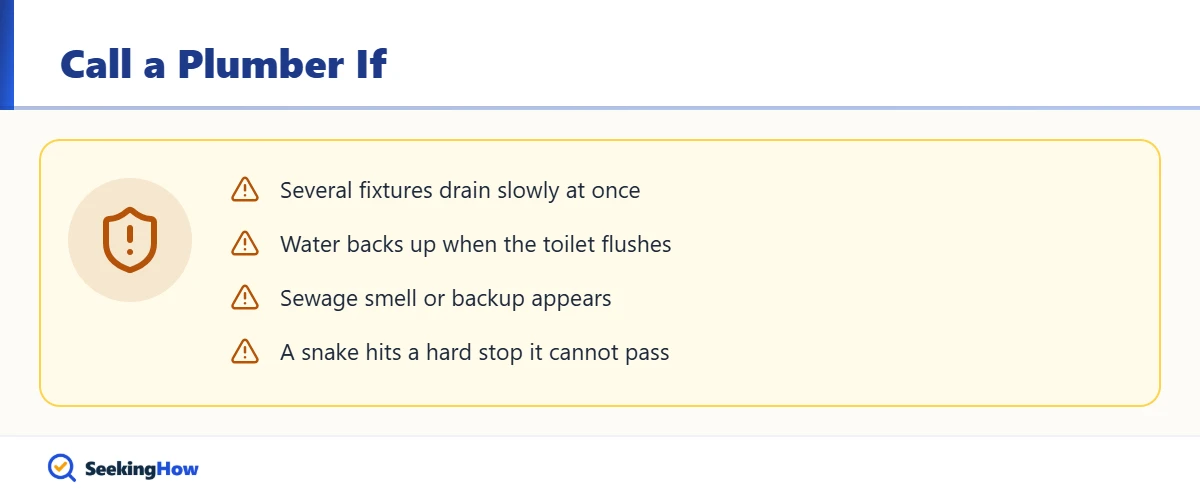
Call a plumber if several fixtures drain slowly at once, if sewage smell or backup appears in the shower, or if a snake hits a hard stop it cannot pass. Do not combine drain cleaners if someone already used one, since mixing chemicals can release toxic gas. Wear gloves and wash your hands after handling drain debris.
Prevention Tips
- Install a hair catcher and empty it after every few showers.
- Brush long hair before showering so less of it goes down the drain.
- Run the barbed tool through the drain once a month before clogs form.
- Flush with hot tap water weekly to move soap scum along.
Related Guides
- How To Unclog a Bathtub Drain
- How To Use a Drain Snake
- How To Increase Water Pressure in Your Shower
- How To Unclog an Underground Gutter Drain Pipe
Sources
- U.S. Environmental Protection Agency, Safer Choice program for household cleaning products (epa.gov)
- Charlotte Pipe and Foundry, PVC pipe temperature guidance (charlottepipe.com)
- RIDGID, hand drain auger operating information (ridgid.com)
Frequently Asked Questions
What dissolves hair in a shower drain naturally?
Nothing natural reliably dissolves a mat of hair in a shower drain. Baking soda, vinegar, and hot water can loosen soap scum around it, but hair itself needs to be pulled out. A plastic barbed drain tool or needle-nose pliers is the fastest chemical-free fix.
Does baking soda and vinegar unclog a shower drain?
Baking soda and vinegar can help with light buildup and odors but usually will not clear a shower drain clogged with hair. The fizzing reaction is mild. Remove the hair mechanically first, then use the mixture followed by hot tap water as maintenance if you like.
Is boiling water safe for shower drains?
Boiling water is not recommended for shower drains with PVC pipes or plastic shower pans, because high heat can soften joints. Hot tap water is safe and effective for flushing soap scum. Boiling water is also a scald risk when poured into a shower basin.
Can I use a toilet plunger on a shower drain?
A flat cup plunger works better on a shower drain than a flange toilet plunger. The flat cup seals against a flat floor. If you only have a flange plunger, fold the flange up inside the cup, and use separate plungers for toilets and showers for hygiene.
How do I get hair out of a shower drain without removing the cover?
Slide a thin plastic barbed drain tool through the slots of the cover, twist, and pull up. This works on many strainers with wide slots. If the slots are narrow or a stopper is in the way, you need to remove the cover.
How often should I clean hair out of my shower drain?
Clean hair out of a shower drain about once a month, or more often in homes with long hair. Empty a hair catcher every few showers. Regular cleaning keeps the clog from compacting into a mat that needs a snake.
When should I call a plumber for a clogged shower drain?
Call a plumber when several drains are slow at once, when water backs up into the shower from other fixtures, or when a snake cannot get past a blockage. These signs point to a main line or vent problem rather than a simple hair clog.