
Quick Answer
To tighten a loose bathtub faucet handle, pry off the decorative cap, then tighten the handle screw underneath with a Phillips screwdriver or the Allen key it takes, usually 3/32 or 7/64 inch. Add a drop of blue thread locker if it keeps loosening. It takes about 10 minutes. If the handle still slips, the splines are stripped and the handle needs replacing.
Key Takeaways
- Most loose bathtub faucet handles are fixed by tightening one screw under a cap or under the handle lever.
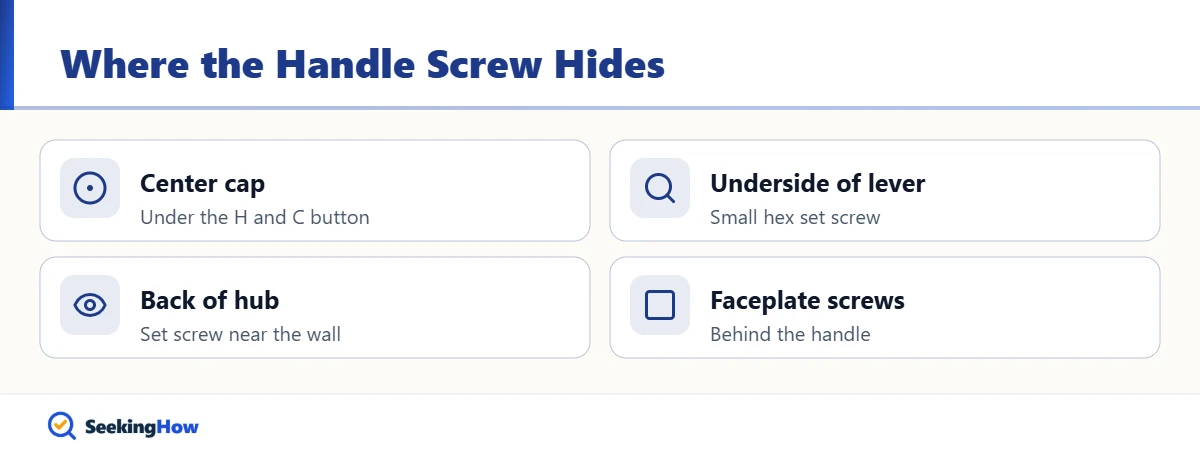
- Many single-lever tub handles use a small hex set screw on the underside instead of a center screw.
- Blue, removable thread locker keeps a handle screw tight without making future repairs hard.
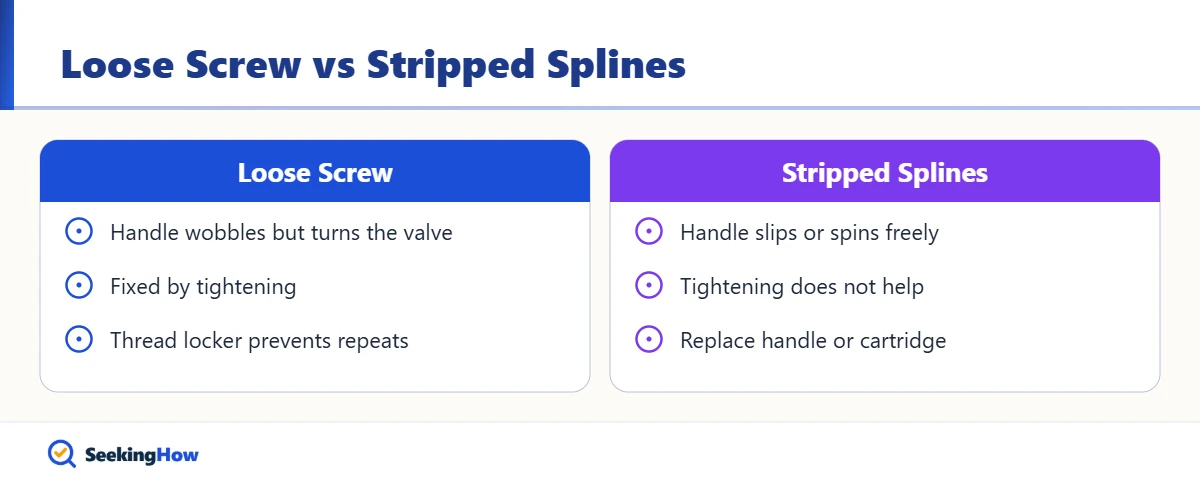
- A handle that spins or slips even when tight has worn splines on the handle, the stem, or both.
- A wobbly faceplate is a separate problem: tighten the escutcheon screws behind the handle.
- You only need to shut off the water if you remove the cartridge or stem.
A wobbly tub control is annoying and, over time, it can strip the splines that connect the handle to the valve. Knowing how to tighten a loose bathtub faucet handle saves you from replacing a whole trim kit for what is usually a five-minute screw adjustment. This guide covers center-screw knobs, single-lever handles with set screws, and what to do when tightening does not help.
What You’ll Need
- Small flathead screwdriver or plastic pry tool (for the decorative cap)
- Phillips screwdriver, No. 2
- Hex (Allen) key set in inch sizes, including 3/32, 7/64, and 1/8 inch
- Masking tape to cover the screwdriver tip and protect the finish
- Blue (medium-strength, removable) thread locker
- Towel to cover the tub drain so screws do not fall in
- White vinegar and an old toothbrush (optional, for mineral buildup)
- Replacement handle or splined handle adapter (optional, if splines are stripped)
How To Tighten a Loose Bathtub Faucet Handle: Step-by-Step
Step 1: Close the Drain and Protect the Tub
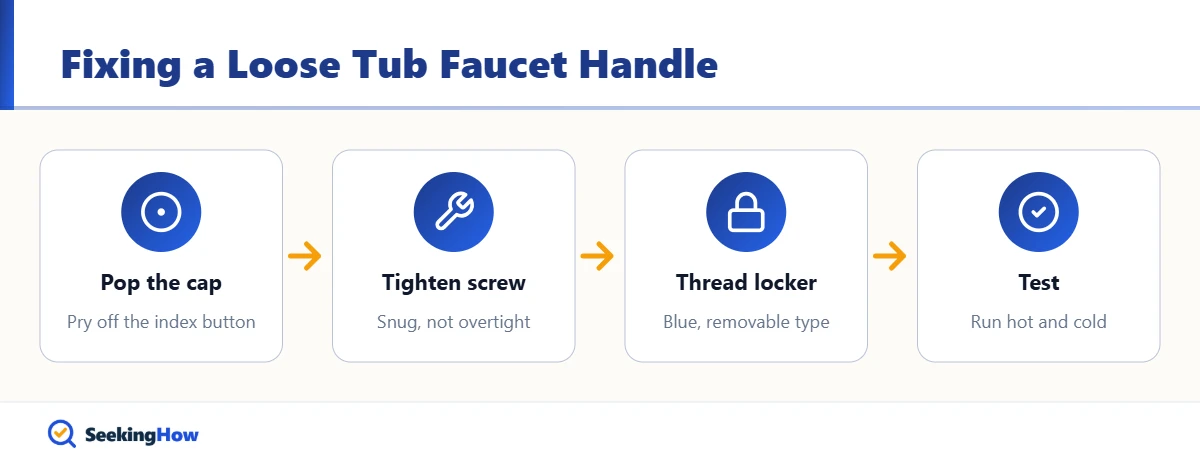
Close the tub drain stopper or lay a towel over it before you start. Handle screws and caps are small and easily lost. Put masking tape on the tip of your flathead screwdriver so it does not scratch chrome.
Step 2: Find the Screw
Look for a decorative cap or index button in the center of the handle, often marked H and C or with a red and blue dot. On single-lever handles, check the underside of the lever and the back of the hub for a small hex set screw instead. Most people miss the set screw because it faces down toward the tub.
Step 3: Remove the Decorative Cap
Slip the taped screwdriver tip into the small notch at the edge of the cap and gently lever it out. If there is no notch, work it around the rim little by little. Caps that are glued in by mineral deposits loosen after a minute under a rag soaked in white vinegar.
Step 4: Tighten the Handle Screw
Turn the Phillips screw or hex set screw clockwise until it is snug, then stop. Overtightening can crack plastic handles or strip the soft brass threads in the stem. If the screw turns endlessly without tightening, the threads in the stem are stripped, which is covered below.
Step 5: Lock the Screw if It Keeps Loosening
Remove the screw, put one small drop of blue thread locker on its threads, and reinstall it snugly. Blue thread locker resists vibration and daily use but still comes apart with normal tools. Avoid red thread locker, which can make the next repair very difficult.
Step 6: Check the Splines
Turn the handle through its full range. If it slips or spins while the screw is tight, pull the handle off and look at the toothed (splined) end of the stem and the inside of the handle. Rounded or crushed teeth mean the handle, and sometimes the stem or cartridge, must be replaced with a matching part from the faucet maker.
Step 7: Tighten a Loose Faceplate
If the plate behind the handle moves, remove the handle and tighten the two escutcheon screws that hold the plate to the valve body. Snug them evenly so the plate seals against the wall. A loose plate lets shower water run into the wall cavity, which is a bigger problem than a wobbly handle.
Step 8: Reinstall the Cap and Test
Press the cap back in, aligning the H and C markings, and run the water hot and cold. The handle should move smoothly with no play. In practice, a handle that loosened once usually stays tight once thread locker is applied.
Bottom line: tighten the screw first, add blue thread locker if it loosens again, and replace the handle only if it slips while the screw is tight.
If That Didn’t Work
| Problem | Likely cause | Fix |
|---|---|---|
| Screw spins without tightening | Stripped threads in the stem | Replace the stem or cartridge; a longer screw is only a temporary fix |
| Handle slips when turned | Worn splines | Install a new handle, or a new cartridge if its splines are worn |
| Whole valve moves in the wall | Valve body not secured to blocking | Call a plumber; it may need an access panel |
| Handle tight but stiff | Mineral buildup or a dry cartridge | Clean and lubricate with silicone plumber’s grease, or replace the cartridge |
| Water drips with handle off | Worn cartridge or washer | Shut off water and repair the valve |
If your problem is weak flow rather than a wobbly handle, see how to increase water pressure in a shower.
Safety and When To Call a Pro
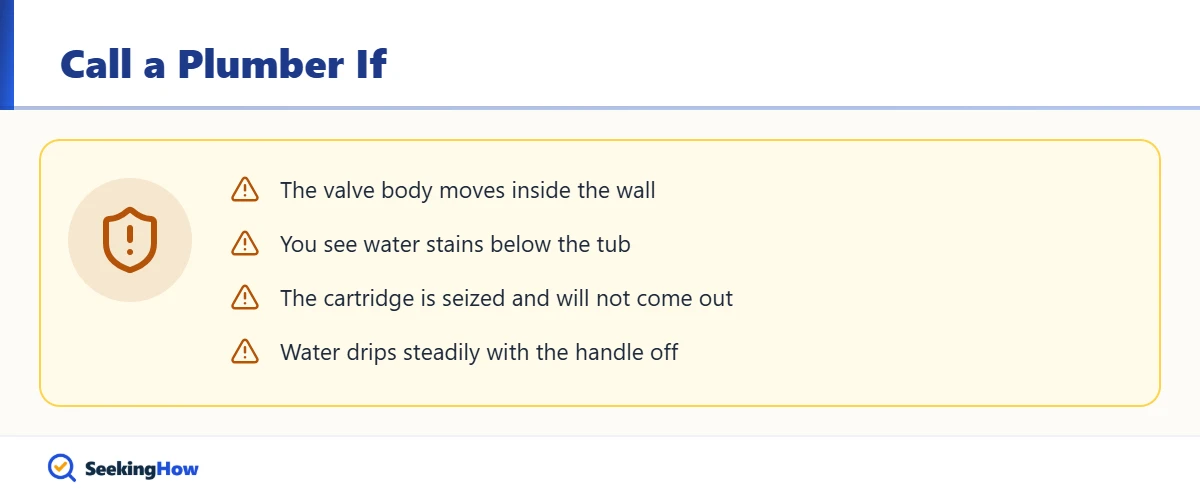
Turn off the house or bathroom water supply before removing any stem or cartridge, and open the handle to relieve pressure first. Call a plumber if the valve body moves inside the wall, if you see water stains below the tub, or if the cartridge is seized and will not come out without heavy force. Forcing a seized cartridge can twist the valve body and break a soldered joint behind the wall.
Prevention Tips
- Turn handles off gently; forcing them past the stop wears splines quickly.
- Check the handle screw once a year and snug it before it becomes loose enough to wobble.
- Keep a bead of silicone around the faceplate so water stays out of the wall; a tub spout leaking from the back often has the same root cause.
Related Guides
- Tub Spout Leaking From the Back
- How To Increase Water Pressure in Your Shower
- How To Unclog a Bathtub Drain
Sources
- Moen, tub and shower handle and cartridge support (moen.com)
- Delta Faucet, tub and shower repair parts and guides (deltafaucet.com)
- Henkel Loctite, medium-strength threadlocker product information (loctite.com)
Frequently Asked Questions
Why does my bathtub faucet handle keep coming loose?
A bathtub faucet handle keeps coming loose because daily turning slowly backs out the handle screw. Hot and cold cycles make it worse. A drop of blue thread locker on the screw usually stops it. If the handle loosens again quickly, check for worn splines or stripped threads in the stem.
What size Allen wrench do I need for a tub faucet handle?
Many tub and shower handles use a 3/32-inch, 7/64-inch, or 1/8-inch hex set screw, but sizes vary by brand and model. An inexpensive inch-size hex key set is the easiest solution. Avoid metric keys that almost fit, because they round out the small screw heads.
How do I remove a bathtub faucet handle with no visible screw?
Look under the decorative cap in the center or for a set screw on the underside of the lever. Some handles have a cap that unscrews counterclockwise instead of popping off. If you still find nothing, look up the faucet model on the maker support site for the exact removal steps.
Do I need to turn off the water to tighten a tub faucet handle?
No, tightening the handle screw does not require turning off the water. The valve stays closed while you work. You only need to shut off the supply if you plan to pull out the cartridge or stem to replace it.
Can I use super glue on a loose faucet handle?
No, do not glue a faucet handle. Glue makes future cartridge repairs very difficult and does not fix stripped splines for long. Use blue thread locker on the screw, and replace the handle or stem if the splines are worn.
How much does it cost to replace a tub faucet handle?
A replacement tub faucet handle from the original maker often costs roughly 15 to 60 dollars, depending on brand and finish, as of 2026. Universal handles cost less but may not fit the splines well. A plumber visit adds a service fee that varies by region.
Why is my tub faucet handle loose and dripping?
A handle that is loose and the spout that drips are usually two separate problems. The loose handle is a screw or spline issue, while the drip comes from a worn cartridge or washer. Tighten the handle first, then repair or replace the cartridge to stop the drip.