Quick Answer
To tell if a sump pump check valve is bad, watch the pit right after the pump shuts off. If water rushes back down the discharge pipe and the pit level jumps several inches, the valve is not sealing. Rapid on-off cycling, a pump running with little rain, or no discharge while the motor runs are other signs. A replacement takes about 30 minutes.
Key Takeaways
- A sump pump check valve stops pumped water from flowing back into the pit when the pump shuts off.
- Backflow you can hear and see right after shutoff is the clearest sign of a failed check valve.
- Short cycling, where the pump restarts within a minute or two, often means a leaking check valve.
- A valve stuck closed makes the pump run without moving water, which can overheat the motor.
- The arrow on the valve body must point up, in the direction of flow.
- A loud thud at shutoff is usually water hammer from a swing valve, not proof of failure.
The check valve is a small part with a big job: without it, the same water gets pumped over and over, wearing out the pump. This guide shows how to tell if a sump pump check valve is bad using simple observations, how to test it, and how to replace it. You only need a flashlight, a screwdriver, and a few minutes beside the pit.
What You’ll Need
- Flashlight
- Bucket of water or garden hose (to trigger a pump cycle)
- Flathead screwdriver or nut driver for hose clamps
- Replacement check valve matching the discharge pipe size, usually 1-1/4 or 1-1/2 inch
- Rags, towels, and a bucket to catch draining water
- Drill with a 1/8-inch bit (optional, for an air-relief hole if the pump instructions call for one)
- Gloves and safety glasses
How To Tell If a Sump Pump Check Valve Is Bad: Step-by-Step
Step 1: Find the Valve and Its Arrow
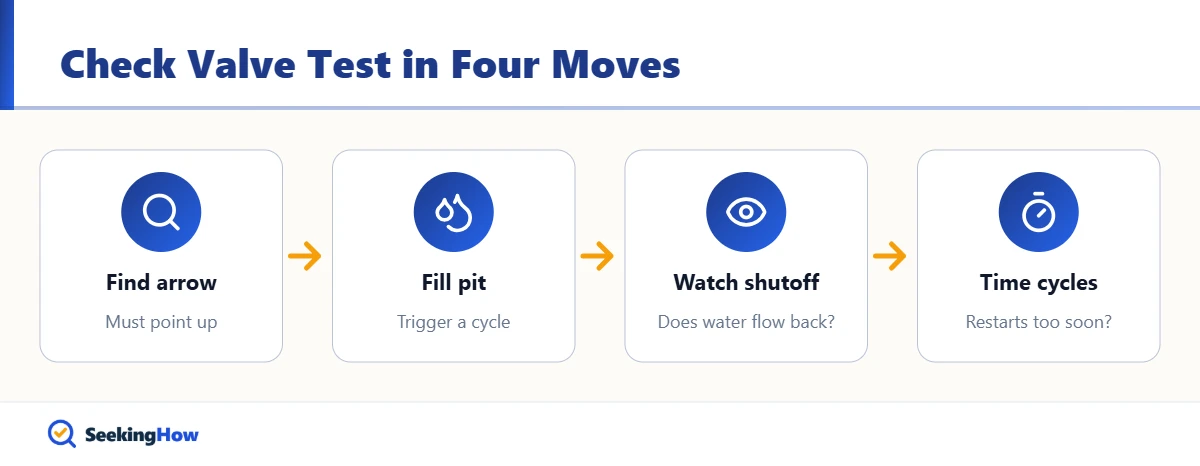
Locate the check valve on the vertical discharge pipe, usually 1 to 2 feet above the pit lid, held by rubber couplings and hose clamps. Look for a flow arrow on the body. If the arrow points down, the valve was installed backwards and will block or restrict flow.
Step 2: Trigger a Pump Cycle
Pour water into the pit with a bucket or hose until the float lifts and the pump starts. Let it run through a full cycle. This test lets you watch the valve when the pump shuts off, which is when failures show.
Step 3: Watch and Listen at Shutoff
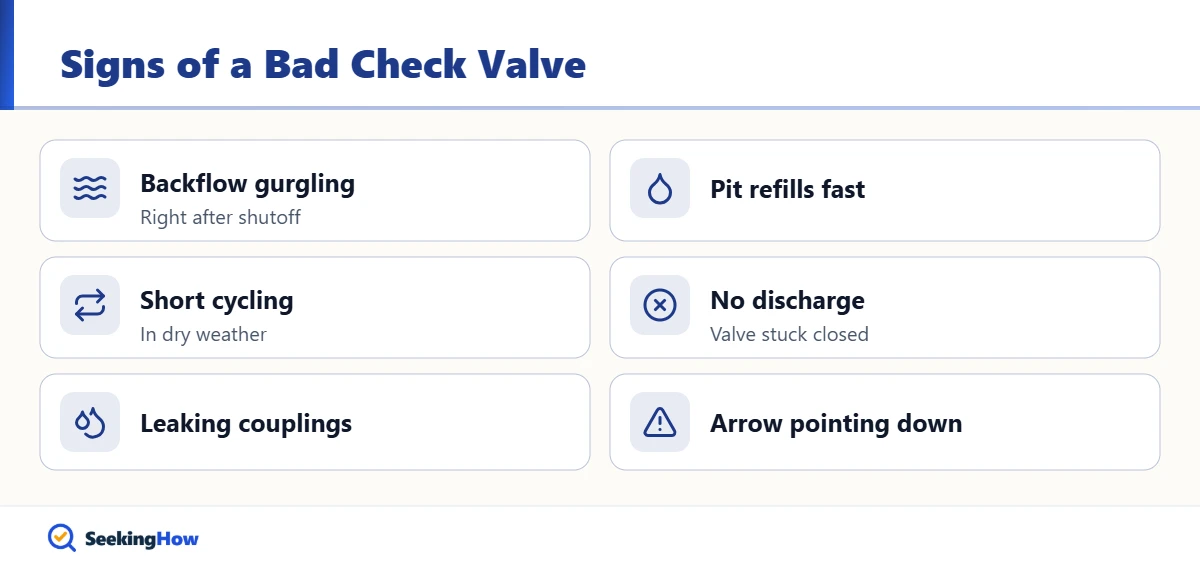
When the pump stops, watch the water level and listen. A good valve holds the column of water in the pipe, so the pit level stays nearly the same. A bad valve lets water gurgle back down, refilling the pit by several inches within seconds.
Step 4: Time the Cycles
Note how long the pump stays off between cycles during dry weather. If it restarts within a minute or two with no new water coming in, the returning water is likely the cause. In practice, a pump that short-cycles like this wears out years early.
Step 5: Check for a Valve Stuck Closed
If the motor runs but water barely leaves the outside discharge, the flapper may be stuck closed or clogged with debris. Unplug the pump before touching the plumbing. A stuck valve forces the pump to run against a closed line, which overheats it.
Step 6: Inspect the Valve
Unplug the pump, put a bucket under the valve, and loosen the top clamp first so the water in the pipe drains slowly. Remove the valve and look inside for a torn, warped, or stuck flapper and debris. Leaks at the couplings or a cracked body also mean replacement.
Step 7: Replace the Valve if Needed
Install the new valve with the arrow pointing up, tighten both clamps snugly, and plug the pump back in. If your pump manual calls for an air-relief hole, it goes in the discharge pipe between the pump and the check valve. Run a test cycle and confirm the pit level holds steady after shutoff.
Bottom line: if water flows back into the pit after the pump stops, or the pump short-cycles in dry weather, replace the check valve.
Normal vs. Bad Check Valve Signs
| What you notice | Normal | Bad check valve |
|---|---|---|
| Pit level after shutoff | Stays about the same | Jumps several inches |
| Sound after shutoff | Single thump or quiet | Gurgling backflow |
| Cycle time in dry weather | Long gaps or none | Restarts within minutes |
| Discharge outside | Strong flow | Weak or none if stuck closed |
| Valve body | Dry couplings | Drips, cracks, or loose clamps |
If That Didn’t Work
Problem: The pump still cycles often with a new valve. Cause: High groundwater, a stuck float, or a leak feeding the pit. Fix: Check the float switch and look for water entering from outside drains.
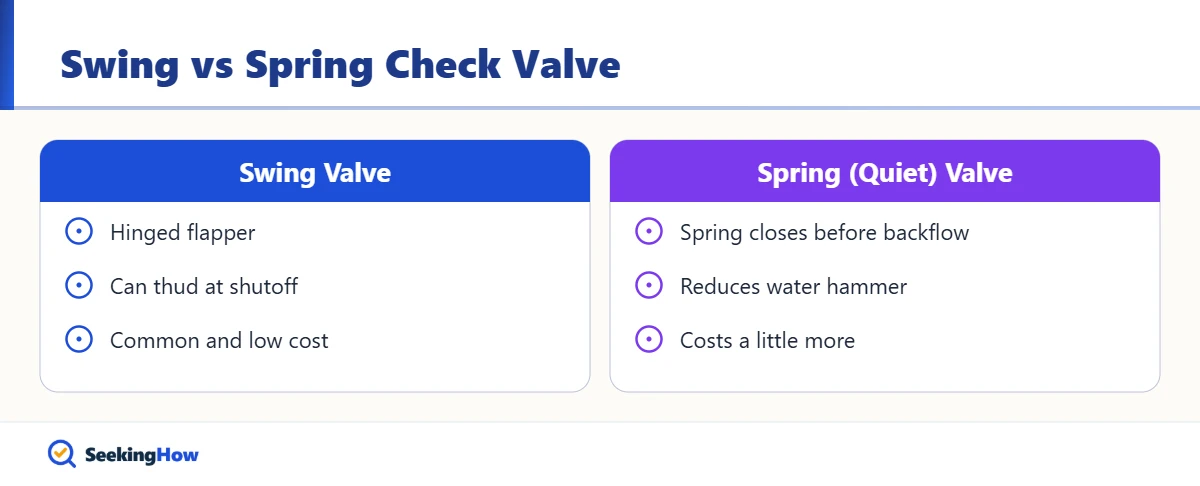
Problem: Loud bang at every shutoff. Cause: Water hammer in a swing-style valve. Fix: Install a spring-loaded quiet check valve.
Problem: The pump runs but moves no water. Cause: An air lock or a frozen or clogged discharge line. Fix: Confirm the relief hole is clear and the outside line is open; see how to unclog an underground drain pipe.
Problem: Water returns slowly over hours. Cause: A small flapper leak. Fix: Replace the valve before it fails completely.
Safety and When To Call a Pro
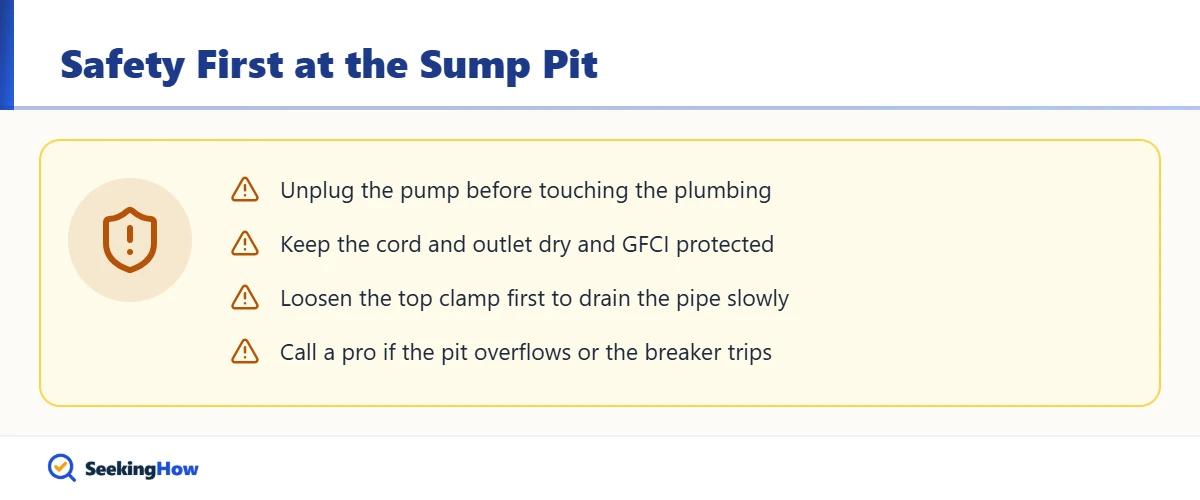
Always unplug the sump pump before touching the pit or discharge plumbing, and keep the cord and outlet dry; sump outlets should be GFCI protected. Call a plumber or waterproofing pro if the pit overflows, the pump trips the breaker, or the basement floods during heavy rain. If the discharge runs to an outdoor line, our guide on installing a sump pump outside covers drainage layouts.
Prevention Tips
- Test the pump and check valve every three to four months and before the rainy season.
- Keep a spare check valve on hand; failures often happen during storms.
- Keep debris out of the pit so it cannot jam the flapper.
- Unexplained pit water in dry weather can signal a supply leak; see how to tell if you have a water leak underground.
Related Guides
- How To Install a Sump Pump Outside
- How To Tell If You Have a Water Leak Underground
- How To Unclog an Underground Gutter Drain Pipe
Sources
- Zoeller Pump Company, sump pump installation and check valve information (zoellerpumps.com)
- Federal Emergency Management Agency, flood protection for homeowners (fema.gov)
- U.S. Consumer Product Safety Commission, electrical safety and GFCI information (cpsc.gov)
Frequently Asked Questions
What happens when a sump pump check valve fails?
When a sump pump check valve fails, water in the discharge pipe drains back into the pit after each cycle. The pump then re-pumps the same water, cycling more often and wearing out faster. A valve stuck closed is worse, because the pump runs without moving water.
How long does a sump pump check valve last?
Many sump pump check valves last several years, but life varies with water quality, debris, and how often the pump runs. Inspect the valve whenever you test the pump, and replace it at the first sign of backflow or leaking.
Is it normal for a sump pump check valve to make noise?
A single thump when the pump shuts off is normal for many swing check valves; it is water hammer as the flapper closes. Loud banging that shakes pipes, or gurgling backflow, is not normal. A spring-loaded quiet check valve reduces the noise.
Which way does a sump pump check valve go?
A sump pump check valve goes on the vertical discharge pipe with the flow arrow pointing up, away from the pump. Installing it backwards blocks discharge and can burn out the motor. Most valves are installed a foot or two above the pit lid for access.
Does every sump pump need a check valve?
Most sump pumps that discharge up and out of a basement need a check valve to prevent backflow. Some setups with very short discharge runs, or pumps with built-in valves, may not. Follow the pump instructions and local code.
Can I replace a sump pump check valve myself?
Yes, most homeowners can replace a sump pump check valve in about 30 minutes. Unplug the pump, drain the pipe into a bucket, loosen the hose clamps, and install the new valve with the arrow up. Test a full cycle afterward.
Why does my sump pump run constantly?
A sump pump runs constantly when the check valve leaks, the float switch sticks, the groundwater is high, or the discharge line is blocked. Watch the pit after shutoff first; if water flows back, the check valve is the likely cause.