Quick Answer
To stop a dog digging under a fence gate, close the gap to 2 inches or less and block the ground with a buried L-shaped wire footer, a concrete or paver threshold, or a strip of large rocks under the gate. Most installs take 1 to 3 hours. Pair the barrier with more exercise and a legal digging spot so the dog stops trying.
Key Takeaways
- Gates are the most common escape point because they need a ground gap to swing.
- A buried L-footer of welded wire or hardware cloth stops digging without blocking the gate swing.
- A concrete or paver threshold under the gate is the most permanent fix.
- Keep the gap under the gate at 2 inches or less for most dogs, smaller for small breeds.
- Digging is often driven by boredom, prey, heat or anxiety, so barriers work best alongside behavior changes.
Dogs target the gate because the soil there is often bare and soft, and the gap already gives them a head start. This guide on how to stop a dog digging under a fence gate covers three proven barriers, how to pick the right one, and the behavior fixes that keep your dog from simply moving to a new spot.
What You’ll Need
- Tape measure and work gloves
- Flat shovel or trenching spade
- Welded wire or 1/2-inch galvanized hardware cloth, 24 to 36 inches wide
- Landscape staples, zip ties or galvanized hog rings and pliers
- Pavers, concrete stepping stones or bagged concrete mix (for a threshold)
- Large landscape rocks, 6 inches or bigger (optional)
- Gate bottom board or kick plate, pressure-treated (optional)
How To Stop a Dog Digging Under a Fence Gate: Step-by-Step
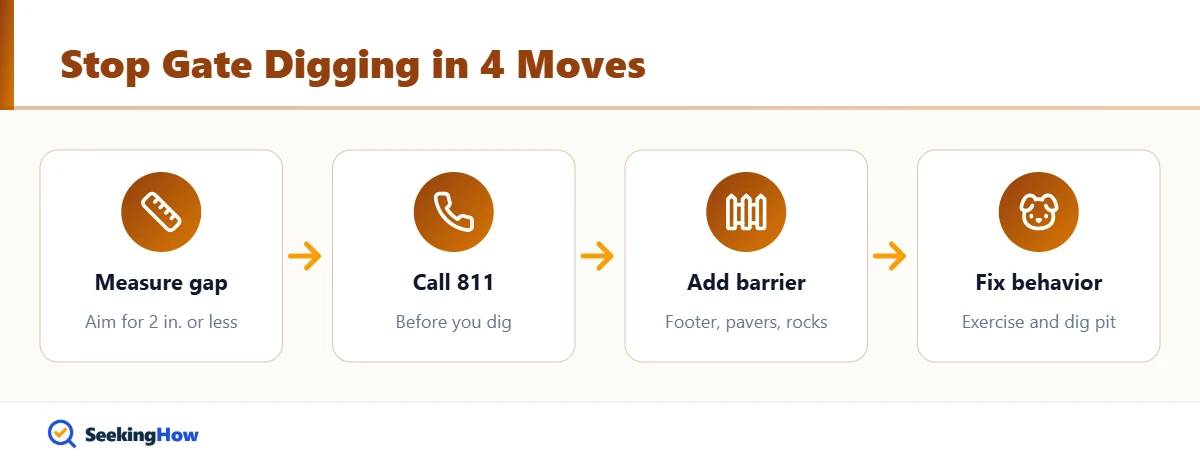
Step 1: Measure the Gap and Call 811
Close the gate and measure from the bottom of the gate to the ground at both ends; ground often slopes, so the gap may be uneven. Before digging more than a few inches, call 811 or file an online request a few days ahead so utility lines are marked. Skipping this risks hitting buried gas, power or irrigation lines.
Step 2: Reduce the Gap Under the Gate
If the gap is more than 2 inches, attach a pressure-treated board or metal kick plate to the bottom of the gate, or raise the ground with compacted gravel. Leave just enough clearance for the gate to swing freely through its full arc. For more options, see our guide on how to fix the gap under a fence gate.
Step 3: Choose Your Dig Barrier
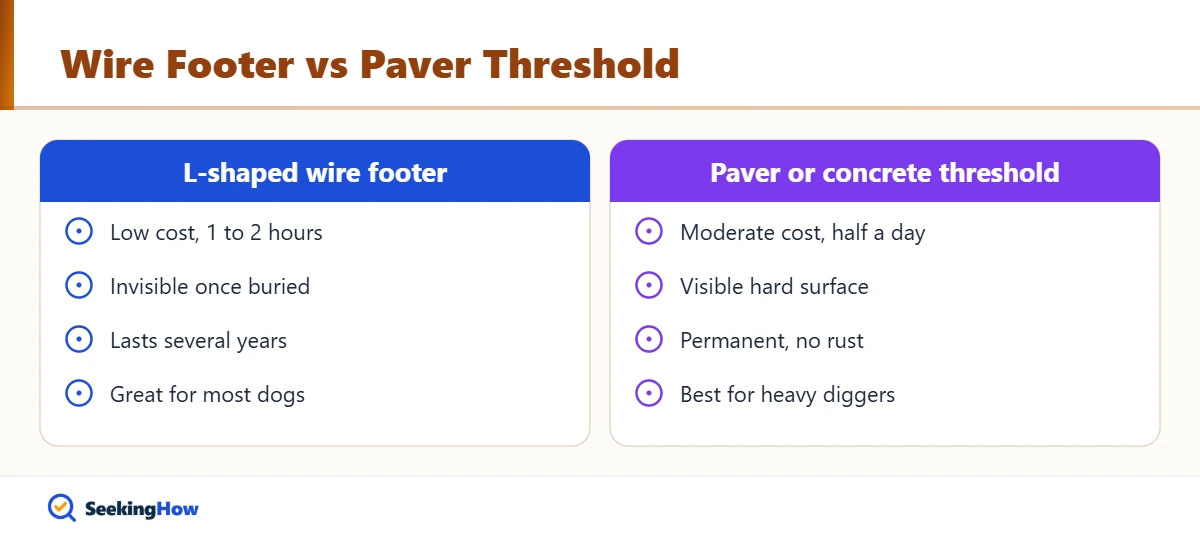
Pick one of three barriers. A buried L-footer is cheapest and invisible; a paver or concrete threshold is the most permanent; a rock strip is fastest but less tidy. In practice, a concrete or paver threshold works best for determined diggers like terriers and huskies.
Step 4: Install an L-Shaped Wire Footer
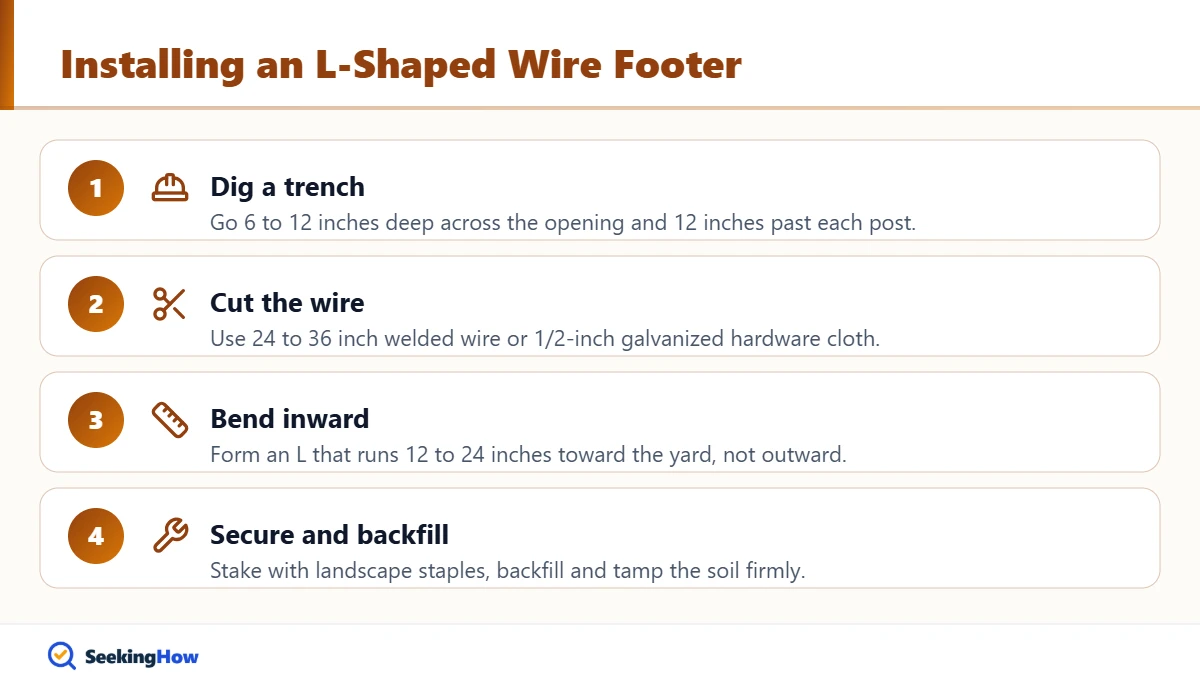
Dig a trench 6 to 12 inches deep across the gate opening and extending a foot past each post. Lay the wire so it runs down and then bends inward 12 to 24 inches toward the yard, forming an L. Backfill and tamp the soil. Dogs dig at the base, hit the wire and give up. The usual mistake is bending the footer outward, which lets dogs dig around it from inside.
Step 5: Or Lay a Paver or Concrete Threshold
Excavate a strip about 12 to 18 inches wide and 4 inches deep under the gate swing, add 2 inches of compacted gravel, and set pavers level, or pour concrete. Keep the surface 1 to 2 inches below the gate bottom. This also stops gate sag issues caused by soft, muddy ground.
Step 6: Or Add a Rock Strip
Partly bury large, flat rocks, at least 6 inches across, in a tight row along the gate line inside the yard. Dogs can’t move heavy rocks and the hard surface discourages pawing. Fill gaps between rocks so small dogs can’t wedge through.
Step 7: Address Why the Dog Is Digging
Give your dog at least the daily exercise its breed needs, rotate chew and puzzle toys, and set up a sandbox or loose-soil digging pit where you bury toys and reward digging. Provide shade and water if the dog digs to cool off. Most people find the gate digging fades within a few weeks once the dog has a better outlet.
Bottom line: Use a concrete or paver threshold for a permanent fix and an L-footer when you need a fast, low-cost barrier, then give your dog a legal place to dig.
If That Didn’t Work
Problem: The dog now digs next to the gate posts. Cause: The barrier stops at the opening. Fix: Extend the footer or threshold at least 12 inches past each post.
Problem: The dog pushes the gate open. Cause: A weak latch or sagging gate. Fix: Add a second latch near the bottom and an anti-sag kit so the gate sits tight.
Problem: The dog jumps or climbs instead. Cause: A motivated escape artist. Fix: Supervise yard time, add height to the gate, and consult your vet or a veterinary behaviorist about the trigger.
Problem: Digging moved to other parts of the yard. Cause: The underlying need was not addressed. Fix: Increase exercise, add a digging pit and never leave the dog alone outside for long periods.
| Barrier | Time | Cost | Durability | Best for |
|---|---|---|---|---|
| L-shaped wire footer | 1 to 2 hours | Low | Several years | Most dogs, renters |
| Paver or concrete threshold | 2 to 4 hours plus curing | Medium | Permanent | Determined diggers |
| Large rock strip | 1 hour | Low to medium | Long-lasting | Quick fixes, rustic yards |
| Gate kick plate only | 30 min | Low | Long-lasting | Gaps over 2 inches |
Safety and When To See a Vet
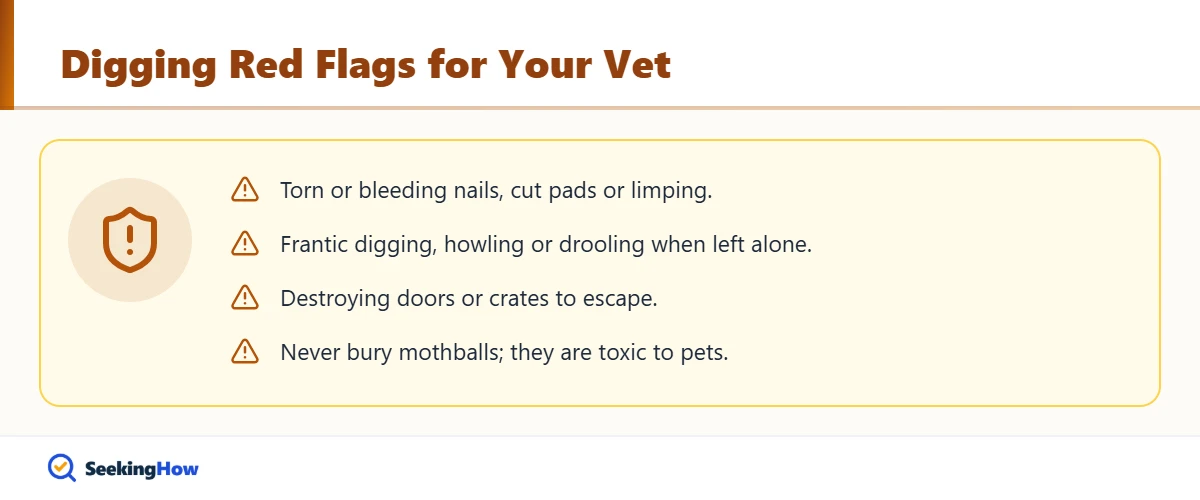
Avoid deterrents that can harm dogs: never bury mothballs, which the ASPCA warns are toxic to pets, and skip chili powder or chemicals in the soil. Bend sharp wire ends inward and down so they can’t cut paws or faces, and check the barrier after heavy rain.
See your veterinarian if your dog has torn or bleeding nails, cut pads or a limp from digging, or if digging comes with pacing, howling, drooling or destruction when left alone. Those signs can point to separation anxiety or another behavior or medical issue that a vet or board-certified veterinary behaviorist should evaluate.
Prevention Tips
- Walk the fence line monthly and fill any new holes with rocks or gravel.
- Neuter or spay as your vet advises; intact dogs roam more.
- Keep wildlife attractants, such as fallen fruit and open trash, away from the fence.
- Pick up waste daily so the yard stays clean; see how to get whipworms out of your yard for why it matters.
Related Guides
- How to fix the gap under a fence gate
- How to get whipworms out of your yard
- How to clean dog poop out of carpet
Sources
- ASPCA – common dog behavior issues and household toxins: aspca.org
- American Veterinary Medical Association (AVMA) – pet behavior resources: avma.org
- American College of Veterinary Behaviorists – finding a veterinary behaviorist: dacvb.org
- Common Ground Alliance – Call 811 before you dig: call811.com
Frequently Asked Questions
What can I put under my gate to stop my dog from digging?
Pavers, a poured concrete strip, large buried rocks or an L-shaped wire footer all work under a gate. Pavers or concrete give the most permanent result. A wire footer is cheaper and invisible, and both let the gate swing freely if you leave 1 to 2 inches of clearance.
How deep should a dig guard be for a dog?
Bury a dig guard 6 to 12 inches deep with a 12 to 24 inch inward bend. Dogs usually dig straight down at the fence base, hit the horizontal wire and quit. Very determined diggers may need the deeper end of that range or a concrete threshold.
How big can the gap under a gate be for a dog?
Keep the gap under a gate at 2 inches or less for medium and large dogs. Small breeds and puppies can squeeze through surprisingly small openings, so aim for about 1 inch. Measure at both ends, because ground under a gate is often uneven.
Does vinegar or cayenne stop dogs from digging?
Scent deterrents like vinegar have mixed results and wash away quickly. Cayenne and chili powders can irritate a dog’s eyes and nose, so they are not recommended. Physical barriers and behavior changes are safer and more reliable.
Why does my dog only dig under the gate?
Dogs dig at gates because the soil is often bare, soft and worn, and the existing gap makes escape look easy. Smells and sounds from outside also draw dogs to the gate. Blocking the ground and reducing outside temptations usually solves it.
Should I punish my dog for digging?
No, punishing a dog after it digs does not stop the behavior and can increase anxiety. Interrupt digging calmly when you see it, redirect to an approved digging pit, and reward the dog there. Supervision and more exercise address the cause.
Can I stop digging under a gate if I rent?
Yes, renters can use removable fixes like large rocks, pavers set on gravel, or wire footers staked with landscape staples. Ask your landlord before digging trenches or pouring concrete. All of these can be removed when you move out.