
Quick Answer
To sell a house with foundation problems, get a structural engineer’s report first (often about $500 to $600), disclose the issue in writing, then choose one path: repair with a transferable warranty, offer a price reduction or repair credit, or sell as-is to a cash buyer. Repairing usually brings the highest price; a cash sale is fastest but pays the least.
Key Takeaways
- In most states, sellers must disclose known foundation problems, even when selling as-is.
- A structural engineer’s report tells buyers the cause, severity and repair plan, which keeps deals from collapsing.
- FHA, VA and USDA loans have structural requirements that can block a sale until the foundation is fixed.
- Average foundation repairs often cost about $2,200 to $8,100, while major settling can reach $5,000 to $25,000.
- Cash investors buy as-is quickly but typically offer well below market value.
Foundation problems scare buyers mostly because of the unknowns: cause, cost and whether the house is still moving. This guide explains how to sell a house with foundation problems by turning those unknowns into facts, then picking the sale strategy that nets you the most for your timeline. Costs are national estimates and vary by region and year; disclosure rules vary by state.
What You’ll Need
- A structural engineer’s inspection and written report
- Two or three written repair bids from foundation contractors
- Your state’s seller disclosure form
- Records of any past foundation work, warranties and permits
- A listing agent experienced with as-is or distressed sales
- A real estate attorney, for complicated disclosure questions (optional)
How To Sell a House With Foundation Problems: Step-by-Step
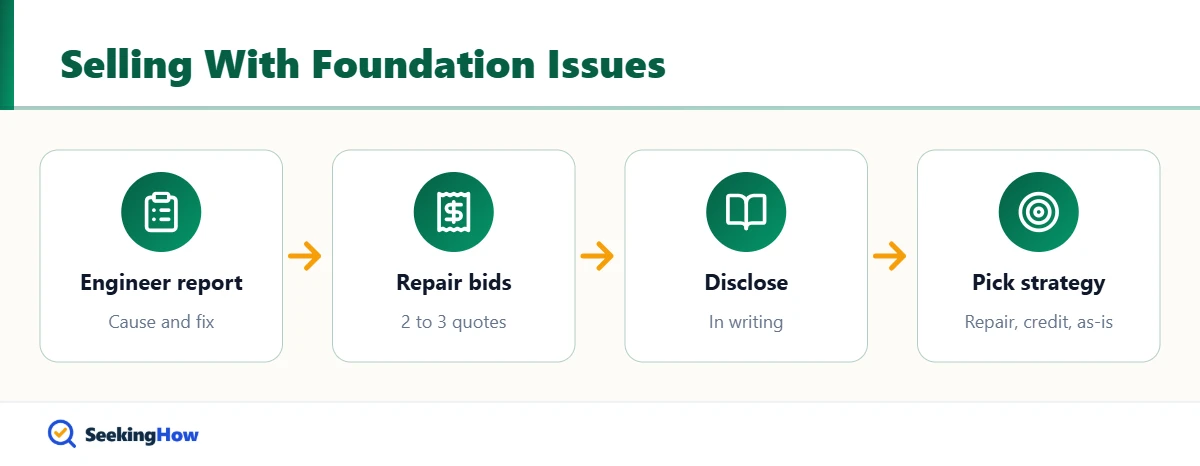
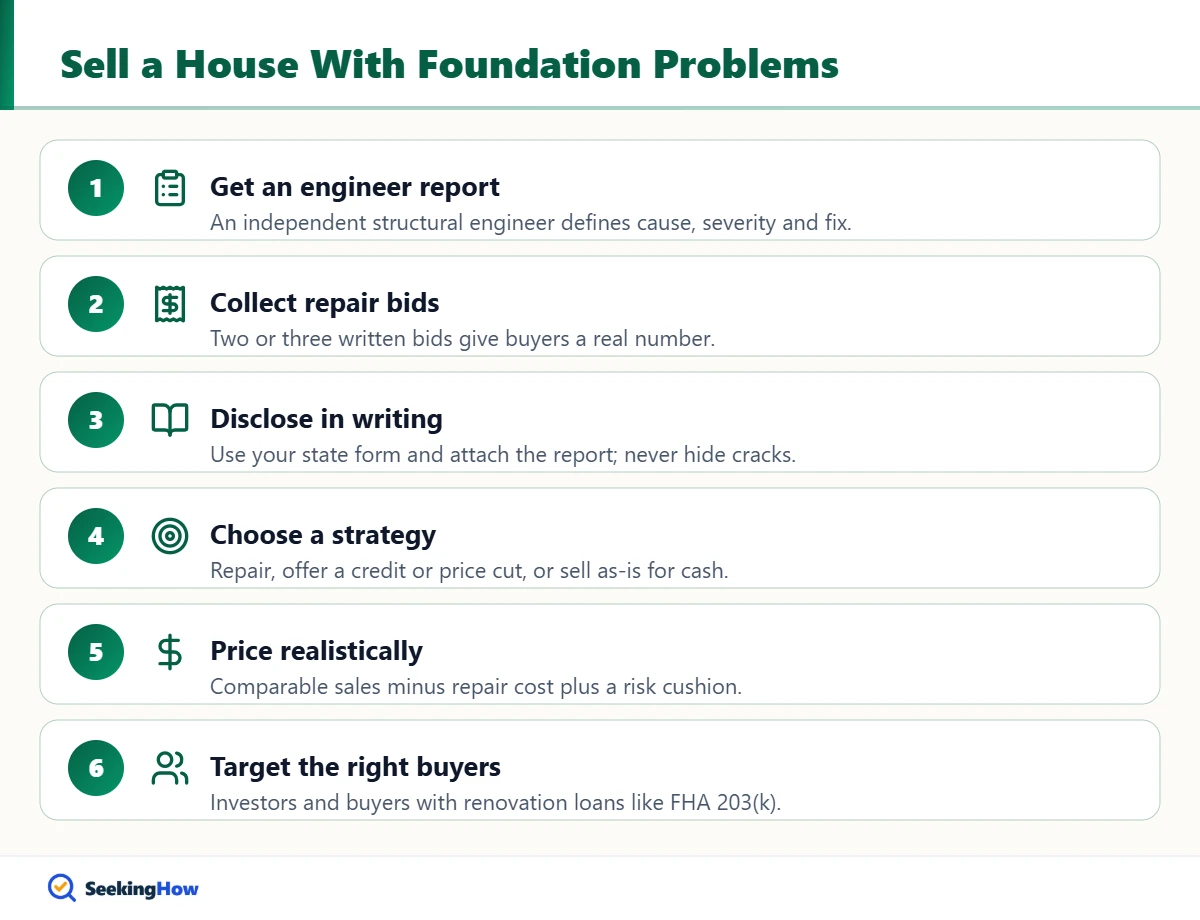
Step 1: Get a Structural Engineer’s Report
Hire an independent licensed structural engineer, not a repair company, to identify the cause and recommend a fix. HomeLight puts the average residential structural engineer visit around $550. In practice, an engineer’s report showing a minor, stable crack can turn a scary inspection note into a non-issue.
Step 2: Get Repair Bids
Collect two or three written bids based on the engineer’s plan. Even if you won’t repair, bids give buyers a concrete number to negotiate around instead of guessing high.
Step 3: Disclose the Problem in Writing
Fill out your state’s seller disclosure form honestly, attach the engineer’s report and note any past repairs. Hiding cracks with paint, caulk or new drywall is the most costly mistake sellers make, because it can expose you to lawsuits after closing.
Step 4: Choose Your Sale Strategy
Decide whether to repair, offer a credit or price cut, or sell as-is to a cash buyer, using the comparison below. Your choice depends on the repair cost, your cash on hand and how soon you need to close.
Step 5: Price the Home Realistically
Ask your agent to price against comparable sales and subtract a realistic repair figure plus a cushion for buyer risk. Overpricing a house with known foundation issues usually leads to long days on market and an even bigger cut later.
Step 6: Market to the Right Buyers
Target investors, contractors and buyers using renovation loans such as FHA 203(k) or Fannie Mae HomeStyle. Make the engineer’s report and bids available up front so buyers and their lenders can evaluate the risk early.
Repair, Credit or Sell As-Is?
| Option | Upfront cost | Sale price | Time to close | Best for |
|---|---|---|---|---|
| Repair before listing | Repair cost plus engineer and permit | Highest | Weeks of repair, then normal sale | Fixable issues and sellers with cash |
| Price cut or repair credit | Engineer report and bids | Moderate | Normal, if buyer financing allows | Moderate issues, cash-paying or renovation-loan buyers |
| Sell as-is on the open market | Report recommended | Lower | Often longer | Sellers who can wait for the right buyer |
| Cash investor or iBuyer | None | Lowest | Days to a few weeks | Major damage or urgent timelines |
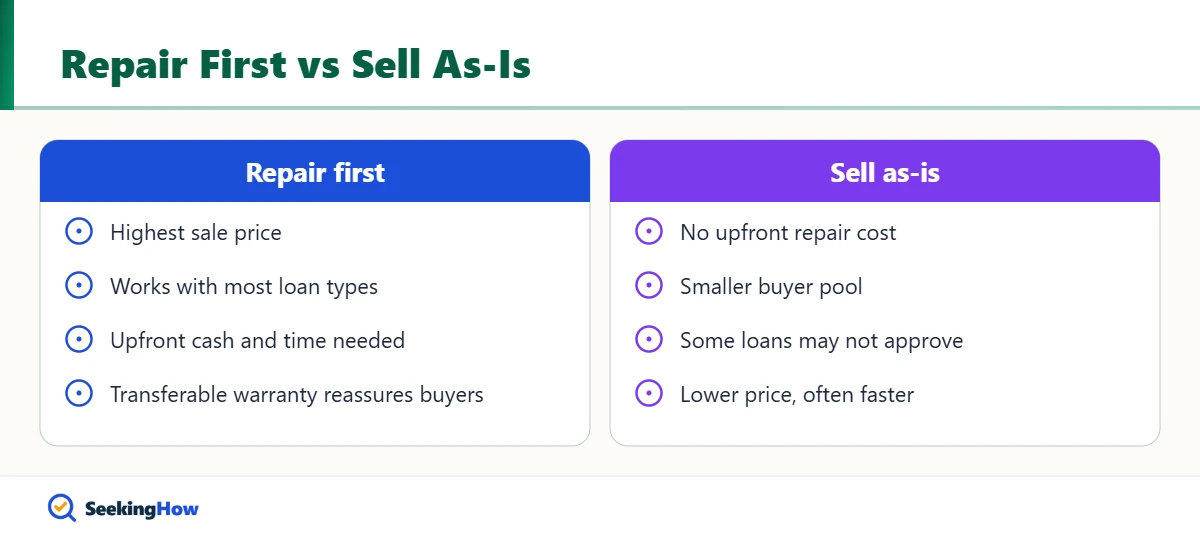
Bottom line: If the repair is under about 5 percent of the home’s value and you can fund it, repair with a transferable warranty; if not, sell as-is with full documentation, and choose a cash buyer only when speed matters more than price.
Typical Foundation Repair Costs
- Minor crack repair: about $250 to $800
- Average repair: about $2,200 to $8,100
- Bowing walls: about $4,000 to $12,000
- Settling or sinking: about $5,000 to $25,000
- Piers: about $1,000 to $3,000 each
For small non-structural cracks you can handle yourself, see how to repair foundation cracks in concrete walls.
If That Didn’t Work
Problem: The buyer’s lender won’t approve the loan. Cause: FHA, VA or USDA structural requirements, or a cautious conventional lender. Fix: Offer to complete repairs before closing, or switch to a cash or renovation-loan buyer.
Problem: Buyers keep backing out after inspection. Cause: They discover the issue late and assume the worst. Fix: Disclose up front with the engineer’s report and repair bids in the listing packet.
Problem: Cash offers are far below expectations. Cause: Investors price in repair costs, holding costs and profit. Fix: Get multiple offers and compare them against repairing first; see how to find cash home buyers and avoid bad offers.
Problem: The home sits unsold for months. Cause: Price too high for the condition or wrong season. Fix: Reprice using as-is comparables and consider timing; see the best time to sell a house.
Safety and When To Call a Pro
Call a structural engineer right away if you see doors or windows that suddenly stick, stair-step cracks in brick, cracks wider than about 1/4 inch, floors sloping noticeably, or walls bowing inward. Consult a real estate attorney if you’re unsure what your state requires you to disclose, or if a past repair failed. Never conceal known defects; failure to disclose can lead to rescission or damages after the sale.

Tips To Get the Best Price
- Choose a repair contractor whose warranty transfers to the next owner.
- Fix drainage, gutters and grading, which are cheap and reassure buyers.
- Keep permits and final inspection sign-offs for any repair.
- Collect several cash offers before accepting one.
Related Guides
- How to repair foundation cracks in concrete walls
- How to find cash home buyers and avoid bad offers
- Best time to sell a house in Ohio
- How to build an addition on piers
Sources
- HomeLight: Selling a house with foundation issues
- U.S. Department of Housing and Urban Development: FHA 203(k) rehabilitation mortgage program (hud.gov)
- Fannie Mae: HomeStyle Renovation mortgage (fanniemae.com)
Frequently Asked Questions
Do I have to disclose foundation problems when selling a house?
In most states, yes. Sellers who know about foundation problems generally must disclose them on the state seller disclosure form, even when selling as-is. Rules vary by state, so check your state form or ask a real estate attorney. Concealing known defects can lead to lawsuits after closing.
How much does a foundation problem lower home value?
It depends on severity, repair cost and the local market. Buyers typically subtract at least the repair estimate plus a cushion for risk and hassle. A minor, documented crack may barely affect price, while active settling can cut offers significantly. An engineer report narrows the discount.
Can you get an FHA loan on a house with foundation problems?
Often not until the problem is fixed. FHA, VA and USDA loans have structural soundness requirements, and an appraiser can flag foundation issues as a required repair. An FHA 203(k) renovation loan is one option, because it can finance the repair as part of the purchase.
Is it better to fix the foundation before selling?
Usually yes, if the repair is affordable and you have time. Repaired homes with a transferable warranty attract more buyers and financing options and typically sell for more. If repairs are extensive or you need to sell quickly, a documented as-is sale can make more sense.
Will cash buyers purchase a house with foundation problems?
Yes. Investors, flippers and iBuyers regularly buy homes with foundation damage as-is, often closing in days or weeks. Expect offers well below market value, since they price in repairs and profit. Get several offers and compare them against the cost of repairing first.
Who should inspect foundation problems before selling?
Hire an independent licensed structural engineer before calling repair companies. An engineer has no incentive to sell you a repair and provides a written report buyers trust. Then get repair bids based on the engineer recommendations.
Can I offer a repair credit instead of fixing the foundation?
Yes. Many sellers offer a credit or price reduction based on repair bids. Some loan programs limit seller credits or require structural repairs before closing, so confirm with the buyer lender. Credits work best with cash buyers or renovation-loan buyers.