Quick Answer
To remove a stripped Phillips screw from metal, first try a wide rubber band or screw-grab compound under a correctly sized #2 bit with heavy downward pressure. If that fails, use a manual impact driver, then a reverse-thread screw extractor. Most screws come out in 5 to 20 minutes. Apply penetrating oil first and wear safety glasses.
Key Takeaways
- Screws threaded into metal are often seized by rust or thread locker, so penetrating oil and time help every method.
- Downward pressure matters more than twisting force when a Phillips head is partly stripped.
- A manual impact driver turns a hammer blow into high torque while pushing the bit into the head.
- Screw extractors work best in hardened steel holes drilled with a left-handed drill bit.
- Cutting a new slot with a rotary tool works whenever the screw head sits above the surface.
A Phillips screw stripped in metal is tougher than one in wood, because metal threads grip tightly and often corrode. This guide on how to remove a stripped Phillips screw from metal starts with the gentlest method and moves to drilling, so you avoid damaging the threaded hole you may need to reuse.
What You’ll Need
- Penetrating oil (a rust-loosening spray)
- Phillips bits in #1, #2, and #3 sizes, ideally new and hardened
- Wide rubber band or screw-grab (friction) compound
- Manual impact driver with bits and a 1- to 2-pound hammer
- Screw extractor set and left-handed (reverse) drill bits
- Variable-speed drill
- Rotary tool with a thin cutoff wheel (optional)
- Locking pliers (optional)
- Center punch, cutting oil, and safety glasses
How To Remove a Stripped Phillips Screw From Metal: Step-by-Step
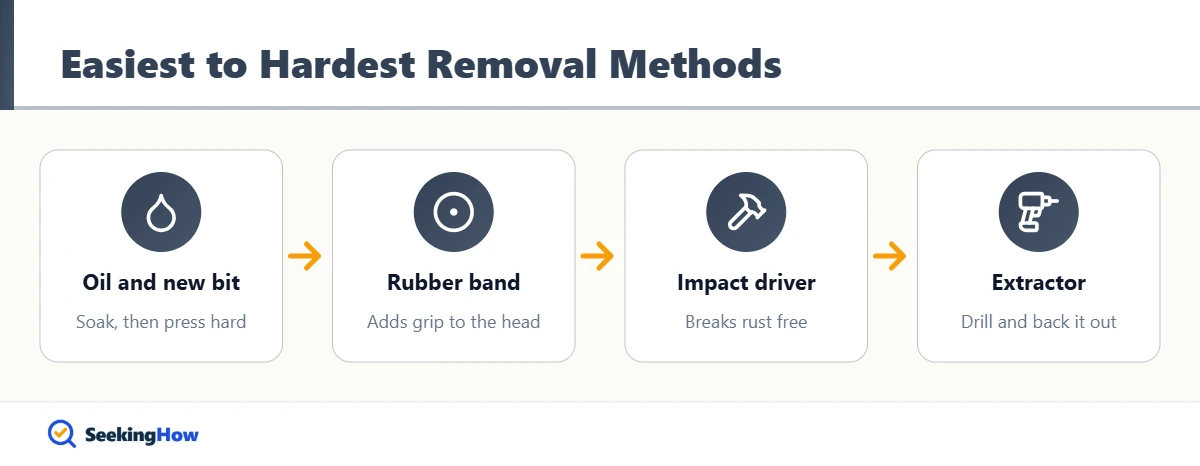
Step 1: Soak the Screw With Penetrating Oil
Spray penetrating oil around the screw head and let it soak for 15 minutes, or overnight on rusty outdoor parts. Tap the head a few times with a hammer to help the oil wick into the threads. Skipping this step is the most common reason screws break off when you apply more force.
Step 2: Use a Fresh, Correctly Sized Bit
Try a new #2 Phillips bit, then a #3 if it seats deeper; a bigger bit often catches the unstripped part of the cross. Press down hard with your body weight and turn slowly counterclockwise. In practice, many stripped screws come out at this step because the original bit was worn or one size too small.
Step 3: Add a Rubber Band or Screw-Grab Compound
Lay a wide rubber band flat over the head, push the bit through it, and turn with steady pressure. Screw-grab compound works the same way, adding grit between the bit and the head. Both methods only work on lightly stripped heads, so move on if the bit still spins.
Step 4: Hit It With a Manual Impact Driver
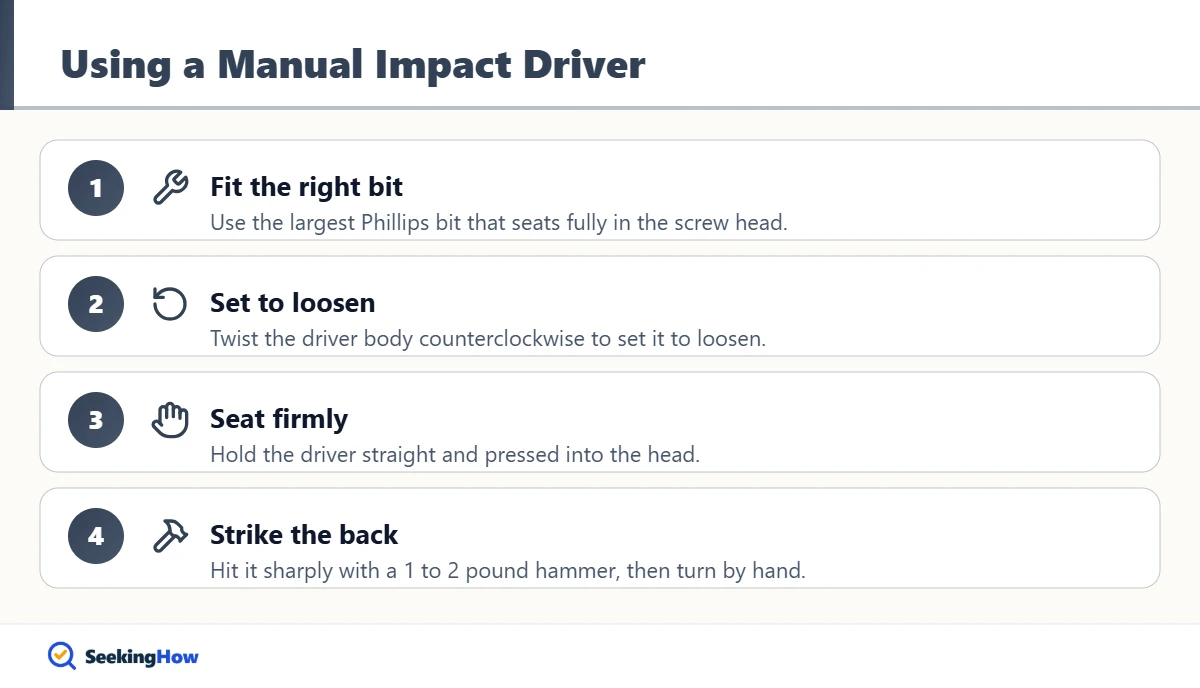
Fit the impact driver with a Phillips bit, set it to loosen, place it firmly in the screw head, and strike the back with a hammer. Each blow forces the bit into the head and turns it a few degrees, breaking rust and thread locker free. This is the best tool for machine screws seized in steel, such as on cars, appliances, and motorcycles.
Step 5: Cut a Slot With a Rotary Tool
If the head sits above the surface, cut a straight slot across it with a thin cutoff wheel about 1/16 inch deep. Then remove it with a large flat-blade screwdriver or the impact driver with a flat bit. Wear safety glasses, since cutoff wheels throw sparks and can shatter.
Step 6: Use a Screw Extractor
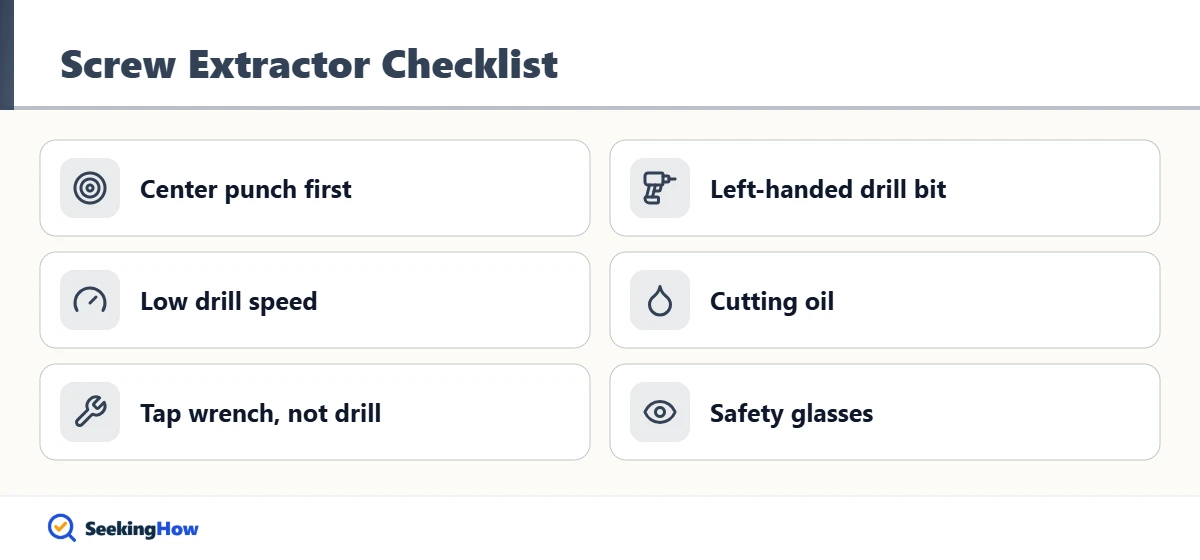
Center-punch the screw, then drill a pilot hole with a left-handed drill bit at low speed, using cutting oil. Often the reverse bit catches and backs the screw out on its own. If not, tap the extractor into the hole and turn it counterclockwise slowly with a tap wrench; never force it, because a broken extractor is hardened and very hard to drill.
Step 7: Grip the Head With Locking Pliers
If the head stands proud of the surface, clamp locking pliers tightly on its sides and turn counterclockwise. This works well on pan and truss heads that are too damaged for any bit. It will not work on flat-head screws countersunk flush into the metal.
Bottom line: Soak, then use a new bit with pressure, and go straight to a manual impact driver for screws seized in metal before reaching for an extractor.
If That Didn’t Work
Problem: The screw head snapped off. Cause: Too much torque on a seized screw. Fix: Remove the part and grip the protruding shank with locking pliers, or drill it out and re-tap the hole.
Problem: The extractor broke in the hole. Cause: Turning too hard or at an angle. Fix: Stop drilling; a machine shop can remove it with carbide tools or electrical discharge machining.
Problem: The screw spins but will not back out. Cause: Stripped threads in the metal. Fix: Pry gently under the head while turning, then repair the hole with a thread insert or a larger screw.
Problem: It is an Allen or socket screw, not Phillips. Cause: Different drive type. Fix: See our guide to removing a stripped Allen screw.
| Method | Time | Cost | Difficulty | Best for |
|---|---|---|---|---|
| New bit plus pressure | 2 min | Free to low | Easy | Lightly stripped heads |
| Rubber band or grab compound | 5 min | Low | Easy | Shallow cam-out damage |
| Manual impact driver | 5–10 min | Low | Easy | Rusted or seized screws in steel |
| Rotary tool slot | 10 min | Moderate | Moderate | Heads above the surface |
| Screw extractor | 15–30 min | Moderate | Moderate | Fully stripped, flush heads |
Safety and When To Call a Pro
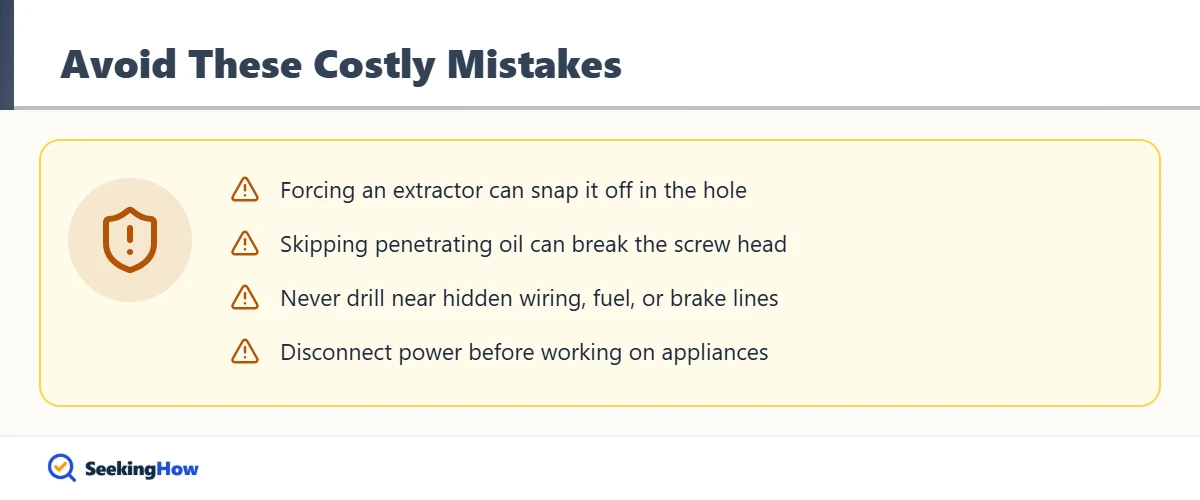
Wear safety glasses for every method; hardened bits, extractors, and cutoff wheels can shatter. Disconnect power before working on appliances, electrical boxes, or vehicles, and never drill near fuel lines, brake lines, or wiring you cannot see. Take the part to a machine shop if an extractor or drill bit breaks off in the hole, or if the threads are in an expensive engine or transmission part.
Prevention Tips
- Use the right bit size and replace worn bits often.
- Press down firmly and turn slowly to prevent cam-out.
- Put anti-seize on screws in outdoor or high-heat metal parts.
- Clean off rust early with our guide to the fastest way to remove rust from metal.
Related Guides
- How to remove a stripped Allen screw
- How to remove a stripped screw from wood
- The fastest way to remove rust from metal
- How to stabilize a wobbly cabinet
Sources
- OSHA — hand and power tool safety guidance (osha.gov)
- American National Standards Institute (ANSI) — eye protection standard Z87.1 information (ansi.org)
- Tool manufacturers’ screw extractor instructions — drilling and extraction procedures
Frequently Asked Questions
What is the easiest way to remove a stripped Phillips screw from metal?
The easiest way is to soak the screw with penetrating oil, then use a new, slightly larger Phillips bit with strong downward pressure. Adding a wide rubber band between the bit and the head gives extra grip. These two steps remove most lightly stripped screws without special tools.
Does the rubber band trick work on metal screws?
Yes, the rubber band trick works on metal screws that are only lightly stripped and not seized. The rubber fills the worn cross and adds friction. It will not free a rusted or thread-locked screw, so pair it with penetrating oil or move to an impact driver.
Can I use a drill to remove a stripped screw?
Yes, a drill can remove a stripped screw using a left-handed drill bit or a screw extractor. Run the drill in reverse at low speed with steady pressure. The left-handed bit often catches the screw and backs it out before you ever need the extractor.
How do I remove a rusted stripped screw from metal?
Remove a rusted stripped screw by soaking it in penetrating oil for several hours or overnight, tapping it to help the oil penetrate, then using a manual impact driver. Gentle heat can help on non-flammable parts, but never use heat near fuel, plastics, or paint.
What if a screw extractor breaks off?
If a screw extractor breaks off, stop drilling, because extractors are hardened and will destroy ordinary drill bits. A machine shop can remove it with carbide tools or electrical discharge machining. Forcing it further often damages the part beyond repair.
How do I prevent Phillips screws from stripping?
Prevent Phillips screws from stripping by using the correct bit size, pressing firmly, and turning slowly. Replace worn bits, keep the driver straight, and lower the clutch setting on power drills. On metal parts that see weather or heat, apply anti-seize when reinstalling.