Quick Answer
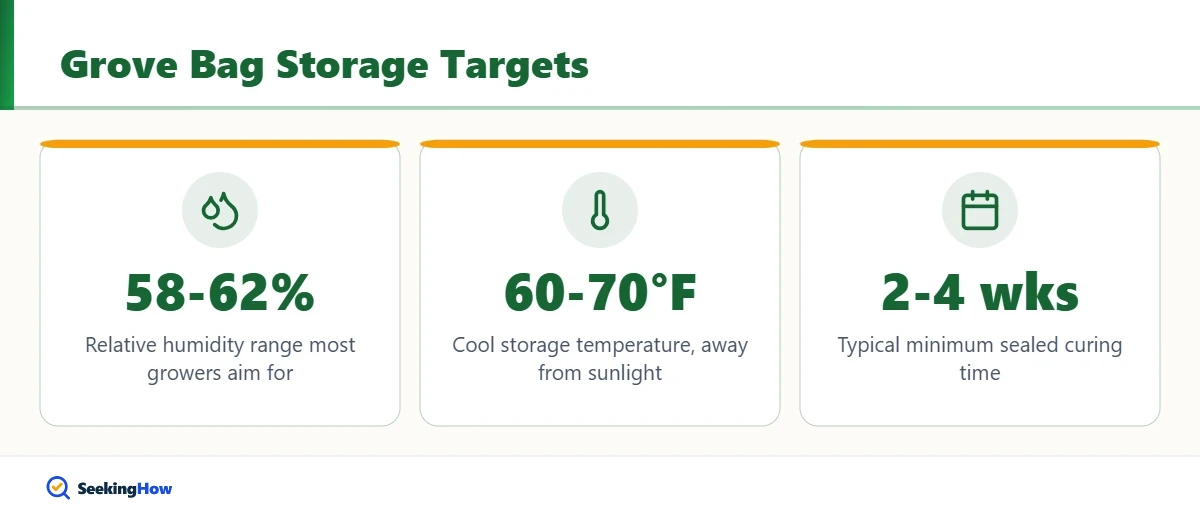
To use Grove Bags for storage, fill the bag with fully dried herbs or flower (stems should snap, not bend), leaving room so nothing is crushed. Press out excess air, seal the zipper fully, and store the bag upright in a cool, dark place around 60-70°F. The TerpLoc film helps hold humidity near the 58-62% range, so burping is generally not needed.
Key Takeaways
- Grove Bags use a TerpLoc film that regulates moisture and oxygen exchange and blocks UV light (opaque styles block it fully).
- Material must be properly dried before bagging; bagging wet material risks mold in any container.
- Pick a bag size that fits your quantity so there is little empty air space.
- Child-resistant versions exist; use them anywhere children or pets live, and follow local laws for regulated products.
Grove Bags are flexible pouches designed for curing and long-term storage of dried plant material, most often cannabis where it is legal, and also culinary or medicinal herbs. They replace glass jars for many growers because they are lighter, block light, and do not need daily opening. Here is how to use them correctly.
What Are Grove Bags and How Do They Work?
Grove Bags are made with a multi-layer film the brand calls TerpLoc. The film is designed to let moisture and oxygen pass at a controlled rate, helping the contents settle into a stable humidity rather than drying out or trapping excess moisture. That is why the manufacturer markets them as a no-burp alternative to jars.
They come in opaque and windowed styles, with child-resistant zipper versions, and in sizes from small personal pouches to large bags for bulk harvests.
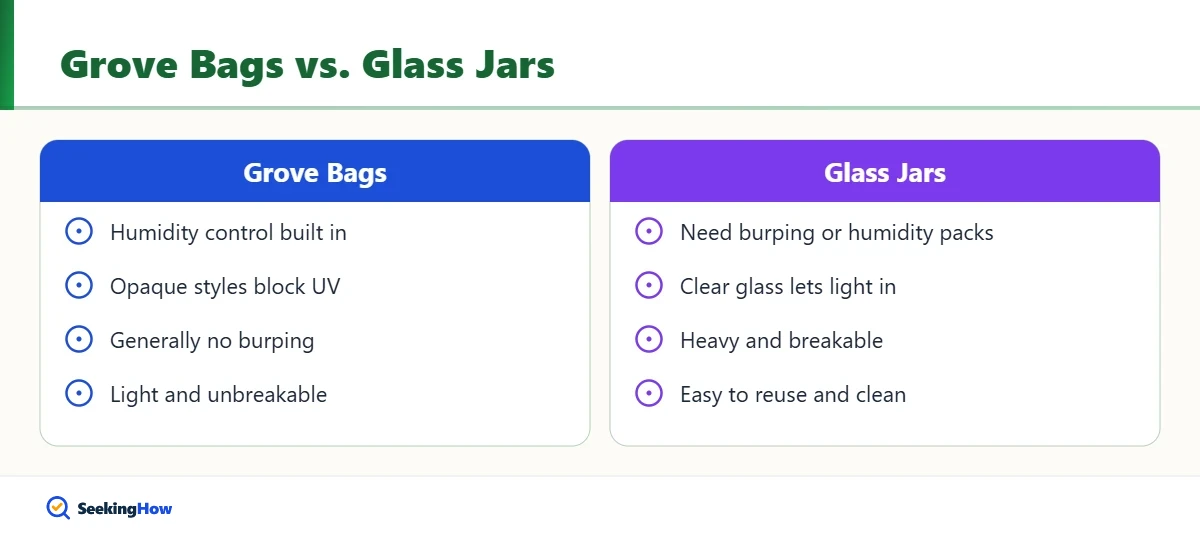
| Feature | Grove Bags | Glass mason jars | Plastic zip bags |
|---|---|---|---|
| Light protection | Opaque styles block UV | None unless amber or stored in the dark | Poor |
| Humidity control | Built into the film | Needs burping or humidity packs | Poor; can trap moisture |
| Burping | Generally not needed | Daily during early cure | Not designed for curing |
| Weight and breakage | Light, unbreakable | Heavy, breakable | Light |
| Static | Low-static interior | None | Can pull off trichomes or fine particles |
How To Use Grove Bags for Storage, Step by Step
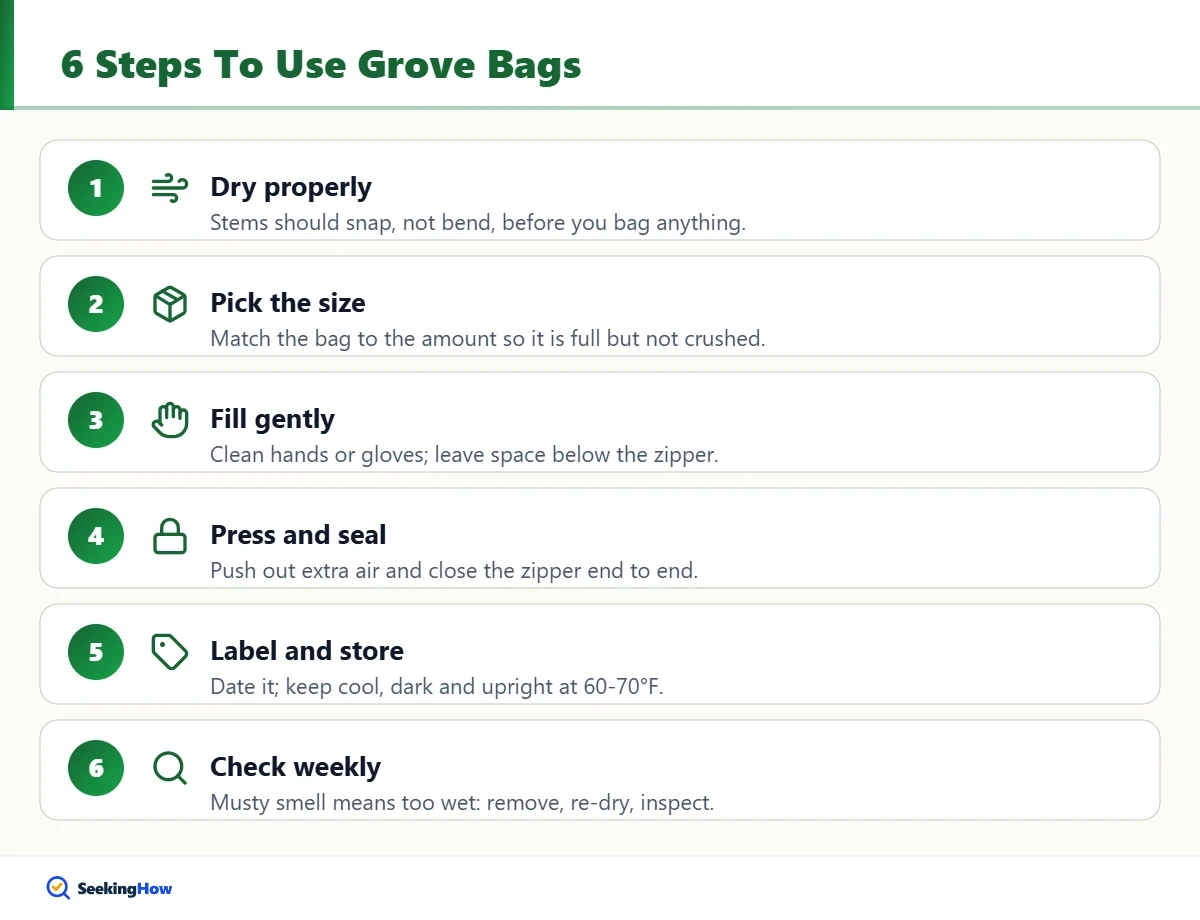
Step 1: Make Sure the Material Is Properly Dried
Dry herbs or flower slowly, typically 7-14 days hanging in a dark room around 60-70°F and 50-60% humidity. They are ready when small stems snap rather than bend and the outside feels dry. Bagging material that is still wet can lead to mold, which no storage bag can fix.
Step 2: Choose the Right Bag Size
Match the bag to the amount you are storing so it is filled without crushing. Too large a bag leaves excess air; too small a bag compresses the material. Most sizes are labeled by the weight they are intended to hold.
Step 3: Fill the Bag Gently
Wash and dry your hands or wear nitrile gloves. Place the material in loosely, leaving an inch or two below the zipper so it can seal cleanly. Do not pack it down.
Step 4: Remove Excess Air and Seal
Gently press out the extra air without squashing the contents, then run your fingers along the zipper end to end until it is fully closed. Child-resistant versions require pinching the designated area to reopen.
Step 5: Label and Store in a Cool, Dark Place
Write the contents, variety and date on the bag or a label. Store bags upright in a drawer, cabinet or bin away from sunlight, heat sources and big temperature swings; about 60-70°F is a good target.
Step 6: Check Occasionally During the First Weeks
For a cure, leave the bag sealed for at least 2-4 weeks. Check through the window or by opening briefly once a week: the material should smell fresh and feel slightly springy. A musty or ammonia smell means it was too wet; remove it, dry it further, and inspect for mold.
Tip: A small digital hygrometer placed in the bag for a day gives you a real humidity reading. Around 58-62% relative humidity is the range most growers aim for during curing and storage.
Do You Need Humidity Packs With Grove Bags?
Usually not. The bags are designed to manage humidity on their own when material goes in at the right dryness. If you live in a very dry climate or are storing for many months, a two-way humidity pack in the 58-62% range can add a safety margin. Never add a pack to material that is already too moist.
Humidity matters around the house as well as in storage. If your home is very dry in winter, see our guide on cleaning a Honeywell humidifier so it runs efficiently.
How Long Can You Store Herbs in Grove Bags?
Properly dried material stays in good condition for many months in a sealed bag kept cool and dark. Aroma and potency of any dried plant fade slowly over time, especially with heat and light, so label dates and use older stock first. For culinary herbs, quality is usually best within about a year; see our guide on how much rosemary is safe to eat for one popular herb.
Common Mistakes When Using Grove Bags
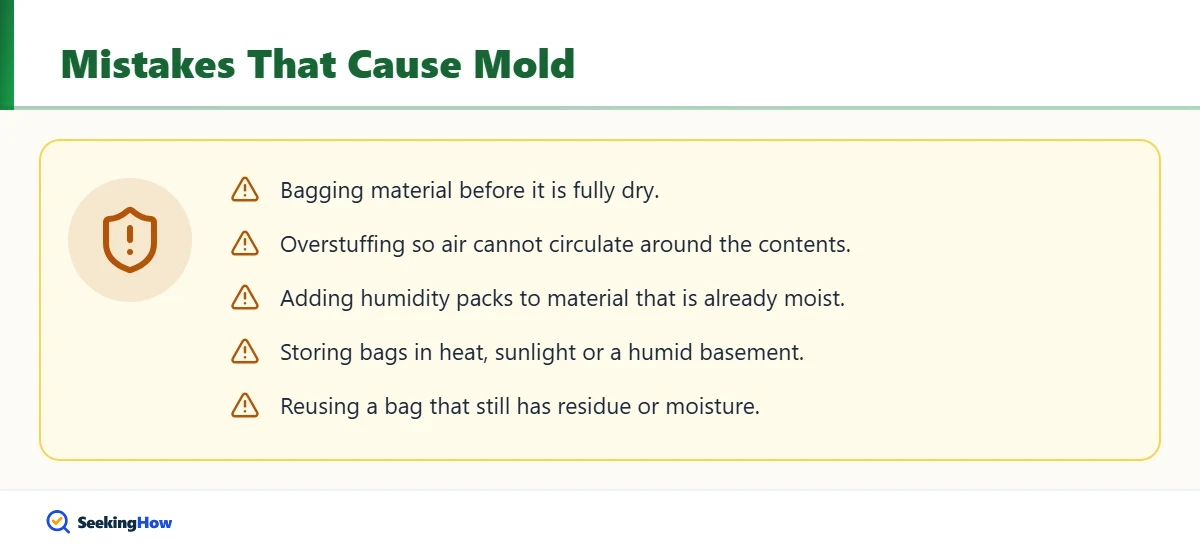
- Bagging too early: the most common cause of mold. If in doubt, dry another day.
- Overstuffing: crushes material and prevents an even cure.
- Using a huge bag for a small amount: extra air space slows stabilization.
- Storing in a hot car, attic or sunny window: heat degrades aroma and quality.
- Not fully closing the zipper: a small gap defeats the humidity control.
- Reusing dirty bags: residue and old moisture can introduce mold; use a fresh bag for each batch.
Is It Safe and Legal To Store Cannabis in Grove Bags?
The bag itself is just a storage container. Whether you can possess or grow cannabis depends on your state or country law, so follow local rules. Wherever children or pets live, use child-resistant bags, keep them in a locked or high cabinet, and keep edibles and flower clearly labeled. If a child or pet may have swallowed cannabis, call Poison Control (1-800-222-1222 in the U.S.) or your veterinarian right away.
Frequently Asked Questions
Do you have to burp Grove Bags?
Generally no. Grove Bags are designed so the TerpLoc film manages moisture and oxygen exchange, which is why the maker markets them as a no-burp option. Opening one briefly to smell and inspect during the first weeks is still a good check for excess moisture.
How full should a Grove Bag be?
Fill it so the contents sit loosely without being compressed, leaving an inch or two below the zipper for a clean seal. Choose the bag size labeled for your quantity so there is little extra air space.
Can you reuse Grove Bags?
They can be reused if they are clean, dry and the zipper still seals. Many users prefer a fresh bag for each batch because residue and leftover moisture can raise the risk of mold and odor transfer.
Can you use Grove Bags for food or herbs?
Yes, they work well for dried culinary herbs, tea leaves and other dried plant material. Make sure the herbs are fully dry before sealing and store the bags somewhere cool and dark.
How long should you cure in Grove Bags?
Many growers cure for at least 2-4 weeks, and some cure longer for smoother aroma. Keep the bag sealed in a cool, dark place and check for any musty smell during the first weeks.