Quick Answer
To tape a sprained pinky toe, buddy tape it to the fourth toe: place a thin strip of gauze or felt between the two toes, then wrap 1/4 to 1/2 inch medical tape around both toes in two loops, one near the base and one near the middle, snug but not tight. Change the tape daily and keep it on for about 2 to 4 weeks.
Key Takeaways
- Buddy taping uses the fourth toe as a natural splint so the injured pinky toe moves less and hurts less.
- Always put gauze, cotton, or felt between the toes to prevent moisture, rubbing, and skin breakdown.
- Tape the toes together at two points and avoid wrapping directly over the most swollen spot or the toe joint crease.
- Check that the tip of the toe stays pink and warm; numbness, tingling, or blue color means the tape is too tight.
- Most sprained toes improve within 2 to 4 weeks with taping, ice, and a stiff-soled shoe.
- A crooked toe, severe bruising, or inability to walk can signal a fracture that needs an X-ray.
Stubbing a little toe on a bed frame or table leg is one of the most common ways to sprain it. This guide explains how to tape a sprained pinky toe safely with the buddy taping method, how long to keep it taped, and how to tell a sprain from a break.
What You’ll Need
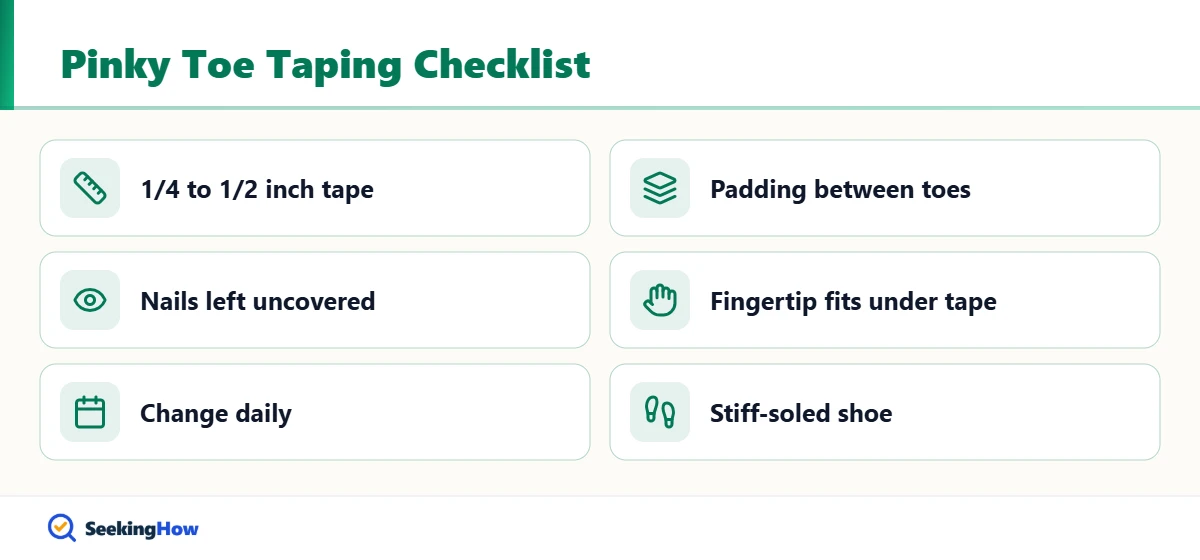
- Medical or athletic tape, 1/4 to 1/2 inch wide (cut wider tape lengthwise)
- Gauze pad, cotton ball, or thin moleskin felt
- Small scissors
- Soap, water, and a towel
- Ice pack wrapped in a thin cloth
- Stiff-soled shoe, post-op shoe, or roomy sneaker
How To Tape a Sprained Pinky Toe: Step-by-Step
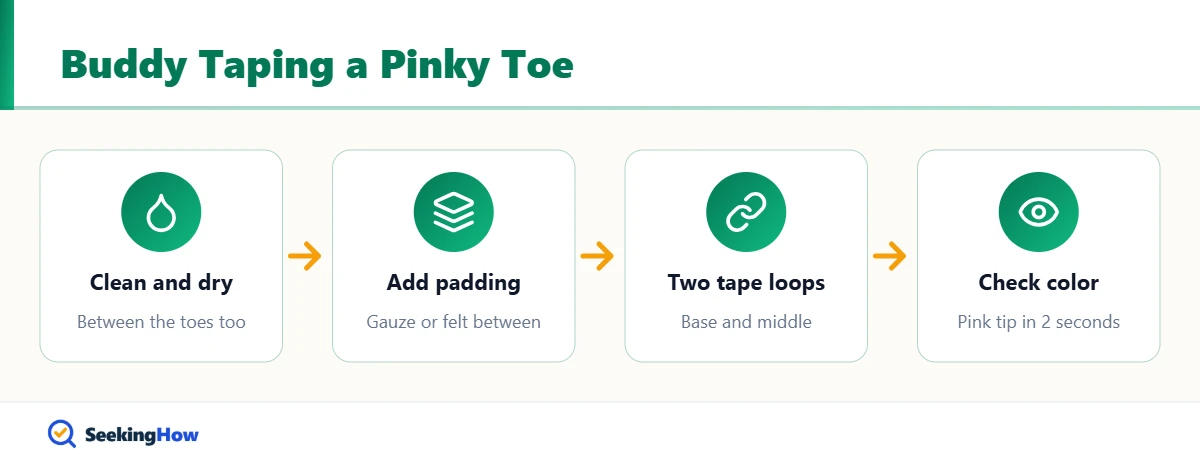
Step 1: Clean and Dry Both Toes
Wash the pinky and fourth toe with soap and water and dry thoroughly, especially between the toes. Trapped moisture under tape can cause skin breakdown and fungal irritation. Skip lotion on the area so the tape sticks.
Step 2: Place Padding Between the Toes
Fold a small piece of gauze or a thin felt strip and set it between the pinky and the fourth toe. The pad absorbs sweat and stops skin from rubbing. Leaving out the padding is the most common mistake and often causes blisters within a day or two.
Step 3: Line the Toes Up Gently
Hold the pinky in its natural position next to the fourth toe without forcing it. If the pinky looks crooked or out of line, stop and have it checked, because it may be broken or dislocated and need to be set by a clinician.
Step 4: Wrap the First Loop Near the Base
Wrap a strip of tape around both toes once or twice near the base, between the knuckle and the foot. Keep it snug enough to hold the toes together but loose enough that you can slide a fingertip under the edge. Avoid wrapping directly over the joint crease so the toes can still flex slightly.
Step 5: Add a Second Loop Near the Middle
Wrap a second strip around both toes closer to the tips, leaving the nails uncovered. Two loops hold the toes better than one wide wrap. In practice, thin tape is easier to keep comfortable on the small pinky toe than standard 1-inch tape.
Step 6: Check Circulation
Press the tip of the pinky toenail; the color should return within about 2 seconds. Remove and rewrap the tape if the toe becomes numb, tingly, pale, blue, or throbs more than before. Swelling can increase after taping, so recheck after an hour.
Step 7: Change the Tape Daily and After Showers
Remove the tape and padding every day or whenever they get wet, inspect the skin, dry it, and reapply. Continue buddy taping for about 2 to 4 weeks, or until you can walk without pain. Wear a stiff-soled or roomy shoe so the toes are not squeezed.
Bottom line: buddy tape the pinky to the fourth toe with padding in between, change it daily, and get an X-ray if the toe is crooked or you cannot walk.
Home Care Alongside Taping
- Ice: 15 to 20 minutes at a time, wrapped in cloth, several times a day for the first 48 hours.
- Elevate: raise the foot above heart level when resting to limit swelling.
- Footwear: a stiff sole or post-op shoe reduces toe bending while walking.
- Pain relief: over-the-counter pain relievers can help if safe for you; follow the label.
Foot pain can change how you walk and strain the leg; see how to reduce leg pain if your calf or shin starts to ache.
If That Didn’t Work
Problem: The tape keeps slipping off. Cause: Sweat or tape that is too wide for the small toe. Fix: Dry the skin well, use 1/4 inch strips, and wear a sock over the taping.
Problem: Skin between the toes is white and soggy. Cause: Moisture trapped by missing or wet padding. Fix: Leave the toes open to air for a few hours, then retape with fresh dry gauze.
Problem: Pain is no better after 1 to 2 weeks. Cause: Possible fracture or more serious ligament injury. Fix: See a doctor for an exam and X-ray.
Problem: The pinky curls under after healing. Cause: A pre-existing or developing toe deformity. Fix: See how to fix hammertoe with tape and consult a podiatrist.
Sprain vs Broken Pinky Toe
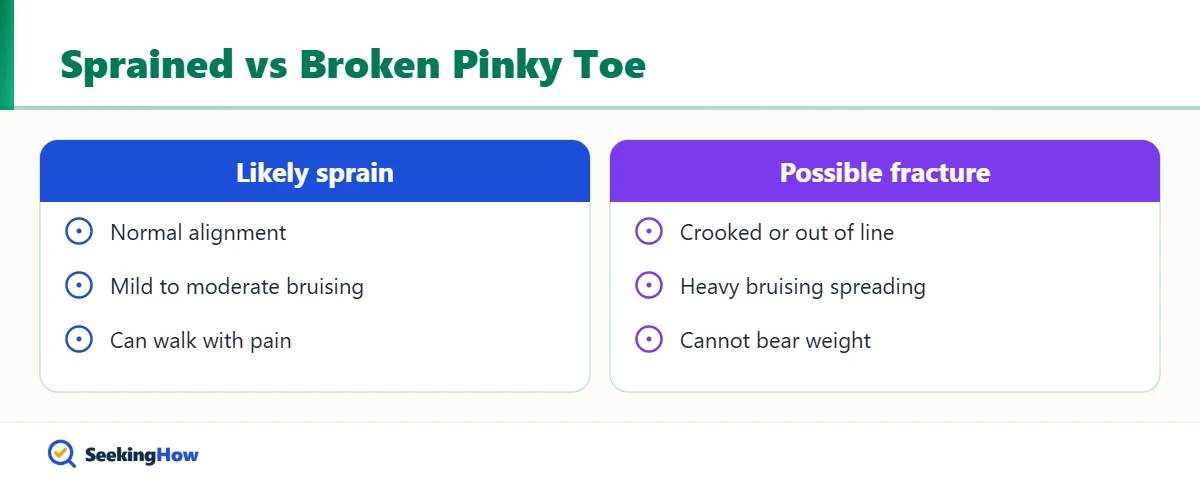
| Sign | Sprain | Possible fracture |
|---|---|---|
| Shape | Normal alignment | Crooked, bent, or out of line |
| Bruising | Mild to moderate | Often heavy, can spread to the foot |
| Walking | Painful but possible | Very painful or not possible |
| Pain on touch | Spread over the joint | Sharp pain on one spot of the bone |
| Treatment | Buddy taping at home | X-ray; may still use buddy taping |
Safety and When To See a Doctor
Many pinky toe sprains and simple fractures heal with buddy taping, but get evaluated if:
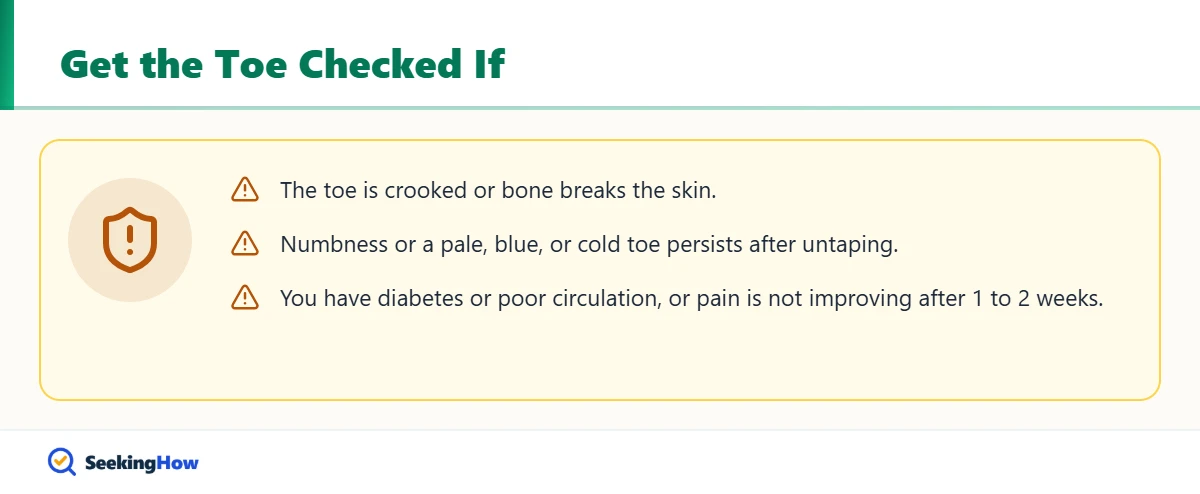
- The toe is crooked, points in an odd direction, or the bone pokes through the skin (urgent).
- You cannot put weight on the foot or pain is severe.
- Numbness, tingling, or a cold, pale, or blue toe persists after removing the tape.
- Redness, warmth, pus, or fever suggests infection, especially near a cut or nail injury.
- You have diabetes, neuropathy, or poor circulation; ask a doctor before taping toes.
- Pain and swelling are not improving after 1 to 2 weeks.
Prevention Tips
- Wear shoes or slippers with a closed toe around the house at night.
- Keep a nightlight on paths to the bathroom.
- Move bed frames and furniture legs out of common walkways when possible.
Related Guides
- How to fix hammertoe with tape: taping steps and limits
- How to reduce leg pain at home
- How to reduce back pain from an altered walking pattern
Sources
- American Academy of Orthopaedic Surgeons OrthoInfo: Toe and forefoot fractures (orthoinfo.aaos.org)
- NHS: Broken toe treatment and buddy strapping (nhs.uk)
- American Podiatric Medical Association: Foot injuries and care (apma.org)
Frequently Asked Questions
Should I tape a sprained pinky toe?
Yes, taping a sprained pinky toe to the fourth toe is a common, effective home treatment. Buddy taping splints the injured toe, reduces movement, and eases pain while it heals. Use padding between the toes and change the tape daily. People with diabetes or poor circulation should ask a doctor first.
How long should you buddy tape a sprained toe?
Buddy tape a sprained toe for about 2 to 4 weeks, or until you can walk comfortably without pain. Change the tape and padding daily and whenever they get wet. If pain and swelling are not improving after 1 to 2 weeks, see a doctor to rule out a fracture.
Can I sleep with my toe taped?
Yes, you can usually sleep with your toe buddy taped, as long as the tape is not too tight. Check that the toe is pink and not numb before bed. Some people remove the tape at night to let the skin breathe and reapply it in the morning.
How do I know if my pinky toe is broken or sprained?
A broken pinky toe is more likely if the toe looks crooked, bruising is heavy, pain is sharp on one spot of the bone, or you cannot bear weight. A sprain usually keeps normal alignment. Only an X-ray can confirm a fracture, though many simple pinky fractures are also treated with buddy taping.
What tape is best for taping a toe?
Narrow medical or athletic tape, about 1/4 to 1/2 inch wide, works best for taping a toe. Cloth medical tape and paper tape are gentle on skin, while athletic tape holds well during activity. You can cut wider tape lengthwise to fit the small pinky toe.
Can I walk on a sprained pinky toe?
Yes, you can usually walk on a sprained pinky toe, but limit long walks for the first several days. A stiff-soled shoe or post-op shoe keeps the toe from bending. If walking is not possible or pain is severe, get an X-ray to check for a fracture.
Should I ice a sprained pinky toe?
Yes, ice helps a sprained pinky toe during the first 48 hours. Apply a cloth-wrapped ice pack for 15 to 20 minutes several times a day and elevate the foot. Never put ice directly on the skin, and skip ice if you have poor circulation or reduced sensation in the feet.