Quick Answer
To reduce leg pain from strain or overuse, rest the leg for 24-48 hours, apply ice wrapped in a cloth for 15-20 minutes at a time, elevate it above heart level, and use acetaminophen or ibuprofen if safe for you. After the first two days, add heat, gentle stretching and walking. Get urgent care for swelling, redness and warmth in one calf, or pain after an injury.
Key Takeaways
- Most leg pain comes from muscle strain, cramps, overuse or tendon irritation and improves with rest, ice, compression and elevation.
- Use cold for the first 48 hours after an injury and heat later for stiffness and tight muscles.
- Gentle stretching, hydration and gradual return to activity prevent repeat pain.
- One swollen, warm, red calf can signal a blood clot (DVT) and needs same-day medical care.
- Pain with walking that eases with rest, numbness or pain that lasts more than two weeks should be checked by a doctor.
Leg pain can come from a sore muscle after a long run, a night cramp, shin splints, a pinched nerve in your lower back or a circulation problem. The right fix depends on the cause, so this guide starts with how to tell common causes apart, then walks through home relief steps that work for everyday muscle and overuse pain. It also covers the warning signs that mean you should skip home care and see a doctor.
What Causes Leg Pain?
Most leg pain is mechanical: muscles, tendons and ligaments that have been overloaded or injured. Less often, the pain comes from nerves, blood vessels or bones, and those causes behave differently. Paying attention to where the pain is, when it starts and what makes it better is the fastest way to narrow it down.
| Likely cause | Typical feel and location | Usual first step |
|---|---|---|
| Muscle strain or soreness | Achy, tender muscle after activity; worse when you use it | Rest, ice, gentle stretching after 48 hours |
| Muscle cramp (charley horse) | Sudden, hard knot in the calf or thigh, often at night | Stretch the muscle, massage, hydrate |
| Shin splints | Dull pain along the inner edge of the shinbone in runners | Reduce running volume, ice, supportive shoes |
| Tendinitis (Achilles, patellar) | Pain at a tendon that is worse at the start of activity | Relative rest, ice, gradual loading |
| Sciatica (pinched nerve) | Shooting, burning pain from the buttock down the back of the leg | Stay gently active, see a doctor if it persists |
| Peripheral artery disease | Calf pain when walking that eases within minutes of rest | See a doctor for a circulation check |
| Deep vein thrombosis (DVT) | Swelling, warmth, redness and pain in one calf | Urgent medical care the same day |
Safety: Call 911 or go to the emergency room if leg pain comes with chest pain, shortness of breath or coughing up blood. These can be signs that a blood clot has traveled to the lungs.
How Do You Reduce Leg Pain at Home?
For muscle strain, overuse pain and minor injuries, the steps below cover the first few days and the return to normal activity. If the pain started with a fall, a pop or an inability to bear weight, get it examined before following a home plan, since a fracture or torn tendon needs proper treatment.
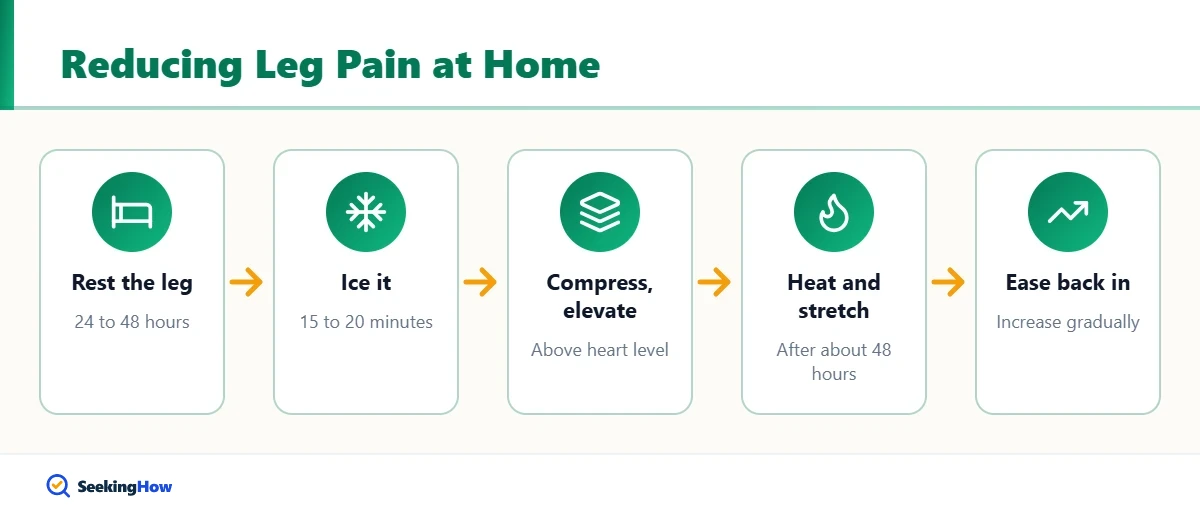
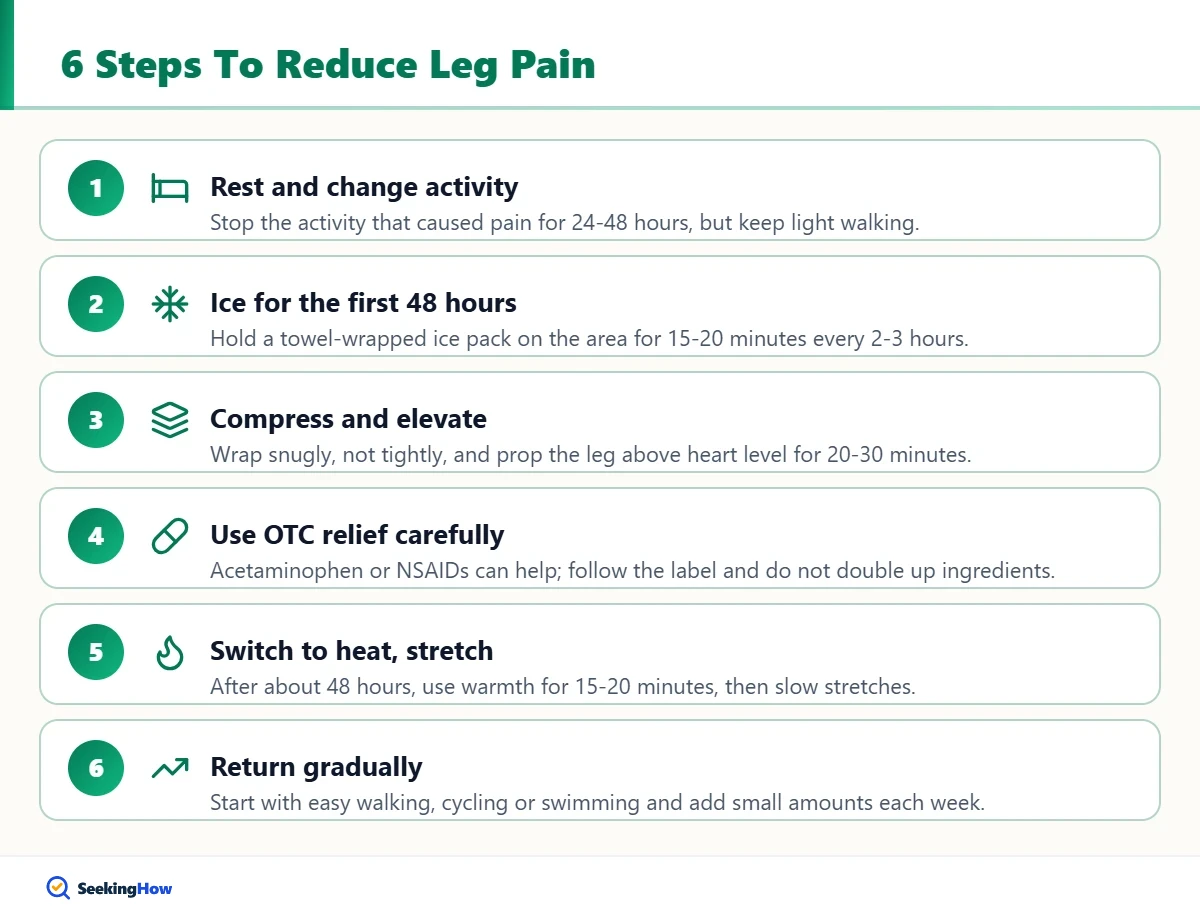
Step 1: Rest the Leg and Change Your Activity
Stop the activity that caused the pain for 24-48 hours. Rest does not mean lying in bed all day; light walking around the house keeps blood moving and prevents stiffness. Avoid running, jumping and heavy lifting until you can walk without limping.
Step 2: Apply Ice for the First 48 Hours
Wrap an ice pack or a bag of frozen peas in a thin towel and hold it on the sore area for 15-20 minutes. Repeat every 2-3 hours while you are awake. Never put ice directly on bare skin, and skip ice if you have poor circulation, diabetes-related nerve damage or Raynaud’s disease unless your doctor approves it.
Step 3: Compress and Elevate
An elastic bandage wrapped snugly, but not tightly, can limit swelling after a strain. Loosen it if your toes tingle, turn pale or feel cold. Prop your leg on pillows so it sits above the level of your heart for 20-30 minutes a few times a day, which helps fluid drain away from the injured area.
Step 4: Use Over-the-Counter Pain Relief Carefully
Acetaminophen (Tylenol) eases pain, while NSAIDs such as ibuprofen (Advil, Motrin) and naproxen (Aleve) ease pain and inflammation. Follow the label dose and do not combine several products that contain the same ingredient. Ask a pharmacist first if you have kidney disease, stomach ulcers, heart disease, take blood thinners or are pregnant; topical diclofenac gel is another option they may suggest.
Step 5: Switch to Heat and Gentle Stretching
Once the initial swelling settles, usually after about 48 hours, warmth relaxes tight muscles. Use a warm shower, a heating pad on low or a warm compress for 15-20 minutes. Follow with slow stretches for the calves, hamstrings and quads, holding each for 20-30 seconds without bouncing.
Step 6: Return to Activity Gradually
Start with walking, cycling or swimming at an easy pace before going back to running or sports. Increase your training time by small amounts each week rather than jumping straight back to your old routine. If the pain returns, drop back to the last level that felt fine.
Which Stretches Help Leg Pain?
Stretching helps most with tight muscles, cramps and the stiffness that follows a strain. Move slowly, breathe normally and stop if a stretch causes sharp pain rather than a gentle pull.
- Standing calf stretch: Hands on a wall, one foot back with the heel down and knee straight. Lean forward until you feel the calf stretch. Bend the back knee slightly to target the lower calf (soleus).
- Seated hamstring stretch: Sit with one leg straight and the other bent. Hinge forward from the hips, keeping your back long, until you feel the back of the thigh.
- Standing quad stretch: Hold a chair for balance, bend one knee and hold your ankle behind you, keeping knees together.
- Figure-four stretch: Lying on your back, cross one ankle over the opposite knee and pull the lower leg toward your chest. This stretches the hip and buttock muscles, which can help some sciatica-type pain.
- Towel calf stretch: Sitting with your leg straight, loop a towel around the ball of your foot and gently pull your toes toward you. Good before getting out of bed if you get night cramps.
If your pain spreads from your lower back down the leg, back care often matters as much as leg care. Our guide on how to reduce back pain covers posture, movement and core work that can ease nerve-related leg symptoms.
How Do You Stop Leg Cramps?
When a cramp hits, straighten the leg and pull your toes toward your shin to stretch the calf, or stand and press your heel to the floor. Massaging the muscle and applying warmth helps it release. Most cramps fade within a few minutes, though the muscle can stay sore for a day.
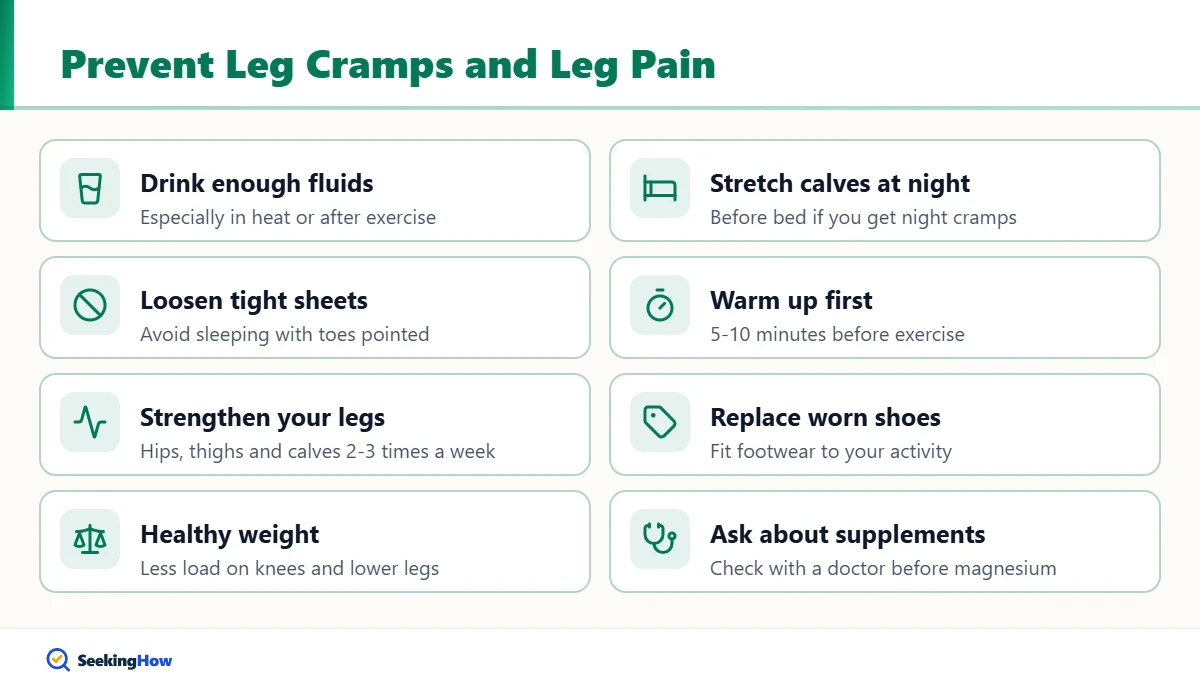
To make cramps less frequent, drink enough fluids, especially in hot weather or after exercise, stretch your calves before bed and avoid sleeping with your toes pointed under tight sheets. Frequent cramps can be a side effect of some medications, such as certain diuretics and statins, so mention them to your doctor rather than stopping a prescription on your own.
Tip: Ask your doctor before taking magnesium or other supplements for cramps. Supplements are not approved by the FDA for safety or effectiveness before sale, and magnesium can interact with some antibiotics and kidney conditions.
Common Mistakes That Make Leg Pain Worse
- Pushing through sharp pain: Mild soreness is fine, but sharp or worsening pain is a signal to back off.
- Using heat on a fresh injury: Heat in the first 48 hours can increase swelling after a strain or sprain.
- Total bed rest: Long periods without moving cause stiffness and raise blood clot risk.
- Worn-out shoes: Running shoes lose cushioning over time; replace them when the midsole looks compressed or the tread is worn.
- Increasing training too fast: Big jumps in mileage or intensity are a classic trigger for shin splints and stress fractures.
- Taking extra pain relievers: Going over the label dose of ibuprofen or acetaminophen can damage the stomach, kidneys or liver.
How Can You Prevent Leg Pain?
Prevention is mostly about loading your legs steadily and recovering well. Warm up for 5-10 minutes before exercise, strengthen your hips, thighs and calves two or three times a week, and choose footwear that fits your activity. If you sit for long stretches at a desk or on flights, stand up, walk or do ankle circles every hour or so.
Maintaining a healthy weight reduces the load on your knees and lower legs, and staying hydrated helps muscles work normally. A diet built around vegetables, fruit, whole grains and lean protein supports recovery; our guide to reducing oxidative stress explains which everyday habits support healthy tissues.
When Should You See a Doctor for Leg Pain?
Home care is appropriate for mild pain with an obvious cause. See a doctor promptly, or go to urgent care, if any of these apply:
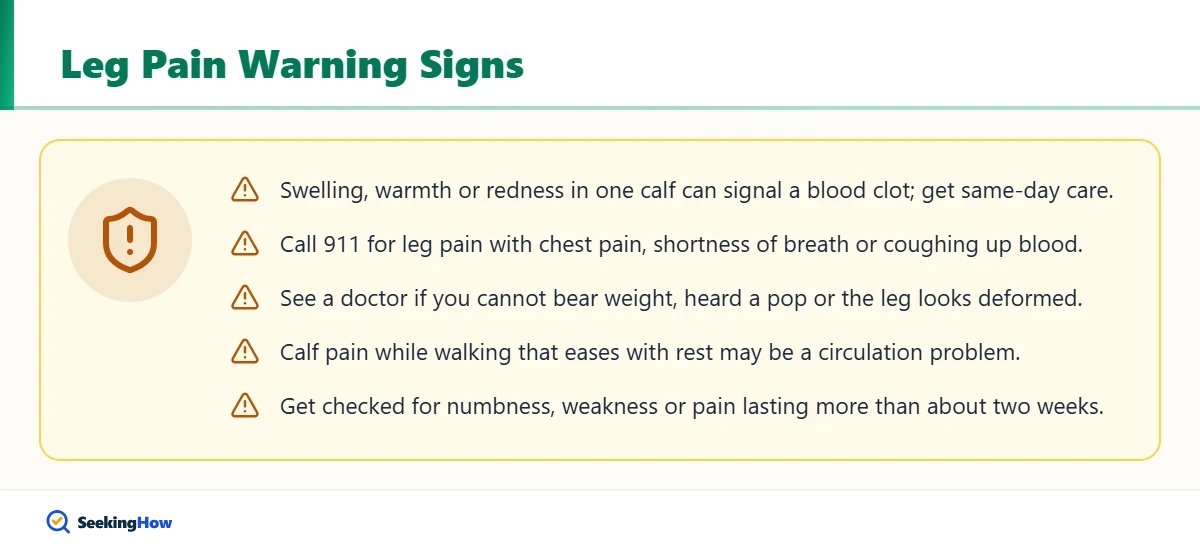
- Swelling, warmth, redness or tenderness in one calf, especially after surgery, a long flight or a period of bed rest
- You cannot bear weight, heard a pop, or the leg looks deformed after an injury
- Pain while walking that consistently goes away with rest (possible circulation problem)
- Numbness, tingling, weakness or pain that shoots down the leg from your back
- A wound, fever, or skin that is red and hot and spreading
- Pain that has not improved after about two weeks of home care, or wakes you at night
- You have diabetes and notice new leg or foot pain, sores or color changes
A doctor or physical therapist can examine your leg, order imaging or blood flow tests if needed, and build a strengthening plan tailored to the cause.
Medical disclaimer: This article is for general information and is not medical advice. Talk to a doctor or pharmacist before starting new medications or supplements, and seek urgent care for any of the warning signs above.
Frequently Asked Questions
Is heat or ice better for leg pain?
Use ice for the first 48 hours after a strain, sprain or overuse flare-up because it limits swelling and numbs pain. After that, heat is usually better for stiffness and tight muscles. Wrap both in a cloth, limit sessions to 15-20 minutes, and skip either one on numb skin.
Why do my legs hurt at night?
Night leg pain is often caused by muscle cramps, tired muscles after a long day, or restless legs syndrome. Stretching your calves before bed and staying hydrated can help. Pain that wakes you every night, or comes with swelling or numbness, should be checked by a doctor.
Can dehydration cause leg pain?
Dehydration can contribute to muscle cramps, especially during hot weather or long workouts, though cramps have many causes. Drinking fluids regularly through the day and after exercise is a simple preventive step. Constant leg pain is unlikely to be caused by dehydration alone.
How long does leg muscle strain take to heal?
A mild leg muscle strain often feels much better within one to three weeks with rest and gradual return to activity. Moderate strains can take several weeks, and severe tears may need months and medical care. If you cannot walk normally after a few days, have it examined.
What does blood clot pain in the leg feel like?
A deep vein thrombosis often feels like a cramp or soreness in one calf or thigh that does not go away, with swelling, warmth and red or darkened skin. It is more likely after surgery, long travel or immobility. It needs same-day medical evaluation.