Quick Answer
To reduce leg pain after standing all day, lie down and elevate your legs above heart level for 15 to 20 minutes, then do gentle calf stretches and ankle pumps. Wear supportive, cushioned shoes and light compression socks (15 to 20 mmHg) on long shifts. See a doctor promptly for one-sided swelling, warmth, or redness, which can signal a blood clot.
Key Takeaways
- Prolonged standing lets blood pool in the lower legs, causing aching, heaviness, and mild swelling by evening.
- Elevating the legs above heart level for 15 to 20 minutes helps fluid drain back toward the heart.
- Calf muscles act as a pump; ankle pumps and short walks every 30 to 60 minutes keep blood moving.
- Light over-the-counter compression socks of 15 to 20 mmHg reduce end-of-day leg fatigue for many workers.
- An anti-fatigue mat and shoes with arch support lower strain on feet, calves, and knees.
- Swelling in only one leg, with warmth or redness, needs same-day medical care.
Retail workers, nurses, cooks, teachers, and factory staff all know the throbbing, heavy-leg feeling that sets in after an 8 to 12 hour shift. This guide covers how to reduce leg pain after standing all day with an evening recovery routine, plus the workday habits that keep the pain from building in the first place.
What You’ll Need
- Pillows or a wedge cushion for elevation
- Compression socks, graduated 15 to 20 mmHg, knee-high
- Supportive shoes with cushioning and arch support
- Anti-fatigue mat for your workstation (optional)
- Foam roller or tennis ball (optional)
- Cold pack or a basin of cool water (optional)
How To Reduce Leg Pain After Standing All Day: Step-by-Step
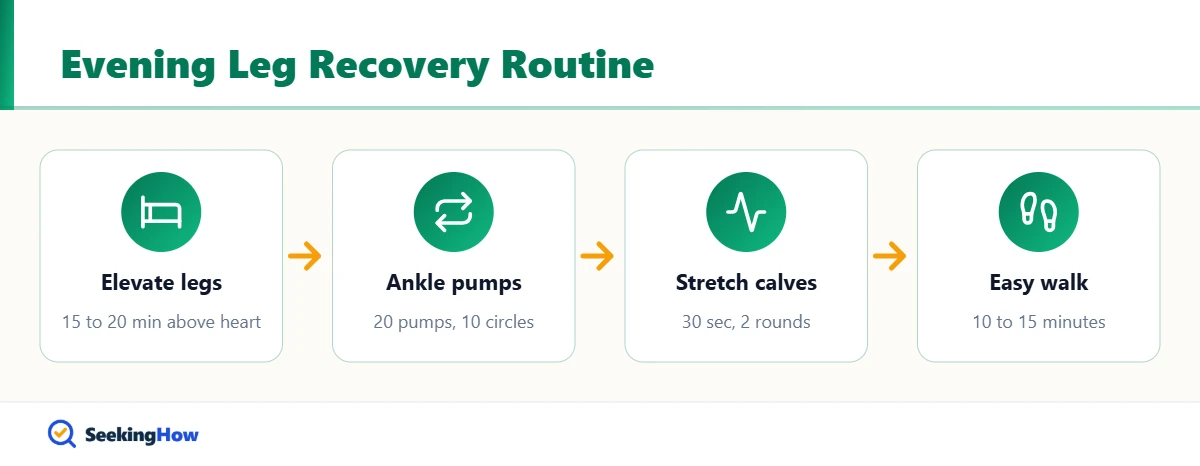
Step 1: Elevate Your Legs for 15 to 20 Minutes
Lie on your back and rest your legs on pillows so your ankles sit above heart level, or put your legs up a wall. Gravity helps pooled blood and fluid drain out of the lower legs. Propping your feet on a low footstool while seated does far less, because the legs stay below the heart.
Step 2: Do Ankle Pumps and Circles
While elevated, point and flex your feet 20 times, then circle each ankle 10 times in each direction. Every calf contraction squeezes the deep leg veins and pushes blood upward. Move slowly and fully rather than with quick, small flicks.
Step 3: Stretch Your Calves and Hamstrings
Stand facing a wall with one foot back and the heel down, and hold a calf stretch for 30 seconds per side, two rounds each. Follow with a gentle seated hamstring stretch. Tight calves add to the aching that standing causes, and bouncing in a stretch can strain the muscle.
Step 4: Take a Short, Easy Walk
A 10 to 15 minute easy walk after work can relieve stiffness better than collapsing on the couch. Walking uses the calf pump in a way that standing still does not. Most people find the heavy-leg feeling eases noticeably within the first few minutes.
Step 5: Cool Sore Areas and Roll Tight Muscles
Soak your feet and lower legs in cool water for 10 to 15 minutes or apply a wrapped cold pack to sore spots. Then roll your calves gently with a foam roller for 1 to 2 minutes. Avoid very hot baths right after a shift if your ankles are swollen, since heat widens veins and can increase swelling.
Step 6: Hydrate and Reset for Tomorrow
Drink water through the evening and keep salty meals in check, because excess sodium can increase fluid retention. Lay out compression socks and supportive shoes for your next shift. If over-the-counter pain relievers are needed, follow the label and ask a pharmacist if you take other medications.
Prevent Leg Pain During Your Shift
What you do during the shift matters as much as the evening routine.
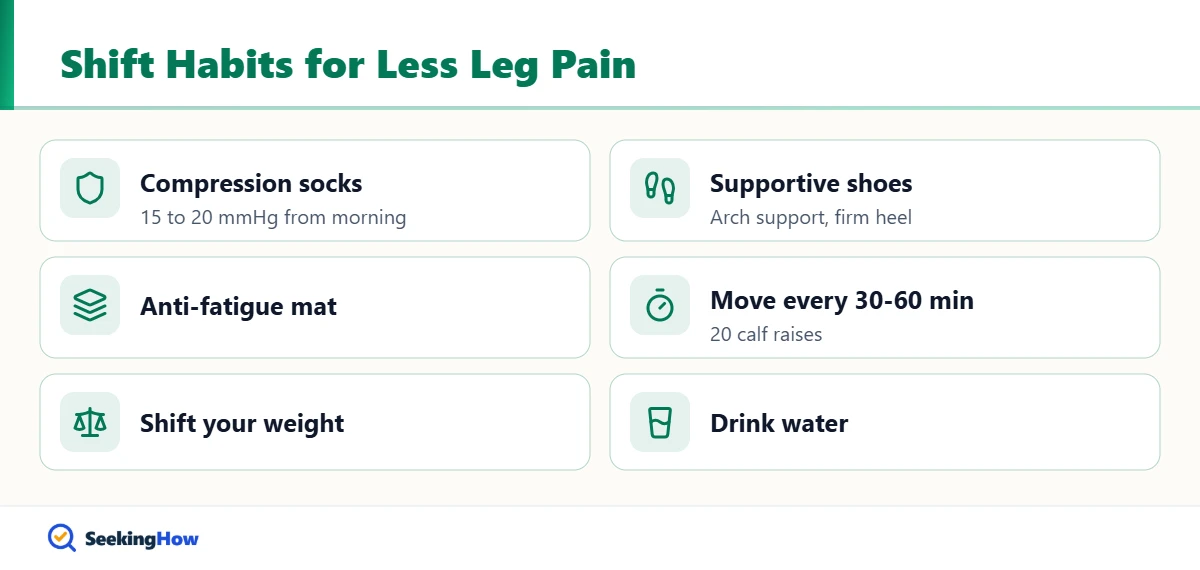
- Shift your weight every few minutes and rest one foot on a low rail or box, alternating sides.
- Move every 30 to 60 minutes: 20 calf raises or a 2-minute walk resets circulation.
- Wear compression socks from morning, when legs are least swollen.
- Choose shoes with a firm heel counter, cushioned midsole, and arch support; replace them when the cushioning flattens.
- Stand on an anti-fatigue mat instead of bare concrete when possible.
Foot problems like hammertoes and bunions can change how you stand and add to leg strain; see how to fix hammertoe with tape for short-term relief.
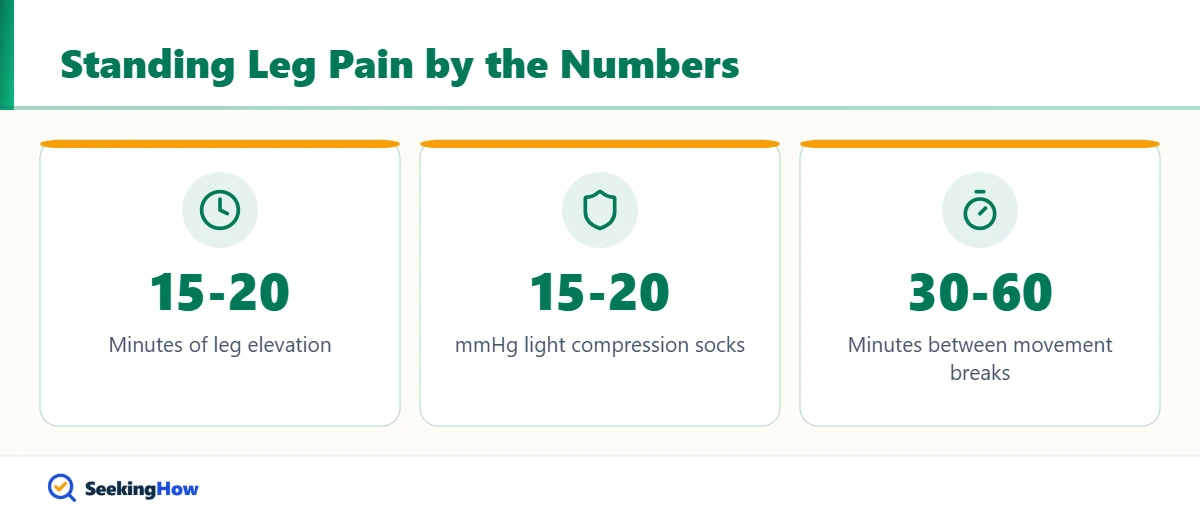
Bottom line: elevate and move your legs every evening, and wear compression socks and supportive shoes every shift.
If That Didn’t Work
Problem: Legs still ache the next morning. Cause: Not enough recovery or worn-out footwear. Fix: Add a second elevation session before bed and check whether your shoes have lost cushioning.
Problem: Ankles swell every evening. Cause: Fluid pooling or vein valve problems. Fix: Wear compression socks all shift; if swelling persists for weeks, ask a doctor to check for venous insufficiency.
Problem: Visible bulging or twisting veins. Cause: Varicose veins, which standing jobs can worsen. Fix: Use compression and see a doctor or vein specialist for evaluation.
Problem: Pain also in the lower back. Cause: Poor posture and fatigue spread up the chain. Fix: See our guide to reducing back pain and add core and hip stretches.
Relief Methods Compared
| Method | Time | Cost | Best for |
|---|---|---|---|
| Leg elevation | 15 to 20 minutes | Free | Heaviness and swelling, best first step |
| Ankle pumps and walking | 5 to 15 minutes | Free | Stiffness and circulation |
| Compression socks | Worn all shift | Low | Preventing end-of-day aching |
| Anti-fatigue mat | Worn all shift | Moderate | Fixed workstations on hard floors |
| Cool soak or cold pack | 10 to 15 minutes | Free | Sore, warm feet and calves |
Safety and When To See a Doctor
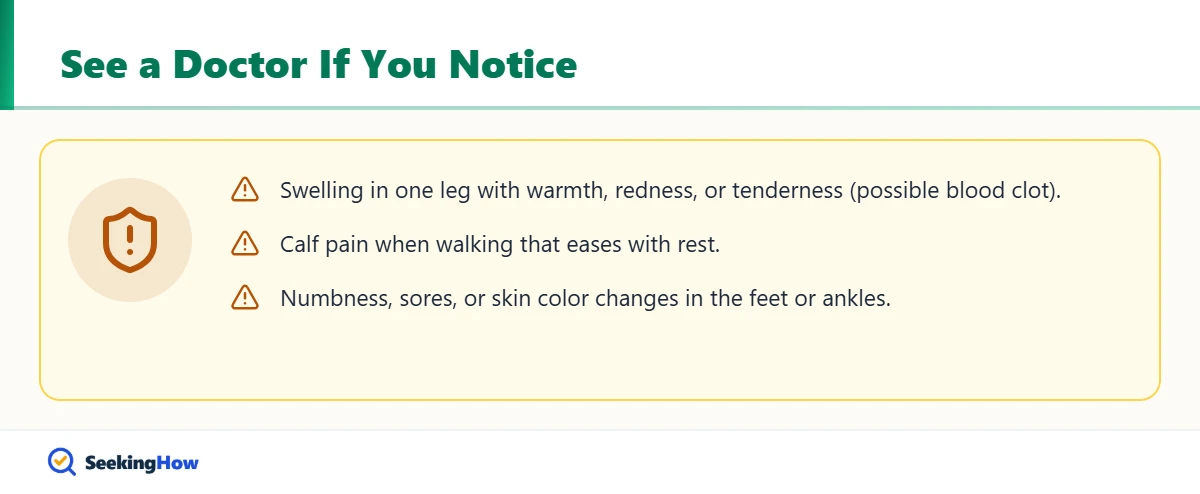
Ordinary standing fatigue is symmetrical and improves with rest overnight. Get medical care if you notice:
- Same day or emergency: swelling in only one calf or leg, especially with warmth, redness, or tenderness, which can signal a deep vein thrombosis (DVT); chest pain or sudden shortness of breath.
- Cramping pain in the calves that starts when you walk and eases with rest, a possible sign of peripheral artery disease.
- Numbness, tingling, or burning in the feet, especially if you have diabetes.
- Skin color changes, sores that will not heal, or hardened skin around the ankles.
- Swelling that does not go down overnight or keeps getting worse.
If you have diabetes, heart failure, or poor circulation, ask a doctor before using compression socks.
Related Guides
- How to reduce leg pain: home relief and when to see a doctor
- How to reduce back pain: 8 proven ways
- How to fix hammertoe with tape
- How to reduce blood pressure with daily habits
Sources
- Mayo Clinic: Leg pain causes and when to see a doctor (mayoclinic.org)
- NHS: Varicose veins and swollen ankles, feet and legs (nhs.uk)
- CDC National Institute for Occupational Safety and Health: Prolonged standing at work (cdc.gov/niosh)
- Canadian Centre for Occupational Health and Safety: Working in a standing position (ccohs.ca)
Frequently Asked Questions
Why do my legs hurt after standing all day?
Legs hurt after standing all day mainly because blood and fluid pool in the lower legs when the calf muscles are not contracting. That pooling causes heaviness, aching, and swelling. Muscle fatigue, hard floors, and unsupportive shoes add to it. The pain usually eases with elevation and movement.
Do compression socks help with leg pain from standing?
Yes, compression socks help many people with leg pain from standing. Graduated socks of 15 to 20 mmHg squeeze tightest at the ankle and help push blood upward. Put them on in the morning before swelling builds. People with diabetes, peripheral artery disease, or heart failure should ask a doctor first.
Is it better to use heat or ice for tired legs?
Cool water or ice is usually better for tired, swollen legs right after a shift because it helps limit swelling. Gentle warmth can relax tight muscles later if there is no swelling. Always wrap ice packs in a cloth and limit them to 15 to 20 minutes.
How long should I elevate my legs after work?
Elevate your legs for 15 to 20 minutes after work, with your ankles above heart level. Repeat once more before bed if your legs still feel heavy. Lying flat with pillows under your calves or resting your legs up a wall both work well.
What shoes are best for standing all day?
The best shoes for standing all day have a cushioned midsole, good arch support, a firm heel counter, and a roomy toe box. Many workers prefer slip-resistant work shoes or supportive athletic shoes. Replace them when the cushioning feels flat, often every 6 to 12 months with daily use.
Can standing all day cause varicose veins?
Long periods of standing are a recognized risk factor for varicose veins, especially with a family history, pregnancy, or older age. Standing increases pressure in leg veins, which can strain the valves over time. Compression socks, movement breaks, and leg elevation can help ease symptoms.
When is leg pain after standing a sign of something serious?
Leg pain after standing may be serious if one leg is swollen, warm, red, or tender, which can point to a blood clot. Calf pain that starts with walking and stops with rest, numbness, open sores, or swelling that does not go down overnight also need a doctor.