Quick Answer
To reduce knee swelling after a long walk, rest the knee and apply a cloth-wrapped ice pack for 15 to 20 minutes every 2 to 3 hours, wear a snug elastic compression sleeve, and keep the leg raised above heart level. Mild swelling usually improves within 1 to 3 days. Get medical care if the knee is hot, red, locks, or cannot bear weight.
Key Takeaways
- Knee swelling after a long walk usually comes from irritated joint lining, overuse, or a flare of existing arthritis.
- Ice for 15 to 20 minutes at a time, always with a cloth barrier, to limit swelling and pain.
- A compression sleeve or elastic wrap should feel snug but never cause numbness, tingling, or color change.
- Gentle range-of-motion exercises keep the knee from stiffening while swelling settles.
- Swelling with fever, a hot red joint, or inability to bear weight needs prompt medical evaluation.
- Supportive shoes and gradual distance increases prevent most walking-related knee swelling.
A puffy, tight knee after a hike, a city sightseeing day, or a longer-than-usual walk is a sign the joint is irritated and producing extra fluid. This guide explains how to reduce knee swelling after a long walk at home, how to tell ordinary overuse from injury, and when the swelling needs a doctor.
What You’ll Need
- Ice pack, bag of frozen peas, or crushed ice in a zip bag
- Thin towel or cloth to wrap the ice
- Elastic knee sleeve or 4-inch elastic compression bandage
- 2 to 3 pillows for elevation
- Over-the-counter pain reliever, if safe for you (optional)
- Supportive walking shoes for future walks
How To Reduce Knee Swelling After a Long Walk: Step-by-Step
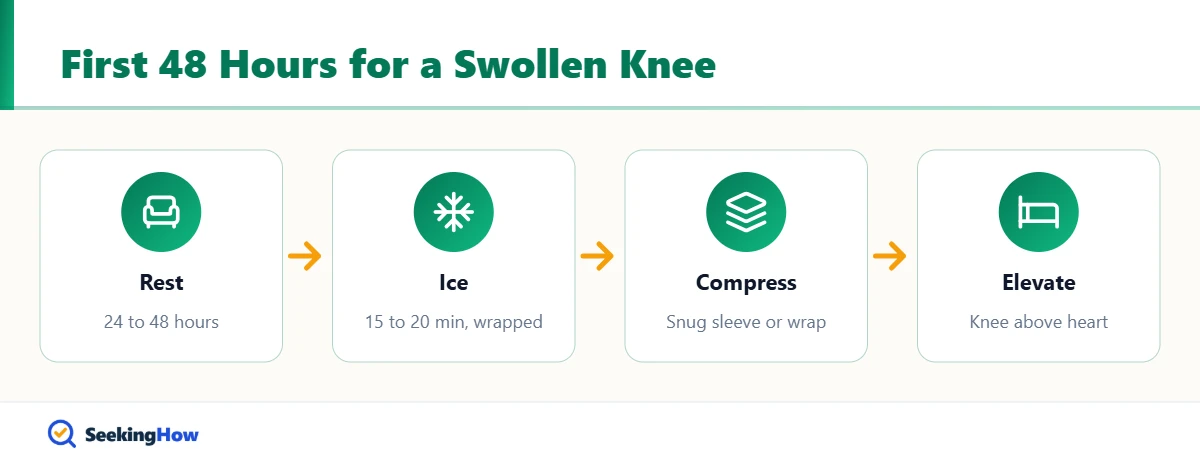
Step 1: Rest the Knee for 24 to 48 Hours
Stop long walks, stairs, and squatting for a day or two and stay on your feet only for short errands. Rest lets the irritated joint lining calm down. Complete bed rest is not needed and can leave the knee stiff.
Step 2: Ice for 15 to 20 Minutes at a Time
Wrap an ice pack in a thin towel and place it around the knee for 15 to 20 minutes, repeating every 2 to 3 hours on the first day. Cold narrows blood vessels and reduces swelling and pain. Putting ice directly on skin or leaving it longer than 20 minutes can cause frostbite-like skin damage.
Step 3: Add Light Compression
Pull on an elastic knee sleeve or wrap an elastic bandage from below the knee to above it, overlapping each layer by half. Compression limits fluid buildup and gives the joint a supported feel. Loosen it right away if your foot tingles, goes numb, turns pale or blue, or throbs.
Step 4: Elevate Above Heart Level
Lie back with the whole leg on pillows so the knee sits above the level of your heart, for 20 to 30 minutes several times a day. Gravity helps fluid drain away from the joint. Propping the foot on a footstool while sitting upright is not high enough.
Step 5: Keep the Knee Moving Gently
Two or three times a day, do 10 slow heel slides (bend and straighten the knee while lying down) and 10 quad sets (tighten the thigh muscle for 5 seconds). Gentle motion pumps fluid out and prevents stiffness. Stop any movement that causes sharp pain.
Step 6: Use Pain Relievers Only as Labeled
An over-the-counter pain reliever such as acetaminophen or an NSAID like ibuprofen or naproxen can help, if they are safe for you. Follow the package directions. People with stomach ulcers, kidney disease, heart disease, or who take blood thinners should ask a doctor or pharmacist before using NSAIDs.
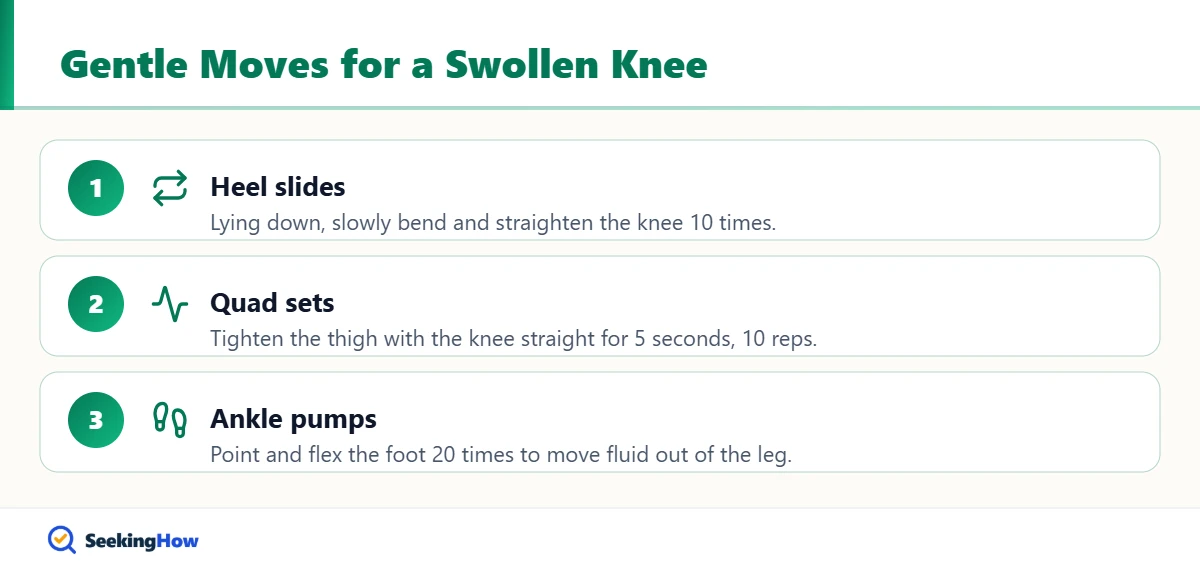
Bottom line: rest, ice, compress, and elevate for the first 48 hours, keep the knee gently moving, and return to walking gradually once swelling is gone.
Common Causes of Knee Swelling After Walking
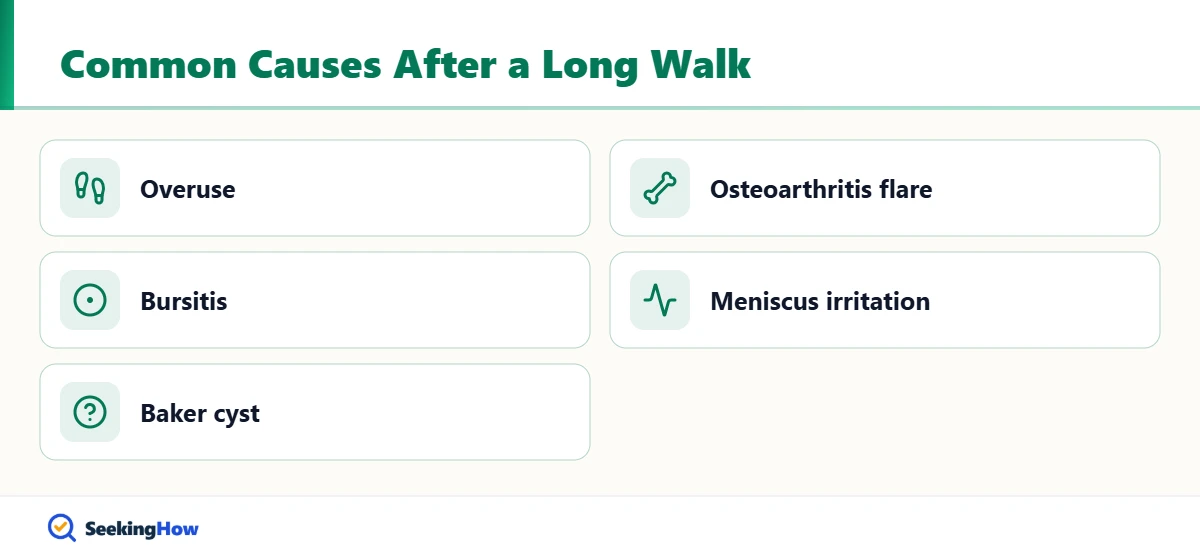
- Overuse: a sudden jump in distance, hills, or uneven ground irritates the joint.
- Osteoarthritis flare: worn cartilage produces extra fluid after heavy use, often with morning stiffness.
- Bursitis: swelling over the front of the kneecap, often from kneeling or friction.
- Meniscus irritation: swelling with catching, clicking, or pain on twisting.
- Baker’s cyst: a fluid-filled bump behind the knee, often linked to arthritis or a meniscus tear.
Knee strain often travels with leg and back discomfort; see how to reduce leg pain for related relief.
If That Didn’t Work
Problem: Swelling has not improved after 3 days. Cause: Possible internal injury, arthritis, or bursitis. Fix: See a doctor or orthopedic specialist for an exam and possibly imaging.
Problem: The knee locks, catches, or gives way. Cause: A torn meniscus or ligament problem. Fix: Stop walking long distances and get evaluated.
Problem: Swelling returns after every walk. Cause: Underlying osteoarthritis or poor footwear and alignment. Fix: Ask a doctor or physical therapist about strengthening, shoe inserts, or a walking plan.
Problem: A soft lump behind the knee. Cause: Likely a Baker’s cyst. Fix: Have it checked, especially if the calf also swells, because a calf clot can look similar.
Relief Methods Compared
| Method | How often | Best for | Watch out for |
|---|---|---|---|
| Ice | 15 to 20 min every 2 to 3 hours | First 48 hours, best first step | Never directly on skin |
| Compression sleeve | During the day | Ongoing puffiness | Numbness or color change |
| Elevation | 20 to 30 min, several times | Draining fluid | Knee must be above heart |
| Gentle motion | 2 to 3 times daily | Stiffness | Stop with sharp pain |
| OTC pain reliever | Per label | Pain that limits sleep | Health conditions and medications |
Safety and When To See a Doctor
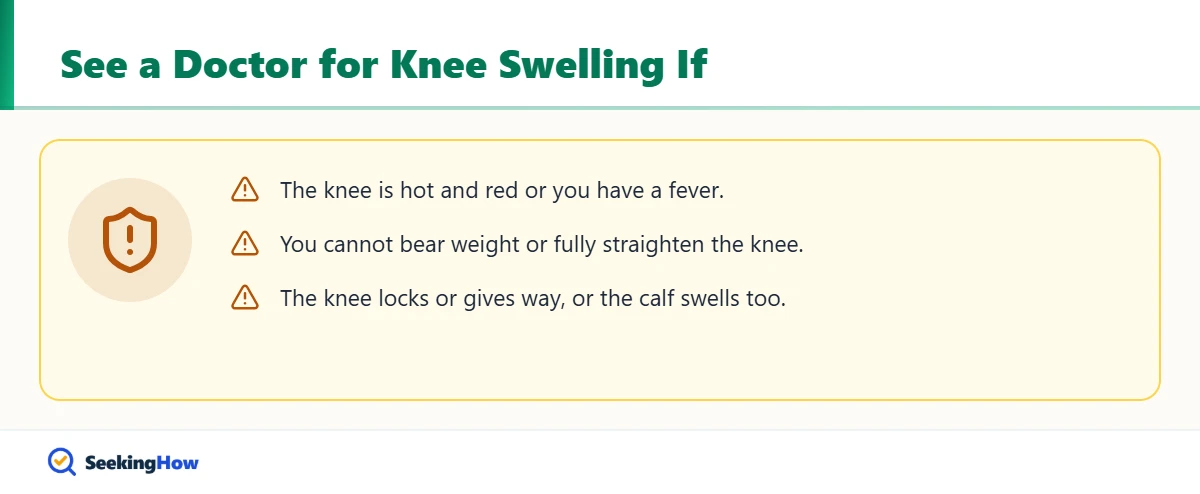
Get medical care promptly if knee swelling comes with:
- Same day: fever, chills, or a knee that is hot and red, which can signal a joint infection or gout.
- Inability to put weight on the leg or straighten the knee fully.
- Rapid swelling within a few hours after a twist, pop, or fall.
- Obvious deformity or severe pain.
- Swelling, pain, and warmth in the calf below the knee, which can signal a blood clot.
- Swelling that lasts longer than 3 days or keeps coming back.
Prevention Tips
- Increase walking distance by no more than about 10 percent per week.
- Wear supportive, cushioned walking shoes and replace worn ones.
- Strengthen your quadriceps, hamstrings, and hips 2 to 3 times a week.
- Use trekking poles on hills and uneven trails to reduce knee load.
- Take short rest breaks on long walks before the knee starts aching.
Related Guides
- How to reduce leg pain: home relief and when to see a doctor
- How to reduce back pain: 8 proven ways
- How to fix hammertoe with tape for more comfortable walking
Sources
- American Academy of Orthopaedic Surgeons OrthoInfo: Knee conditions and treatment (orthoinfo.aaos.org)
- Mayo Clinic: Knee swelling symptoms and causes (mayoclinic.org)
- NHS: Knee pain self-care and when to get help (nhs.uk)
Frequently Asked Questions
Why does my knee swell after walking a long distance?
Your knee swells after a long walk because the joint lining produces extra fluid when it is irritated by overuse. Common triggers include a sudden increase in distance, hills, worn shoes, and existing osteoarthritis. Meniscus irritation and bursitis can also cause swelling after walking.
Should I use ice or heat on a swollen knee?
Use ice on a swollen knee, especially during the first 48 hours. Cold reduces swelling and pain, while heat can increase swelling. Once swelling is gone, gentle heat may help stiffness before activity. Always wrap ice in a cloth and limit sessions to 15 to 20 minutes.
How long does knee swelling from walking last?
Knee swelling from walking usually improves within 1 to 3 days with rest, ice, compression, and elevation. Swelling linked to arthritis flares can take longer. If the knee is still swollen after 3 days, keeps swelling after every walk, or worsens, see a doctor.
Is it OK to walk on a swollen knee?
Short, easy walking is usually fine on a mildly swollen knee if it does not increase pain. Avoid long walks, hills, and stairs until swelling settles. Stop and rest if pain becomes sharp, and get evaluated if you cannot bear weight or the knee gives way.
Does a knee sleeve help with swelling?
Yes, an elastic knee sleeve can help limit swelling and make the joint feel more stable. It should be snug, not tight. Remove or loosen it if your foot becomes numb, tingles, changes color, or throbs. Take it off at night unless a clinician advises otherwise.
Can knee swelling after walking be arthritis?
Yes, knee swelling after walking can be a sign of osteoarthritis, especially in people over 50 or with past knee injuries. Arthritis swelling often comes with morning stiffness and a grinding feeling. A doctor can confirm it with an exam and X-ray and suggest strengthening and other treatments.
When is a swollen knee an emergency?
A swollen knee is urgent when it comes with fever, a hot red joint, severe pain, inability to bear weight, or deformity after an injury. These can signal infection, gout, fracture, or a major ligament tear. Calf swelling and pain alongside the knee may indicate a blood clot.