Quick Answer
To reduce back pain from a bad mattress, first fix the sag: add a 2 to 3 inch medium-firm memory foam or latex topper, or slide a plywood board under a soft or sagging mattress. Use pillows to keep your spine neutral, stretch for 5 minutes each morning, and replace a mattress that is more than about 8 years old or visibly sagging.
Key Takeaways
- A sagging or worn mattress lets your hips sink, bending the spine out of neutral for hours each night.
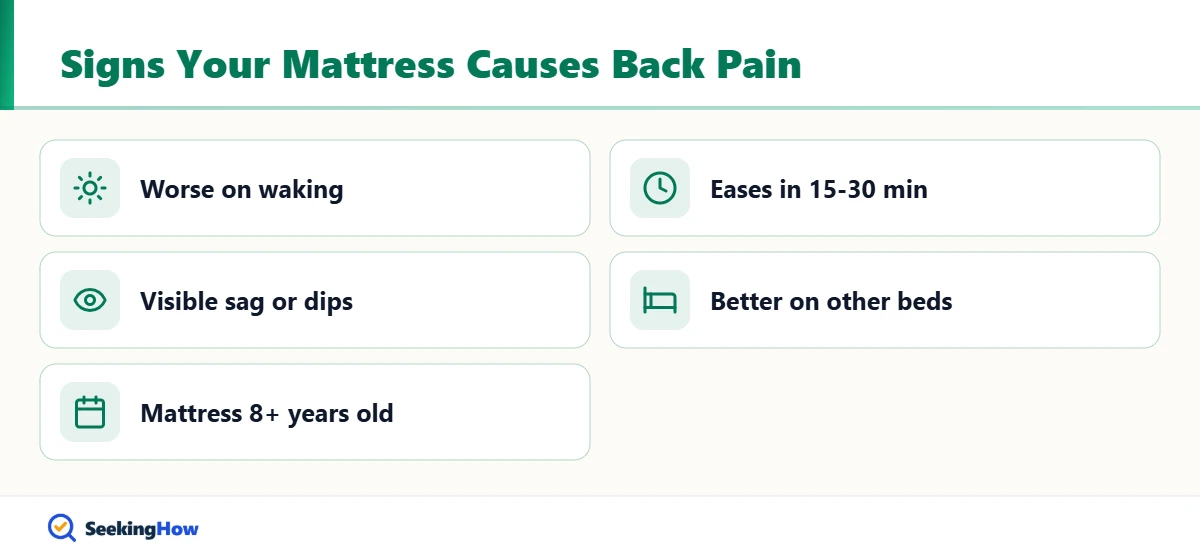
- Back pain that is worst on waking and eases within 15 to 30 minutes of moving often points to the mattress.
- A 2 to 3 inch topper can firm up or cushion a mattress for far less than a replacement.
- Back sleepers benefit from a pillow under the knees; side sleepers from a pillow between the knees.
- Research on low back pain has generally favored medium-firm mattresses over very firm ones.
- Back pain with leg numbness, weakness, fever, or bladder changes needs a doctor, not a new mattress.
Waking up stiff and sore, then feeling better by mid-morning, is a classic sign that your bed is part of the problem. This guide explains how to reduce back pain from a bad mattress tonight with low-cost fixes, how to tell when the mattress needs replacing, and which symptoms mean something other than your bed is to blame.
What You’ll Need
- Mattress topper, 2 to 3 inches, medium-firm memory foam or latex
- Plywood sheet, 1/2 to 3/4 inch, cut to mattress size (for sagging or soft support)
- Supportive pillow sized for your sleep position
- Extra pillow for under or between your knees
- Straightedge or tape measure to check sag depth (optional)
How To Reduce Back Pain From a Bad Mattress: Step-by-Step
Step 1: Check How Much Your Mattress Sags
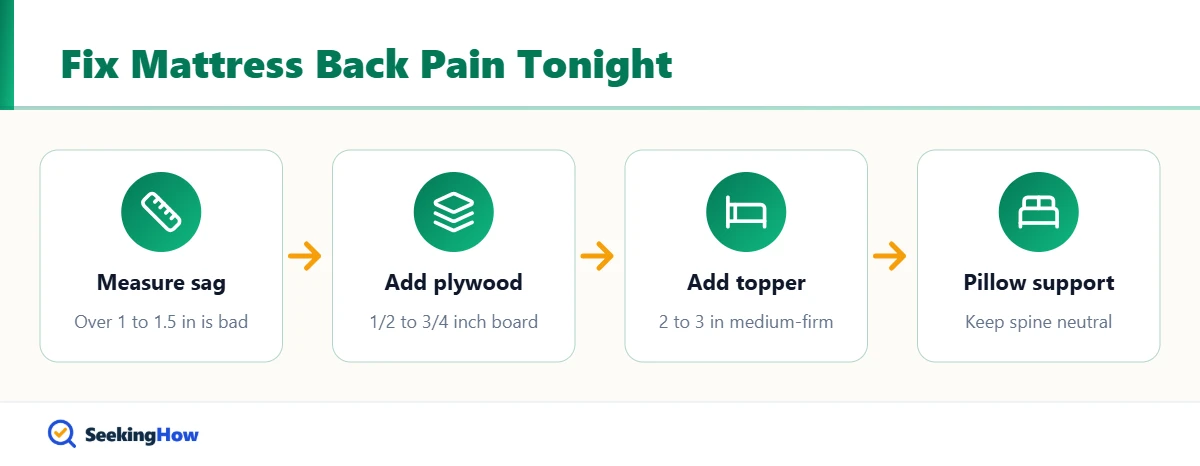
Strip the bed, lay a straightedge or broom handle across the mattress where you sleep, and measure the gap. A dip of more than about 1 to 1.5 inches, permanent body impressions, or broken springs means the support is failing. In practice, many people discover the sag is under their hips, exactly where low back pain starts.
Step 2: Rotate or Flip the Mattress
Turn the mattress 180 degrees so your hips rest on a less worn area. Flip it only if it is a two-sided model, since most modern mattresses have a single comfort side. Rotation buys time but will not fix deep sagging.
Step 3: Add Firm Support Under a Soft Mattress
Slide a 1/2 to 3/4 inch plywood board between the mattress and a weak box spring or widely spaced slats. This stops the middle from bowing. Our guide on making a box spring out of plywood shows how to build a sturdier foundation.
Step 4: Add a Medium-Firm Topper
Place a 2 to 3 inch topper on top: medium-firm memory foam or latex to fill minor dips, or a softer topper if a too-firm mattress is creating pressure points at the hips and shoulders. A topper cannot fix a mattress with deep, hole-like sagging, so do Step 3 first if needed.
Step 5: Use Pillows To Keep Your Spine Neutral
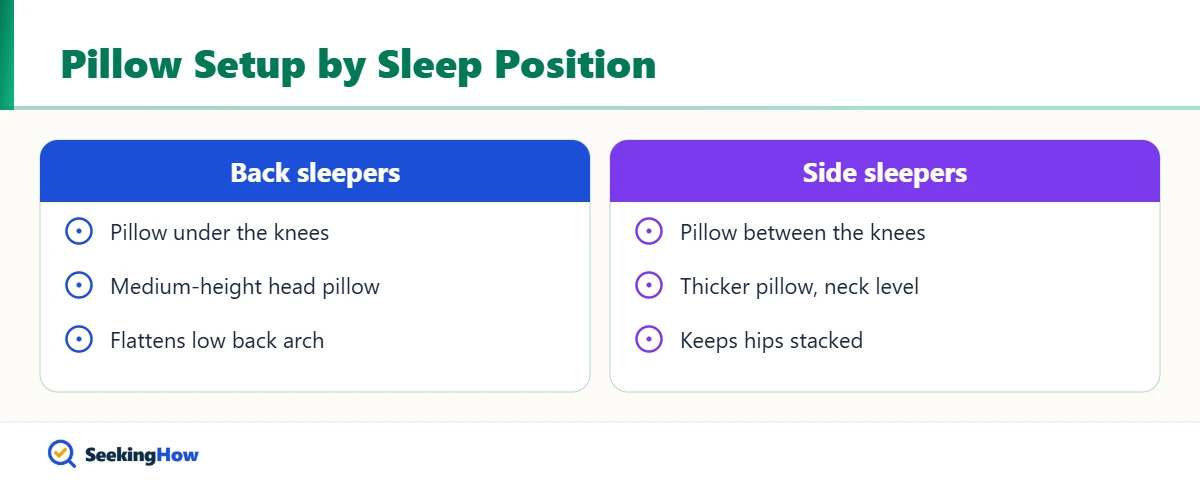
Back sleepers should place a pillow under the knees to flatten the low back. Side sleepers should put a pillow between the knees and use a head pillow that keeps the neck level with the spine. Stomach sleeping arches the low back; if you cannot switch, put a thin pillow under your hips.
Step 6: Stretch for 5 Minutes After Waking
Before getting up, do 10 gentle knee-to-chest pulls, 10 pelvic tilts, and 30 seconds of a lying knee-twist on each side. Moving gently eases morning stiffness. Avoid jumping straight into heavy lifting or bending in the first half hour.
Step 7: Replace the Mattress When Fixes Fail
If pain persists after 2 to 4 weeks of fixes, or the mattress is older than about 7 to 10 years, plan a replacement. Look for a medium-firm model with a generous trial period so you can return it if your back does not improve.
Bottom line: shore up sagging support with plywood, fine-tune comfort with a topper and pillows, and replace the mattress if pain lasts beyond a month of fixes.
If That Didn’t Work
Problem: The topper sinks into the same hole. Cause: The mattress core has collapsed. Fix: Add plywood under the mattress or replace it; toppers only fix surface comfort.
Problem: Pain is worse after switching to a very firm mattress. Cause: Too little give at the shoulders and hips. Fix: Add a 2 to 3 inch softer topper or choose medium-firm.
Problem: Pain is the same on any bed, including hotels. Cause: The mattress likely is not the main cause. Fix: Review posture, activity, and see our guide on how to reduce back pain, and consider a doctor or physical therapist.
Problem: Neck and upper back hurt more than the low back. Cause: Wrong pillow height. Fix: Choose a pillow that keeps your nose in line with your breastbone.
Fixes Compared
| Fix | Typical cost | Effort | Best for |
|---|---|---|---|
| Pillow positioning | Free to low | Easy | Every sleeper, start tonight |
| Rotate mattress | Free | Easy | Mild, uneven wear |
| Plywood support board | Low | Moderate | Sagging middle, weak box spring |
| 2 to 3 inch topper | Low to moderate | Easy | Minor dips or too-firm surface |
| New medium-firm mattress | High | Easy | Old, deeply sagging mattresses |
Prices for toppers, plywood, and mattresses vary widely by region, material, and year, so compare a few options before buying.
Safety and When To See a Doctor
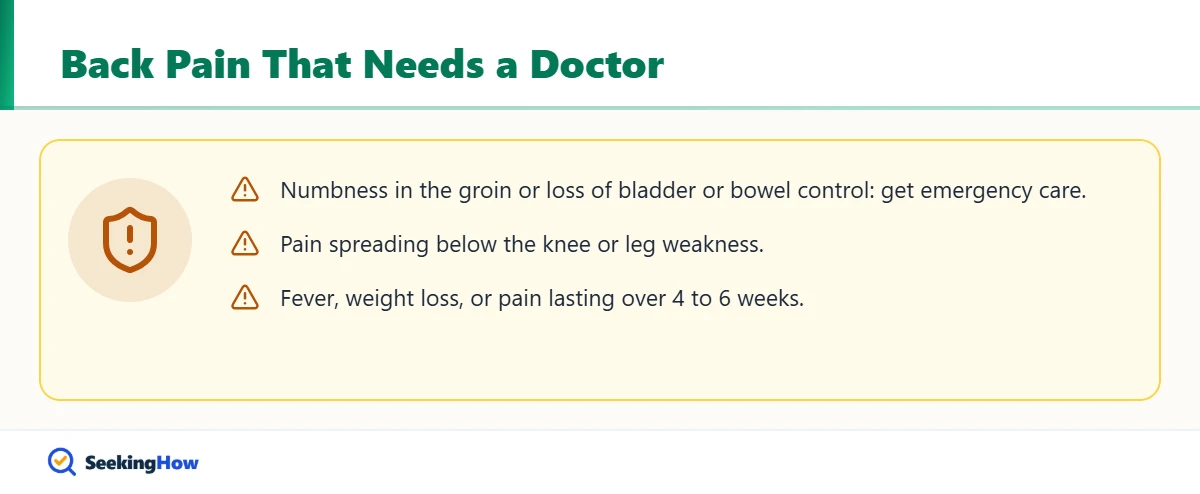
Mattress-related back pain is stiff and achy, worst in the morning, and improves with movement. See a doctor if back pain comes with:
- Emergency: new numbness in the groin or inner thighs, loss of bladder or bowel control, or sudden leg weakness. Seek care immediately.
- Pain that spreads below the knee, or numbness and tingling in a leg.
- Fever, unexplained weight loss, or a history of cancer.
- Pain after a fall or injury, or severe pain at night that does not change with position.
- Pain that lasts more than 4 to 6 weeks despite home care.
Prevention Tips
- Rotate your mattress every 3 to 6 months.
- Use a supportive foundation with slats no more than a few inches apart.
- Keep a regular stretching or core routine during the day.
- Replace pillows when they flatten or no longer spring back.
Related Guides
- How to reduce back pain: 8 proven ways to get relief
- How to make a box spring out of plywood
- How to get rid of a neck hump
- How to reduce leg pain
Sources
- Mayo Clinic: Back pain symptoms, causes, and self-care (mayoclinic.org)
- NHS: Back pain and when to get help (nhs.uk)
- National Institute of Neurological Disorders and Stroke (NIH): Low back pain (ninds.nih.gov)
Frequently Asked Questions
Can a bad mattress really cause back pain?
Yes, a bad mattress can cause or worsen back pain by letting the spine bend out of neutral for hours. Sagging under the hips is the most common problem. Pain that is worst when you wake up and fades within 15 to 30 minutes of moving often points to the mattress.
How long does it take for back pain to go away after changing mattresses?
Back pain often improves within 2 to 4 weeks after switching to a better mattress, as your body adjusts. Some people feel better within days, while others feel slightly sore during the first week. If pain is unchanged after a month, look for other causes and consider a doctor.
Is a firm mattress better for back pain?
Not necessarily; a medium-firm mattress is usually better for back pain than a very firm one. Research on low back pain has generally favored medium-firm surfaces. A very firm mattress can create pressure at the hips and shoulders, especially for side sleepers, while a too-soft mattress lets the hips sink.
Will a mattress topper fix back pain?
A mattress topper can help back pain if the mattress has minor dips or feels too firm or too soft. Choose a 2 to 3 inch medium-firm memory foam or latex topper. It will not fix a mattress with deep sagging or broken springs, which needs firmer support underneath or replacement.
Does putting plywood under a mattress help back pain?
Putting plywood under a mattress can help back pain when the problem is a weak box spring or widely spaced slats. A 1/2 to 3/4 inch board stops the middle from bowing. It does not fix a mattress whose own foam or springs have collapsed.
What is the best sleeping position for back pain?
Sleeping on your back with a pillow under your knees or on your side with a pillow between your knees is usually best for back pain. Both positions keep the spine neutral. Stomach sleeping tends to arch the low back and twist the neck, so it often makes pain worse.
How often should you replace a mattress?
Most mattresses need replacing about every 7 to 10 years, sooner if they sag, have lumps, or you wake up sore. Quality, materials, and body weight all affect lifespan. If you sleep better in hotel or guest beds, your mattress is likely worn out.