Quick Answer
To put in an L-shaped nose stud, wash your hands, clean the stud and piercing with saline, insert the straight post straight into the outside of the hole, then tilt the stud so the short bent leg slides inside and points up or back. It takes about 2 minutes; never force it if the hole has started to close.
Key Takeaways
- An L-shaped nose stud has a 90-degree bend that holds it inside the nostril.
- You insert the post straight, then rotate the stud so the bent leg rests flat against the inner nostril.
- Pointing the bend toward the tip or top of the nose is most common and usually most comfortable.
- L-shaped studs are easier to insert than nose screws but can fall out more easily.
- Brand-new piercings should usually keep the original jewelry until a piercer says it’s safe to change.
An L-shaped nose stud is one of the easiest nose rings to change yourself, but the bend can feel awkward the first time. Knowing how to put in an L-shaped nose stud correctly prevents scraping the piercing channel and keeps the stud from slipping out.
What You’ll Need
- L-shaped nose stud in the correct gauge (20G and 18G are common; match your current jewelry)
- Sterile saline wound wash (0.9% sodium chloride)
- Clean paper towels or non-woven gauze
- Mirror with good lighting
- Water-based lubricant (optional)
- Disposable gloves (optional)
How To Put In an L-Shaped Nose Stud: Step-by-Step
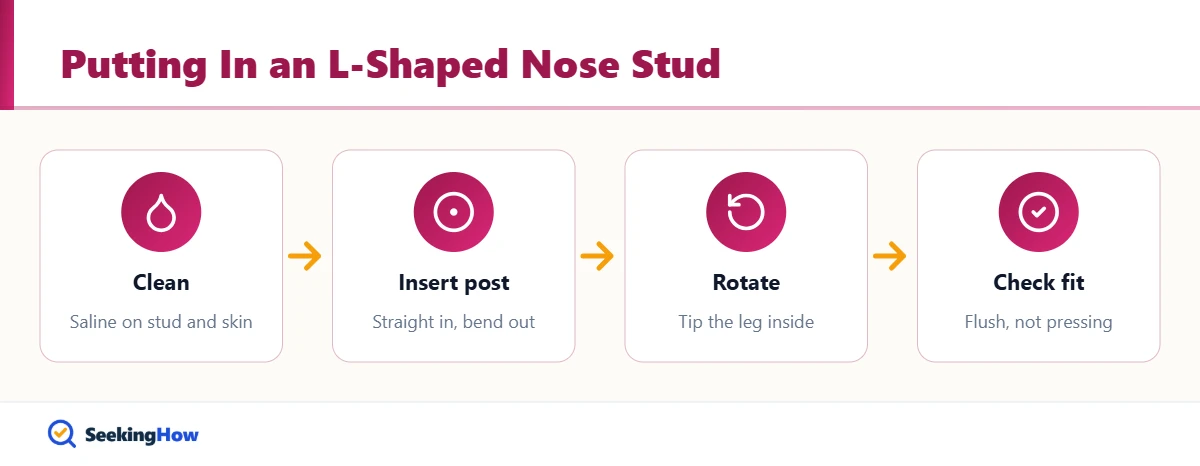
Step 1: Check the Gauge, Length, and Material
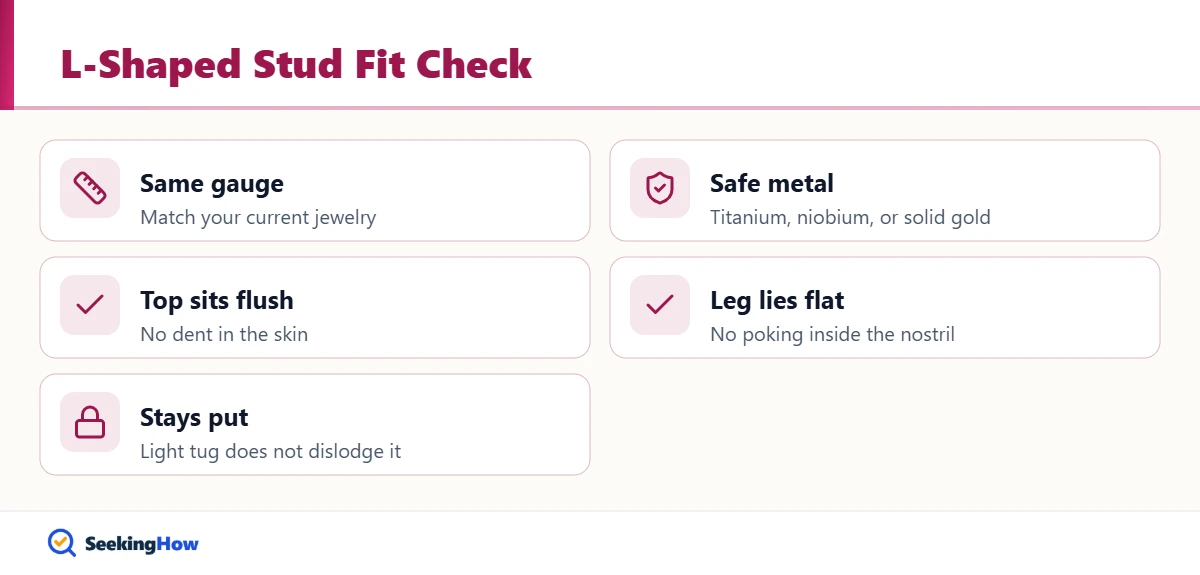
Match the new stud’s gauge to the jewelry you already wear; going thicker can tear the channel. Post length is usually around 6 mm to the bend, but nostril thickness varies. Implant-grade titanium, niobium, or solid 14k or 18k gold are the safest choices for sensitive skin.
Step 2: Wash Hands and Clean Everything
Wash your hands with soap and water for 20 seconds. Spray or wipe the stud and the outside of the piercing with sterile saline, then pat dry with clean paper. Skip alcohol and hydrogen peroxide, which dry and irritate healing tissue.
Step 3: Remove the Old Jewelry
Take out your current jewelry by reversing how it went in. Have the L-shaped stud within reach so the hole has no time to tighten. If you are swapping from a nose screw, follow the curve backward slowly.
Step 4: Insert the Straight Post
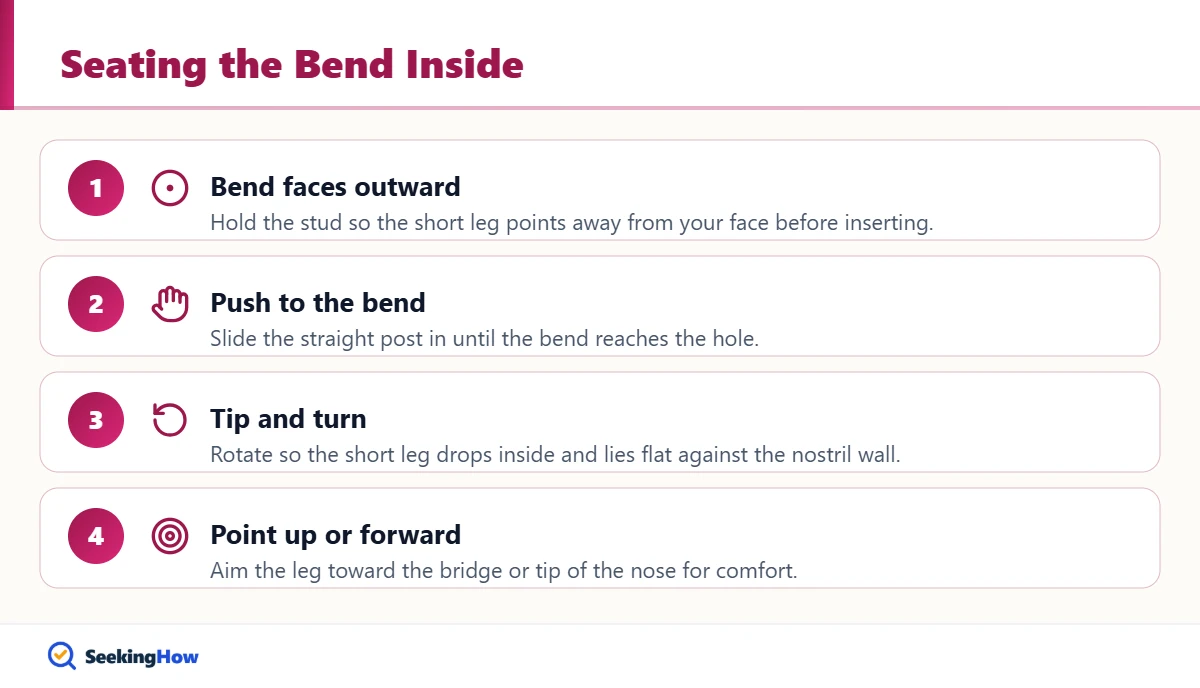
Hold the stud by the decorative top with the bend pointing away from your face, parallel to the floor. Line the tip up with the outside opening and push gently straight in. A drop of water-based lubricant helps if it drags; if it will not pass with light pressure, stop.
Step 5: Rotate the Bend Into Place
Once the post reaches the bend, rotate the stud so the short leg tips into the nostril, then turn it until that leg lies flat against the inside wall. Most people point the leg up toward the bridge or forward toward the tip. In practice, using a fingertip inside the nostril to feel the leg makes this step much easier.
Step 6: Check the Fit
The top should sit flush against the skin without pressing a dent into it. Gently tug the top; it should not slide out. Rinse with saline one more time and leave it alone so the piercing can settle.
Bottom line: push the post straight in, then rotate the bend flat inside; if it resists, stop rather than force it.
If That Didn’t Work
Problem: The post won’t go through. Cause: The hole has tightened or you’re angling it. Fix: Soak with warm saline, add lubricant, and try again straight on; see a piercer if it still won’t pass.
Problem: The stud keeps falling out. Cause: The bend leg is too short for your nostril or not lying flat. Fix: Rotate the leg upward, or switch to a nose screw or threadless flat-back stud.
Problem: The top presses into the skin. Cause: The post is too short. Fix: Get a longer post; tight jewelry can embed.
Problem: Itching or a rash around the stud. Cause: Possible nickel allergy. Fix: Switch to implant-grade titanium or solid gold.
Nose Stud Styles Compared
| Style | Insertion difficulty | Security | Best for |
|---|---|---|---|
| L-shaped | Easy | Moderate | Quick daily changes |
| Nose screw | Moderate | High | Active lifestyles |
| Flat-back threadless | Moderate | Very high | Healing piercings |
| Nose bone | Hard | Moderate | Fully healed piercings |
Safety and When To See a Doctor
Do not change jewelry in a piercing that is still healing unless a piercer advises it, as nostril piercings commonly take several months to heal. See a doctor if you notice thick yellow or green pus, spreading redness, warmth, fever, or red streaks after inserting the stud. If the stud slips inside your nose and you cannot reach it, or you think it was inhaled and you are coughing or wheezing, seek urgent medical care.
Prevention Tips
- Change jewelry over a towel, not an open sink drain.
- Keep a spare stud in a clean case so you never leave the hole empty.
- Clean around the stud with saline once a day after swimming or workouts.
- Ask a piercer to check fit if the stud ever pinches or sinks.
Related Guides
- How to take out a nose stud with a flat back
- How to remove a stuck nose screw
- How to clean nickel silver jewelry safely
Sources
- Association of Professional Piercers – jewelry materials and aftercare
- American Academy of Dermatology – nickel allergy and piercing care
- NHS – piercing aftercare and infection signs
Frequently Asked Questions
Which way should an L-shaped nose stud face?
An L-shaped nose stud usually faces up toward the bridge of the nose or forward toward the tip. Both keep the short leg against the inner nostril wall where it is least noticeable. Choose the direction that feels comfortable and does not poke when you breathe or blow your nose.
Do L-shaped nose studs fall out easily?
L-shaped nose studs are less secure than nose screws or flat-back studs and can slip out, especially while sleeping or toweling off. Rotating the leg upward and choosing a slightly longer bend helps. If yours keeps falling out, a nose screw or threadless flat-back stud is a better choice.
Does putting in an L-shaped nose stud hurt?
Putting in an L-shaped nose stud should not hurt in a healed piercing, though you may feel pressure as the bend passes in. Sharp pain, bleeding, or strong resistance means the hole has tightened or the angle is wrong. Stop, soak with saline, and see a piercer if needed.
Can I use an L-shaped stud in a new piercing?
An L-shaped stud is generally not recommended for a fresh nose piercing. New piercings do best with the original jewelry the piercer placed, usually a threadless flat-back stud, until healing is well along. Changing jewelry early can irritate the channel and introduce bacteria.
What size L-shaped nose stud do I need?
Most nose studs are 20 gauge or 18 gauge, and your new stud should match your current jewelry. Post length to the bend is often about 6 mm, but nostrils vary in thickness. A piercer can measure your piercing so the stud sits flush without pressing into the skin.
How do I take an L-shaped nose stud out?
To take an L-shaped nose stud out, rotate it so the short leg tips back toward the hole, then pull gently while turning until the bend clears the nostril. Reverse the insertion motion. Use saline or water-based lubricant if it sticks.