
Quick Answer
To make cedar smell again, lightly sand the cedar surface with 120- to 220-grit sandpaper to expose fresh wood, wipe away the dust, and let it air out for a few hours. For a stronger scent, add a few drops of cedarwood oil to cedar blocks, not to chest interiors. Sanding takes about 10 minutes and works on blocks, hangers, closets, and chests.
Key Takeaways
- Cedar loses its smell because the aromatic oils at the surface evaporate and the wood oxidizes over time.
- Light sanding with 120- to 220-grit paper exposes fresh, oil-rich wood and restores most of the scent.
- Never seal or varnish the inside of a cedar chest or closet; a finish locks the scent in.
- Cedarwood oil can refresh small blocks and balls, but it can stain fabric until fully absorbed.
- Cedar repels and may harm some young moth larvae but is not a reliable stand-alone moth treatment.
- Expect to refresh cedar blocks every few months and chests every year or two.
Cedar blocks, hangers, and chest liners smell strong when new, then fade to almost nothing within a year or two. The good news is that the aromatic oils are still inside the wood. Here is how to make cedar smell again, method by method, and how long each fix lasts.

What You’ll Need
- Sandpaper: 120 grit for heavy fading, 220 grit for light refreshes
- Sanding block or sponge; a random-orbit sander for closets and chest interiors (optional)
- Vacuum with brush attachment
- Lint-free cloth
- Pure cedarwood essential oil (for blocks and balls, optional)
- Paper bag or tray to dry oiled pieces
- Dust mask (N95), since cedar dust irritates many people
How To Make Cedar Smell Again: Step-by-Step
Step 1: Empty and vacuum the cedar
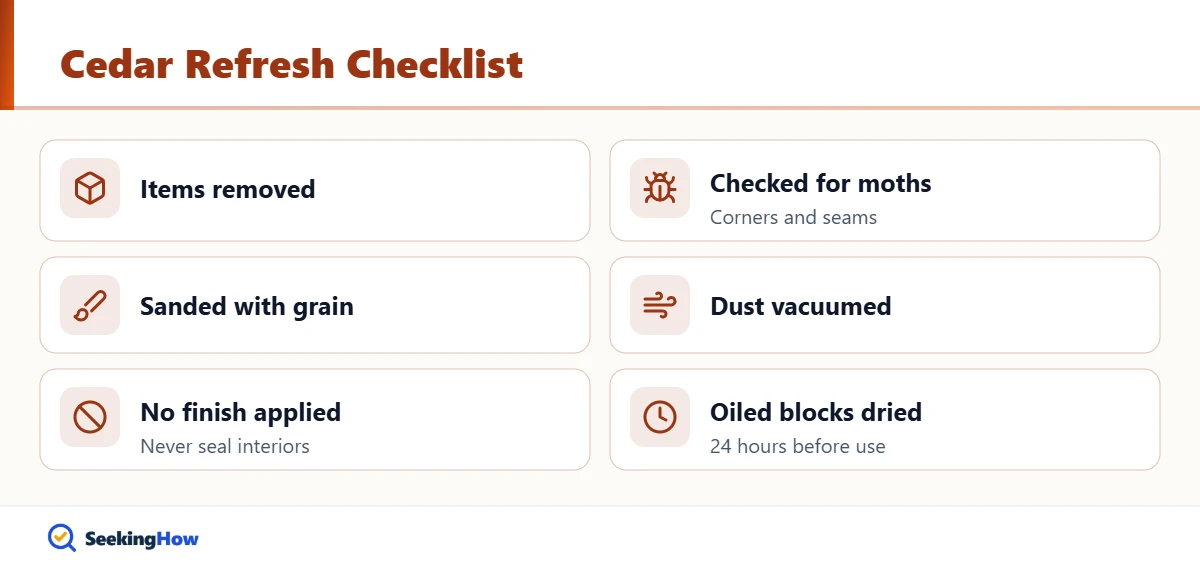
Remove clothes, linens, and stored items, then vacuum the cedar surface with a brush attachment. Dust and lint clog the wood pores and muffle the scent. Check for moth larvae or webbing at the same time, especially in corners and seams.
Step 2: Sand lightly with the grain
Sand each surface with 120- or 220-grit paper, moving with the grain, just until the wood looks lighter and fresher. You only need to remove the dull, oxidized surface layer, not reshape the wood. The most common mistake is sanding too hard on thin chest liners or veneered panels, which can cut through to the backing.
Step 3: Remove the dust
Vacuum the sanding dust, then wipe the surface with a dry, lint-free cloth. Do not use a damp cloth or furniture polish, since water raises the grain and polish forms a film that blocks the aroma. In practice, most people notice the cedar smell returning before they finish cleaning up.
Step 4: Air it out
Leave a chest lid or closet door open for several hours so the dust settles and the fresh surface oils start releasing. Close the space afterward so the scent builds up inside, which is where cedar does its work.
Step 5: Add cedarwood oil to blocks (optional)
For cedar blocks, rings, or balls, add 2 to 3 drops of pure cedarwood oil to each piece and let them dry on a paper bag for 24 hours before they touch fabric. Oil can leave yellow marks on clothes if it has not fully soaked in. Skip oil on chest and closet interiors; sanding is cleaner and lasts longer.
If you want to make your own oil, our guide on how to make cedar oil covers infused and distilled methods.
Bottom line: Sand first, oil only small loose pieces, and never seal the inside of a cedar chest or closet.
How Long Does Refreshed Cedar Smell Last?
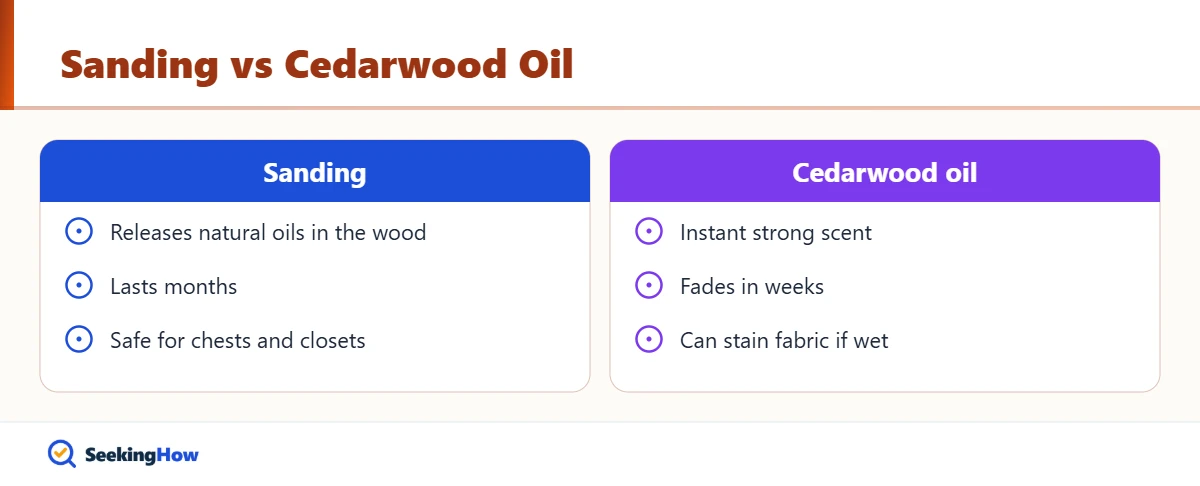
Sanded cedar blocks and hangers usually smell noticeably for a few months before needing another light sanding. Solid cedar chests and closet linings hold scent longer because they have more wood and the space is enclosed. Cedarwood oil on blocks fades fastest, often within weeks.
If That Didn’t Work
Problem: The cedar still has no smell after sanding. Cause: The surface is sealed with lacquer or varnish. Fix: Check for a shiny film; if present, the scent cannot escape, so use loose cedar blocks inside instead.
Problem: The chest smells musty, not cedary. Cause: Mildew or trapped odors. Fix: Air it in a dry, ventilated spot for a few days, place an open box of baking soda inside, then sand.
Problem: Clothes have yellow spots. Cause: Cedar oil or resin contact. Fix: Store items in cotton bags or wrap them in acid-free tissue, and let oiled blocks dry fully.
Problem: The smell fades within days. Cause: The space is open or ventilated constantly. Fix: Keep lids and doors closed; cedar scent needs an enclosed space to concentrate.
| Method | Time | How long it lasts | Best for |
|---|---|---|---|
| Light sanding | 10 to 30 minutes | Months | Blocks, hangers, chests, closets |
| Cedarwood oil | 5 minutes plus 24-hour dry | Weeks | Blocks, balls, rings |
| Adding new cedar blocks | 2 minutes | Months to a year | Sealed or faded chests |
| Airing out | Hours to days | Short | Musty odors before sanding |
Safety and When To Call a Pro
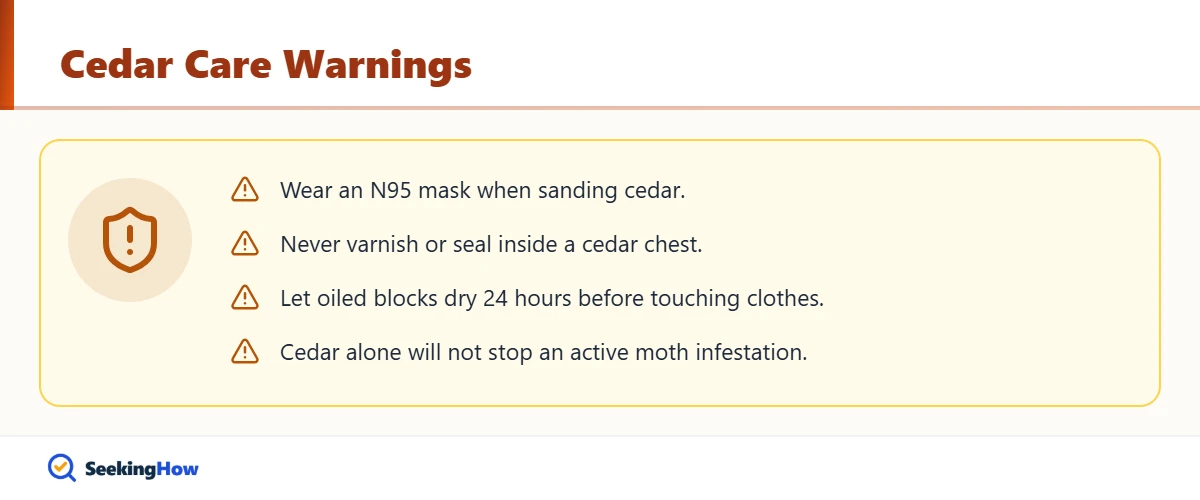
Wear an N95 dust mask while sanding, because cedar dust can irritate the nose and throat and may trigger asthma or allergic reactions in sensitive people. Keep cedarwood oil away from children and pets, and do not apply it to skin undiluted.
If cedar storage shows active moth damage, such as holes in wool, silky webbing, or small cream-colored larvae, cedar alone will not solve it. Clean or freeze affected items and consider a pest control professional for widespread infestations. Have a furniture restorer handle antique cedar chests with veneered or finished exteriors.
Prevention Tips
- Keep cedar chests and closets closed when not in use.
- Store only clean clothes; body oils and food residue attract moths.
- Give cedar a light 220-grit sanding once or twice a year.
- Keep cedar storage in a cool, dry room away from direct sun.
Related Guides
- How to make cedar oil at home
- How to remove polyurethane from wood
- How to change wood color from dark to light
Sources
- USDA Forest Products Laboratory: Wood Handbook, properties of cedar heartwood
- University of Kentucky Entomology: clothes moth control and the limits of cedar
- OSHA: wood dust hazards
Frequently Asked Questions
Why does cedar lose its smell?
Cedar loses its smell because the aromatic oils near the surface evaporate and the exposed wood oxidizes over time. Dust and lint also clog the pores. The oils deeper in the wood remain, which is why a light sanding brings the scent back so quickly.
Can you put cedar oil on a cedar chest?
You can, but it is not recommended for the chest interior. Oil can soak unevenly, leave dark patches, and transfer to stored fabrics before it dries. Light sanding refreshes a cedar chest cleanly. Save cedarwood oil for loose blocks and balls you can let dry outside the chest.
How often should you sand cedar blocks?
Sand cedar blocks whenever the scent fades, typically every few months. Use 220-grit paper for a quick refresh and 120 grit if they have been neglected for a long time. Each sanding removes very little wood, so blocks last for years.
Does cedar really keep moths away?
Cedar helps somewhat but is not a reliable moth control on its own. Fresh cedar oils may repel adult moths and harm some small larvae, but the effect weakens as the scent fades. Clean storage, sealed containers, and regular inspection matter more than cedar alone.
Can I use sandpaper on a cedar closet?
Yes, sandpaper works well on cedar closet lining. Use a sanding block or random-orbit sander with 120- to 220-grit paper and sand lightly with the grain. Vacuum thoroughly afterward and keep the closet door closed so the refreshed scent concentrates inside.
Should I wash cedar blocks?
No, you should not wash cedar blocks with water. Water raises the grain, can promote mildew, and does not restore the scent. Brush or vacuum off dust, then sand the blocks lightly. If they are moldy, it is usually easier to replace them.
How do I get rid of a musty smell in a cedar chest?
Air the cedar chest in a dry, ventilated room for a few days and place an open box of baking soda inside to absorb odors. Once the mustiness fades, sand the interior lightly. If mildew is visible, clean it and fix any humidity problem before refreshing.