Quick Answer
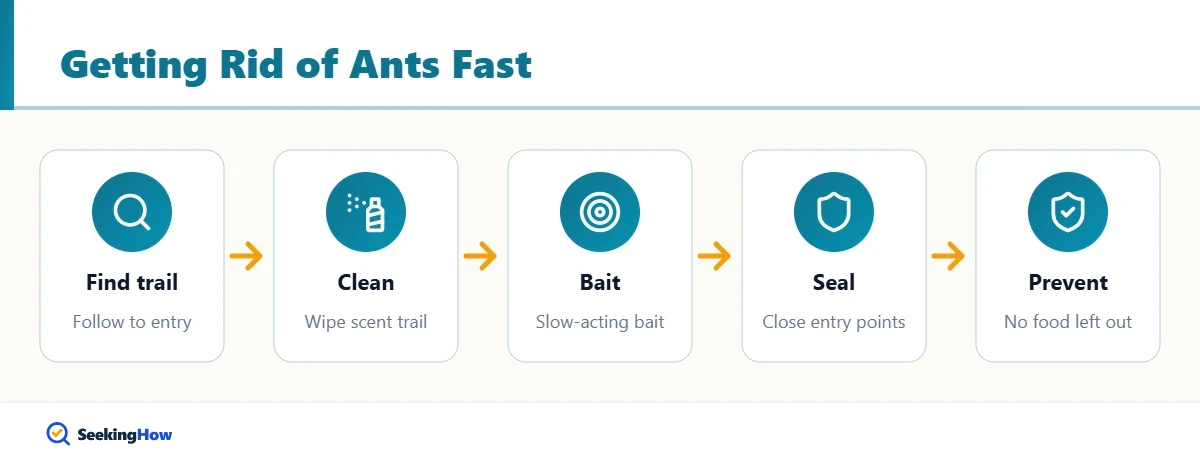
The fastest way to get rid of ants in the house is to wipe away their scent trail with soapy water or 50/50 vinegar, remove food and water sources, then place slow-acting ant bait stations (borax-sugar or commercial gel) along the trail. Workers carry the bait back and kill the colony, usually within a few days to two weeks. Seal entry points with caulk to stop new ants.
Key Takeaways
- Spraying the ants you see gives quick relief but rarely ends an infestation; baits that reach the queen do.
- Erase pheromone trails with soapy water or diluted vinegar so other ants cannot follow them.
- Do not spray repellents near bait stations; the ants must feed on the bait and share it.
- Identify the species: carpenter ants and Pharaoh ants usually need different handling or a professional.
- Prevention is sealing cracks, storing food airtight, fixing leaks, and trimming plants away from the house.
A line of ants across the counter is a sign that scouts found food and laid a chemical trail for the rest of the colony. Killing the visible ants helps for an afternoon, but the nest, often in a wall void, under flooring, or just outside the foundation, keeps sending more. The approach below clears what you see quickly and then takes out the source.
Why Are Ants Suddenly in Your House?
Ants come indoors for three things: food, water, and shelter. Spring and early summer bring the most activity as colonies expand, and heavy rain or drought often drives them inside. Kitchens and bathrooms are the usual hot spots because they offer crumbs, sugary spills, pet food, and moisture around sinks and pipes.
Common causes include unsealed food, dirty dishes, sticky soda cans in recycling bins, pet bowls left out, leaking pipes, and gaps around windows, doors, and utility lines.
What Kind of Ants Do You Have?
Identifying the ant helps you choose the right method. A close look with a phone camera is usually enough.
| Ant | How to recognize it | Best approach |
|---|---|---|
| Odorous house ant | Small, dark brown; smells like rotten coconut when crushed | Sugar-based baits; patience, as colonies are large |
| Pavement ant | Small, dark; trails from cracks in slabs or sidewalks | Protein or sugar baits; seal slab cracks |
| Carpenter ant | Large, black or red-black; leaves sawdust-like frass | Find the nest; often needs a pest professional |
| Pharaoh ant | Tiny, yellowish; common in apartments | Baits only; sprays can split the colony |
| Fire ant | Reddish; painful stings; mounds in yards | Outdoor mound baits; keep kids and pets away |
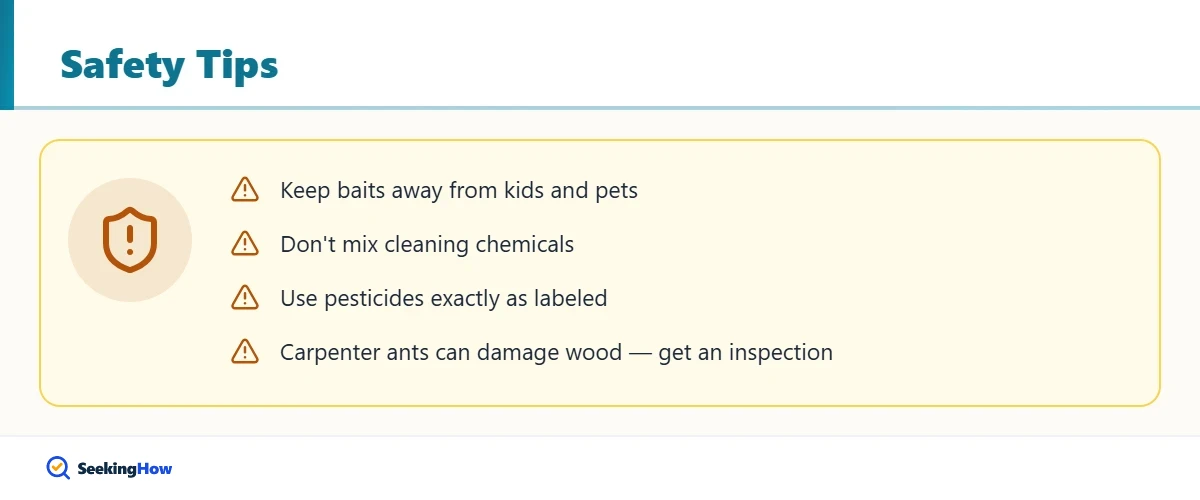
Safety: Fire ant stings can cause severe allergic reactions in some people. If someone has trouble breathing, swelling of the face or throat, or dizziness after stings, call 911.
How to Get Rid of Ants in the House Quickly
Step 1: Follow the Trail to Find the Entry Point
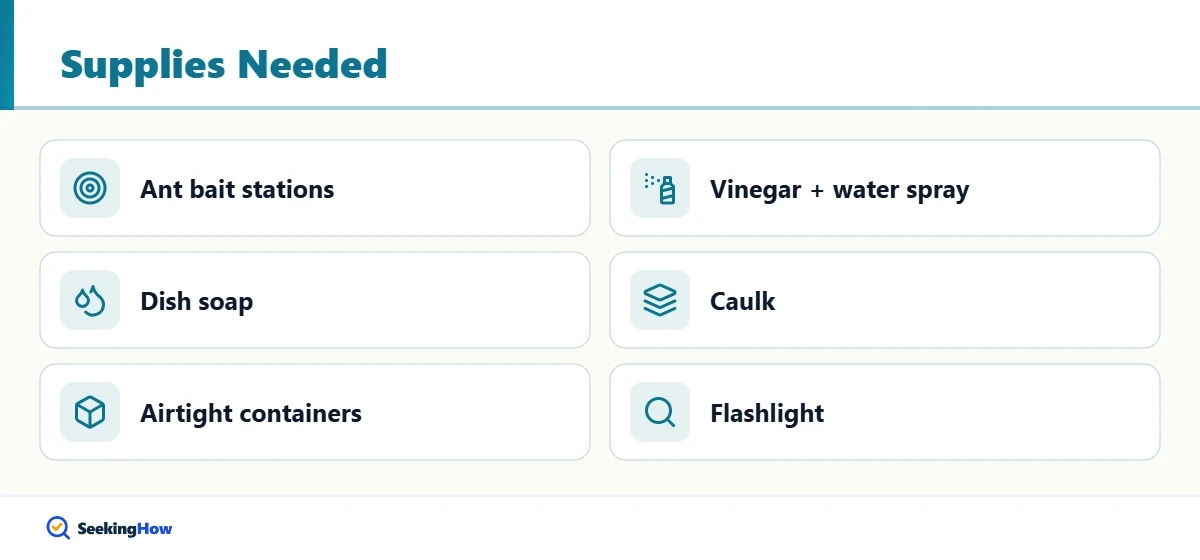
Before wiping anything, watch where the line of ants goes. Follow it to a crack in the baseboard, a gap around a window, an outlet, or a pipe opening. Mark the spot with painter’s tape so you know where to place bait and where to seal later.
Step 2: Remove the Visible Ants and Their Scent Trail
Wipe the ants and the path they used with warm soapy water or a 1:1 mix of white vinegar and water. This kills the ants on contact and erases the pheromone trail that guides the rest of the colony. Vacuuming works too; empty the canister or bag outside right away.
Step 3: Cut Off Food and Water
Store sugar, cereal, honey, syrup, and pet food in airtight containers. Wipe counters and sweep floors daily, rinse recyclables, take out trash, and avoid leaving pet bowls out overnight. Fix dripping faucets and wipe up water around sinks, since ants also come in to drink.
Step 4: Place Bait Stations Along the Trail
Put enclosed bait stations or dabs of gel bait right next to the trail and entry point, not on top of it. Commercial baits containing borax, boric acid, or slow-acting insecticides such as indoxacarb or fipronil work because foragers carry the bait home and feed it to the queen and larvae. A homemade option is 1 tablespoon of borax mixed into 1/2 cup of sugar water, soaked into cotton balls in a lidded container with holes.
Step 5: Leave the Bait Alone
Seeing more ants on the bait at first is a good sign; it means they are feeding. Do not spray, wipe, or clean around the stations for at least several days. Replace the bait when it dries out or empties, and expect activity to drop over one to two weeks.
Step 6: Seal Entry Points
Once activity stops, seal the cracks and gaps you marked with silicone or acrylic caulk. Add door sweeps and repair torn window screens. Fill gaps around pipes and cables with caulk or expanding foam.
Step 7: Treat the Outside Perimeter
Many indoor ants nest outdoors. Trim shrubs and branches so they do not touch the house, pull mulch a few inches back from the foundation, and place outdoor bait stations near nests or trails. Granular baits or a labeled perimeter treatment can help, applied strictly according to the label.
Do Natural Ant Remedies Work?
Some do, mainly as repellents or trail cleaners rather than colony killers. They are useful for prevention and in areas where you prefer not to use insecticides.
- White vinegar: erases scent trails and kills ants on contact, but does not affect the nest.
- Soapy water: a simple dish soap spray kills ants on contact by breaking down their outer coating.
- Food-grade diatomaceous earth: a fine powder that damages ants’ exoskeletons; works only while dry, so dust it thinly into cracks and wall voids, not wet areas.
- Peppermint, tea tree, or citrus oils: may repel ants temporarily. Many essential oils are toxic to cats and dogs, so use them cautiously in homes with pets.
- Cinnamon, coffee grounds, or chalk lines: may deter a few ants but are unreliable.
For a deeper look at how vinegar behaves as a cleaner, see this guide to practical vinegar uses around the house.
Is Borax Safe Around Kids and Pets?
Borax and boric acid have low toxicity in the small amounts used in ant baits, but they can still cause vomiting and other symptoms if a child or pet eats enough. Use enclosed, tamper-resistant bait stations, place them behind appliances or inside cabinets, and keep homemade baits out of reach. If a child swallows bait, call Poison Control at 1-800-222-1222; for pets, call your veterinarian or a pet poison hotline.
Common Mistakes That Keep Ants Coming Back
- Spraying insecticide on ants that are feeding on bait, which stops them carrying it home.
- Using repellent sprays on Pharaoh ants, which can cause the colony to split into several new ones.
- Leaving a single crumb source, such as a toaster or pet food bin, that competes with the bait.
- Giving up after two days; colonies with multiple queens take longer to collapse.
- Ignoring moisture problems that attract ants and other pests.
Ants are not the only pests that hide in cracks and seams. If you also suspect bed bugs, learn how to check for bed bugs before treating, and clear webs and egg sacs with these tips on removing cobwebs from high ceilings.
How Do You Keep Ants Out for Good?
- Clean kitchen surfaces nightly and sweep under appliances weekly.
- Keep food, including pet food and birdseed, in sealed plastic or glass containers.
- Fix leaks under sinks and around dishwashers and refrigerators.
- Seal gaps in the foundation, window frames, and utility penetrations.
- Keep firewood, mulch, and plant branches away from exterior walls.
- Check for new trails in spring and put out bait at the first sign.
When Should You Call a Pest Control Professional?
Call a licensed pest control company if you see carpenter ants or sawdust-like debris, which can signal damage to wood framing; if ants keep returning after two to three weeks of baiting; if you have fire ants near play areas; or if ants are nesting inside walls you cannot access. Professionals can identify the species precisely and use non-repellent products that are not sold to consumers.
Tip: Save a few ants in a sealed bag with tape. A pest professional or your local Cooperative Extension office can identify them, which helps you pick the right bait type.
Frequently Asked Questions
What kills ants instantly?
Soapy water or a 1:1 mix of white vinegar and water kills ants on contact and erases their scent trail. A vacuum also removes them fast. These methods only handle the ants you can see, so pair them with bait stations that worker ants carry back to the nest.
How long does ant bait take to work?
You may see fewer ants within a few days, but full colony control usually takes one to two weeks, sometimes longer for large colonies with several queens. Keep the bait fresh and avoid spraying or cleaning around the stations during that time.
Why do I see more ants after putting out bait?
More ants at first means the bait is working. Foragers recruit nestmates to the food source, then carry the bait back to feed the queen and larvae. Leave the bait in place and resist spraying; activity should fall off over the following days.
Does vinegar keep ants away?
Vinegar erases the pheromone trails ants follow and kills them on contact, so it is a good cleaner for ant paths. It does not destroy the nest or provide lasting protection once it dries, so use it with baits and sealing for longer-term control.
What attracts ants into the house?
Ants are drawn in by food crumbs, sugary spills, grease, pet food, garbage, and moisture from leaks or wet sinks. Gaps around doors, windows, foundations, and pipes give them easy access. Plants touching the house also act as bridges.