Quick Answer
To fix frizzy hair after bleaching, use a bond-repair treatment once a week, deep condition after every wash, switch to a gentle sulfate-free shampoo, seal damp hair with a leave-in conditioner and a light silicone or oil serum, and cut heat styling. Expect visible smoothing in 2–4 weeks; trim badly frayed ends, because bleached hair cannot fully heal.
Key Takeaways
- Bleach lifts the hair cuticle and breaks internal bonds, which makes hair porous, dry, and frizzy.
- Bond-building treatments help reconnect broken bonds, while conditioners smooth the cuticle surface.
- Bleached hair needs both moisture and occasional protein; too much of either can make frizz worse.
- Heat styling on bleached hair should stay at the lowest effective temperature with a heat protectant.
- Damaged ends do not repair themselves, so regular small trims are part of the fix.
Bleaching removes pigment by chemically opening the hair cuticle, and that roughened surface is why freshly lightened hair often feels straw-like and frizzy. This guide covers how to fix frizzy hair after bleaching with a routine that addresses both the inner damage and the rough outer layer.
What You’ll Need
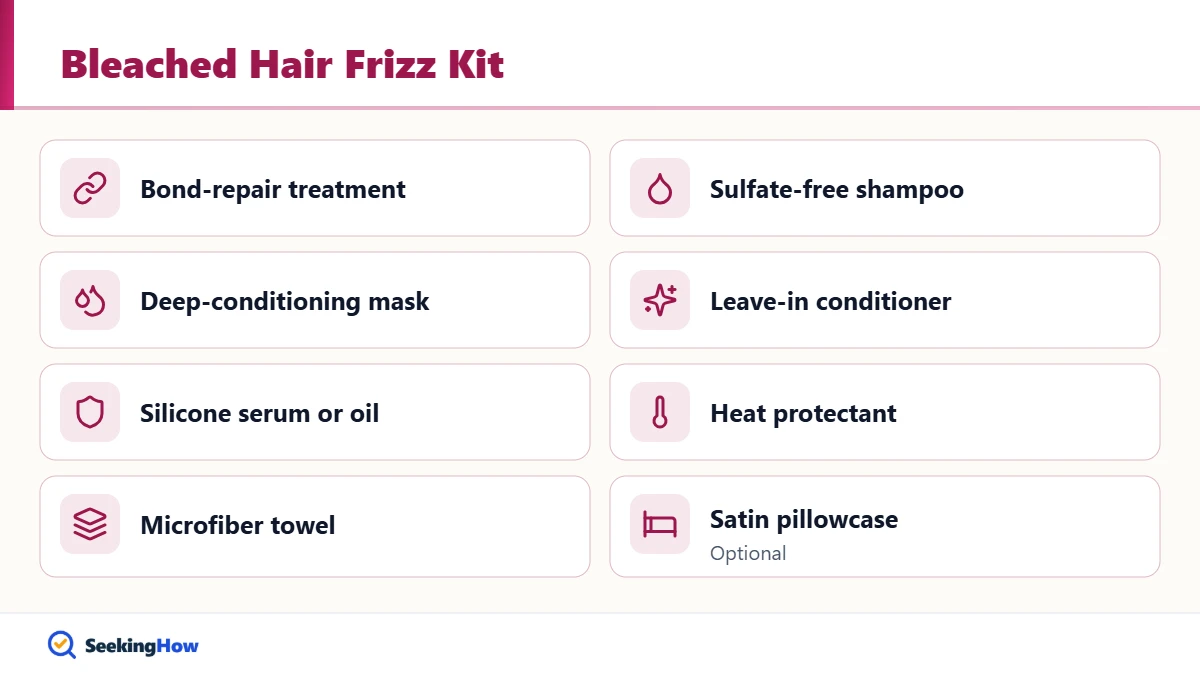
- Bond-repair treatment (pre-shampoo or in-salon bond builder)
- Sulfate-free, gentle shampoo
- Rich conditioner and a weekly deep-conditioning mask
- Light protein treatment or protein-containing mask
- Leave-in conditioner
- Lightweight silicone serum or hair oil
- Microfiber towel or cotton T-shirt
- Wide-tooth comb
- Heat protectant (if you heat style)
- Silk or satin pillowcase (optional)
How To Fix Frizzy Hair After Bleaching: Step-by-Step
Step 1: Start a Weekly Bond-Repair Treatment
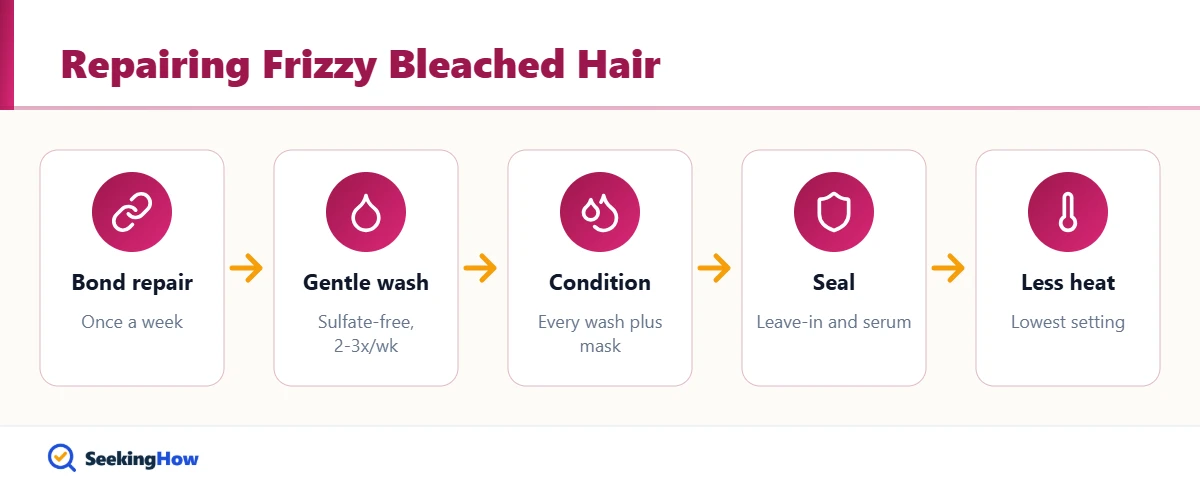
Apply a bond-repair treatment to damp hair once a week, following the label’s timing, usually 10 minutes or longer before shampooing. These products target the internal bonds bleach breaks, which is where much of the weakness comes from. Most people find frizz and snapping improve noticeably after three or four treatments.
Step 2: Wash Less Often With a Gentle Shampoo
Shampoo 2 to 3 times a week with a sulfate-free formula, focusing it on the scalp and letting the rinse clean the lengths. Harsh cleansers strip what little oil coats the porous cuticle. Rinse with lukewarm water rather than hot.
Step 3: Condition Every Time and Deep Condition Weekly
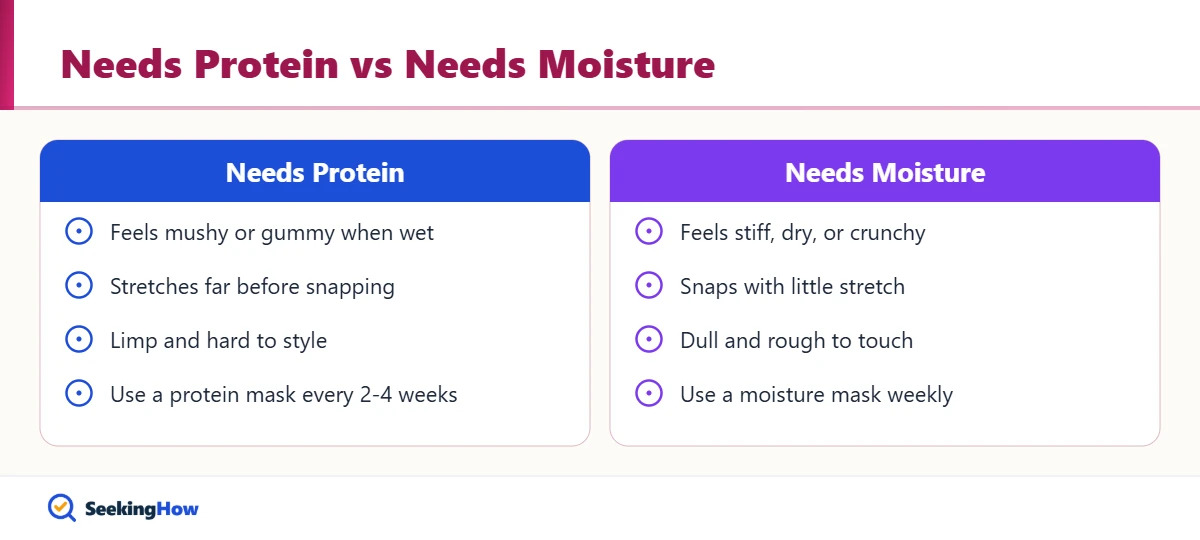
Apply conditioner from mid-length to ends after every wash and leave it on for 3 to 5 minutes. Once a week, swap in a deep-conditioning mask for 10 to 20 minutes. Alternate moisture masks with a light protein treatment about every 2 to 4 weeks; hair that feels mushy needs protein, and hair that feels stiff needs moisture.
Step 4: Seal Damp Hair
Blot hair with a microfiber towel instead of rubbing, then apply a leave-in conditioner and a pea-sized amount of silicone serum or oil to the ends. This coats the raised cuticle so humidity doesn’t swell it. Detangle with a wide-tooth comb from the ends upward.
Step 5: Cut Back on Heat
Air-dry when you can. If you blow-dry or flat iron, use a heat protectant and the lowest temperature setting that works; bleached hair burns at temperatures virgin hair tolerates. The common mistake is flat ironing frizz away daily, which creates more damage and more frizz.
Step 6: Trim the Damaged Ends
Get a small trim, about 1/4 to 1/2 inch, every 6 to 10 weeks to remove split, frayed ends. Splits travel up the shaft if left alone. A stylist can also tell you whether the frizz is from over-processing that needs a bigger cut.
Bottom line: pair weekly bond repair with daily conditioning and less heat; if hair stretches like gum when wet, stop all chemical services and see a stylist.
Treatment Options Compared
| Treatment | What it does | How often | Best for |
|---|---|---|---|
| Bond-repair treatment | Helps rebuild broken internal bonds | Weekly | Weak, snapping hair |
| Deep-conditioning mask | Restores moisture and softness | Weekly | Dry, rough frizz |
| Protein treatment | Temporarily fills porous gaps | Every 2–4 weeks | Limp, overly stretchy hair |
| Silicone serum | Smooths and seals the surface | Daily on ends | Humidity frizz |
| Trim | Removes split ends | Every 6–10 weeks | Frayed, see-through ends |
If That Didn’t Work
Problem: Hair feels gummy and stretchy when wet. Cause: Severe protein loss from over-bleaching. Fix: Add a protein treatment, handle hair very gently, and skip chemical services until a stylist approves.
Problem: Hair feels stiff and crunchy. Cause: Protein overload. Fix: Pause protein and use moisture masks for 2 weeks.
Problem: Frizz returns in humidity. Cause: Porous hair absorbing moisture from the air. Fix: Use an anti-humidity serum and a satin bonnet or pillowcase.
Problem: Hair keeps breaking at the same length. Cause: Overlapping bleach on previously lightened sections. Fix: Ask your colorist to apply lightener to new growth only.
When To See a Doctor or Dermatologist
See a doctor promptly if your scalp burned, blistered, oozed, or developed open sores after bleaching, as this can be a chemical burn. See a dermatologist if hair is breaking off in patches, you notice bald spots, or your scalp stays itchy, red, or flaky for more than a week. Severe swelling of the face or eyelids after a hair service needs urgent care because it may be an allergic reaction.
Prevention Tips
- Have bleach applied by a professional, and lighten in stages rather than all at once.
- Ask for a bond builder to be added during the lightening service.
- Wait several weeks between chemical services such as bleach, perms, and relaxers.
- Sleep on silk or satin to reduce friction.
Related Guides
- How to get rid of frizzy hair permanently
- How to fix hair breakage at the crown
- How to clean a boar bristle brush
Sources
- American Academy of Dermatology – tips for healthy hair and coloring safely
- U.S. FDA – hair dyes and cosmetic safety
- NHS – hair loss and scalp problems
Frequently Asked Questions
Will frizzy bleached hair ever go back to normal?
Bleached hair will not fully return to its original state, because bleach permanently changes the hair structure. With bond repair, conditioning, and less heat, it can look and feel much smoother. Truly healthy texture returns only as new, unbleached hair grows in and damaged lengths are trimmed away.
How long after bleaching does hair stop being frizzy?
Most people see smoother, less frizzy hair within 2 to 4 weeks of a consistent repair routine. Severely over-processed hair may stay rough until damaged sections are trimmed. Frizz from humidity can persist on porous bleached hair, so sealing products remain part of the routine.
Is coconut oil good for bleached frizzy hair?
Coconut oil can help some people by reducing water absorption and smoothing the surface of the hair. Use a small amount on the ends, either as a pre-wash treatment or a finishing product. It can weigh down fine hair, so a lightweight serum may work better.
Should I use protein or moisture on bleached hair?
Bleached hair usually needs both, used in balance. Use moisture-focused conditioners and masks weekly and a protein treatment every 2 to 4 weeks. If hair feels gummy or overly stretchy, increase protein; if it feels stiff or crunchy, cut protein and focus on moisture.
Can I flat iron bleached frizzy hair?
You can, but use a heat protectant, the lowest effective temperature, and limit how often you do it. Bleached hair is weaker and burns more easily than unprocessed hair. Daily flat ironing tends to increase frizz and breakage over time.
Do bond builders really work on bleached hair?
Bond-building treatments are designed to help repair the internal bonds that bleaching breaks, and many people notice stronger, smoother hair with regular use. They are not a cure for severe damage. Use them consistently and combine them with conditioning and gentle styling for the best results.
When should I see a dermatologist after bleaching?
See a dermatologist if your hair is breaking off in patches, you develop bald spots, or your scalp stays red, itchy, or flaky for more than a week. Seek prompt medical care for blistering, oozing, or severe burning, which can indicate a chemical burn.