
Quick Answer
To clean a boar bristle brush, pull out trapped hair with a wide-tooth comb, then swish only the bristles in lukewarm water with a few drops of gentle shampoo for 1–2 minutes, scrub with a second comb, rinse bristles-down, and dry bristles-down on a towel overnight. Never soak a wooden boar bristle brush or use hot water.
Key Takeaways
- Boar bristles are natural hair, so they hold scalp oil, product, and lint that make them limp and greasy.
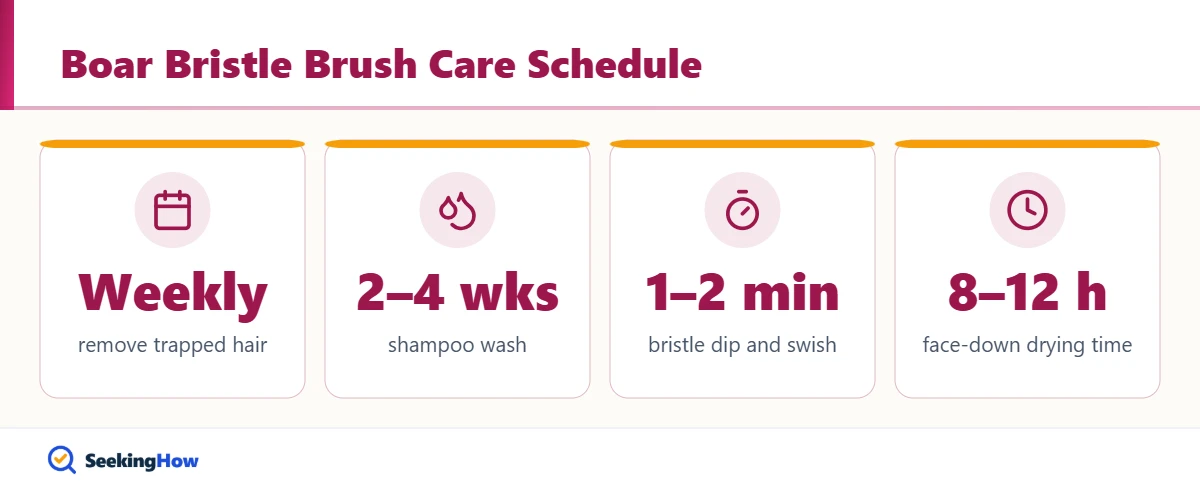
- Remove loose hair about once a week and wash the brush every 2 to 4 weeks.
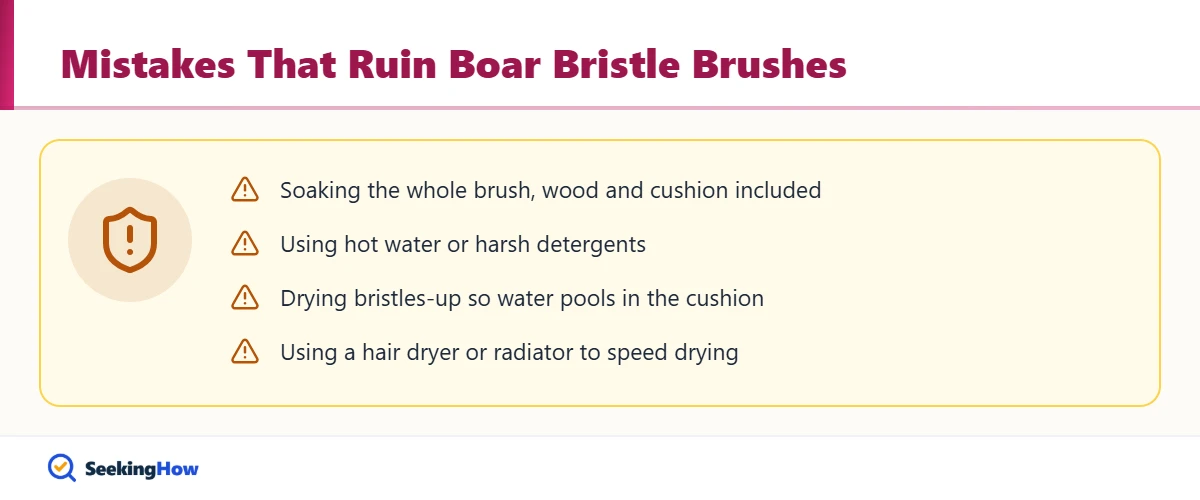
- Soaking warps wooden handles and loosens cushion glue, so wet only the bristles.
- Drying bristles-down stops water from pooling in the rubber cushion.
- Hot water and harsh detergents can make natural bristles brittle.
A boar bristle brush spreads natural scalp oil down the hair shaft, which is exactly why it gets grimy fast. Knowing how to clean a boar bristle brush correctly keeps the bristles springy and the wood intact for years.
What You’ll Need
- Wide-tooth comb or rat-tail comb
- Bowl of lukewarm water
- Gentle shampoo, ideally clarifying for heavy product buildup
- Second fine-tooth comb or brush-cleaning tool
- Clean towel
- Baking soda, 1 teaspoon (optional, for heavy residue)
How To Clean a Boar Bristle Brush: Step-by-Step
Step 1: Remove Trapped Hair
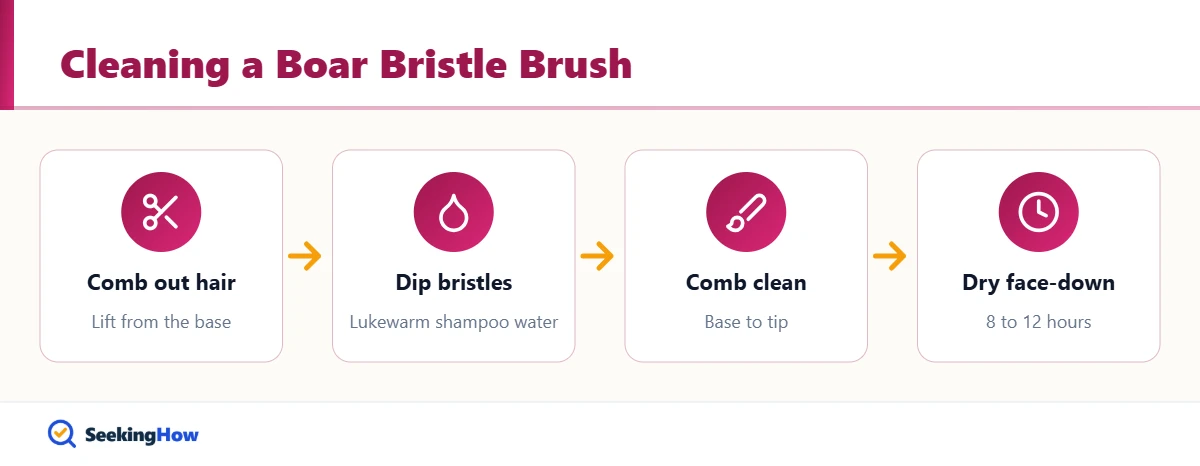
Slide the tail or teeth of a comb under the hair at the base of the bristles and lift it up and out. Work from one end of the brush to the other. Scissors can cut tangled mats, but avoid snipping bristles.
Step 2: Mix a Gentle Wash
Add a few drops of shampoo to a bowl of lukewarm water and swirl. For heavy styling product buildup, stir in about 1 teaspoon of baking soda. Hot water can soften cushion adhesives and dry out natural bristles.
Step 3: Dip and Swish the Bristles Only
Hold the brush bristles-down and dip only the bristles into the water, swishing for 1 to 2 minutes. Keep the wooden back and handle dry. The most common mistake is dunking the whole brush, which lets water seep into the cushion vent and wood.
Step 4: Scrub With a Second Comb
Run a fine-tooth comb or brush-cleaning tool through the bristles from base to tip to work out oil and residue. Dip and comb again until the water stays mostly clear. In practice, two or three rounds are usually enough.
Step 5: Rinse Bristles-Down
Rinse the bristles under lukewarm running water while holding the brush bristles-down so water drains away from the base. Gently shake off excess water.
Step 6: Dry Bristles-Down Overnight
Lay the brush bristles-down on a clean towel and leave it to air-dry for 8 to 12 hours. Do not use a hair dryer or radiator, which can warp wood and crack the cushion. Wipe the handle with a dry cloth if it got damp.
Bottom line: wet only the bristles, keep the water lukewarm, and always dry the brush face-down.
Cleaning Options Compared
| Method | Time | When to use |
|---|---|---|
| Comb out hair | 2 min | Weekly |
| Shampoo dip and comb | 10 min plus overnight drying | Every 2–4 weeks |
| Shampoo plus baking soda | 15 min plus overnight drying | Heavy oil or product buildup |
| Full soak | Not recommended | Never for wooden or cushioned brushes |
If That Didn’t Work
Problem: Bristles still feel greasy. Cause: Silicone or oil-based product buildup. Fix: Repeat with clarifying shampoo and baking soda.
Problem: The brush smells musty. Cause: Water trapped in the cushion. Fix: Dry face-down longer in a ventilated room; replace the brush if mold appears.
Problem: Bristles are splayed or flattened. Cause: Drying bristles-up or using heat. Fix: Gently reshape while damp and dry face-down.
Problem: Cushion is coming loose. Cause: Water reached the adhesive. Fix: Let it dry fully; future washes should keep water off the base.
Safety and When To Replace the Brush
Replace the brush if you see black or green spots of mold in the cushion, a persistent musty smell after drying, or bristles that break off. Clean the brush more often, and keep it separate, if you are using medicated shampoo for dandruff or scalp conditions. See a dermatologist if scalp flaking, itching, or redness persists despite clean tools.
Prevention Tips
- Pull out loose hair after every few uses.
- Brush styling products in after brushing, not before.
- Store the brush in a dry place, not a humid shower caddy.
- Use a separate brush for wet hair.
Related Guides
- How to clean a wave brush without ruining the bristles
- How to get rid of frizzy hair
- How to fix hair breakage at the crown
Sources
- American Academy of Dermatology – hair care tips and scalp health
- U.S. EPA – mold basics and moisture control
Frequently Asked Questions
How often should you clean a boar bristle brush?
Remove trapped hair from a boar bristle brush about once a week and give it a shampoo wash every 2 to 4 weeks. Wash it more often if you use heavy styling products or have an oily scalp. A clean brush distributes oil evenly instead of redepositing old buildup.
Can you get a boar bristle brush wet?
Yes, the bristles can get wet, but the wooden handle and cushion should stay as dry as possible. Soaking the whole brush can warp wood, loosen glue, and trap water inside the cushion where mold can grow. Dip only the bristles and dry the brush face-down.
Can I use dish soap to clean a boar bristle brush?
A drop of mild dish soap can cut heavy grease, but gentle shampoo is the better everyday choice. Strong detergents can strip natural bristles and leave them dry and brittle. Rinse thoroughly either way so no residue goes back onto your hair.
Can I clean a boar bristle brush with vinegar?
Diluted white vinegar, about one part vinegar to two parts water, can help with mineral or product residue as a bristle dip. Rinse well afterward. Shampoo and baking soda handle most buildup, so vinegar is rarely necessary.
Why does my boar bristle brush smell?
A boar bristle brush usually smells because oil buildup or trapped moisture has let bacteria or mold grow in the bristles or cushion. Wash it and dry it face-down in a ventilated spot. If the smell persists or you see mold spots, replace the brush.
How long does a boar bristle brush last?
A well-cared-for boar bristle brush can last for years. Replace it when bristles break or fall out, the cushion cracks or detaches, or mold appears. Gentle cleaning and face-down drying are the biggest factors in extending its life.