Quick Answer
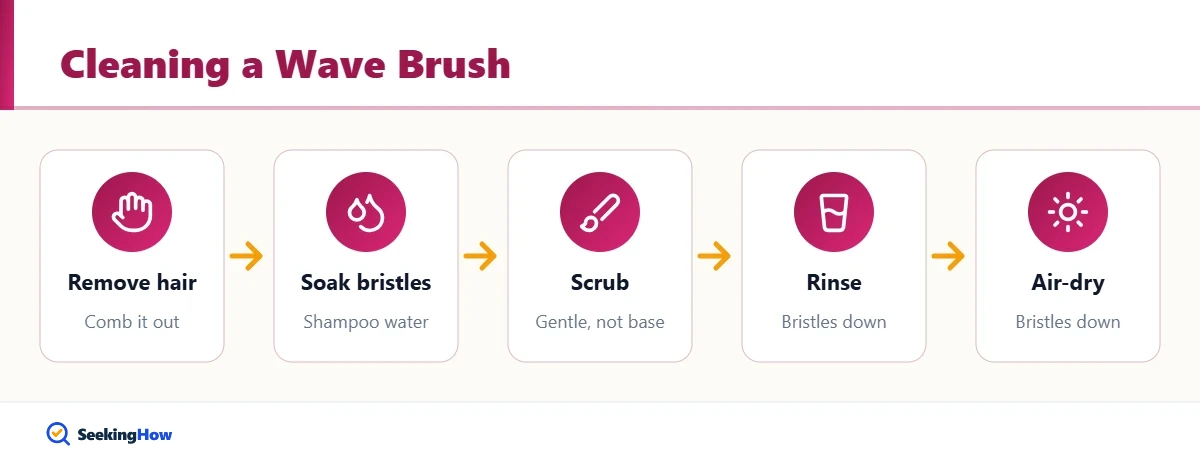
To clean a wave brush, pull out trapped hair with a comb, then dip only the bristles in lukewarm water mixed with a small amount of shampoo. Work the lather through with your fingers or a fine comb, rinse the bristles under lukewarm water, shake out excess, and dry bristles-down for 12-24 hours. Keep the wooden base out of water. Clean it every 1-2 weeks.
Key Takeaways
- Wave brushes trap pomade, grease, oil, and dead skin that dull waves and can irritate your scalp.
- Wash the bristles, not the whole brush. Soaking the wooden handle or glued base can warp it and loosen bristles.
- Use lukewarm water and a gentle or clarifying shampoo; hot water and harsh cleaners can damage natural boar bristles.
- Always dry the brush bristles-down so water does not seep into the base.
- Remove hair after every few uses and deep clean every 1-2 weeks, or weekly if you use heavy pomade.
A good wave brush is an investment, especially a medium or hard boar bristle brush you have broken in. Build-up from pomade and oils makes it less effective at laying hair down and can transfer residue back onto your scalp. Here is how to clean it thoroughly without ruining it.
Why Should You Clean Your Wave Brush?
Every brushing session leaves behind hair, product, natural oils, and skin flakes. Over time that mix packs between bristles and coats them, which reduces their grip on the hair and can feel greasy.
- Better waves: Clean bristles distribute product evenly and train your hair more effectively.
- Healthier scalp: Less residue on the brush means less buildup on your scalp, which can help with itching and flaking.
- Longer brush life: Product and oil buildup can make natural bristles brittle and loosen glued bases.
- Hygiene: Brushes that stay damp or dirty can develop odors.
What Type of Wave Brush Do You Have?
Bristle and base materials affect how you clean. Check your brush before you start.
| Brush type | Common use | Water tolerance | Cleaning notes |
|---|---|---|---|
| Soft boar bristle | Finishing, sensitive scalps, 360 waves maintenance | Bristles only, briefly | Gentle shampoo, no hot water |
| Medium boar bristle | Everyday brushing for most hair types | Bristles only, briefly | Comb out hair first; dry bristles-down |
| Hard boar bristle | Coarse or thick hair, wolfing | Bristles only, briefly | Clarifying shampoo for heavy pomade |
| Nylon or synthetic bristle | Budget brushes, mixed bristle | More tolerant | Mild soap; still avoid soaking wood |
| Palm brush (no handle) | Hand-held brushing | Base must stay dry | Hold upside down while rinsing |
What Do You Need To Clean a Wave Brush?
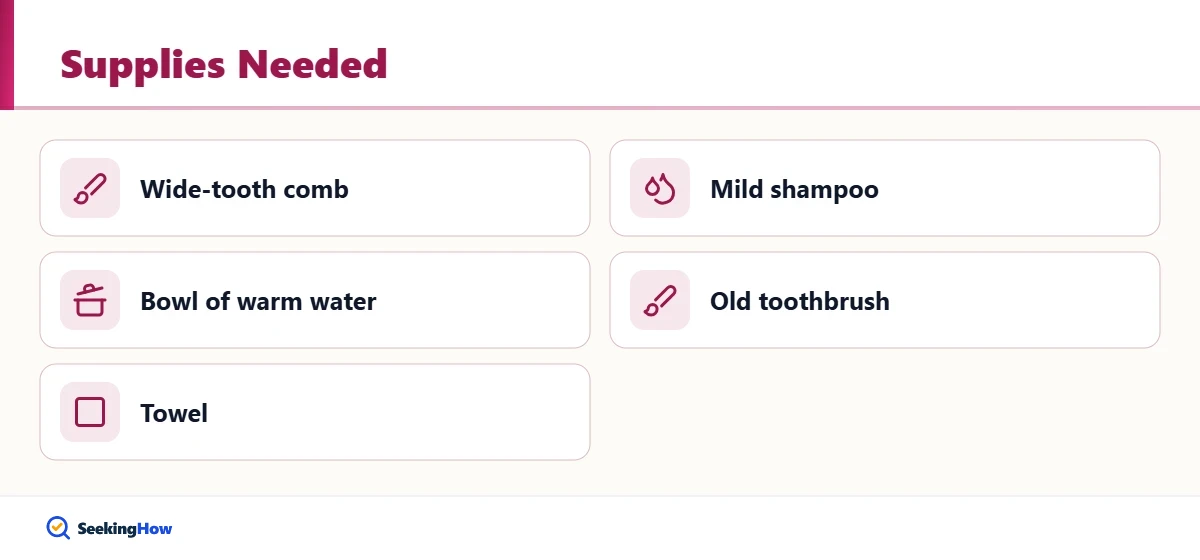
- A wide-tooth or fine-tooth comb (a rat-tail comb works well)
- Small bowl or sink with lukewarm water
- A teaspoon or so of gentle or clarifying shampoo, or mild dish soap for heavy grease
- Optional: a few drops of white vinegar or a teaspoon of baking soda for odors
- Clean towel
How To Clean a Wave Brush Step by Step
Step 1: Remove trapped hair
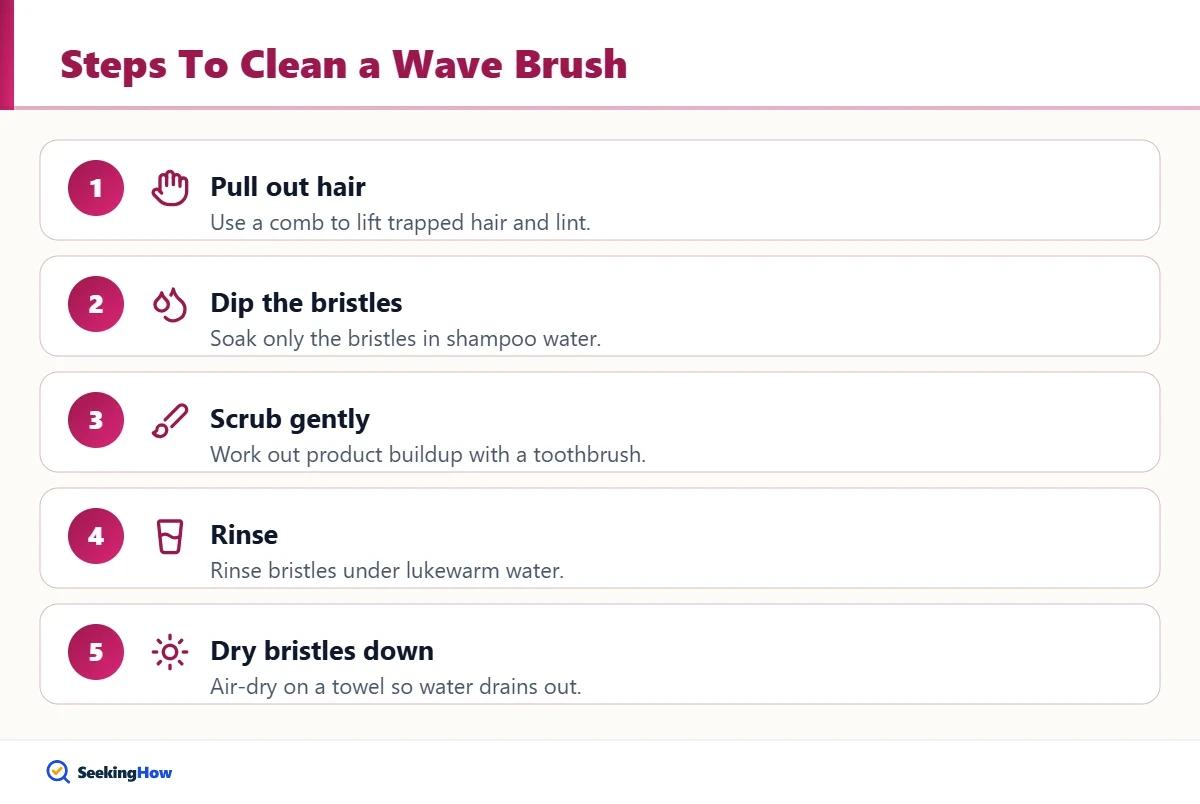
Run a comb through the bristles from the base outward to lift hair, lint, and flakes. Pull loose hair out with your fingers. A rat-tail comb’s handle helps pry out clumps near the base.
Step 2: Mix a gentle cleaning solution
Fill a bowl with about 1-2 inches of lukewarm water and stir in a small squirt of shampoo. The water should be shallow enough to cover the bristles without reaching the wooden base or handle.
Step 3: Dip and work the bristles
Hold the brush bristles-down and dip only the bristles into the solution. Swish it gently for 1-2 minutes and massage the lather between the bristles with your fingertips. For heavy pomade buildup, add a drop of dish soap or use a clarifying shampoo.
Step 4: Comb the bristles while soapy
Run the comb through the wet, soapy bristles to loosen remaining residue. Dip again and repeat until the bristles no longer feel waxy or greasy.
Step 5: Rinse with the brush facing down
Rinse the bristles under a gentle stream of lukewarm water, keeping the brush upside down so water runs off the tips rather than into the base. Continue until the water runs clear and no suds remain.
Step 6: Shake and blot
Give the brush a few firm shakes to remove water, then press the bristles into a clean towel to blot. Wipe the handle and base dry right away.
Step 7: Air-dry bristles-down
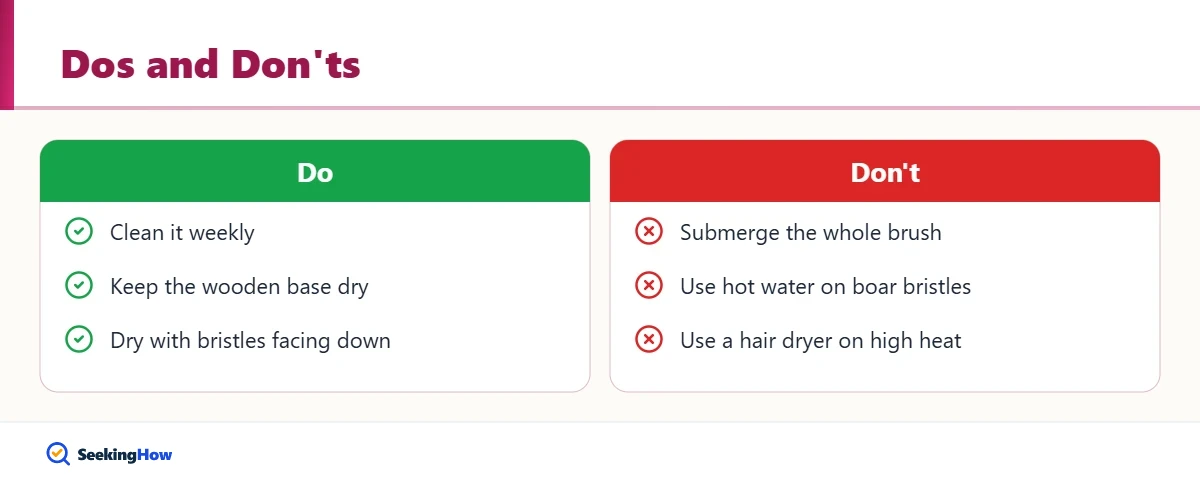
Lay the brush bristles-down on a dry towel in a well-ventilated spot and let it dry for 12-24 hours. Do not use a hair dryer on high heat or set it in direct sun, which can make natural bristles brittle and dry out wood.
How Do You Deodorize or Sanitize a Wave Brush?
If your brush smells musty, add a few drops of white vinegar or a teaspoon of baking soda to the cleaning water. Both are gentle options for freshening bristles. Rinse well afterward.
For extra sanitizing, some people lightly mist bristles with an alcohol-based disinfectant and let it dry, but alcohol can dry out natural boar bristles if used often. Use it occasionally, not every wash, and follow product directions; our guide on using Lysol disinfectant spray properly covers contact times and safety.
Tip: If you have a scalp condition, such as dandruff or a fungal infection, clean your brush more often and avoid sharing it. Ask a dermatologist if irritation continues.
Common Mistakes That Ruin Wave Brushes
- Submerging the whole brush: Water can swell wood and dissolve glue, causing bristles to fall out.
- Using hot water: It can soften glue and damage natural bristles.
- Harsh chemicals: Bleach and strong cleaners can break down natural bristles and finishes.
- Drying bristles-up: Water collects in the base and can lead to mildew.
- Using it wet: Brushing with a damp brush can transfer residue and keeps bristles from drying fully.
How Often Should You Clean a Wave Brush?
Remove hair every few uses, especially if you brush daily. Do a full wash every 1-2 weeks for typical use, or weekly if you use heavy pomade, grease, or oils. Some wavers keep two brushes so one can dry while they use the other.
How Long Does a Wave Brush Last?
A well-cared-for boar bristle brush can last a long time, often a year or more with regular use. Replace it when bristles fall out, the base cracks, or bristles splay permanently and no longer lay your hair down. Cleaning on a schedule and drying properly add the most life.
How Do You Keep a Wave Brush Clean Between Washes?
- Brush on clean hair so less product transfers to the brush.
- Use only as much pomade or moisturizer as you need.
- Store the brush bristles-down or in a breathable pouch, not in a sealed bag while damp.
- Keep it away from bathroom counters where it can sit in water.
- Do not share brushes, which spreads oils and microbes.
The same comb-and-rinse approach works for other bristled tools; see our guide on cleaning a broom and dustpan for household brushes.
Frequently Asked Questions
Can you wash a wave brush with dish soap?
Yes. A small amount of mild dish soap cuts through heavy pomade and grease well. Use it diluted in lukewarm water, dip only the bristles, and rinse thoroughly so no residue is left that could transfer back onto your hair.
Can I put my wave brush in water?
Only the bristles. Submerging the whole brush lets water soak into the wooden base and glue, which can warp the wood and loosen bristles. Dip the bristles in shallow water and rinse with the brush held upside down.
How long does a wave brush take to dry?
Plan on about 12 to 24 hours of air-drying with the bristles facing down in a ventilated spot. Dense hard-bristle brushes may need the longer end. Avoid high heat or direct sun, which can damage natural boar bristles.
Can I use conditioner on a boar bristle wave brush?
Some people add a tiny amount of conditioner to the rinse water to keep natural bristles soft, but it is optional. Rinse it out thoroughly, since leftover conditioner can attract buildup. Gentle shampoo alone works well for most brushes.
Why does my wave brush smell?
Odors usually come from trapped oils, product and moisture, especially if the brush dries bristles-up or is stored damp. Wash it with shampoo, add a few drops of white vinegar or some baking soda to the water, rinse well and dry bristles-down.