
Quick Answer
To fix a sticking wooden drawer, pull the drawer out, clean the runners and sides, and rub paraffin wax or a candle stub on every surface where wood slides on wood. If it still binds, find the shiny rub marks and sand or plane those high spots lightly. Most sticking wooden drawers are fixed in 15 to 30 minutes. Avoid oil, which attracts grime.
Key Takeaways
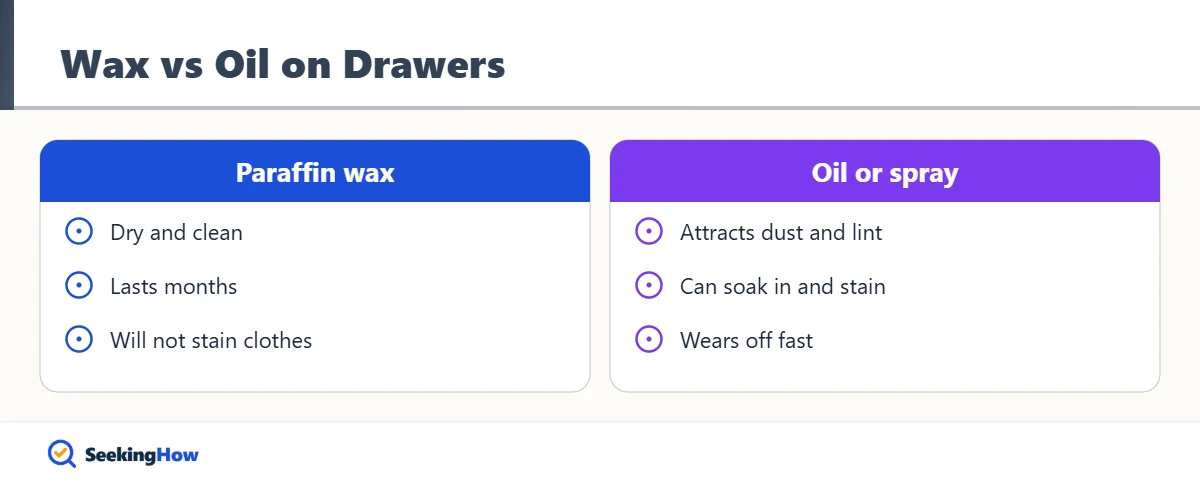
- Paraffin wax is the best lubricant for wooden drawers; it is clean, dry, and long lasting.
- Shiny, polished spots on the drawer or runners show exactly where the drawer is binding.
- Humidity swelling is the most common cause of seasonal sticking in solid wood drawers.
- Sand or plane only the rubbing spots, removing as little wood as possible.
- Loose drawer joints rack the box out of square and cause binding that wax will not cure.
- Oil and household sprays attract dust and can make sticking worse over time.
Wooden drawers stick for a handful of reasons: dry runners, swollen wood, worn guides, or a drawer box that has pulled out of square. This guide shows how to fix a sticking wooden drawer by working from the easiest fix to the most involved, so you never remove wood you did not need to.

What You’ll Need
- Paraffin wax block, beeswax, or a plain white candle stub
- Vacuum with crevice tool and a dry cloth
- Sandpaper: 120 and 180 grit, plus a sanding block
- Block plane (for heavy binding)
- Chalk or a soft pencil to mark rub spots
- Wood glue and clamps (for loose joints)
- Self-adhesive UHMW or nylon glide tape (optional)
- Thin hardwood strips or veneer to shim worn runners (optional)
- Shellac or clear finish for bare wood (optional)
How To Fix a Sticking Wooden Drawer: Step-by-Step
Step 1: Remove the drawer and clean the runners
Empty and remove the drawer, then vacuum the opening and wipe the runners and drawer sides with a dry cloth. Sawdust, lint, and old crumbs act like sandpaper and make wood grab. Check for protruding nails, screws, or loose items wedged behind the drawer while you are in there.
Step 2: Wax all sliding surfaces
Rub paraffin wax firmly on the drawer bottom edges, the lower edges of the drawer sides, and the cabinet runners. Buff lightly with a cloth. In practice, most people find this alone fixes the drawer, because dry wood-on-wood friction is the most common cause of sticking.
Step 3: Find the rub spots
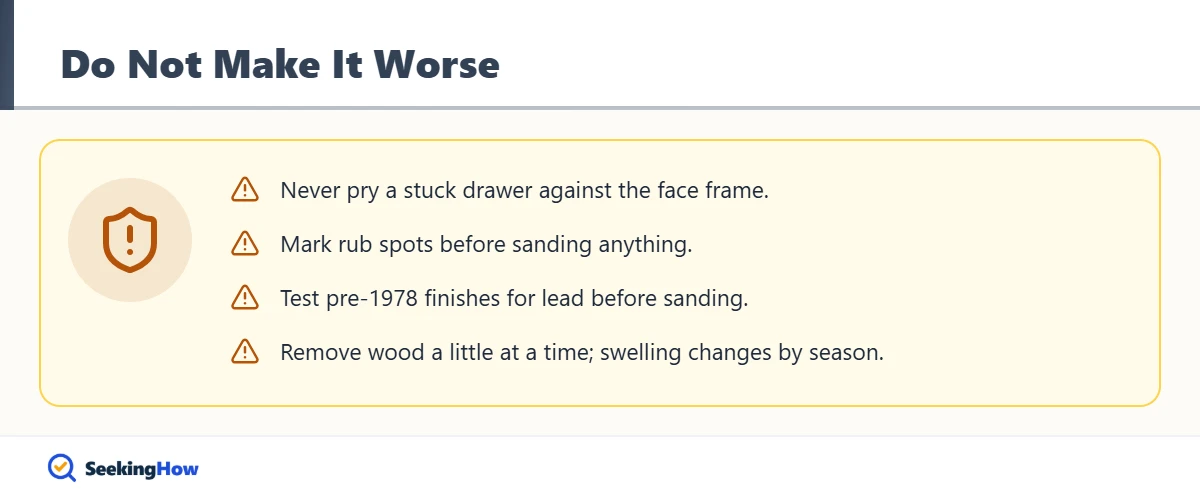
If the drawer still binds, rub chalk on the drawer sides and runners, slide it in and out, and look where the chalk is wiped off. Shiny, burnished areas are also tell-tale signs. Marking first prevents the most common mistake: sanding the whole drawer instead of the high spot.

Step 4: Sand or plane the high spots
Sand the marked areas with 120-grit paper on a block, then smooth with 180 grit. For heavier binding, take a few light passes with a block plane. Remove only a little at a time and test-fit often; if the drawer is sticking from humid-season swelling, overcutting leaves it sloppy in winter.
Step 5: Check the drawer for square and loose joints
Measure the drawer’s diagonals; if they differ by more than about 1/8 inch, the box is racked. Reglue loose corners, clamp the drawer square until the glue cures, and reinforce with small glue blocks if needed. A racked drawer rubs on one corner no matter how much wax you use.
Step 6: Rebuild worn runners and reseal
If the runners have deep worn grooves, glue on thin hardwood strips or apply UHMW glide tape to restore the original height. Seal any bare wood you sanded with a thin coat of shellac so it absorbs less humidity, let it dry, and wax again before reinstalling.
Bottom line: Clean and wax first; sand only the marked rub spots; repair the drawer box if it is out of square.
Seasonal Sticking From Humidity
Solid wood swells across its grain when humidity rises, so drawers often stick in summer and slide freely in winter. Running a dehumidifier to keep indoor humidity around 40 to 50 percent reduces this swing. Sealing unfinished drawer interiors and sides slows moisture exchange, which is why many antique drawers stick only where the original finish has worn away. For related wood movement problems, see how to straighten wood with water.
If That Didn’t Work
Problem: The drawer sticks only halfway out. Cause: The drawer tips down and its back lifts into the frame above. Fix: Add a kicker strip above the drawer side to keep it level.
Problem: The drawer front rubs the cabinet face. Cause: Worn runners letting the drawer drop. Fix: Shim the runners with hardwood strips or glide tape to lift the drawer.
Problem: The whole cabinet seems twisted. Cause: The dresser or cabinet is racked on an uneven floor. Fix: Level the case with shims; see how to stabilize a wobbly cabinet.
Problem: The drawer bottom drags. Cause: A sagging or loose bottom panel. Fix: Re-secure the bottom with small screws or glue blocks, or replace it.
Problem: The wood swelled from a spill. Cause: Water damage. Fix: Let it dry thoroughly before sanding; particle board may need the steps in repairing particle board water damage.
| Fix | Time | Difficulty | Best for |
|---|---|---|---|
| Clean and wax | 10 minutes | Easy | Dry friction, mild sticking |
| Sand or plane high spots | 20 to 40 minutes | Moderate | Swollen or tight drawers |
| Reglue and square drawer | 30 minutes plus cure | Moderate | Racked drawer boxes |
| Shim or tape runners | 30 minutes | Moderate | Worn runners, drooping drawers |
| Control humidity | Ongoing | Easy | Seasonal sticking |
Safety and When To Call a Pro
Wear a dust mask when sanding, especially on old furniture, and test finishes on pieces made before 1978 for lead before sanding. Never force a stuck drawer with a pry bar against the face frame; you can split the frame or tear the drawer front off its joint.
Call a furniture restorer for valuable antiques, where planing original surfaces can reduce value, or if multiple drawers stick because the case itself is cracked, twisted, or has failed glue joints.
Prevention Tips
- Rewax wooden runners once or twice a year.
- Keep indoor humidity between about 40 and 50 percent.
- Do not overload drawers; heavy loads wear runners faster.
- Keep finish intact on all drawer surfaces to slow moisture swings.
Related Guides
- How to stabilize a wobbly cabinet
- How to straighten wood with water
- How to repair particle board water damage
- How to fix a wobbly chair
Sources
- USDA Forest Products Laboratory: Wood Handbook, moisture and dimensional change in wood
- U.S. EPA: lead-based paint and safe renovation practices
Frequently Asked Questions
What is the best lubricant for wooden drawers?
Paraffin wax is the best lubricant for wooden drawers. It goes on dry, does not attract dust, and will not stain clothing. Beeswax and a plain candle stub also work. Avoid cooking oil, WD-40, and furniture polish, which gum up and attract grime over time.
Why do my wooden drawers stick in summer?
Wooden drawers stick in summer because higher humidity makes the wood absorb moisture and swell across its grain. The drawer and cabinet grow slightly tighter. Waxing, sealing bare wood, and running a dehumidifier to keep humidity around 40 to 50 percent usually solve it.
Can I use soap on a sticking drawer?
Yes, a dry bar of soap works as a quick fix on sticking drawers, an old-fashioned trick. However, soap can attract moisture and leave residue. Paraffin wax lasts longer and is cleaner, so use soap only if you have nothing else on hand.
Should I sand a sticking drawer?
Sand a sticking drawer only after waxing fails and only at the spots that rub. Mark them with chalk first. Sanding the entire drawer can leave it loose and rattling in dry months, especially if the sticking was caused by seasonal humidity.
How do I fix a drawer that sticks on one side?
A drawer that sticks on one side is usually racked out of square or rubbing on a single runner. Measure the diagonals; if they differ, reglue and clamp the drawer square. If it is square, sand or plane the shiny rub spot on that side and wax it.
Can I use silicone spray on a wooden drawer?
Silicone spray will reduce friction, but it is not recommended on wooden furniture. It can soak into bare wood and cause problems if the piece is ever refinished, since new finishes may not stick. Paraffin wax provides similar slip without contaminating the wood.
How do I fix worn wooden drawer runners?
Fix worn wooden drawer runners by gluing thin hardwood strips onto the worn surface to restore its height, or applying self-adhesive UHMW glide tape. Both lift the drawer back to its original position so the front no longer rubs. Wax the new surface afterward.