Quick Answer
To dispose of a car battery for money, take the old lead-acid battery to an auto parts store recycling program for a store credit, about $10 at AutoZone, O’Reilly or Advance Auto Parts as of 2026, or sell it to a scrap yard, which pays by weight, typically a few dollars to around $10. Transport it upright and never put it in household trash.
Key Takeaways
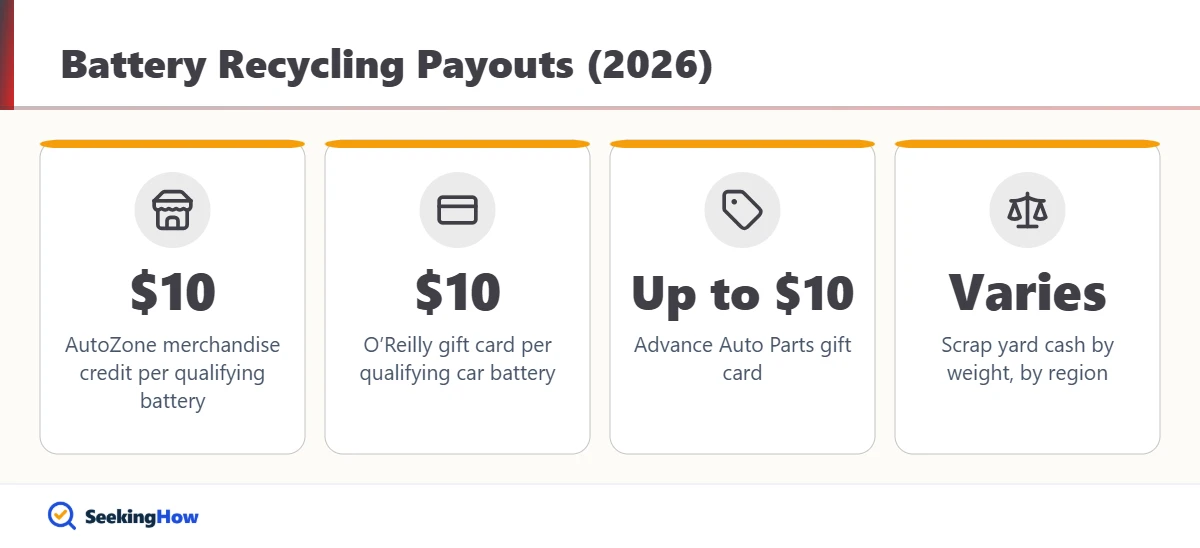
- As of 2026, AutoZone gives a $10 merchandise credit per qualifying lead-acid battery, limit 10 per day at participating stores.
- O’Reilly gives a $10 gift card per qualifying car battery, generally limited to 5 per day (2 in Florida, 6 in California).
- Advance Auto Parts offers up to a $10 gift card for car and light truck batteries through its battery recycling program.
- Scrap yards pay cash by the pound; prices change with lead markets and vary by region, often around $0.20-$0.30 per pound in late 2026.
- If you are buying a new battery, returning the old one refunds the core charge instead of earning a credit.
Old car batteries are about 60% lead by weight, which is why they’re among the most recycled products in the U.S. and why someone will pay you for one. Here’s how to dispose of a car battery for money, which option pays the most, and how to handle it safely.
What You’ll Need
- Acid-resistant gloves and safety glasses
- Sturdy plastic tub or battery carrier
- Baking soda and water (for any acid residue)
- Wrench (commonly 10 mm or 1/2 inch) if the battery is still in the vehicle
- Photo ID (some scrap yards require it to pay cash)
How To Dispose of a Car Battery for Money: Step-by-Step
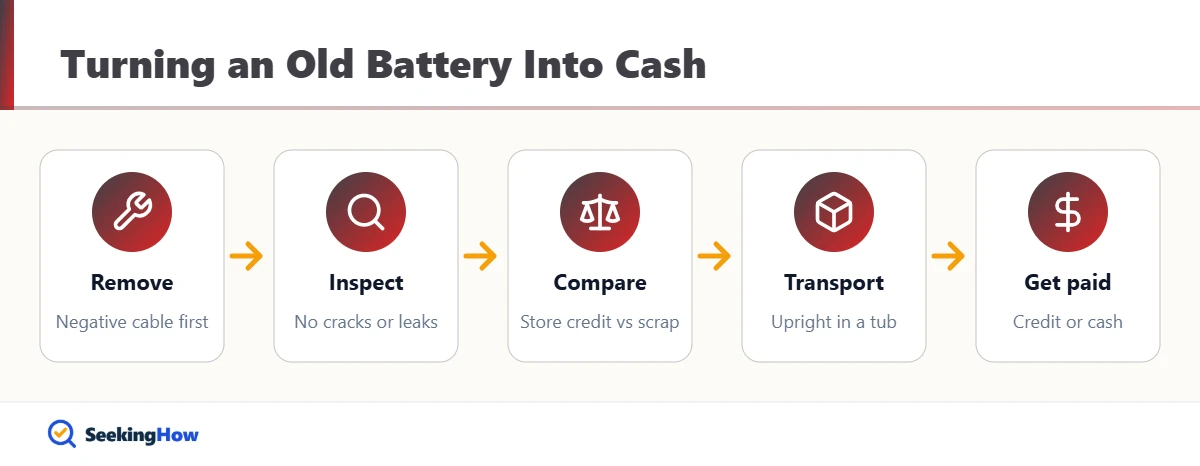
Step 1: Remove the Battery Safely
With the engine off, disconnect the negative (black, -) cable first, then the positive (red, +), and remove the hold-down. Lift with both hands; a typical car battery weighs roughly 30-50 pounds. Removing the positive first is the classic mistake that causes sparks if the wrench touches metal.
Step 2: Inspect for Cracks and Leaks
Check the case for cracks, bulging or wet acid. Store programs may refuse damaged batteries, and leaking batteries need a hazardous waste site instead. Wipe light corrosion off the terminals with a baking soda and water paste.
Step 3: Choose Credit or Cash
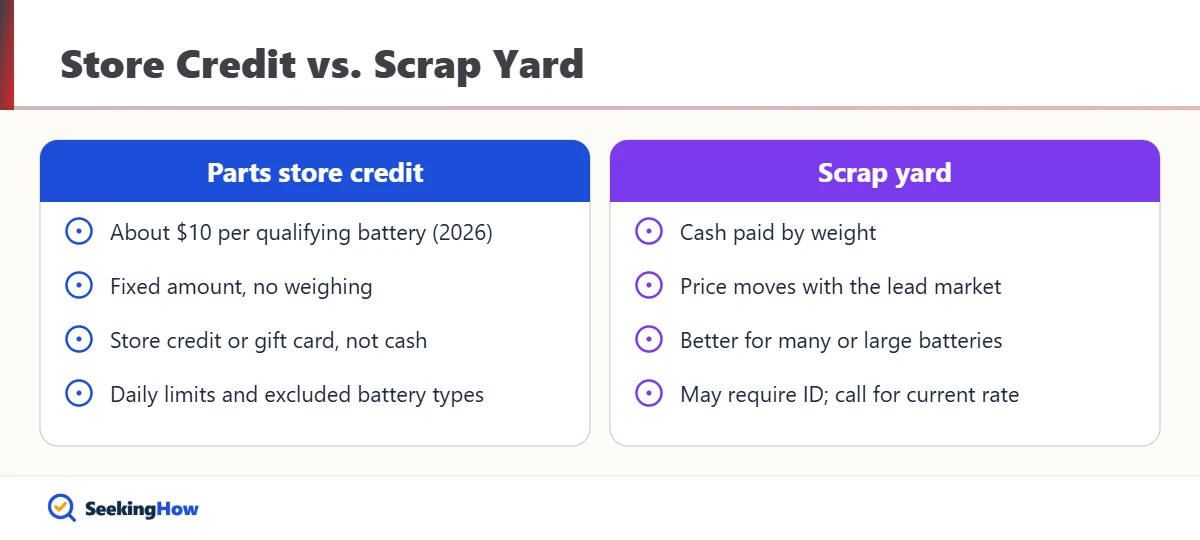
Compare a store credit (about $10 per battery at the three major chains as of 2026) with your local scrap yard’s price per pound. In practice, the store credit beats scrap value for a single typical car battery unless lead prices spike or you shop nowhere else. Scrap yards make more sense for several batteries or large truck batteries.
Step 4: Transport It Upright
Set the battery upright in a plastic tub on the floor of the trunk or truck bed, wedged so it can’t tip. Do not stack batteries or let terminals touch metal. Acid spills can eat through carpet and clothing.
Step 5: Turn It In and Get Paid
At the parts store, hand the battery to the counter staff and ask for the recycling credit or gift card. At a scrap yard, the battery is weighed and you are paid by the posted rate, sometimes after showing ID. Ask in advance whether they take lawn, motorcycle or marine batteries; several store programs exclude them from the reward.
Bottom line: For one or two car batteries, take the $10 parts store credit; for a pile of batteries, call scrap yards for a per-pound quote.
| Option (as of 2026) | What you get | Limits / notes |
|---|---|---|
| AutoZone | $10 merchandise credit | Qualifying lead-acid batteries; 10 per day; excludes lawn, motorcycle, PWC and core returns |
| O’Reilly Auto Parts | $10 gift card | Undamaged car batteries; 5 per day (FL 2, CA 6); excludes core returns and small batteries |
| Advance Auto Parts | Up to $10 gift card | Car and light truck batteries; excludes core returns, lawn and powersport |
| Scrap yard | Cash by weight | Price varies by region and lead market; roughly a few dollars to about $10+ per car battery |
| Core charge refund | Refund of the deposit paid | Only when buying a new battery; amount varies by store and state |
If That Didn’t Work
Problem: The store wouldn’t give a credit. Cause: The battery was a core return from a new purchase, an excluded type, or damaged. Fix: Recycle it there anyway for free, or try a scrap yard.
Problem: The scrap yard offered very little. Cause: Low lead prices or a minimum weight policy. Fix: Call two or three yards, or take the fixed store credit.
Problem: The battery is leaking. Cause: Cracked case. Fix: Place it in a sealed plastic tub and take it to a household hazardous waste facility.
Problem: It is a lithium battery from an EV, hybrid or powersport vehicle. Cause: Lead-acid recycling programs don’t take most lithium packs. Fix: Contact the dealer or a specialized battery recycler.
Safety and When To Call a Pro
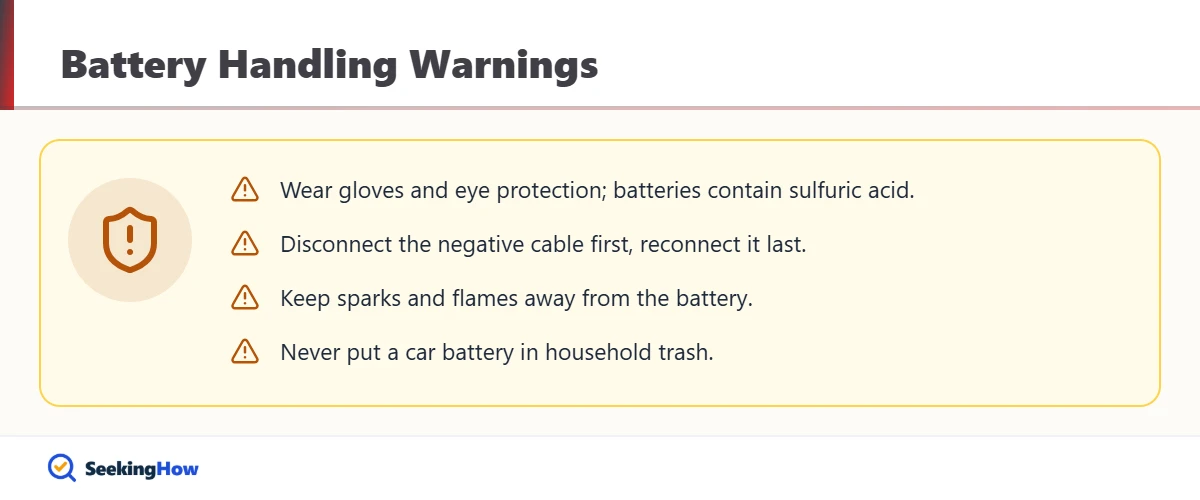
Lead-acid batteries contain sulfuric acid and lead. Wear gloves and eye protection, keep sparks and flames away (charging batteries can release hydrogen gas), and wash your hands after handling. If acid gets on your skin or in your eyes, flush with running water for at least 15 minutes and seek medical care for eye contact. Have a shop or hazardous waste facility handle swollen, cracked or leaking batteries and any hybrid or EV high-voltage pack. Throwing car batteries in the trash is illegal in most states.
Prevention Tips
- Keep your receipt when you buy a battery so you can claim the core refund within the store’s window.
- Recycle old batteries promptly; stored batteries can crack or freeze.
- Store a spare battery on wood or plastic in a cool, dry place, upright.
The same parts stores also recycle used oil; see how to dispose of motor oil for free, and for worn-out tires, how to dispose of used tires.
Related Guides
- How to dispose of motor oil for free
- How to dispose of used tires
- How to change a Honeywell thermostat battery
- How to get water out of a gas tank
Sources
- AutoZone – Battery and oil recycling
- O’Reilly Auto Parts – Free oil, fluid and battery recycling
- Advance Auto Parts – Battery recycling program
- U.S. Environmental Protection Agency – Household hazardous waste
Frequently Asked Questions
How much money can I get for an old car battery?
As of 2026, most people get about $10 in store credit or a gift card from AutoZone, O’Reilly or Advance Auto Parts for a qualifying old car battery. Scrap yards pay cash by weight, which for a typical car battery often works out to a few dollars to roughly $10, depending on lead prices and region.
Does AutoZone give money for old batteries?
AutoZone gives a $10 merchandise credit, not cash, for each qualifying lead-acid battery you recycle without buying a new one, as of 2026. The offer is limited to 10 batteries per customer per day at participating stores and excludes lawn and garden, motorcycle and personal watercraft batteries and core returns.
Do scrap yards buy car batteries?
Yes, many scrap yards and metal recyclers buy lead-acid car batteries and pay by the pound. Prices follow the lead market and differ by location, so call ahead for the current rate. Some yards require a photo ID and may not accept leaking or cracked batteries.
What is a battery core charge?
A battery core charge is a refundable deposit added when you buy a new car battery. You get it back when you return the old battery, either at the time of purchase or within the store’s return window. Batteries returned for a core refund do not qualify for the separate recycling gift card.
Can I throw a car battery in the trash?
No, you should not throw a car battery in the trash, and doing so is illegal in most U.S. states. Lead and sulfuric acid can harm sanitation workers and leak into soil and water. Parts stores, scrap yards and household hazardous waste sites all accept them for recycling.
Can I get money for a lawn mower or motorcycle battery?
Usually not at parts stores, since AutoZone, O’Reilly and Advance exclude lawn, motorcycle and powersport batteries from their gift card offers. They still recycle many of them for free. A scrap yard may pay a small amount by weight, but small batteries weigh little, so the payout is minimal.