Quick Answer
To clean a turquoise ring without damaging it, wipe the stone with a soft, dry or barely damp microfiber cloth, clean the setting with a dry soft brush, and polish only the silver or gold with a jewelry polishing cloth. Turquoise is porous, so never soak it, use soap, chemicals, ultrasonic, or steam cleaners. It takes about 5 minutes.
Key Takeaways
- Turquoise is a porous gem around 5 to 6 on the Mohs scale, so it absorbs liquids and scratches easily.
- Water, soap, oils, and lotions can discolor turquoise, often turning sky blue stones greenish over time.
- Much turquoise is stabilized with resin or wax, which heat and solvents can damage.
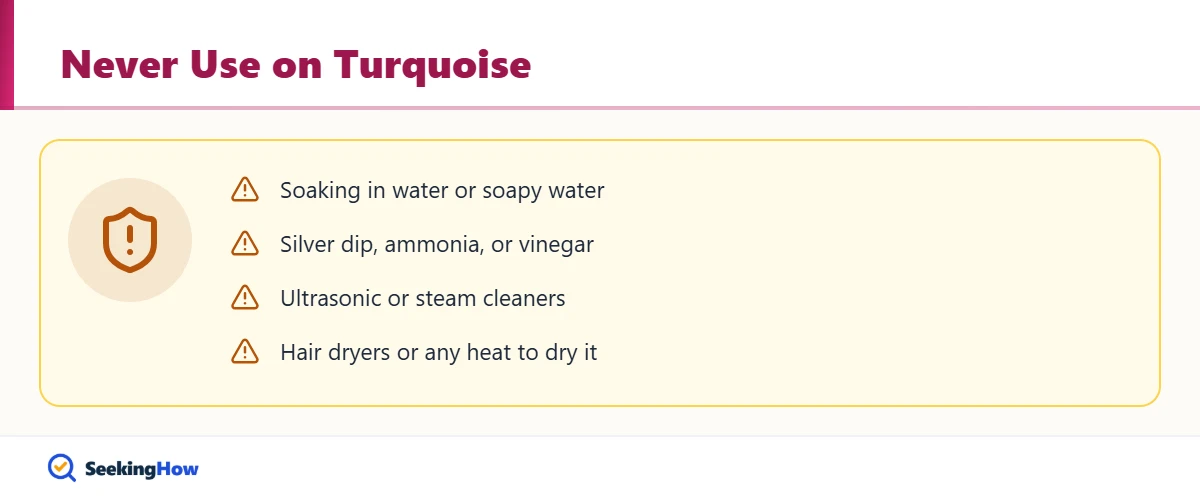
- Silver dip, ammonia, and ultrasonic or steam cleaners should never touch turquoise.
- A dry microfiber cloth after each wear is the best cleaning routine.
Turquoise rings are usually set in sterling silver, which tarnishes, around a stone that hates the very products that remove tarnish. This guide explains how to clean a turquoise ring without damaging it by treating the stone and the metal separately.
What You’ll Need
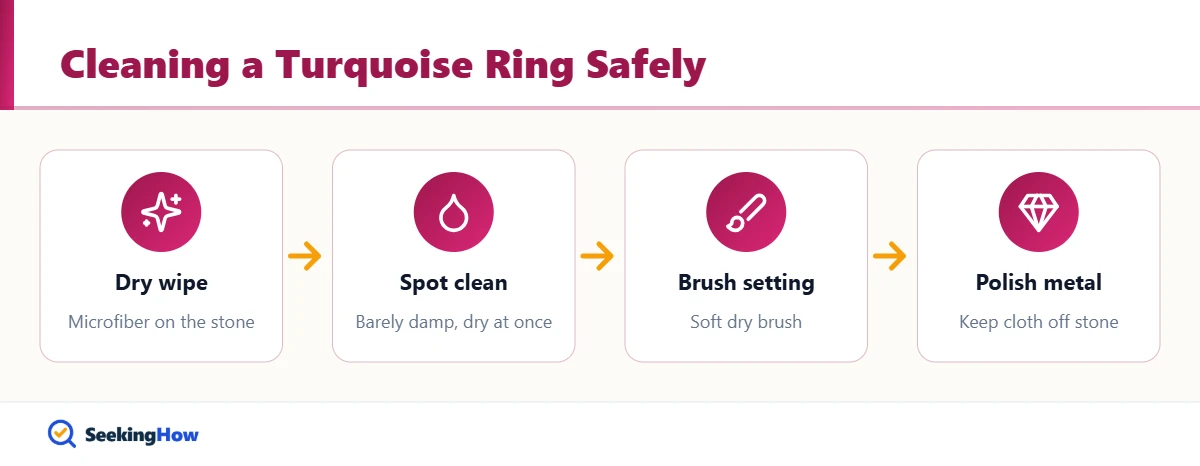
- Two clean, soft microfiber cloths
- Soft, dry toothbrush or makeup brush
- Distilled water (a few drops, for stubborn smudges)
- Silver polishing cloth or gold polishing cloth, matched to your setting
- Wooden toothpick (optional, for crevices)
- Painter’s tape (optional, to mask the stone while polishing)
How To Clean a Turquoise Ring Without Damaging It: Step-by-Step
Step 1: Wipe the Stone Dry
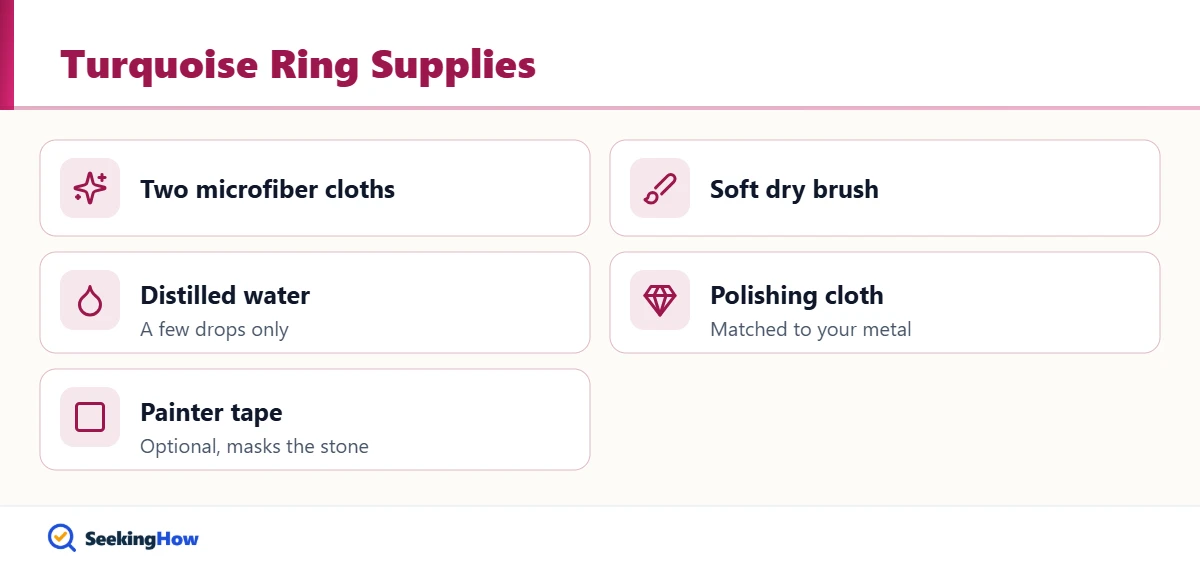
Gently rub the turquoise with a dry microfiber cloth to lift skin oil and dust. Dry wiping removes most everyday grime. Avoid paper towels, which can be surprisingly abrasive on a soft stone.
Step 2: Spot-Clean With a Barely Damp Cloth
For smudges that remain, dampen a corner of the second cloth with a few drops of distilled water, wring it nearly dry, and wipe the stone. Dry it immediately with the first cloth. The common mistake is rinsing the ring under a tap, which lets water and chlorine sink into the stone.
Step 3: Brush the Setting
Use a soft, dry brush to clear dust from the bezel, prongs, and any oxidized silver design work. A wooden toothpick can lift lint from tight corners. Never use metal tools near the stone edge, which chips easily.
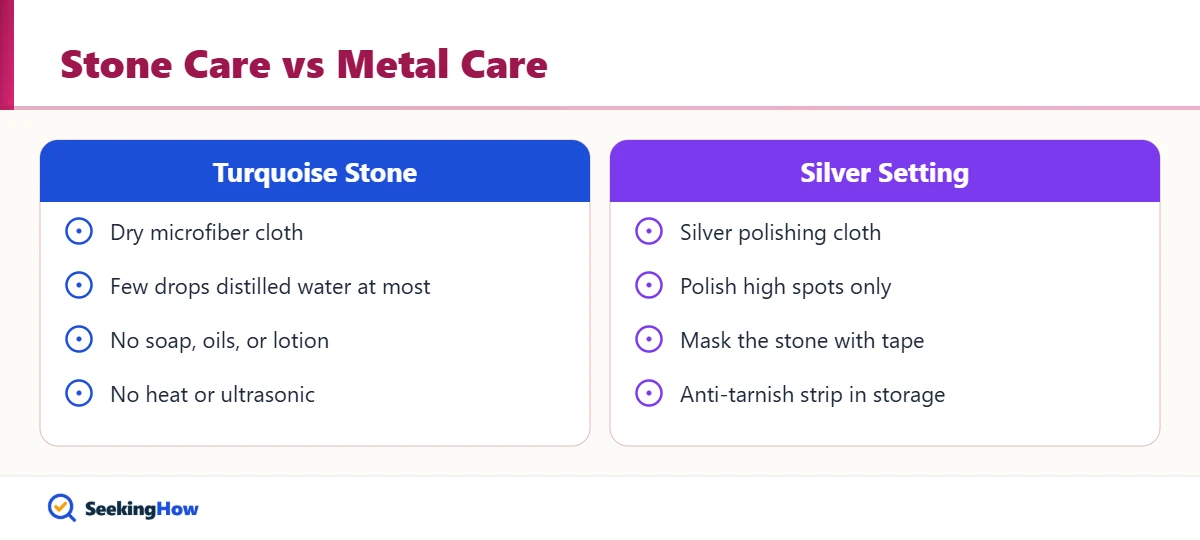
Step 4: Polish the Metal Only
Rub tarnished silver or gold with a polishing cloth, keeping it on the metal and off the turquoise. Polishing cloths contain compounds that can stain or dull the stone. In practice, wrapping the stone in painter’s tape first makes this much easier on small bezels.
Step 5: Air the Ring Before Storing
Leave the ring out for a few minutes so any moisture evaporates, then store it in a dry pouch away from sunlight. Store it separately from harder gems that could scratch it.
Bottom line: treat turquoise as a stone you dust, not wash, and polish the metal around it with a cloth that never touches the stone.
What Is Safe for Turquoise
| Method | Safe for turquoise? | Why |
|---|---|---|
| Dry microfiber cloth | Yes | Removes oil without moisture |
| Barely damp cloth, distilled water | Yes, briefly | Minimal moisture, dried at once |
| Soap and water soak | No | Porous stone absorbs residue |
| Silver dip or ammonia | No | Can discolor and etch the stone |
| Ultrasonic or steam cleaner | No | Heat and vibration crack or loosen stones |
If That Didn’t Work
Problem: The stone looks greenish or darker. Cause: It has absorbed oils, lotion, or sweat over time. Fix: This change is often permanent; ask a jeweler before attempting anything else.
Problem: Silver is black in the recesses. Cause: Intentional oxidation on many Southwestern designs. Fix: Polish only high spots; leave darkened recesses for contrast.
Problem: Stone looks dull or chalky. Cause: Wear on a natural, unstabilized stone or damaged resin. Fix: A jeweler or lapidary can assess repolishing.
Problem: Stone moves in the bezel. Cause: Loosened setting or worn adhesive. Fix: Stop wearing it and have a jeweler reset it.
Safety and When To Call a Pro
See a jeweler if the turquoise is cracked, loose, chipped, or separating from its backing, or if the bezel is lifting. A jeweler can also clean heavily tarnished silver with the stone protected. Never apply heat to dry the ring, as hair dryers and heaters can damage stabilizing resin.
Prevention Tips
- Put the ring on after lotion, perfume, and hairspray have dried.
- Take it off for handwashing, dishes, swimming, and showers.
- Wipe it with a dry cloth every time you take it off.
- Store sterling settings with an anti-tarnish strip.
Related Guides
- How to clean nickel silver safely
- How to clean tanzanite rings at home
- How to clean an opal ring without damage
Sources
- Gemological Institute of America (GIA) – turquoise description, treatments, and care
- American Gem Society – gemstone care guide
Frequently Asked Questions
Can turquoise get wet?
Turquoise can tolerate brief splashes, but it should not be soaked or worn in water regularly. The stone is porous, so water, chlorine, and soap can seep in and change its color over time. Take turquoise rings off for showers, swimming, and dishwashing.
Can I use silver polish on a turquoise ring?
You can use a silver polishing cloth on the metal, but keep it off the turquoise itself. Liquid silver dips and polish creams should not be used, because they can soak into and discolor the stone. Mask the stone with painter tape for small settings.
Why did my turquoise turn green?
Turquoise often turns greener as it absorbs skin oils, lotion, sweat, and other liquids over time. Natural, untreated stones are most prone to it. The change is usually permanent, which is why preventing contact with oils and water matters more than cleaning.
Can I clean turquoise with soap?
No, soap is not recommended for turquoise. Soap residue can enter the porous surface and dull or discolor the stone. A dry or barely damp microfiber cloth is enough for routine cleaning, and a jeweler can handle heavier cleaning safely.
Is stabilized turquoise easier to clean?
Stabilized turquoise is somewhat more durable because resin fills its pores, but it still should not be soaked or exposed to heat and solvents. Heat and chemicals can damage the resin. Use the same gentle dry-cloth method for stabilized and natural turquoise.
How do I clean a turquoise and silver ring that is very tarnished?
Polish the silver with a polishing cloth while keeping it off the stone, or take the ring to a jeweler. Heavy tarnish tempts people to use silver dip, which can ruin turquoise. A jeweler can protect the stone while restoring the metal.