Quick Answer
To clean the bottom of an iron with vinegar, unplug the iron and let it cool, then wipe the soleplate with a cloth soaked in warm white vinegar. For stubborn residue, rub a paste of equal parts vinegar and salt with a soft cloth, clear the steam vents with vinegar-dipped cotton swabs, and wipe clean. It takes about 15 minutes. Never use steel wool on nonstick or ceramic plates.
Key Takeaways
- White vinegar dissolves the mineral scale and light scorch film that build up on an iron’s soleplate.
- Always clean the soleplate with the iron unplugged and cool or barely warm.
- A vinegar and salt paste adds gentle scrubbing power for brown, sticky residue.
- Cotton swabs dipped in vinegar clear crusty steam vents without scratching the plate.
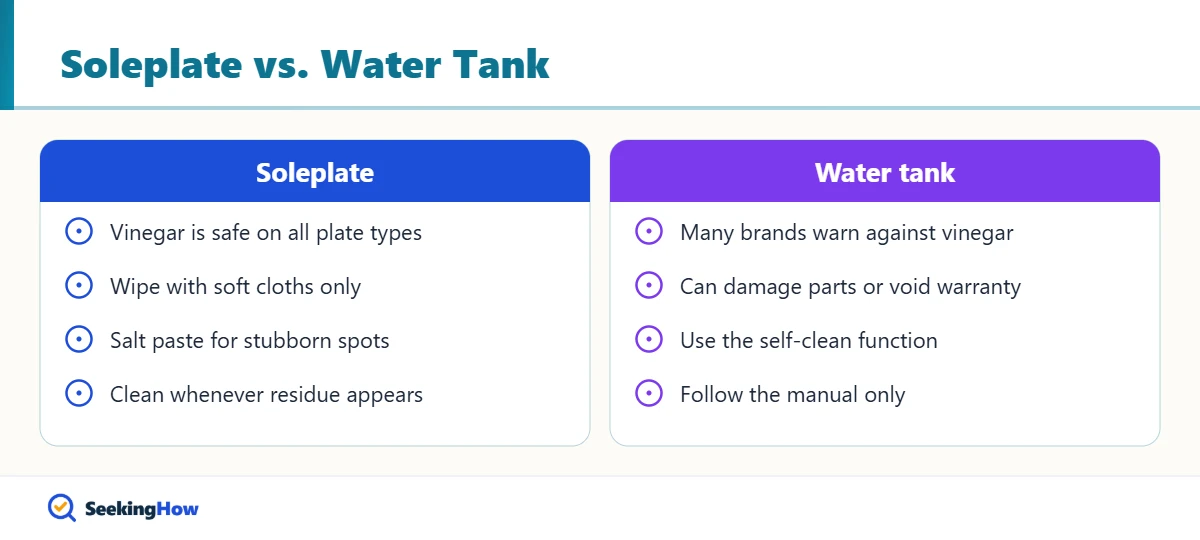
- Many iron makers warn against pouring vinegar into the water tank, so check your manual first.
A dirty soleplate drags on fabric, leaves brown streaks and can spit rusty flecks onto a white shirt. Knowing how to clean the bottom of an iron with vinegar fixes all three problems with a pantry staple and about 15 minutes of work. This method is safe for stainless steel, aluminum, nonstick and ceramic soleplates when you use soft cloths only.
What You’ll Need
- Distilled white vinegar (about 1/2 cup)
- Table salt (optional, for stubborn residue)
- Soft cotton cloths or microfiber cloths
- Cotton swabs
- Small microwave-safe bowl
- Old cotton towel or scrap fabric
- Distilled water for refilling the tank
How To Clean the Bottom of an Iron With Vinegar: Step-by-Step
Step 1: Unplug the Iron and Let It Cool
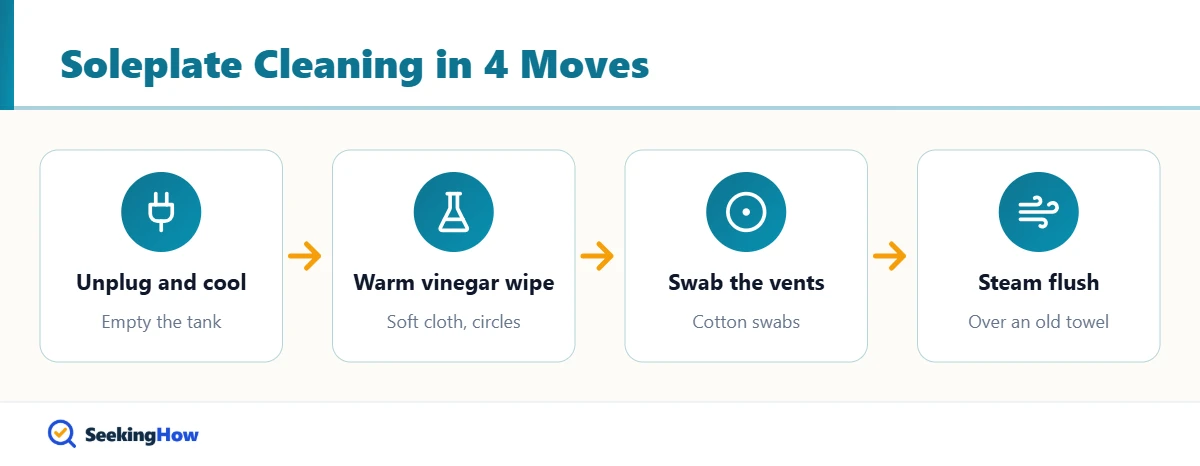
Unplug the iron and empty the water tank. Let it cool until the soleplate is warm at most, about 15 to 30 minutes. Cleaning a hot iron risks burns, and vinegar evaporates too fast to work.
Step 2: Warm the Vinegar
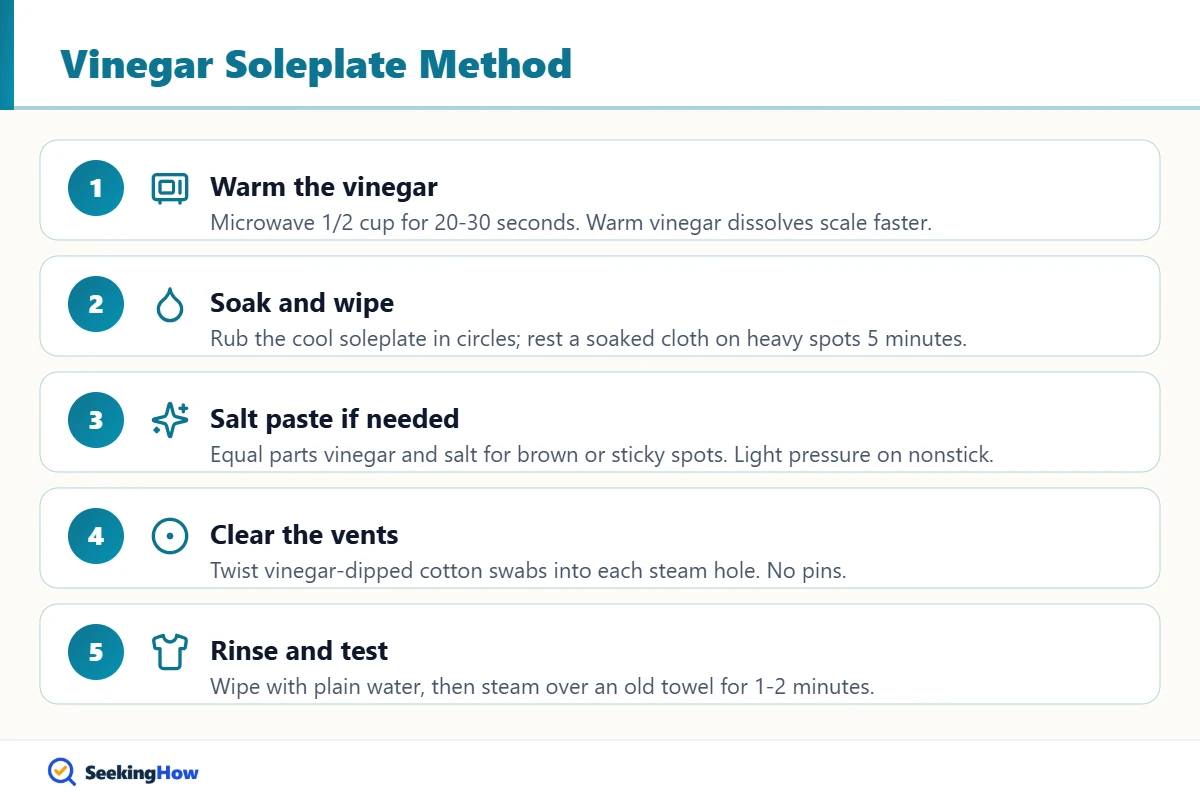
Microwave about 1/2 cup of white vinegar for 20 to 30 seconds until it is warm, not boiling. Warm vinegar dissolves scale faster than cold vinegar. Pour it into a shallow bowl. Any standard 5% white vinegar works; see white vinegar vs. distilled white vinegar.
Step 3: Wipe the Soleplate With Vinegar
Soak a soft cloth in the warm vinegar, wring it out lightly and rub the soleplate in small circles. Let a vinegar-soaked cloth rest on heavy spots for 5 minutes, with the iron lying on its side on a towel. Most light film comes off at this step.
Step 4: Use a Vinegar and Salt Paste for Stubborn Residue
Mix equal parts vinegar and table salt and rub it onto brown or sticky spots with a soft cloth. The salt provides mild abrasion without scratching most plates. On nonstick or ceramic soleplates, use light pressure and skip the salt if the coating looks worn.
Step 5: Clean the Steam Vents
Dip a cotton swab in vinegar and twist it into each steam hole to loosen white or brown crust. Replace swabs as they get dirty. Do not use pins or toothpicks, which can scratch or break off inside the holes.
Step 6: Wipe Clean and Test on an Old Towel
Wipe the soleplate with a cloth dampened in plain water, then dry it. Refill the tank with distilled or the water type your manual recommends, heat the iron and press it over an old towel with steam on for 1 to 2 minutes. This flushes loosened grit out of the vents before it reaches your clothes.
Bottom line: wipe with warm vinegar first, add salt only for stubborn spots, and always test on an old towel before ironing clothes.
Should You Put Vinegar in the Iron’s Water Tank?
Only if your manual says it is allowed. Several major iron brands warn that vinegar and descaling products can damage internal parts and void the warranty. If your iron has a self-clean or anti-calc function, use that with water instead. In practice, the safest default is to clean the soleplate with vinegar but descale the tank only as the manufacturer directs.
| Soleplate problem | Vinegar method | Time | Safe on nonstick? |
|---|---|---|---|
| White mineral spots | Warm vinegar wipe | 5 minutes | Yes |
| Brown scorch film | Vinegar-soaked cloth rest, then wipe | 10 minutes | Yes |
| Sticky melted residue | Vinegar and salt paste | 10 to 15 minutes | Gently, light pressure |
| Clogged steam vents | Vinegar cotton swabs plus steam flush | 10 minutes | Yes |
If That Didn’t Work
Problem: Melted polyester or plastic is stuck to the plate. Cause: Ironing synthetics too hot. Fix: Heat the iron to low, unplug it, and gently push the softened residue off with a wooden spatula, then repeat the vinegar wipe. Our guide to removing sticky residue has more options.
Problem: The iron still spits brown water. Cause: Scale inside the tank and steam chamber. Fix: Run the self-clean function per the manual, or contact the manufacturer for an approved descaler.
Problem: The soleplate smells like vinegar. Cause: Residue left on the plate. Fix: Wipe again with plain water and steam over an old towel for 2 minutes.
Problem: The nonstick coating looks scratched or peeling. Cause: Abrasive pads or age. Fix: Stop scrubbing; consider replacing the iron, because a damaged coating snags fabric.
Safety and When To Replace
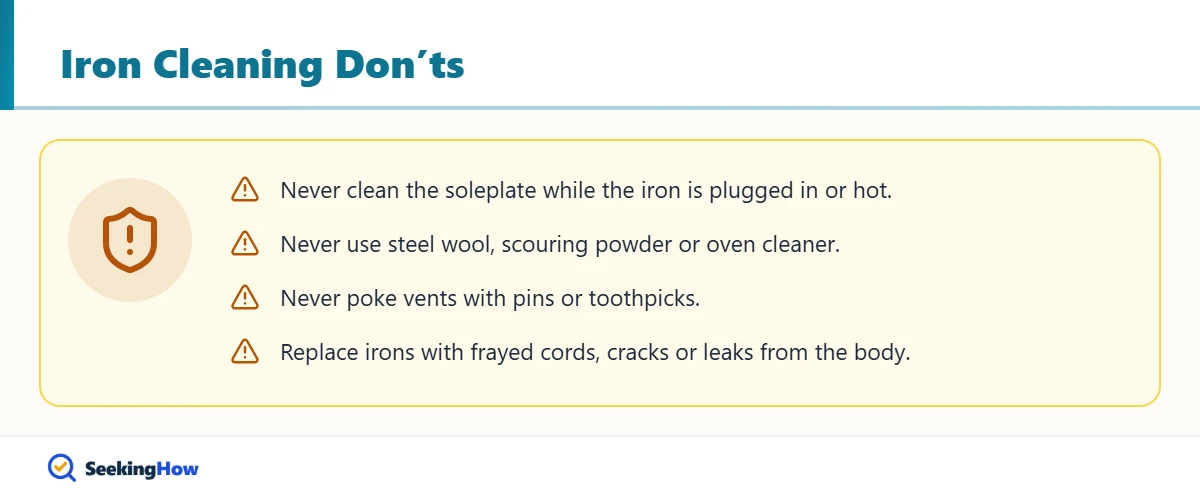
Always unplug the iron before cleaning and never immerse it in water or vinegar. Avoid steel wool, scouring powders and oven cleaner on any soleplate; they scratch metal and destroy coatings. Keep the cord away from the vinegar bowl.
Replace the iron if the cord is frayed, the plug is scorched, it trips your outlet, leaks water from the body, or the soleplate is cracked. These problems cannot be fixed with cleaning and can create shock or burn hazards.
Prevention Tips
- Use the water type your manual recommends, often distilled or a tap and distilled mix.
- Empty the tank after each use so minerals do not settle.
- Iron synthetics on low heat and use a pressing cloth for delicate fabrics.
- Wipe the cool soleplate with a damp cloth once a week if you iron often.
Related Guides
- 20 genius vinegar uses around the house
- White vinegar vs. distilled white vinegar
- How to remove sticky residue
- How to clean a toaster inside
Sources
- U.S. Consumer Product Safety Commission: electrical appliance safety (cpsc.gov)
- Rowenta: steam iron care and maintenance support (rowenta.com)
- American Cleaning Institute: laundry and household cleaning guidance (cleaninginstitute.org)
Frequently Asked Questions
Can vinegar damage the bottom of an iron?
No, white vinegar wiped on with a soft cloth is safe for stainless steel, aluminum, nonstick and ceramic soleplates. Rinse it off with a damp cloth afterward. Damage comes from abrasive scrubbers or harsh cleaners, not from vinegar itself. The water tank is different, so check the manual before adding vinegar there.
How do you get brown stuff off the bottom of an iron?
Brown residue is usually scorched starch, fabric finish or minerals. Rest a cloth soaked in warm vinegar on it for 5 minutes, then rub with an equal-parts vinegar and salt paste. Clean the vents with vinegar-dipped swabs and steam over an old towel to finish.
Can I put vinegar in my iron to clean it?
Only if your manual allows it. Many iron makers warn that vinegar in the water tank can damage internal parts and void the warranty. Use the built-in self-clean or anti-calc function with water instead, and reserve vinegar for wiping the outside of the soleplate.
Does baking soda or vinegar work better on an iron?
Vinegar works better on mineral scale and light film, while baking soda paste is good for sticky burnt residue. Many people use vinegar first, then a baking soda paste for anything left. Rinse thoroughly with a damp cloth and steam over an old towel before ironing clothes.
How often should I clean the bottom of my iron?
Clean the soleplate whenever you see spots, feel drag or notice marks on fabric. Frequent ironers benefit from a quick damp-cloth wipe weekly and a vinegar cleaning once a month. Using recommended water and emptying the tank after use slows buildup.
How do you clean a nonstick iron soleplate?
Use a soft cloth with warm vinegar or mild dish soap and water, applying light pressure. Skip salt scrubs if the coating looks worn, and never use steel wool or scouring pads. Wipe with plain water and dry. Replace the iron if the coating is peeling.