
Quick Answer
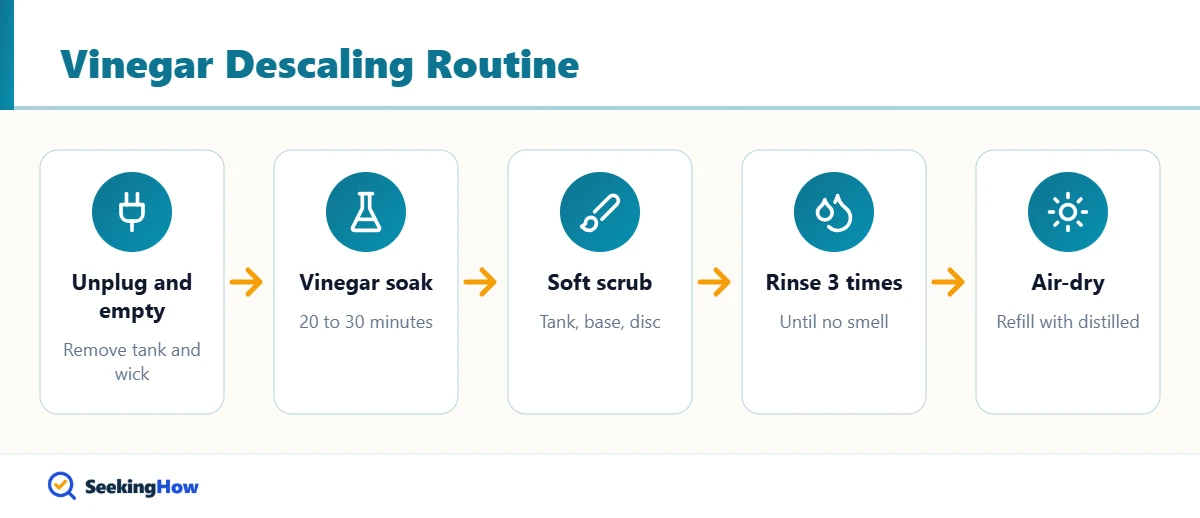
To clean a cool mist humidifier with vinegar, unplug it, empty the tank, then fill the tank and base with undiluted white vinegar and let them soak for 20 to 30 minutes. Scrub mineral scale with a soft brush, rinse with fresh water until the smell is gone and air-dry. Never mix vinegar with bleach, and never soak a wick filter in vinegar.
Key Takeaways
- White vinegar’s acetic acid dissolves the white mineral scale that builds up in humidifier tanks and bases.
- A 20 to 30 minute vinegar soak loosens most scale; heavy buildup may need up to an hour.
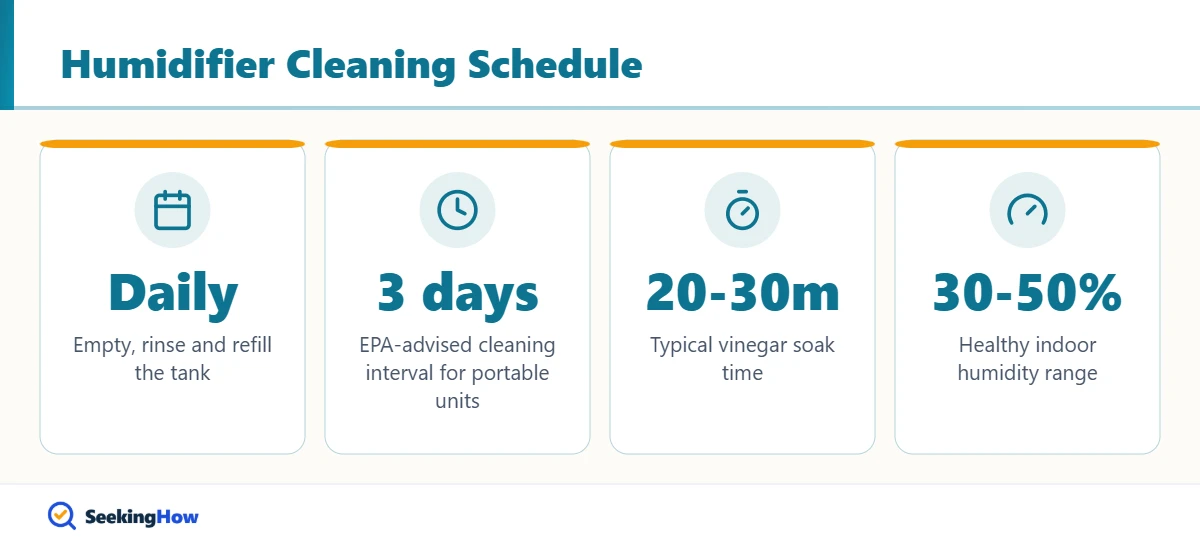
- The U.S. EPA advises emptying portable humidifier tanks daily and cleaning them every third day.
- Rinse until no vinegar smell remains, or the first hours of mist will smell sour.
- Vinegar and bleach must never be mixed or used back to back without rinsing, because they release chlorine gas.
A dirty humidifier can blow mineral dust and microbes into the air you breathe. Knowing how to clean a cool mist humidifier with vinegar keeps an ultrasonic or evaporative unit running quietly and keeps the mist clean, and it costs less than a dollar per cleaning. This method works for most brands, including Vicks, Honeywell, Pure Enrichment, Levoit and Crane. For brand-specific steps, see how to clean a Honeywell humidifier.
What You’ll Need
- Distilled white vinegar (about 2 to 4 cups depending on tank size)
- Soft bottle brush and an old soft toothbrush
- Clean microfiber cloth
- Cotton swabs for small openings
- Distilled or demineralized water for refilling (recommended)
- Replacement wick filter (evaporative models, if the old one is hard or discolored)
- Hydrogen peroxide 3% or diluted bleach for disinfecting (optional, used separately)
How To Clean a Cool Mist Humidifier With Vinegar: Step-by-Step
Step 1: Unplug and Disassemble
Turn off and unplug the humidifier. Remove the water tank, mist nozzle, any cap or valve and the filter or wick if your model has one. Dump all remaining water; standing water is where bacteria and mold grow.
Step 2: Set the Wick Filter Aside
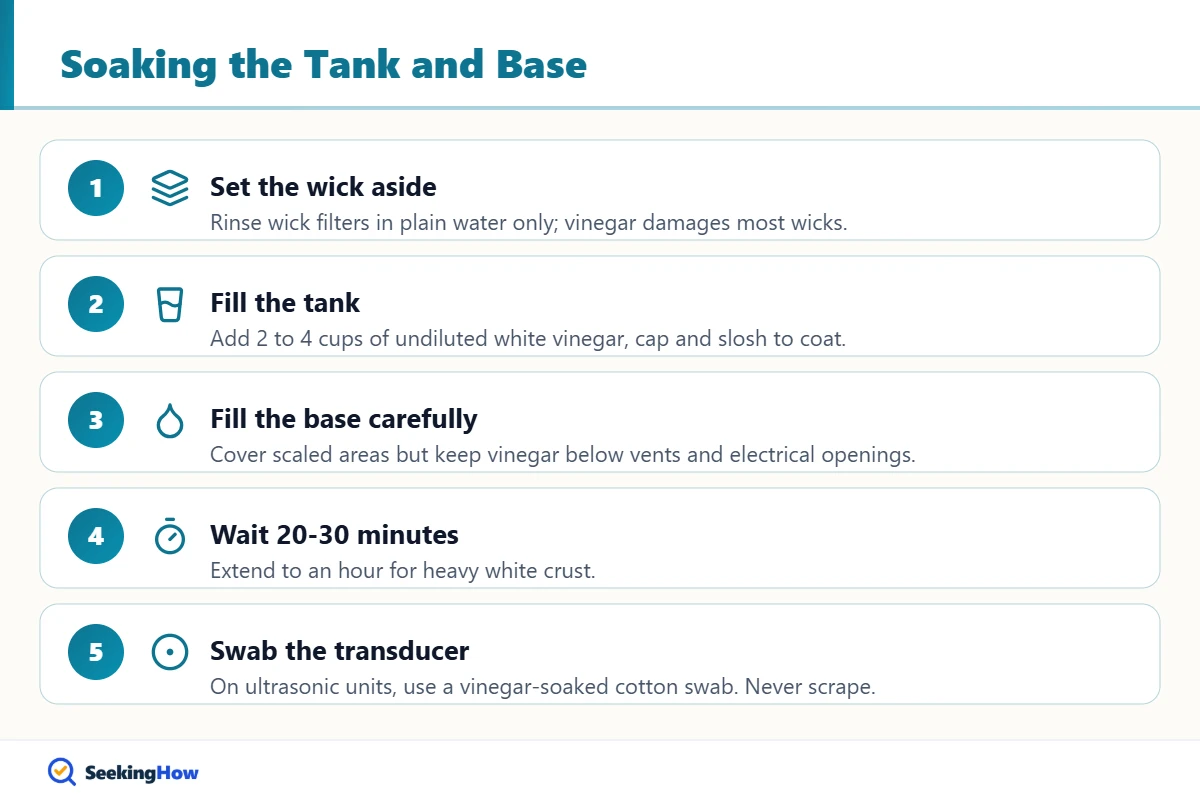
Evaporative cool mist models use a paper or foam wick. Most manufacturers say to rinse wicks in cool water only, because vinegar and cleaners damage the fibers or coating. If the wick is stiff, crusty or discolored, replace it instead.
Step 3: Soak the Tank With Vinegar
Pour 2 to 4 cups of undiluted white vinegar into the tank, cap it and slosh it around so every surface gets coated. Let it sit 20 to 30 minutes, turning the tank occasionally. For thick scale, extend the soak to an hour.
Step 4: Soak the Base and Reservoir
Pour enough vinegar into the base to cover the scaled area, but keep it below any vents or electrical openings. Let it sit 20 to 30 minutes. On ultrasonic models, this covers the small round transducer disc where scale reduces mist output.
Step 5: Scrub the Scale Gently
Scrub the tank with a bottle brush and the base with a soft toothbrush. Use a cotton swab dipped in vinegar on the ultrasonic transducer; never scrape it with metal or hard objects, which can crack it. Clean the mist nozzle and float, too.
Step 6: Rinse Thoroughly
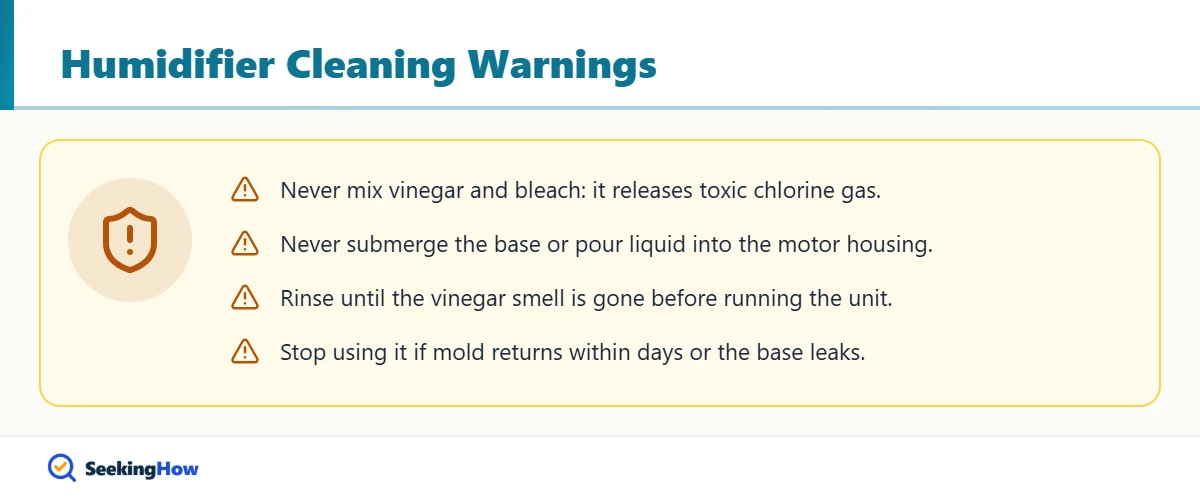
Rinse the tank and base several times with fresh water until you can no longer smell vinegar. Most people find three rinses are needed. Do not submerge the base or let water run into the motor housing.
Step 7: Air-Dry and Reassemble
Let all parts air-dry on a towel, then reassemble. Refill with distilled water for the fewest mineral deposits and white dust. If you are shopping for both, here is the difference between white vinegar and distilled white vinegar. Run the unit and check that mist output is back to normal.
Bottom line: soak with vinegar to remove scale weekly, rinse well, and use a separate disinfecting step only when mold or slime appears.
Do You Also Need To Disinfect?
Vinegar removes minerals well but is not a registered disinfectant. If you see pink slime, black spots or a musty odor, disinfect after the vinegar rinse with 3% hydrogen peroxide or a solution of 1 teaspoon of bleach per gallon of water, following your manual. Let it sit about 20 minutes, then rinse many times. Always rinse vinegar out completely before using bleach.
| Task | Solution | How often | Purpose |
|---|---|---|---|
| Empty, rinse, refill | Fresh water | Daily | Prevent microbial growth |
| Descale tank and base | Undiluted white vinegar | Every 3 days to weekly | Remove mineral scale |
| Disinfect | 3% hydrogen peroxide or dilute bleach | Weekly or when slime appears | Kill bacteria and mold |
| Replace wick filter | New filter | Per manual, often every 1 to 3 months | Restore output, prevent odor |
If That Didn’t Work
Problem: White crust will not come off. Cause: Thick calcium deposits from hard water. Fix: Soak for an hour or overnight in the tank only, then scrub; switch to distilled water.
Problem: Mist smells like vinegar. Cause: Incomplete rinsing. Fix: Empty, rinse three more times and run with fresh water for 30 minutes in a ventilated room.
Problem: Mist output is still low. Cause: Scale on the ultrasonic transducer or a clogged wick. Fix: Clean the disc again with a vinegar-soaked swab, or replace the wick.
Problem: White dust settles on furniture. Cause: Minerals from tap water in ultrasonic mist. Fix: Use distilled water or a demineralization cartridge if your model accepts one.
Safety and When To Call a Pro
Never mix vinegar with bleach; the combination releases toxic chlorine gas. Do not add vinegar, essential oils or cleaners to the water while the humidifier is running unless the manual specifically allows it, because they can damage parts and irritate lungs.
Stop using the humidifier and contact the manufacturer if the base leaks, the unit sparks, smells of burning, or mold returns within days of cleaning. Talk to a doctor if anyone in the home develops coughing, wheezing or flu-like symptoms that improve when the humidifier is off, which can signal a reaction to contaminated mist.
Prevention Tips
- Empty and refill the tank with fresh water every day.
- Use distilled or demineralized water to cut scale and white dust.
- Keep indoor humidity between 30% and 50% and check it with a hygrometer.
- Dry all parts completely before storing the humidifier for the season.
Related Guides
- How to clean a Honeywell humidifier
- Vinegar uses around the house
- White vinegar vs. distilled white vinegar
- Why vinegar and baking soda react
Sources
- U.S. EPA: use and care of home humidifiers and indoor air quality (epa.gov)
- U.S. Consumer Product Safety Commission: dirty humidifiers and health (cpsc.gov)
- Mayo Clinic: humidifiers and health, keeping them clean (mayoclinic.org)
Frequently Asked Questions
How long should vinegar sit in a humidifier?
Let white vinegar sit in the tank and base for 20 to 30 minutes for routine descaling. For heavy white crust, extend the soak to an hour, or overnight in the tank only. Then scrub with a soft brush and rinse until the vinegar smell is completely gone.
Can I run vinegar through my humidifier to clean it?
No, do not run the humidifier with vinegar in it unless your manual specifically allows it. Misting vinegar can irritate eyes and lungs and may damage internal parts. Soak the tank and base with the unit unplugged, then rinse thoroughly before running fresh water.
Should vinegar be diluted to clean a humidifier?
Undiluted white vinegar works best on mineral scale. Diluting it slows the descaling and usually requires longer soaking. Use full-strength vinegar for the soak, then rely on several fresh-water rinses to remove any lingering smell or residue.
Does vinegar kill mold in a humidifier?
Vinegar can reduce some mold and bacteria, but it is not a registered disinfectant and does not reliably kill everything. If you see slime or black spots, rinse out the vinegar and disinfect with 3% hydrogen peroxide or dilute bleach as your manual directs, then rinse many times.
How often should you clean a cool mist humidifier?
Empty and refill the tank daily and clean the tank and base every third day, as the EPA recommends for portable humidifiers. Many people do the vinegar descale weekly and a disinfecting step weekly or whenever slime appears. Hard water calls for more frequent descaling.
Can you clean a humidifier wick filter with vinegar?
Most manufacturers say no. Wick filters are designed to be rinsed in cool water only, and vinegar can break down the fibers or remove antimicrobial coatings. If a wick is hard, crusty, discolored or smelly, replace it rather than soaking it.
Why does my humidifier leave white dust?
White dust comes from minerals in tap water that ultrasonic humidifiers turn into fine particles. Using distilled or demineralized water largely prevents it. Some models accept a demineralization cartridge. Regular vinegar descaling also helps the unit run efficiently.