Quick Answer
To block a bunk bed ladder, remove it if it hooks on, or cover the bottom 3-4 rungs with a smooth panel of 1/4-inch plywood or acrylic held by hook-and-loop straps or zip ties. The panel must leave no footholds, have no loose cords, and be removable in seconds so older kids can still get down quickly.
Key Takeaways
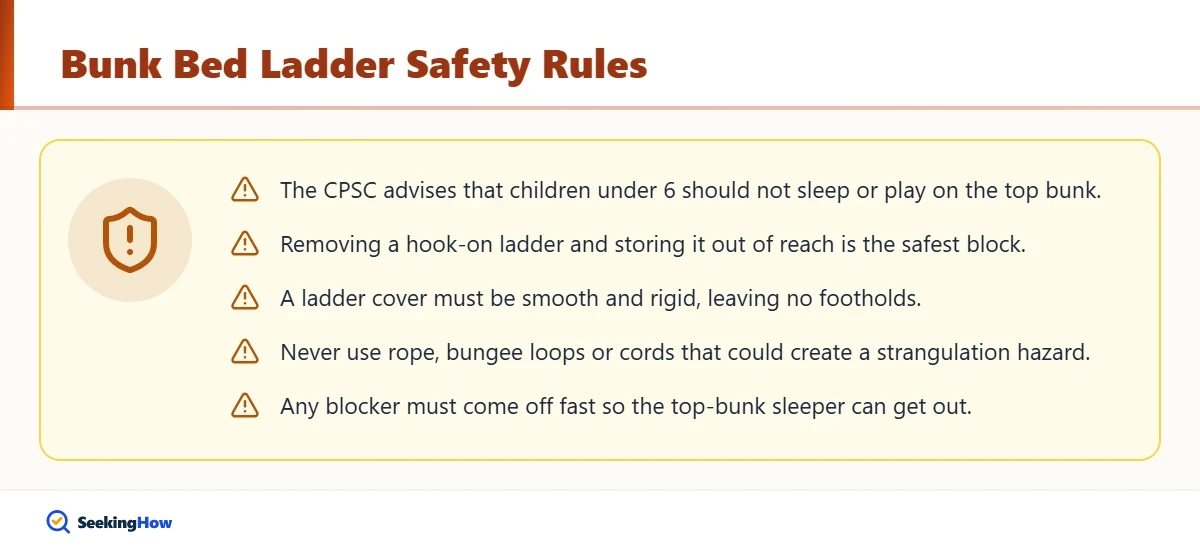
- The U.S. Consumer Product Safety Commission (CPSC) advises that children under 6 should not sleep or play on the top bunk.
- The safest block is removing a hook-on ladder and storing it out of reach.
- A fixed ladder can be covered with a smooth, rigid panel that removes every foothold.
- Never use rope, bungee loops or cords that could create a strangulation hazard.
- Any blocker must come off fast so the top-bunk sleeper can exit in an emergency.
A bunk bed ladder is an open invitation to toddlers and younger siblings. Blocking it keeps little climbers on the ground while still letting the older child use the top bunk. Below are the methods that actually work, how to build a simple ladder cover, and the safety rules that matter most.
Why Should You Block a Bunk Bed Ladder?
Falls from bunk beds send thousands of children to emergency rooms in the U.S. each year, and the youngest kids are the most likely to be hurt. Toddlers love to climb but lack the balance and judgment to get down safely or stay put near a top-bunk edge.
The CPSC and the American Academy of Pediatrics both recommend keeping children under 6 off the top bunk. If you have a toddler in the house and an older child up top, a ladder block is the practical way to enforce that rule when you are not in the room.
Blocking the ladder is only one layer of protection. The top bunk should also have guardrails on both long sides, and openings in those rails should be 3.5 inches or less so a child cannot slip through or become trapped.
What Are the Best Ways to Block a Bunk Bed Ladder?
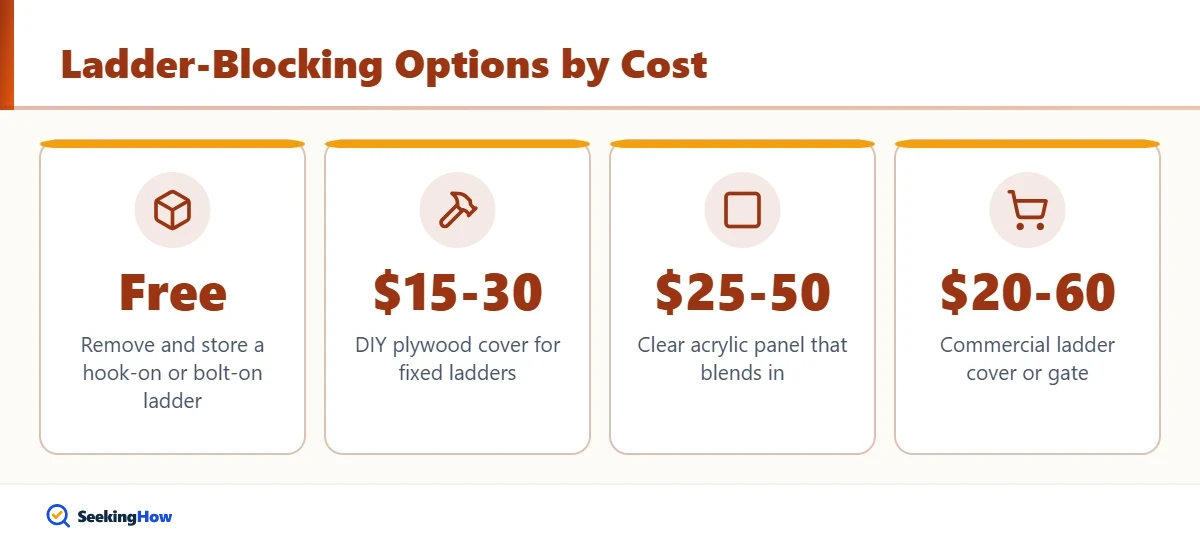
The right method depends on whether your ladder hooks on, bolts to the frame, or is built into the end panel. Use this table to choose.
| Method | Best for | Cost | Pros | Cons |
|---|---|---|---|---|
| Remove and store the ladder | Hook-on or bolt-on ladders | Free | Eliminates the climb completely | Must be reattached every night |
| Plywood ladder cover | Fixed or vertical ladders | $15-$30 | Sturdy, paintable, cheap | Takes an hour to build |
| Clear acrylic panel | Shared rooms where looks matter | $25-$50 | Blends in, easy to wipe | Can scratch or crack if kicked hard |
| Commercial ladder cover or gate | Parents who want a ready-made fix | $20-$60 | No tools needed | Fit varies by ladder width |
| Rotate the bed so the ladder faces a wall gap | Rooms with flexible layouts | Free | No hardware | Rarely possible with built-in ladders |
Remove the Ladder Entirely
Many bunk beds use a ladder that hooks over the side rail or attaches with two bolts. Lift or unbolt it during the day and store it in a closet or under the bottom bunk with the rungs facing the floor. Reattach it at bedtime, after the toddler is asleep or out of the room.
Cover the Bottom Rungs
For ladders built into the frame, the most reliable block is a smooth panel that covers the bottom three or four rungs. A toddler needs a foothold within about 18-24 inches of the floor to start climbing, so removing those lower footholds stops most attempts.
Use a Commercial Ladder Cover
Fabric-and-board ladder covers and small bunk-bed ladder gates are sold for exactly this job. Measure your ladder width and rung spacing before buying, and choose one that attaches with straps or clamps rather than loose ties.
Rearrange the Room
If the ladder is detachable and the bed has a second mounting point, move the ladder to the side that sits in a narrow corner or against a dresser that blocks access. Never place furniture where it gives a toddler a new step up to the bunk.
How Do You Make a DIY Bunk Bed Ladder Cover?
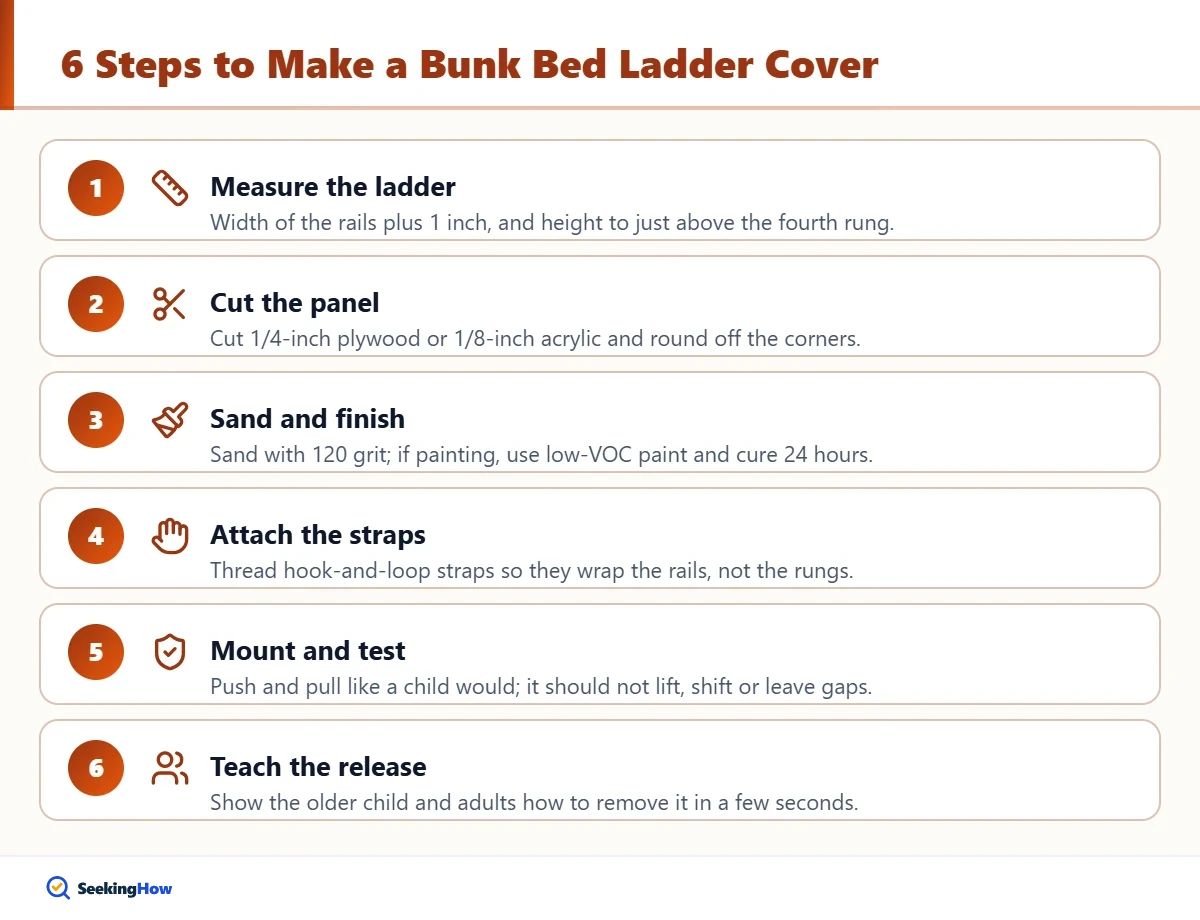
A plywood cover is cheap, strong, and takes about an hour. You need a sheet of 1/4-inch plywood or 1/8-inch acrylic, a tape measure, a jigsaw or a store cut, sandpaper (120 grit), heavy-duty hook-and-loop straps or UV-rated zip ties, and child-safe paint if you want a finish.
Step 1: Measure the Ladder
Measure the outside width of the ladder rails and the height from the floor to just above the fourth rung. Add 1 inch to the width so the panel overlaps the rails slightly. Most bunk ladders are 12-16 inches wide.
Step 2: Cut the Panel
Cut the plywood or acrylic to size, or have the home center cut it for you. Round the corners with a jigsaw or sand them to a smooth radius so there are no sharp points at a toddler’s face height.
Step 3: Sand and Finish
Sand every edge and both faces with 120-grit sandpaper until there are no splinters. If you paint it, use a low-VOC, water-based paint and let it cure for at least 24 hours before installing.
Step 4: Attach the Straps
Drill small holes near each edge, two per side, and thread hook-and-loop straps through them. Position the straps so they wrap around the ladder rails, not the rungs, which keeps the panel from sliding down.
Step 5: Mount and Test
Strap the panel to the ladder so it sits flush and covers every lower rung. Push and pull on it from the bottom the way a child would. It should not lift, shift, or leave a gap big enough for a toe.
Step 6: Teach the Release
Show your older child and any adult in the house how to remove the cover in a few seconds. Practice once so everyone knows the panel is not a trap in case of fire or illness at night.
Which Ladder-Blocking Ideas Are Unsafe?
Some popular hacks create new hazards. Avoid these:
- Ropes, bungee cords or ribbons strung across the rungs. Loops and dangling ends are a strangulation risk for young children.
- Pressure-mounted baby gates jammed against the ladder. They are not designed for this, can pop loose, and some give toddlers a new foothold.
- Padlocked or screwed-on covers that need tools to remove. The top-bunk sleeper must be able to get out quickly.
- Plastic bins or boxes stacked in front of the ladder. Kids climb them, which makes the problem worse.
- Thin cardboard or poster board. It bends, tears, and teaches a toddler that the barrier is a toy.
Safety: If a child is old enough to remove the ladder cover, the cover has done its job and it is time to rely on supervision and house rules. Never leave a young child alone in a room where the only thing between them and the top bunk is a removable barrier.
How Do You Make the Whole Bunk Bed Safer?
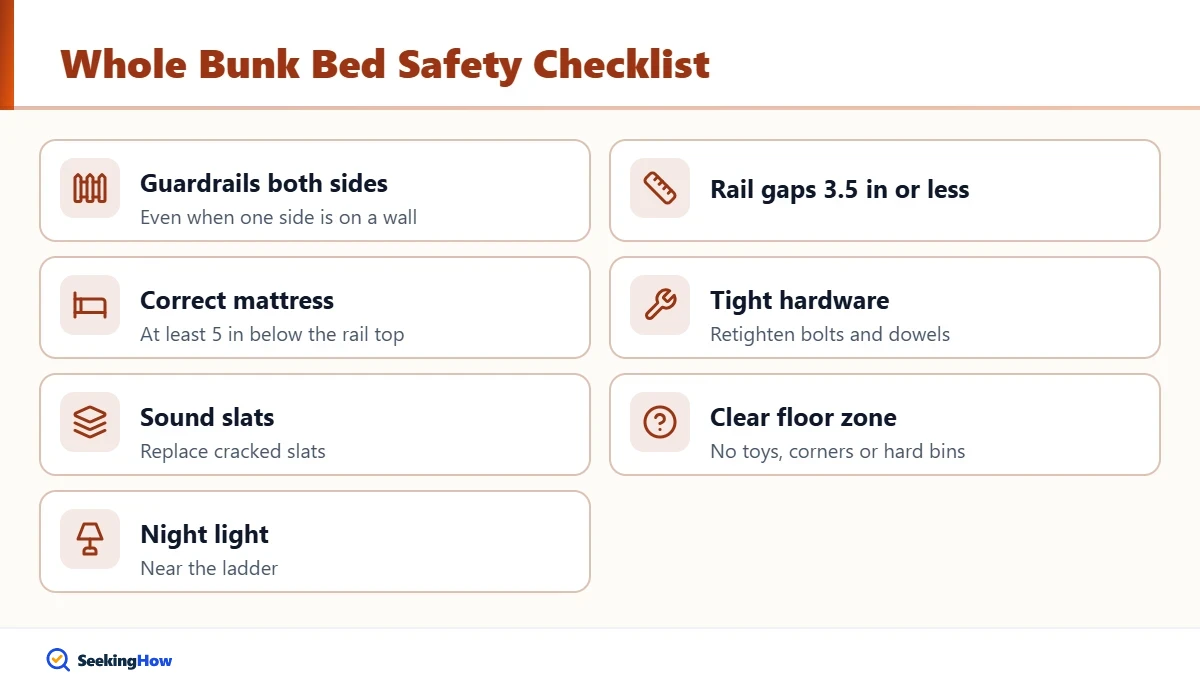
Blocking the ladder works best as part of a full safety setup. Check these points every few months, especially after moving the bed.
- Guardrails on both sides of the top bunk, even when one side is against a wall, because kids can slip into the gap between bed and wall.
- Correct mattress size and thickness. The top of the mattress should sit at least 5 inches below the top of the guardrail. Most bunk manufacturers list a maximum mattress thickness, often 6-8 inches.
- Tight hardware. Retighten bolts and cross dowels so the frame does not rack or sway. If a bolt head is stripped, see our guide on removing a stripped Allen screw before replacing it.
- Sound slats. A cracked slat on the top bunk can drop a child onto the sleeper below. Learn how to fix a broken bed slat quickly and safely.
- Clear floor zone. Keep the area around the bed free of toys, furniture corners and hard storage bins.
- Night light near the ladder so the older child can see the rungs at night.
Furniture tip-over is a related risk in kids’ rooms. Dressers and tall shelves near a bunk bed should be anchored to the wall, and our guide on stabilizing a bookshelf without drilling covers renter-friendly options.
Common Mistakes When Blocking a Bunk Bed Ladder
- Covering only one or two rungs. Toddlers can reach the third rung from the floor. Cover up to roughly 24 inches.
- Leaving gaps at the sides. A panel narrower than the rails leaves toeholds on the outer edges.
- Strapping around the rungs. The panel slides down over time. Strap around the rails.
- Forgetting to recheck. Hook-and-loop straps loosen. Test the panel weekly.
- Relying on the block alone. Pair it with a clear rule: the top bunk is off-limits for little siblings.
When Should You Replace the Bunk Bed Instead?
If the bunk bed has missing guardrails, a cracked frame, a ladder that wobbles at the mounting points, or was made before current U.S. federal bunk bed standards took effect in 2000, consider replacing it or separating the beds. Many bunk beds can be converted to two twin beds, which removes the ladder problem entirely while a toddler is in the house.
Tip: Check the CPSC recall database for your bunk bed brand and model. Recalled beds often come with a free repair kit or refund from the manufacturer.
Frequently Asked Questions
At what age can a child sleep on the top bunk?
The CPSC and the American Academy of Pediatrics recommend that children under 6 should not sleep on the top bunk. Even older children should be mature enough to follow rules about climbing and horseplay, and the bunk should have guardrails on both sides.
Can I use a baby gate to block a bunk bed ladder?
A standard pressure-mounted baby gate is not designed for a ladder and can pop loose or give a toddler a foothold. Use a rigid panel strapped to the ladder rails, a commercial ladder cover sized for bunk beds, or simply remove a detachable ladder.
How high should a bunk bed ladder cover go?
Cover the ladder from the floor to just above the third or fourth rung, roughly 18 to 24 inches. That removes the footholds a toddler can reach from the floor while leaving upper rungs free for an adult to reach if needed.
Is it safe to tie the bunk bed ladder with rope?
No. Rope, cords, ribbons and bungee loops can create a strangulation hazard for young children. Use flat hook-and-loop straps or zip ties trimmed flush, and attach a rigid panel instead of stringing anything across the rungs.
Should the top bunk have guardrails on both sides?
Yes. Guardrails on both long sides prevent falls and stop a child from slipping into the gap between the bed and the wall. Openings in the rails should be 3.5 inches or less, and the rail should rise at least 5 inches above the mattress.