Quick Answer
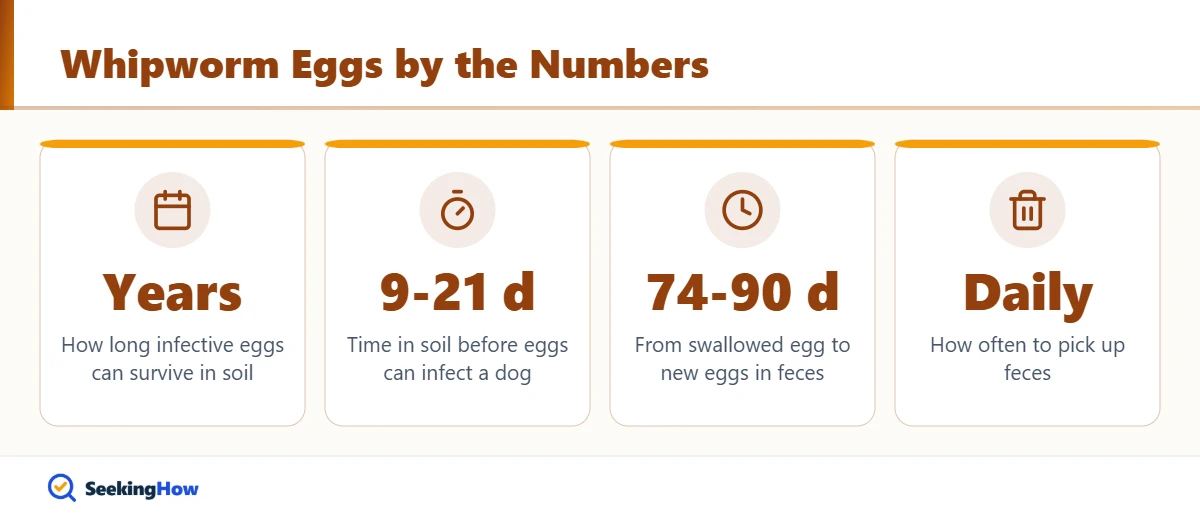
Whipworm eggs can live in soil for several years, and the Companion Animal Parasite Council (CAPC) notes they resist drying, temperature extremes and UV light. Eggs need about 9 to 21 days in soil before they can infect a dog, so picking up feces daily, treating every dog with a vet-prescribed dewormer, and retesting are the only reliable controls.
Key Takeaways
- Whipworm (Trichuris vulpis) eggs can stay infective in soil for years under cool, moist, shaded conditions.
- Fresh eggs are not infective; they need roughly 9 to 21 days in soil to develop, longer in cold weather.
- Daily poop pickup removes eggs before they become infective and is the single best yard control.
- No lawn spray or household disinfectant reliably kills whipworm eggs in soil.
- Reinfected dogs take about 74 to 90 days to shed eggs again, which is why vets often repeat treatment monthly for 3 months.
If your dog was just diagnosed, the next question is usually how long do whipworm eggs live in soil and whether the yard will keep reinfecting your pet. The short version is that the eggs are among the toughest parasite stages a dog owner deals with, so the plan focuses on stopping new contamination and protecting the dog while old eggs die off.
How Long Do Whipworm Eggs Live in Soil? The Timeline
Whipworm eggs survive for years, not weeks. According to CAPC, infective eggs can remain viable in the environment for many years, and they hold up against drying, heat, cold and sunlight better than most worm eggs. In practice, shaded, damp, clay-heavy ground or areas under decks and bushes hold eggs the longest, while hot, sunny, fast-draining sand is less hospitable but still not safe.
| Stage | Typical timing | What it means for you |
|---|---|---|
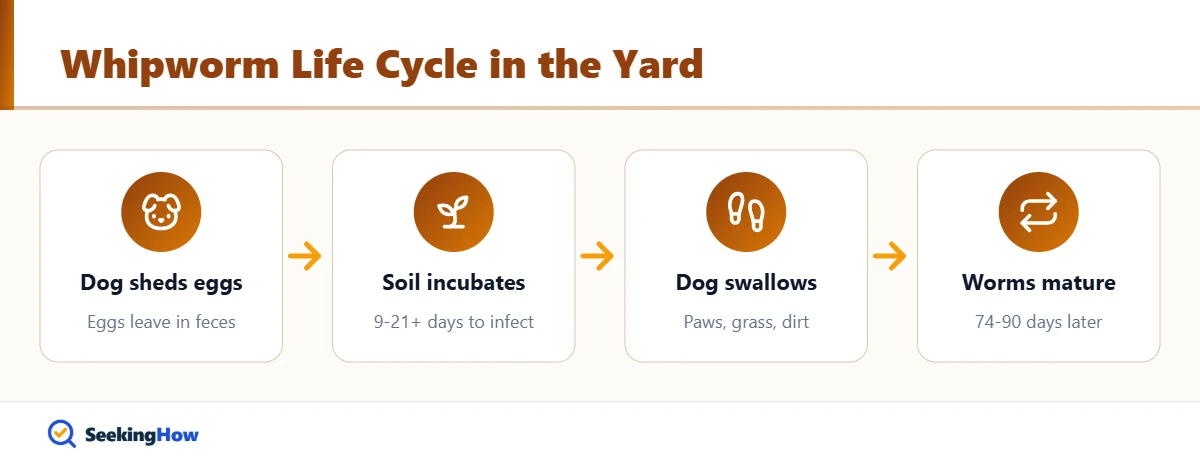
| Egg passed in feces | Day 0 | Not yet infective; removing poop now prevents risk |
| Egg embryonates in soil | About 9 to 21 days or longer | Becomes infective; faster in warm, moist soil |
| Infective egg in soil | Months to several years | Dogs pick it up by licking paws, eating grass or dirt |
| Swallowed egg to adult worm shedding eggs | About 74 to 90 days | A reinfected dog may test negative for nearly 3 months |
What You’ll Need
- Poop bags or a long-handled pooper scooper
- Disposable gloves
- Lidded trash can for sealed waste
- Vet-prescribed dewormer or monthly preventive with whipworm activity
- Fecal test appointments with your veterinarian
- Gravel, pavers or concrete for a dedicated potty area (optional)
- Fresh topsoil and sod for heavily used dirt patches (optional)
How To Reduce Whipworm Eggs in Soil: Step-by-Step
Step 1: Treat Every Dog in the Household
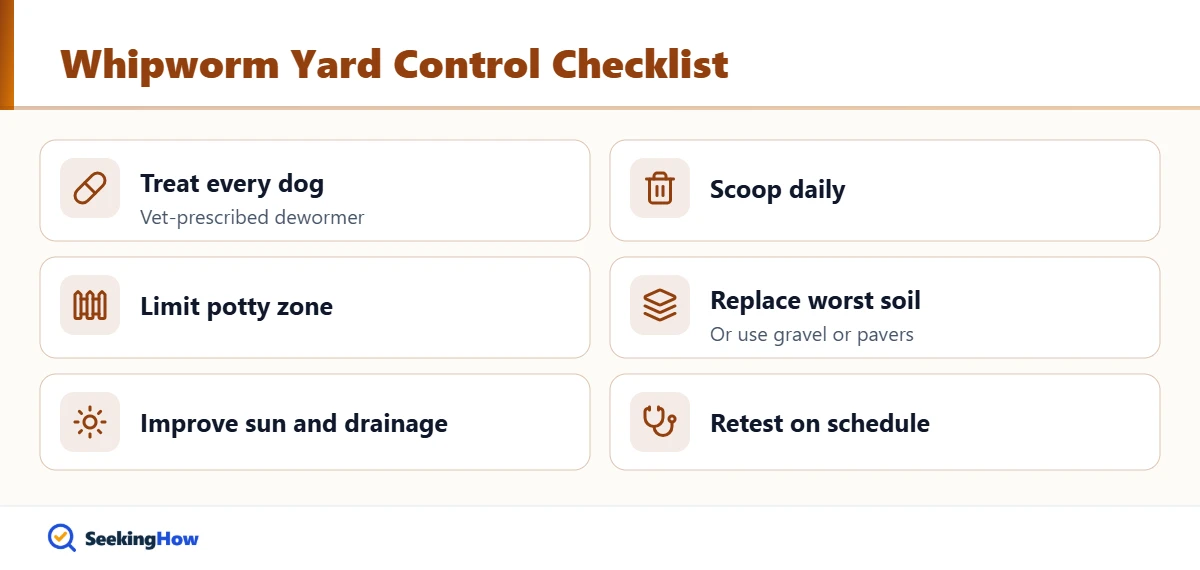
Ask your veterinarian for a dewormer labeled for whipworms; CAPC lists options such as fenbendazole given for 3 days and several monthly heartworm preventives that also control whipworms. Treat all dogs that share the yard, not just the one with symptoms. The common mistake is stopping after one dose, because larvae already inside the dog keep maturing.
Step 2: Pick Up Feces Every Day
Scoop all droppings daily and seal them in bags for the trash. Because eggs need at least 9 days to become infective, daily pickup removes them before they can infect anyone. Do not compost dog waste or spread it on gardens.
Step 3: Map and Limit the Contaminated Zone
Identify where your dog usually goes, often a shady corner or along the fence. Restrict access to those spots with temporary fencing and guide the dog to one easy-to-clean potty area. Most people find this cuts the contaminated area dramatically within a single season.
Step 4: Change the Surface Where Possible
For small, heavily used areas, remove the top 2 to 3 inches of soil and replace it with fresh soil and sod, or switch to pea gravel, pavers or concrete that can be hosed and scooped. Hard surfaces can be cleaned; bare dirt cannot. For a full yard plan, see our guide on how to get whipworms out of your yard.
Step 5: Let Sun and Drainage Work for You
Trim low branches, fix soggy spots and keep grass short so sunlight and air reach the soil. These steps do not sterilize the ground, but drier, warmer, exposed soil is less favorable for long-term egg survival than cool shade.
Step 6: Retest and Stay on Prevention
Follow your vet’s recheck schedule; CAPC suggests monthly treatment for 3 months for control or ongoing monthly preventive, plus fecal testing at least twice a year for adult dogs. Because of the 74- to 90-day prepatent period, a single negative test soon after treatment does not prove the dog is clear.
Bottom line: Assume the soil stays contaminated for years, and protect your dog with daily cleanup and continuous vet-guided prevention rather than trying to sterilize the yard.
If That Didn’t Work
Problem: The dog tests positive again months later. Cause: Reinfection from old soil eggs or incomplete treatment. Fix: Switch to year-round monthly prevention with whipworm activity and restrict access to the old potty area.
Problem: Diarrhea continues but fecal tests are negative. Cause: Whipworms shed eggs intermittently, and early infections do not show eggs yet. Fix: Ask your vet about repeat or alternative fecal tests and empirical treatment.
Problem: Neighborhood dogs keep using your yard. Cause: Gaps in fencing let other animals add new contamination. Fix: Close openings, such as the gap under a fence gate.
Problem: You tried lawn sprays or lime. Cause: Common yard products are not proven to kill whipworm eggs in soil. Fix: Focus on removal, surface replacement and treatment of the dog instead.
Safety and When To See a Vet
Wear gloves when scooping and wash your hands afterward, and never use undiluted bleach, fuel or fire on soil to kill eggs; these harm pets, people and plants without reliably clearing contamination. CAPC currently states that evidence is not strong enough to classify the dog whipworm as a human parasite, but good hygiene still protects against other worms in dog feces.
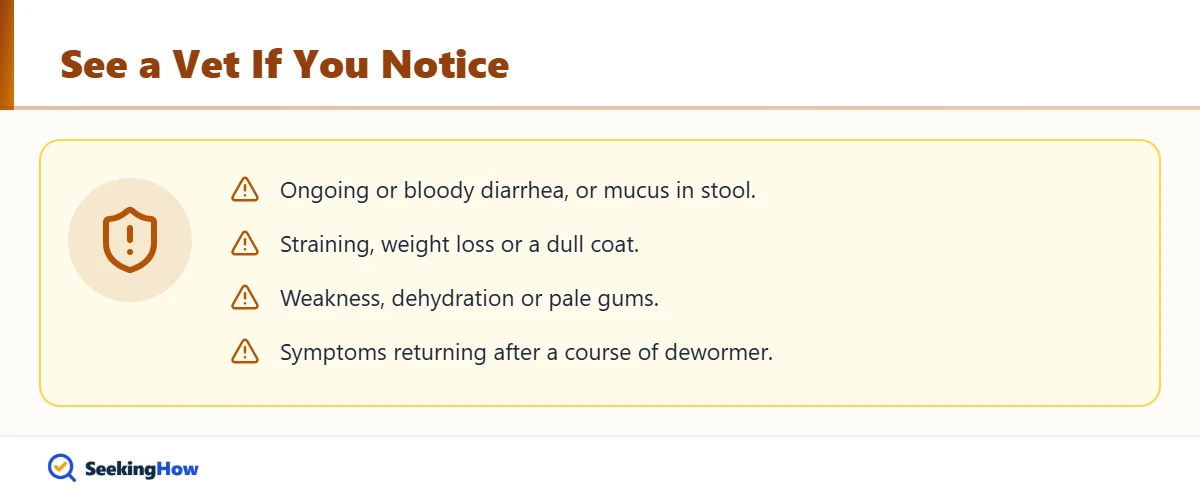
See your vet promptly if your dog has ongoing or bloody diarrhea, mucus in the stool, straining, weight loss, dehydration, weakness or pale gums. Heavy whipworm infections can cause serious bowel inflammation and, in severe cases, electrolyte problems that need medical care.
Prevention Tips
- Keep every dog on a vet-recommended monthly preventive that covers whipworms.
- Scoop the yard daily, including after rain and snow melt.
- Give dogs a designated gravel or paved potty area.
- Pick up after your dog on walks and at parks to protect other dogs.
Related Guides
- How to get whipworms out of your yard and stop reinfection
- How to clean dog poop out of carpet
- How to fix the gap under a fence gate
Sources
- Companion Animal Parasite Council (CAPC) – Trichuris vulpis guidelines: capcvet.org
- American Veterinary Medical Association (AVMA) – pet health and parasite resources: avma.org
- Merck Veterinary Manual – gastrointestinal parasites of dogs: merckvetmanual.com
Frequently Asked Questions
Can whipworm eggs survive winter in soil?
Yes, whipworm eggs can survive winter in soil. CAPC notes they tolerate temperature extremes, so freezing does not reliably kill them. Development pauses in cold soil and resumes when it warms, which is why spring often brings reinfections.
Does sunlight kill whipworm eggs?
Sunlight alone does not reliably kill whipworm eggs. They resist UV and drying better than most parasite eggs. Opening up shaded areas helps make soil less favorable, but it is a supporting step, not a cure for contamination.
Can I kill whipworm eggs in my yard with bleach or lime?
No common yard product is proven to kill whipworm eggs in soil. Bleach is inactivated by organic matter and can harm pets and plants, and lime is not a reliable treatment. Removing feces daily and replacing heavily contaminated soil works better.
How soon can my dog get reinfected after treatment?
A dog can swallow infective eggs the same day it finishes treatment if it goes back into contaminated soil. Those worms take about 74 to 90 days to produce eggs, so reinfection may not show on a fecal test for nearly 3 months. Ongoing monthly prevention closes this gap.
Can humans get whipworms from dog-contaminated soil?
The dog whipworm is not currently classified as a human parasite. CAPC says the reported human cases are not well enough validated. People can get other worms from dog feces, though, so wear gloves and wash hands after yard cleanup.
Should I replace my lawn if my dog has whipworms?
Most yards do not need full replacement. Focus on the small areas your dog uses most, remove 2 to 3 inches of soil there, and replace it with fresh soil, sod, gravel or pavers. Combine this with daily scooping and continuous prevention.
Do whipworm eggs live on concrete?
Whipworm eggs survive poorly on clean, sunny concrete compared with soil, and hard surfaces can be scrubbed and hosed. That is why vets often recommend a gravel or paved potty area. Remove feces before washing so eggs are not just spread around.