Quick Answer
To get rid of roundworm eggs in the yard, deworm every dog and cat with a vet-recommended product, pick up feces daily before eggs become infective in 2 to 4 weeks, and replace or cover heavily contaminated soil. No lawn spray reliably kills roundworm eggs, which the CDC says can persist for months or years.
Key Takeaways
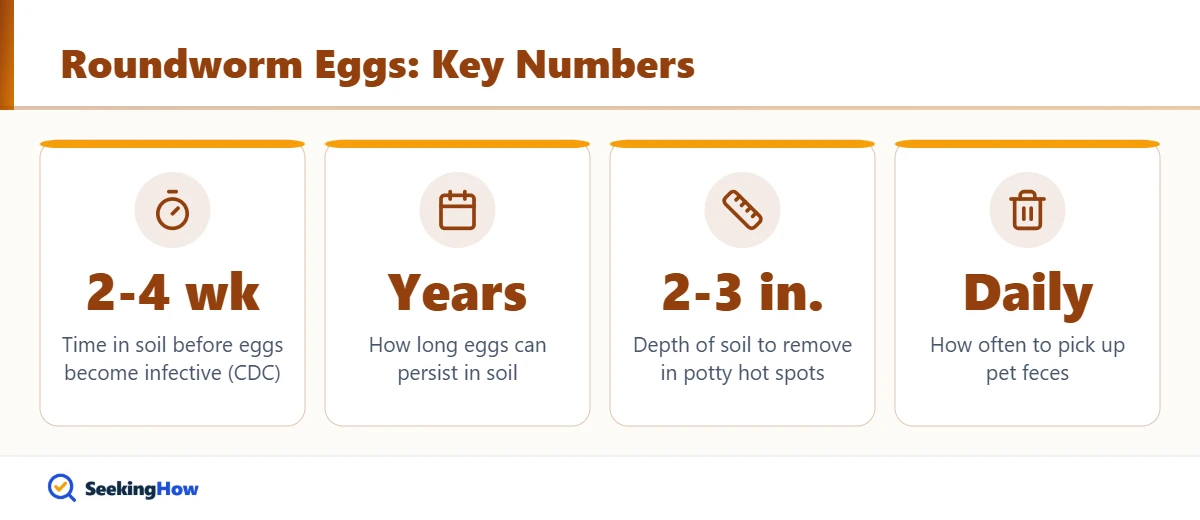
- Roundworm (Toxocara) eggs need about 2 to 4 weeks in soil before they can infect pets or people, according to the CDC.
- Once infective, eggs can survive in soil for months or even years.
- Daily poop pickup is the most effective yard control because it removes eggs before they mature.
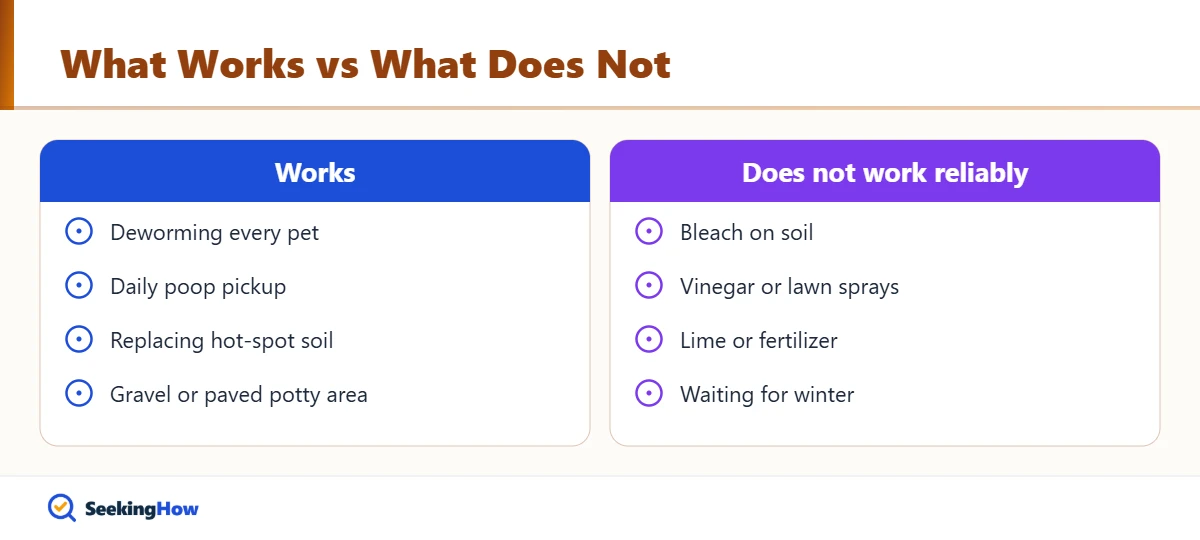
- Bleach, vinegar and common lawn products do not reliably kill roundworm eggs in soil.
- Children are at highest risk, so cover sandboxes and teach handwashing after outdoor play.
Roundworms are the most common intestinal worm in puppies and kittens, and a single infected animal can shed huge numbers of eggs into the yard. Learning how to get rid of roundworm eggs in the yard matters for both your pets and your family, because dog and cat roundworms can also infect people.
What You’ll Need
- Vet-recommended dewormer or monthly preventive that covers roundworms
- Poop bags, pooper scooper and disposable gloves
- Lidded outdoor trash can
- Flat shovel or sod cutter (for removing top soil)
- Fresh topsoil, sod, pea gravel or pavers
- Sandbox cover or tarp
- Temporary garden fencing (optional)
How To Get Rid of Roundworm Eggs in the Yard: Step-by-Step
Step 1: Deworm All Pets First
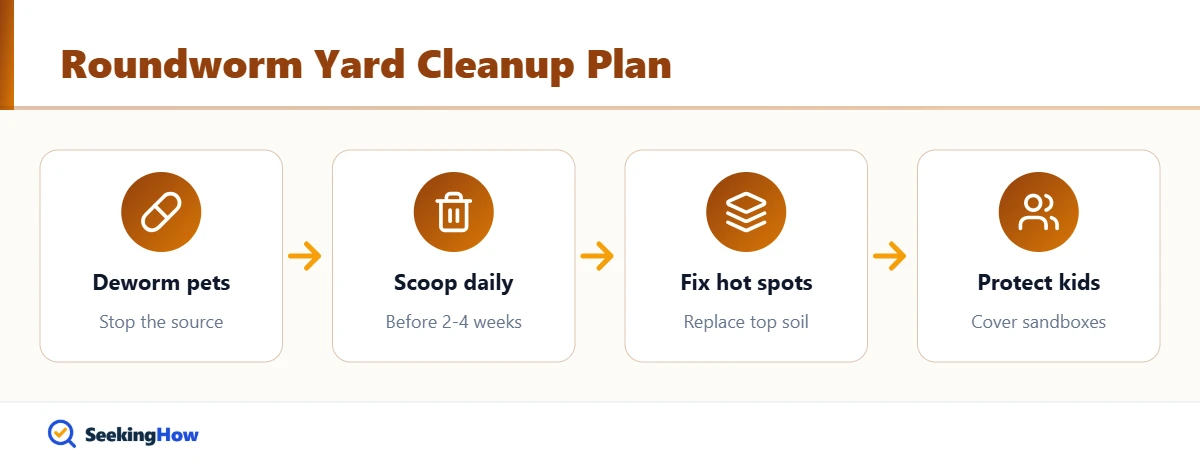
Ask your veterinarian to treat every dog and cat that uses the yard, then put them on a monthly preventive that covers roundworms. Puppies and kittens need repeated doses because they are often born with or nurse in larvae; CAPC recommends starting deworming early, around 2 weeks of age, and repeating it. Cleaning the yard without treating the source animal means new eggs land every day.
Step 2: Pick Up Feces Every Day
Scoop all droppings daily, bag them, and put them in the trash. The CDC notes eggs need 2 to 4 weeks in the environment to become infective, so daily removal takes them out before they can cause infection. Do not compost pet waste or add it to vegetable beds.
Step 3: Identify the Hot Spots
Walk the yard and note where pets usually go: fence lines, shady corners, under decks and near doors. These small zones hold most of the eggs. Mark them with flags so you can treat them consistently.
Step 4: Remove or Cover Contaminated Soil
For heavily used spots, dig out the top 2 to 3 inches of soil and bag it for disposal, then lay fresh topsoil and sod or switch to gravel, pavers or concrete. In practice, a 4-by-6-foot gravel potty area is far easier to keep clean than a whole lawn.
Step 5: Protect Kids’ Play Areas
Cover sandboxes whenever they are not in use, since cats in particular use them as litter boxes. Replace sand that has been exposed to animal feces. Keep pets out of vegetable gardens with fencing.
Step 6: Keep Up Prevention and Retesting
Stay on monthly prevention and bring a stool sample to your vet as recommended, at least once or twice a year for adult dogs and more often for puppies. A negative recheck after the treatment series confirms that new contamination has stopped. For a related parasite with a similar plan, see how to get whipworms out of your yard.
Bottom line: You can’t sterilize a lawn, so the winning plan is to stop new eggs at the source with deworming and daily cleanup while old eggs die off.
If That Didn’t Work
Problem: The puppy keeps testing positive. Cause: Larvae dormant in tissue keep maturing, or the puppy is reinfected from soil. Fix: Complete the full deworming series your vet prescribes and restrict access to old potty areas.
Problem: Worms showed up in an indoor accident. Cause: Adult worms are often passed after deworming. Fix: Bag them, then clean the spot with an enzyme cleaner; see how to clean dog poop out of carpet.
Problem: Neighborhood cats or dogs use your yard. Cause: Outside animals add new eggs. Fix: Seal fence gaps, cover sandboxes and remove food sources that attract strays.
Problem: You treated the lawn with chemicals and still worry. Cause: Household and lawn chemicals are not proven to kill roundworm eggs in soil. Fix: Focus on soil replacement in hot spots and hygiene rather than sprays.
| Method | Effort | Cost | Effectiveness | Best for |
|---|---|---|---|---|
| Deworming pets | Low | Low to medium | Essential | Every household |
| Daily poop pickup | Low, ongoing | Very low | Very high | All yards |
| Replace top 2-3 in. of soil | High | Medium | High in small areas | Potty hot spots |
| Gravel or paved potty area | Medium | Medium | High long-term | Multi-pet homes |
| Bleach or lawn sprays | Low | Low | Not reliable | Not recommended |
Safety and When To See a Vet
Wear gloves for yard cleanup and wash your hands with soap and water afterward, especially before eating. Do not burn soil with a torch or pour gasoline or bleach on the ground; these are dangerous and do not reliably clear contamination.
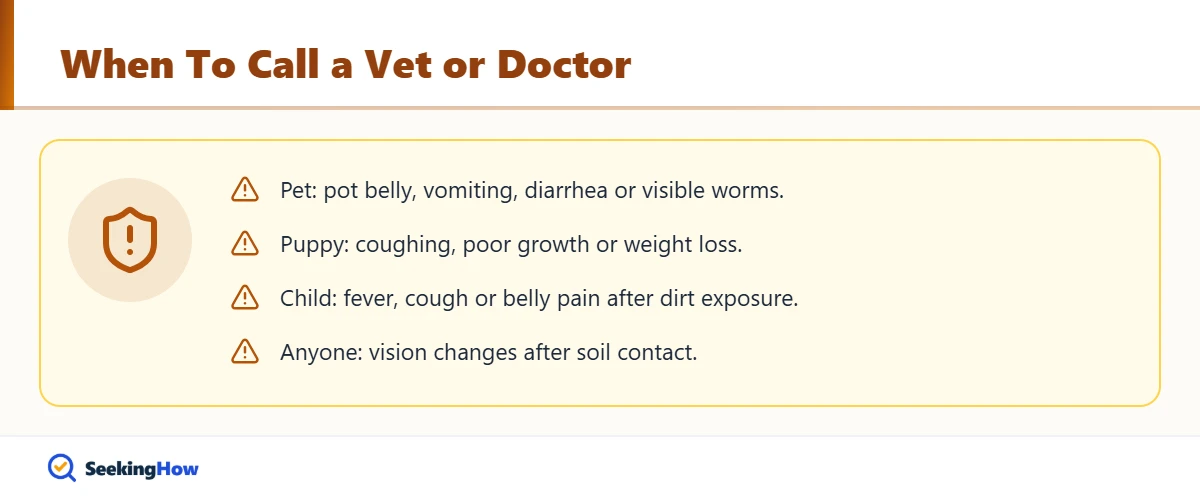
See your vet if your pet has a pot-bellied look, vomiting or diarrhea, visible spaghetti-like worms in stool or vomit, coughing in young puppies, poor growth or weight loss. See a doctor if a child who plays in contaminated soil develops fever, cough, abdominal pain or any vision changes, since the CDC notes human toxocariasis can affect the eyes and organs.
Prevention Tips
- Deworm new puppies and kittens early and on the schedule your vet sets.
- Keep all pets on year-round parasite prevention.
- Scoop daily and pick up after pets on walks.
- Cover sandboxes and teach kids not to eat dirt.
- Close fence openings, such as a gap under the fence gate, to keep strays out.
Related Guides
- How to get whipworms out of your yard
- How to clean dog poop out of carpet
- How to fix the gap under a fence gate
Sources
- Centers for Disease Control and Prevention (CDC) – How toxocariasis spreads: cdc.gov
- Companion Animal Parasite Council (CAPC) – parasite control guidelines for dogs and cats: capcvet.org
- American Veterinary Medical Association (AVMA) – pet health resources: avma.org
Frequently Asked Questions
How long do roundworm eggs live in soil?
Roundworm eggs can live in soil for months or even years, according to the CDC. Their thick shell protects them from weather. Cool, moist, shaded soil favors survival, which is why ongoing prevention matters more than a one-time cleanup.
Does bleach kill roundworm eggs in the yard?
No, bleach does not reliably kill roundworm eggs in soil. Organic matter quickly inactivates it, and the egg’s shell resists it. Bleach can also harm pets, plants and groundwater, so stick to removal, soil replacement and deworming.
Can my kids get roundworms from the yard?
Yes, children can get toxocariasis by swallowing soil containing infective eggs. The CDC lists young children as higher risk because they put hands and dirt in their mouths. Handwashing, covered sandboxes and daily poop pickup lower the risk.
Do I need to treat my yard if my puppy has roundworms?
Yes, clean the yard while your vet treats the puppy. Pick up feces daily so eggs never become infective, and limit the puppy to one easy-to-clean area. Full lawn replacement is rarely needed if you act early.
Does freezing weather kill roundworm eggs?
Freezing weather does not reliably kill roundworm eggs. Development slows in cold soil and resumes in spring. Keep scooping through winter and do a thorough cleanup once snow melts.
How soon can I let my dog back in the yard after deworming?
Most dogs can use the yard right away if you scoop immediately after each bowel movement. Eggs passed after treatment are not infective yet. Restrict access only to old, heavily contaminated hot spots until they are cleaned or covered.
Are cat roundworm eggs a yard risk too?
Yes, cat roundworm eggs contaminate soil in the same way, and outdoor cats often use gardens and sandboxes. Deworm your cats, keep sandboxes covered and wear gloves when gardening in areas cats visit.