
Quick Answer
To get dog hair off a fleece blanket, wipe it with a damp rubber glove or rubber pet-hair brush, then tumble the dry blanket on the no-heat or air-fluff dryer setting for 10 minutes with wool dryer balls, shake it outside, and wash it cold. Skip high heat, which can melt and pill fleece.
Key Takeaways
- Fleece is a polyester knit that builds static, which is why dog hair clings so tightly.
- A damp rubber glove pulls more hair off fleece than a lint roller and costs almost nothing.
- Tumbling the blanket dry before washing loosens hair into the lint trap instead of the washer drum.
- Use cold water and low or no heat; high heat can melt fleece fibers and cause pilling.
- Clean the dryer lint filter after every load to remove hair and reduce fire risk.
Dog hair weaves into the soft pile of fleece and stays put because of static, so a quick shake rarely does much. Here’s how to get dog hair off a fleece blanket fast with tools you already own, and how to wash it so the hair doesn’t end up on your next load of laundry.
What You’ll Need
- Rubber dishwashing gloves or a rubber pet-hair brush
- Spray bottle with plain water
- Wool dryer balls or 2 to 3 dryer sheets
- Lint roller or wide packing tape (for touch-ups)
- Distilled white vinegar, about 1/2 cup (optional, for the rinse)
- Washer pet-hair catcher (optional)
- Upholstery attachment for your vacuum (optional)
How To Get Dog Hair Off a Fleece Blanket: Step-by-Step
Step 1: Shake the Blanket Outdoors
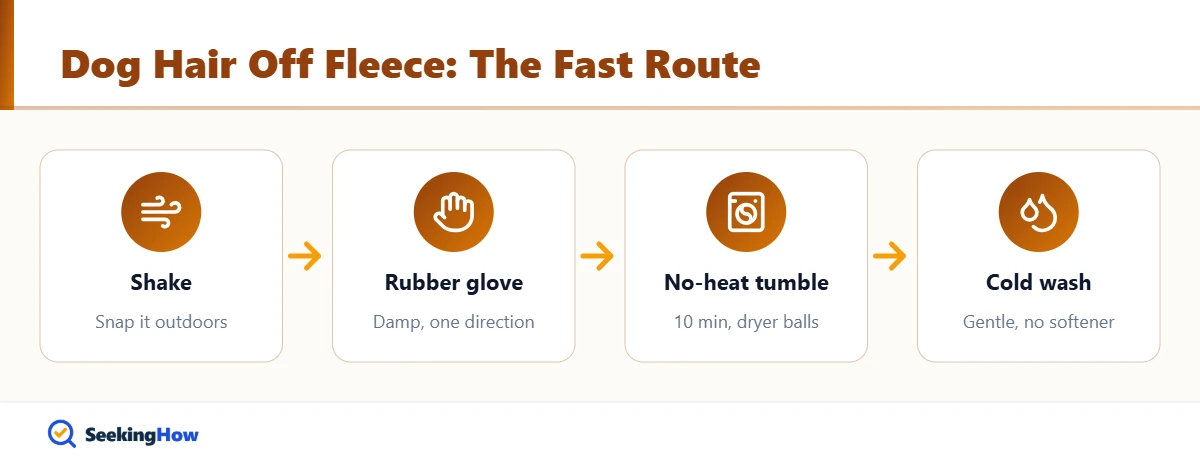
Take the blanket outside and give it 8 to 10 hard snaps from two corners. This removes loose hair and debris before you start working on embedded hair. Skipping it means you just push surface hair deeper into the pile.
Step 2: Wipe With a Damp Rubber Glove
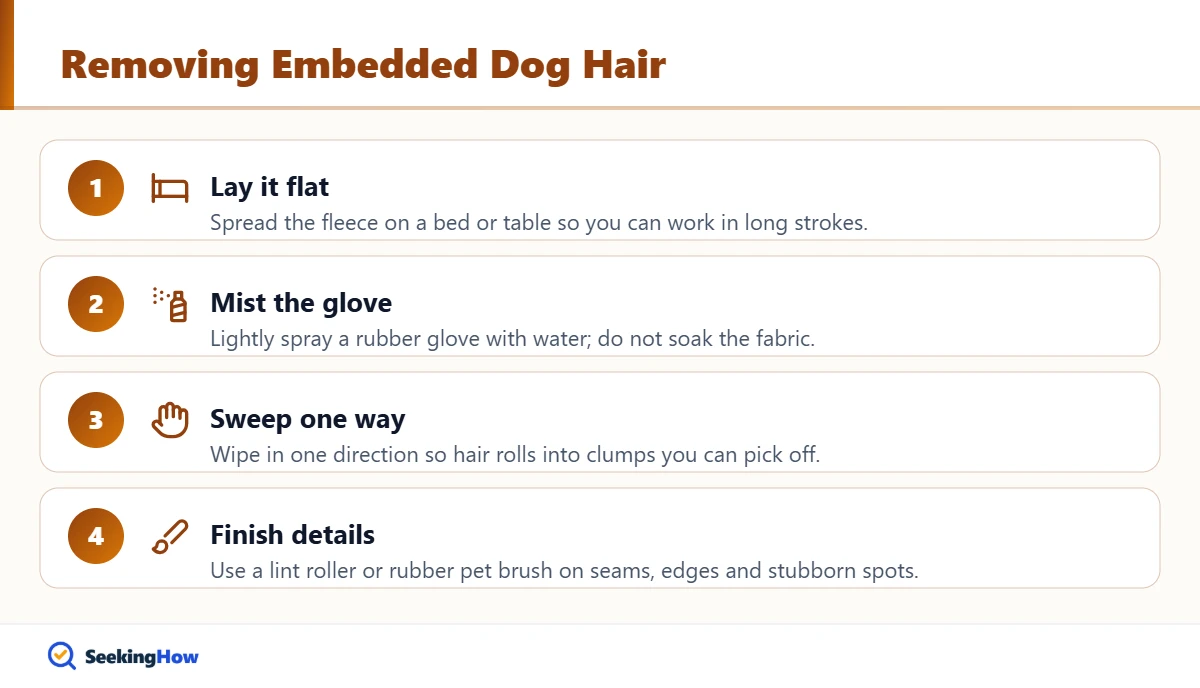
Lay the blanket flat, put on a rubber glove, and lightly mist the glove with water. Sweep your hand across the fleece in one direction; the hair rolls into clumps you can pick off. Most people find this pulls more hair than any lint roller, but too much water makes the fleece soggy, so mist only.
Step 3: Vacuum or Roll What Remains
Go over the blanket with a vacuum upholstery attachment or a rubber pet-hair brush, then finish stubborn spots with a lint roller or tape wrapped sticky-side out around your hand. Work in short strokes along the grain of the pile.
Step 4: Tumble Dry on No Heat for 10 Minutes
Put the dry blanket in the dryer on the air-fluff or no-heat setting with 3 wool dryer balls or 2 dryer sheets for about 10 minutes. The tumbling and reduced static release hair into the lint trap. In practice, this single step does the most work for heavily coated blankets.
Step 5: Clean the Lint Trap and Shake Again
Empty the lint filter right away; it will be full of hair. Give the blanket another quick shake outside so loose hair doesn’t go into the washer, where it can stick to other laundry or collect near the drain.
Step 6: Wash Cold on a Gentle Cycle
Wash the blanket alone or with other pet items in cold water on gentle with a mild detergent. Add about 1/2 cup of white vinegar to the rinse if you like; it helps relax fibers and cut static. Do not use fabric softener, which coats fleece and can make it less soft over time.
Step 7: Dry Low and Wipe Out the Washer
Tumble dry on low or hang to dry, then clean the lint trap again. Wipe the empty washer drum with a damp cloth or run a short rinse cycle to remove leftover hair.
Bottom line: A damp rubber glove plus a 10-minute no-heat tumble removes most dog hair from fleece before it ever touches the washer.

If That Didn’t Work
Problem: Hair is still woven into the pile. Cause: Short, coarse hair from breeds like Labs or pit bulls works deep into knits. Fix: Use a rubber pet-hair brush or a pumice-style pet hair stone with light pressure, testing first on a corner.
Problem: The rest of the laundry is covered in hair. Cause: Hair was washed off the blanket and redeposited. Fix: Always tumble dry first, wash pet bedding separately, and use a washer hair-catcher.
Problem: The fleece looks pilled or matted. Cause: High heat or rough washing damaged the polyester fibers. Fix: Use a fabric shaver lightly, then wash cold and dry low from now on. See our guide on how to stop fleece blankets from shedding.
Problem: Static makes hair jump right back on. Cause: Dry indoor air. Fix: Lightly mist the blanket with water or a mix of water and a little fabric conditioner before brushing.
| Method | Time | Cost | Effectiveness | Best for |
|---|---|---|---|---|
| Damp rubber glove | 5 min | Very low | High | Daily touch-ups |
| No-heat dryer tumble | 10 min | Very low | Very high | Heavily coated blankets |
| Lint roller or tape | 5 to 10 min | Low | Medium | Small areas |
| Rubber pet-hair brush | 5 min | Low | High | Embedded short hair |
| Vacuum attachment | 5 min | None if owned | Medium | Large throws on the couch |
Safety and When To See a Vet
Clean the dryer lint filter before and after every pet-hair load; the U.S. Fire Administration lists lint buildup as a leading cause of dryer fires. Keep used dryer sheets away from dogs, since chewing or swallowing them can upset the stomach or cause a blockage.
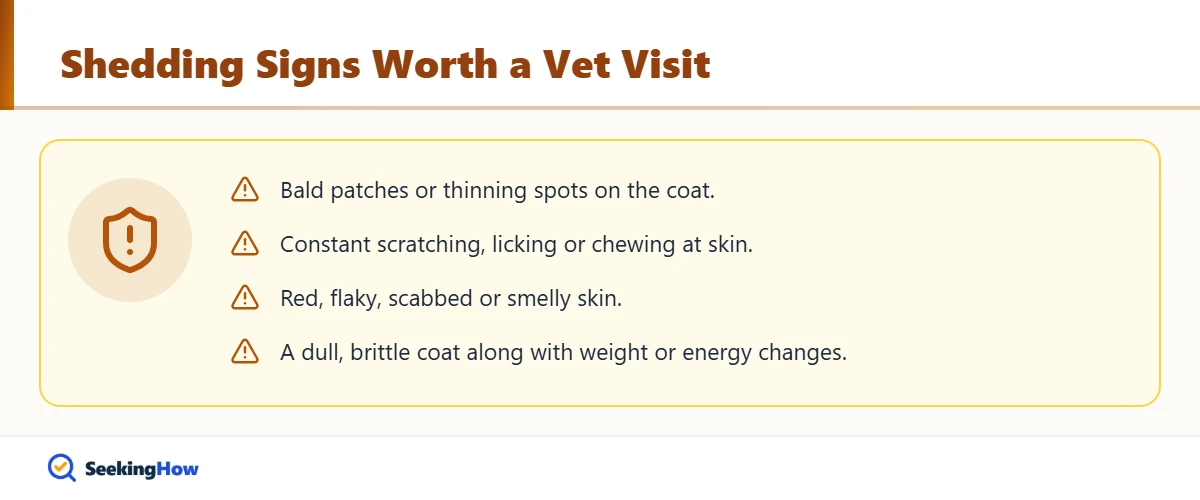
Normal shedding increases in spring and fall. Call your veterinarian if shedding comes with bald patches, constant scratching or licking, red or flaky skin, sores, a strong odor, or a dull, brittle coat, because these can point to allergies, parasites, skin infection or hormonal problems.
Prevention Tips
- Brush your dog several times a week, daily during seasonal sheds, outdoors if possible.
- Keep one washable “dog blanket” on the couch so the good throws stay clean.
- Shake and glove-wipe pet blankets every few days so hair never builds up.
- Ask your vet whether your dog’s diet supports a healthy coat if shedding seems excessive.
Related Guides
- How to stop fleece blankets from shedding
- How to disinfect a fabric couch
- How to clean dog poop out of carpet
- How to clean a tote bag without ruining it
Sources
- U.S. Fire Administration (FEMA) – clothes dryer fire safety: usfa.fema.gov
- American Veterinary Medical Association (AVMA) – pet health resources: avma.org
- ASPCA – dog grooming and household safety guidance: aspca.org
- Fleece blanket manufacturer care labels – cold wash, low or no heat drying
Frequently Asked Questions
What is the fastest way to get dog hair off a fleece blanket?
The fastest way is a 10-minute no-heat dryer tumble with wool dryer balls. Static drops, and the tumbling pulls hair into the lint trap. Follow with a quick swipe of a damp rubber glove for any spots that remain.
Does a lint roller work on fleece?
A lint roller works on fleece but is slow for large blankets. It removes surface hair well yet struggles with short hairs embedded in the pile. Use it for touch-ups after a rubber glove or dryer tumble.
Should I wash a fleece blanket before removing dog hair?
No, remove the hair before washing. Water makes hair cling and can spread it to other laundry or collect in the washer. Tumble the blanket dry on no heat first, shake it, then wash it cold.
Can dog hair clog my washing machine?
Yes, large amounts of pet hair can collect in the drain pump filter and slow draining. Removing hair before washing, using a hair-catcher, and cleaning the pump filter per your washer manual helps prevent problems.
Does vinegar help remove dog hair in the wash?
Vinegar can help a little by reducing static and relaxing fibers so hair rinses away. Add about 1/2 cup to the rinse cycle. It is a helper, not a replacement for removing hair before the wash.
Are dryer sheets safe to use around dogs?
Dryer sheets are fine in the dryer, but keep new and used sheets away from dogs. Dogs that chew or swallow them can get an upset stomach or, in larger amounts, an intestinal blockage. Wool dryer balls are a pet-friendly alternative.
Why does dog hair stick to fleece so badly?
Dog hair sticks to fleece because the polyester knit builds static and has a soft, open pile that traps hairs. Short, coarse hairs work in deepest. Reducing static with moisture or dryer balls makes removal much easier.